Edward Fickett Architecture: Los Angeles’s Most Beloved Modernist
Edward Fickett – Architect Profile
- Born: May 19, 1916 — Los Angeles, California
- Died: May 21, 1999 — Los Angeles, California (age 82)
- Education: B.Arch, University of Southern California (USC); M.Arch & M.Eng., Massachusetts Institute of Technology (MIT); Art Center College of Design, Los Angeles
- Style: California Modernism, California Ranch Style, Mid-Century Modern, California Moderne
- Known For: Designing an estimated 60,000+ postwar homes across Southern California, Open, L-shaped floor plans with glass walls and playful rooflines, Seamless indoor-outdoor integration using redwood, adobe brick and handmade tile, Democratic modernism-bringing high design to everyday homebuyers, Architectural Advisor to President Eisenhower on federal housing standards (FHA), AIA University Lecture Series organizer alongside Richard Neutra, Rudolph Schindler and Frank Lloyd Wright, Elected AIA Fellow (FAIA) in 1969; inducted into the National Housing Hall of Fame
- Key Project Locations: San Fernando Valley (Sherman Oaks, Reseda, Northridge, Granada Hills, Encino), Hollywood Hills and Nichols Canyon Colony, West Hollywood and the Sunset Strip, Palos Verdes (Rollingwood Estates) Pacific Palisades and Bel Air, San Diego County (La Mesa, Rancho Bernardo, La Jolla), Military installations: Edwards AFB, Los Alamitos NAS, Murphy Canyon Heights Naval Base, Baja California, Mexico (Hotel Cabo San Lucas, Las Cruces Resort)
- Notable Work: Jacobson House, Los Angeles (LAHCM No. 674), Dodger Stadium Club and Concessions, Port of Los Angeles Passenger & Cargo Terminals, Spago Restaurant – West Hollywood, Los Angeles City Hall Tower Renovation, the originalWest Hollywood Library, La Costa Resort – Carlsbad, Meadowlark Park – Reseda, Rollingwood Estates, Palos Verdes, Sunset Lanai and Hollywood Riviera apartments – West Hollywood
In This Article
- Who Was Edward Fickett?
- Fickett’s Architectural Philosophy
- Signature Design Elements of a Fickett Home
- Iconic Edward Fickett Buildings in Los Angeles
- Fickett and the Case Study House Era
- Why Fickett Homes Are Highly Sought After Today
- Buying or Selling a Fickett Home in Los Angeles
- How to Identify an Edward Fickett Property
- FAQs About Edward Fickett Architecture
Who Was Edward Fickett?
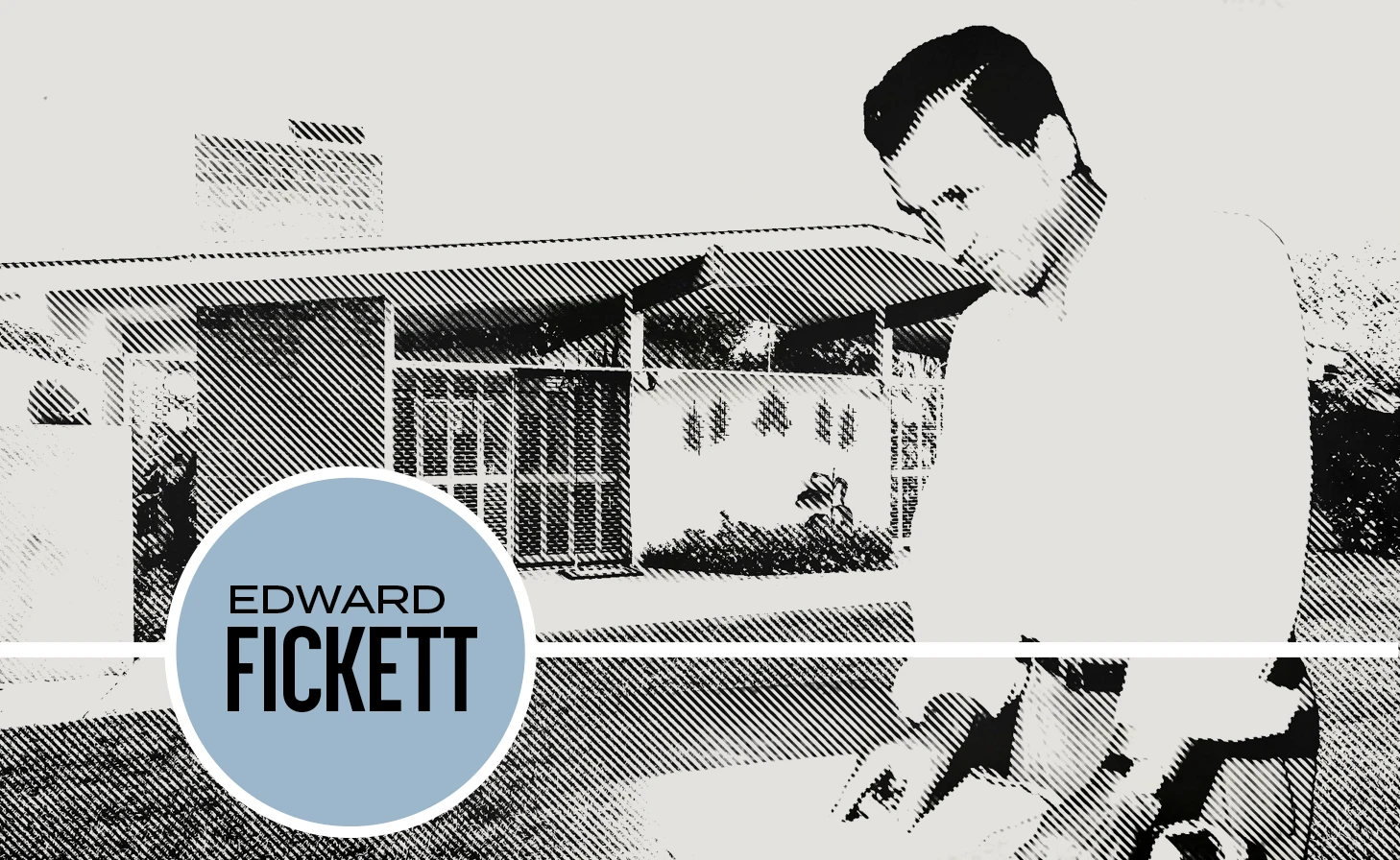
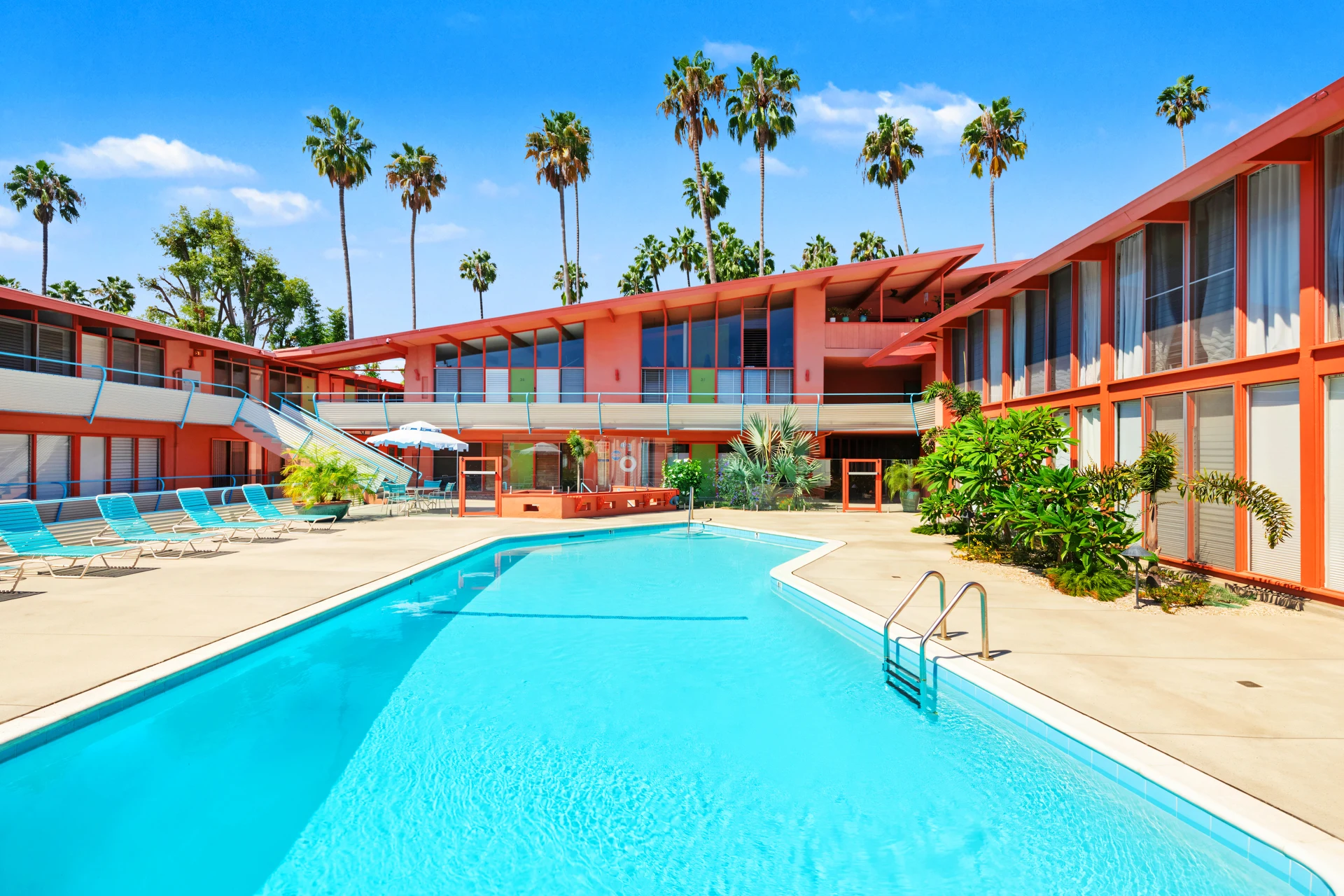
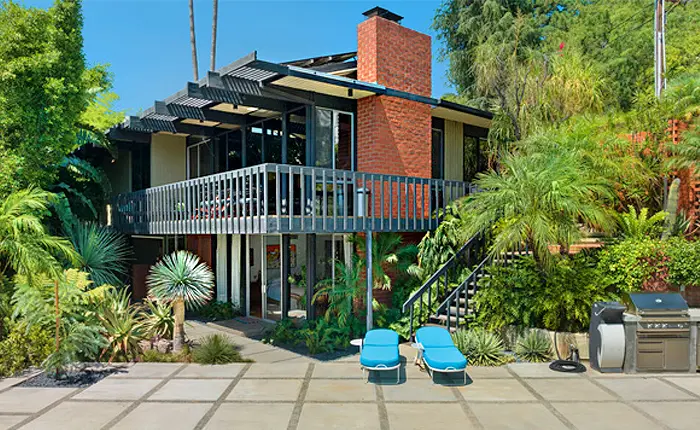
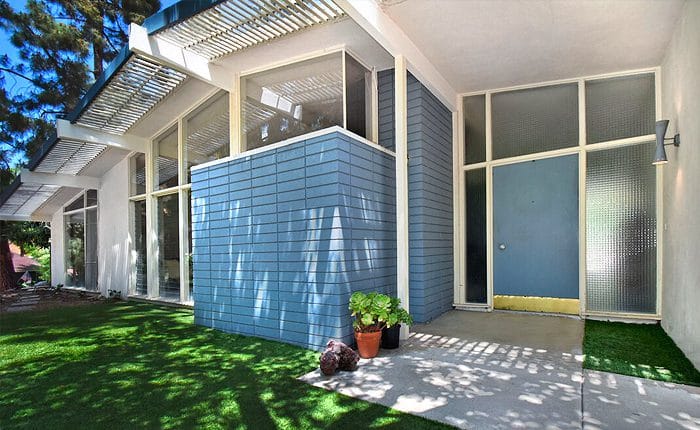
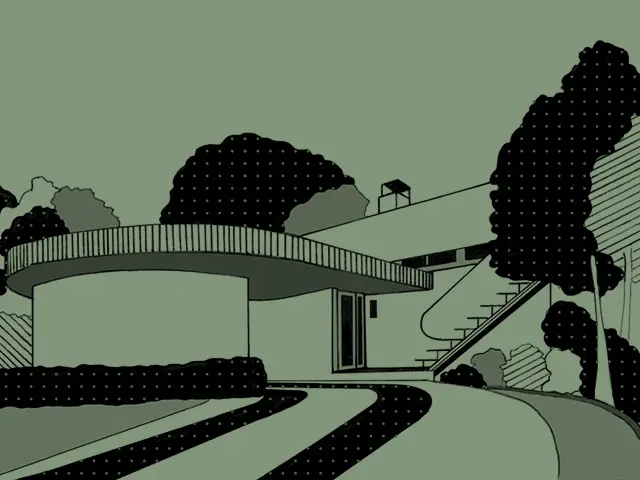
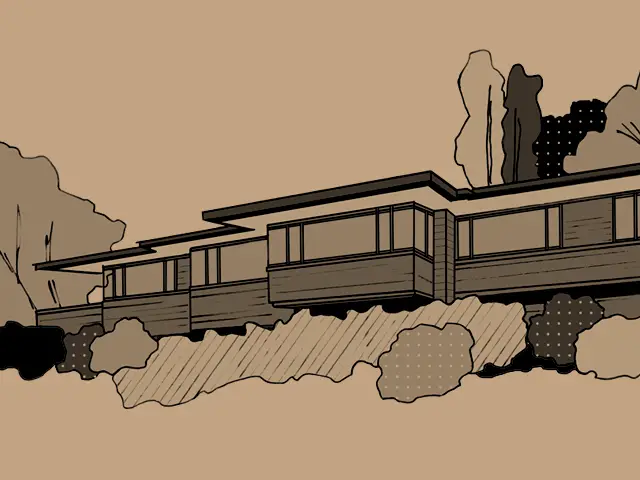
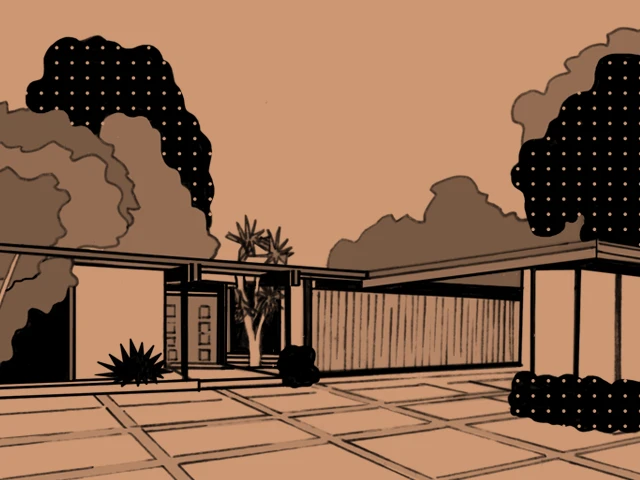
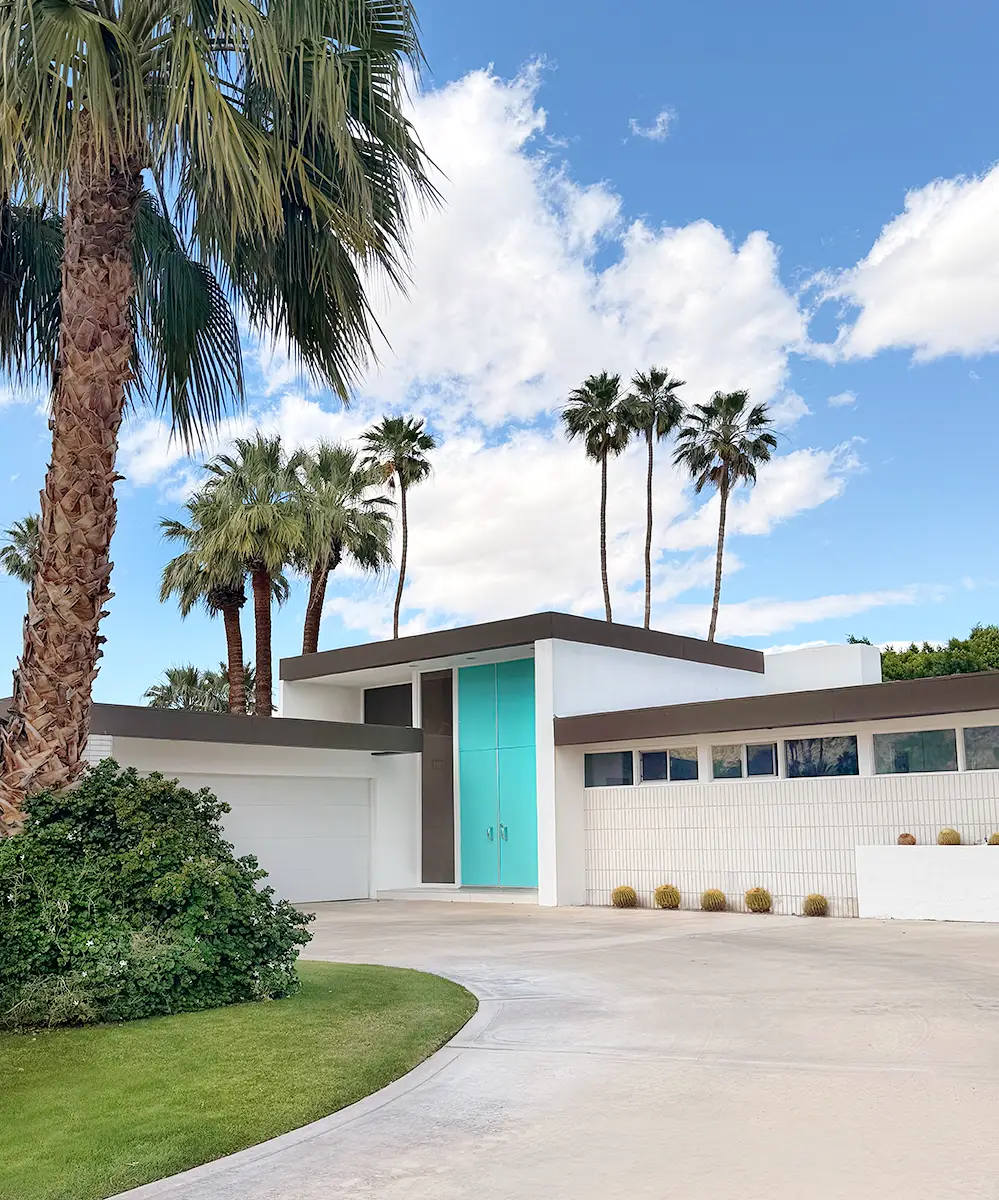
In the hands of architect Edward Fickett, mid-century modernism becomes effortless California living. His post-and-beam structures, generous glazing and relaxed ranch silhouettes celebrate openness without sacrificing comfort. The result is architecture that feels sunny, social and unmistakably West Coast.
Fickett’s Architectural Philosophy
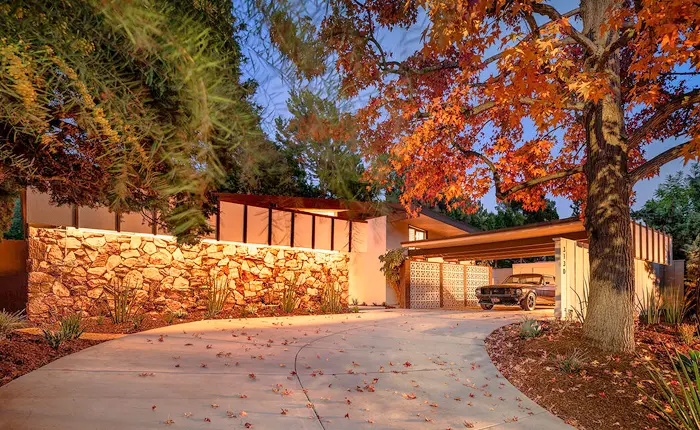
At the core of Edward Fickett’s design philosophy was a belief that modernism should serve everyday life, not merely celebrate itself. He was deeply influenced by the Southern California climate and landscape and his designs consistently prioritized the relationship between interior space and the natural world just outside. Open floor plans, abundant natural light and seamless indoor-outdoor flow were not luxuries in a Fickett home; they were standard design elements. Fickett also believed passionately in efficiency. Working within the constraints of postwar budgets and production timelines, he refined a design vocabulary that could be executed economically without feeling cheap. He favored clean horizontal lines, low-pitched rooflines and the honest use of materials, concrete block, wood, glass and steel, that aged gracefully and required minimal ornamentation to achieve their effect. His approach was also deeply human-centered. Fickett paid careful attention to how families actually lived: where children played, how kitchens connected to dining spaces, how a homeowner might move from a bedroom to a garden without feeling confined. This attention to livability gave his homes an enduring functionality that keeps them just as relevant to today’s buyers as they were to postwar families. Read more about mid-century modern homes for sale in Los Angeles.Signature Design Elements of a Fickett Home
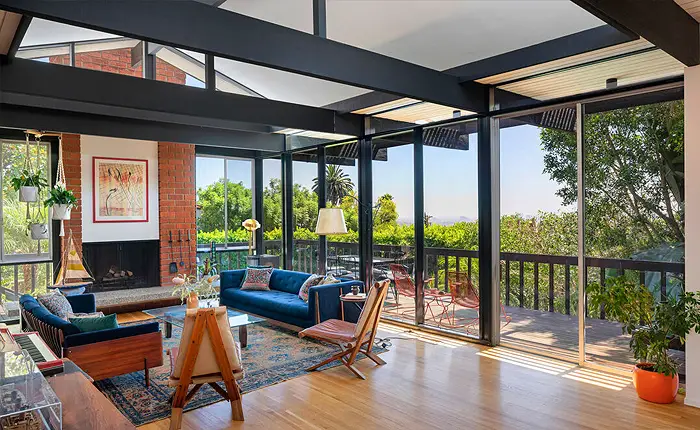
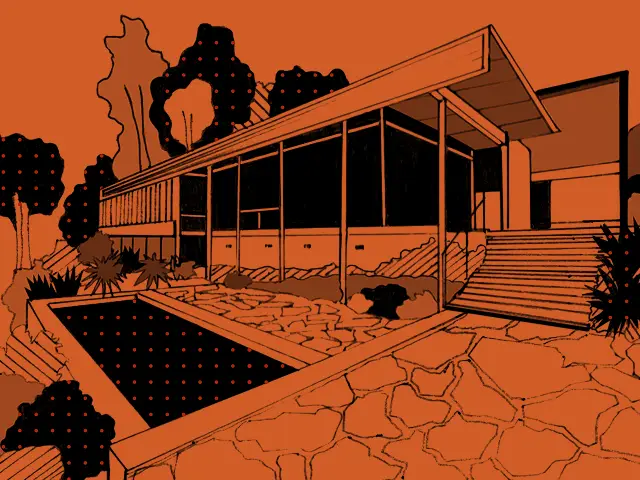
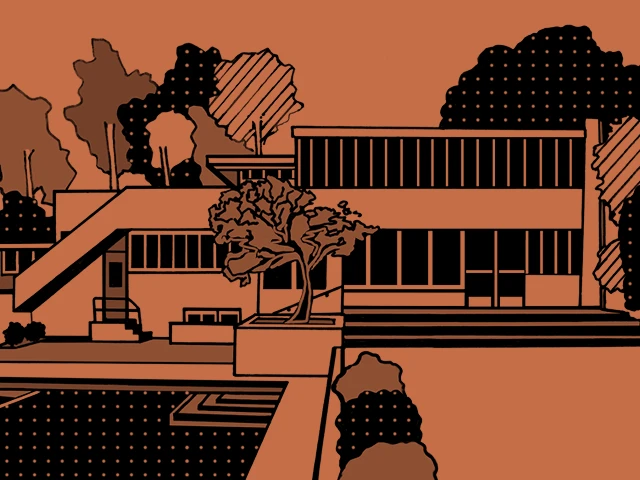
With an intuitive understanding of proportion and flow, Edward Fickett crafted interiors that feel expansive yet intimate. At the Jacobson House, Fickett distilled mid-century ideals into a luminous, livable form. He incorporates planes of glass, vaulted ceilings and rhythmic beams in this open, garden-oriented plan, drawing the eye outward toward landscape and sky. The home stands as a refined testament to California’s optimistic experiment in design and lifestyle. His belief that modern architecture should feel both progressive and profoundly human creates a grounded and serene environment.
Iconic Edward Fickett Buildings in Los Angeles
While much of Fickett’s legacy lives in residential neighborhoods, his work extended to larger institutional and commercial projects across the region. His design contributions to Los Angeles span decades and building types, cementing his place as one of the city’s most versatile architects. Among his most celebrated residential contributions are the hundreds of homes he designed in the San Fernando Valley during the 1950s and 1960s. Neighborhoods like Woodland Hills, Tarzana and Reseda contain substantial concentrations of Fickett-designed homes, modest in footprint but rich in design thinking. Many of these homes have been preserved, renovated and in some cases given local historic designation. Fickett also contributed meaningfully to Westside Los Angeles, where clients with larger budgets gave him more latitude to experiment. His custom homes in areas like Brentwood, Pacific Palisades and Studio City showcased what his philosophy could achieve when unconstrained by production budgets, larger expanses of glass, more dramatic roof forms and more ambitious indoor-outdoor spaces.Fickett’s Commercial and Institutional Work
Beyond residential design, Fickett completed notable commercial and civic projects, including bank buildings, medical offices, and community facilities. These projects applied his residential design sensibility, clarity, efficiency and human scale to public-facing buildings. For architecture enthusiasts, tracking down Fickett’s commercial work offers an interesting complement to his residential story. ArchDaily provides additional resources on modernist architects of this era.Fickett and the Case Study House Era
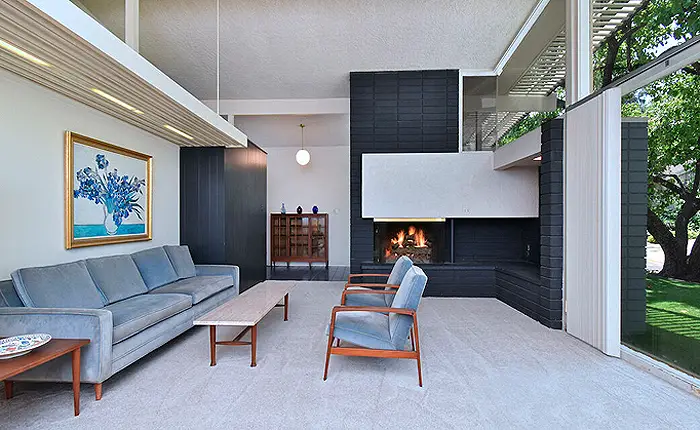
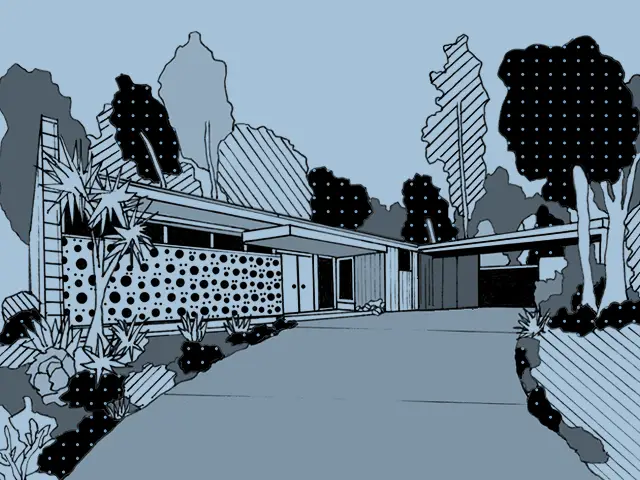
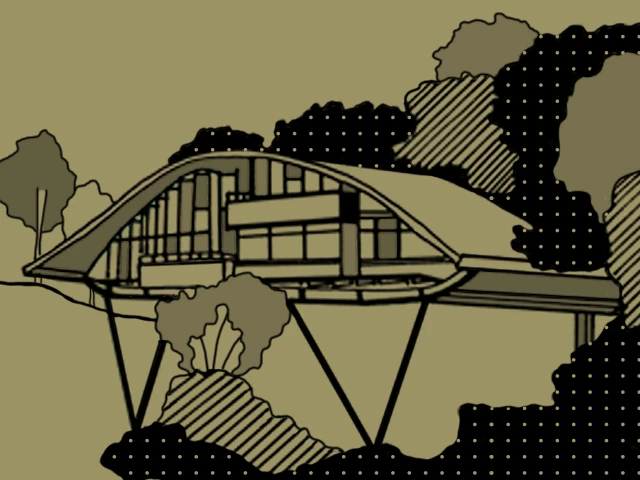
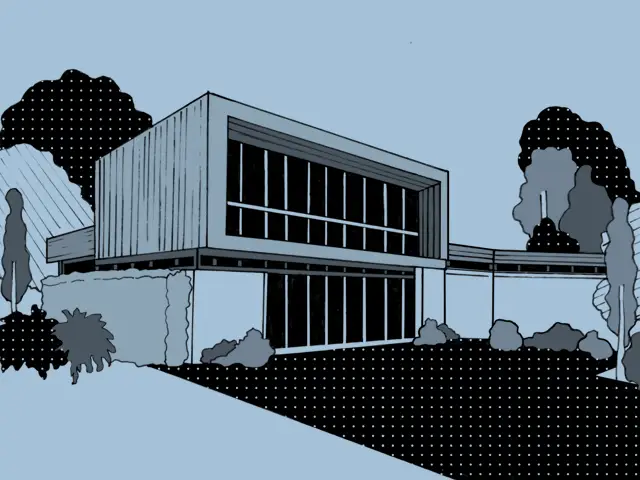
Fickett interiors are defined by open floor plans, post-and-beam structure and abundant natural light, principles shared with the famous Case Study House program that shaped postwar Los Angeles architecture. Fickett’s approach to design elevated the suburban ranch-style home into a refined modern statement. His homes embody a lifestyle rooted in sunshine and connection.
Why Fickett Homes Are Highly Sought After Today
The market for Edward Fickett homes has grown significantly over the past decade, driven by a confluence of factors that have elevated mid-century modern architecture from a niche enthusiasm to a mainstream obsession. Several forces are at work. First, there’s the simple appeal of classic mid-century design. In a market flooded with new construction that mimics modernist aesthetics without the structural logic or material honesty, original Fickett homes offer something increasingly rare: the real thing. Their post-and-beam bones, original clerestory windows, and open floor plans are not reproductions; they are genuine products of the era that defined them. Second, Fickett homes tend to be well-suited to contemporary living. Their open plans, indoor-outdoor connections and emphasis on natural light align well with how people want to live today. Unlike Victorian or Colonial Revival homes, which often require significant structural changes to feel modern, Fickett homes frequently need only cosmetic updates to feel current. Third, growing historic preservation awareness in Los Angeles has drawn attention to mid-century residential architecture as a category worth protecting. Several Fickett homes have received historic designations and awareness of his contribution to the city’s architectural heritage continues to grow. For more perspective on modernist architecture trends, Dezeen regularly covers the preservation and resale of significant mid-century properties.Buying or Selling a Fickett Home in Los Angeles
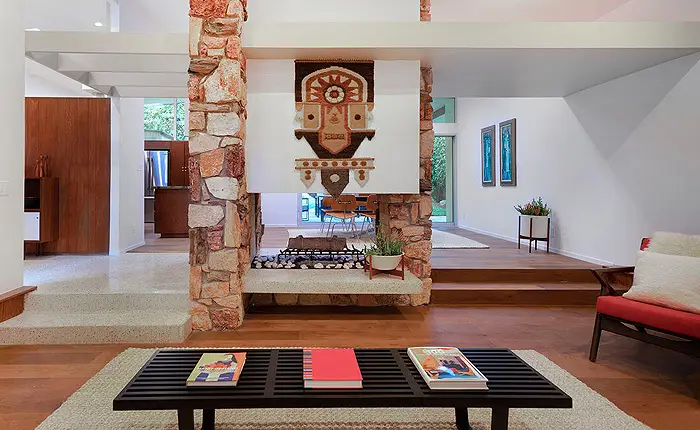
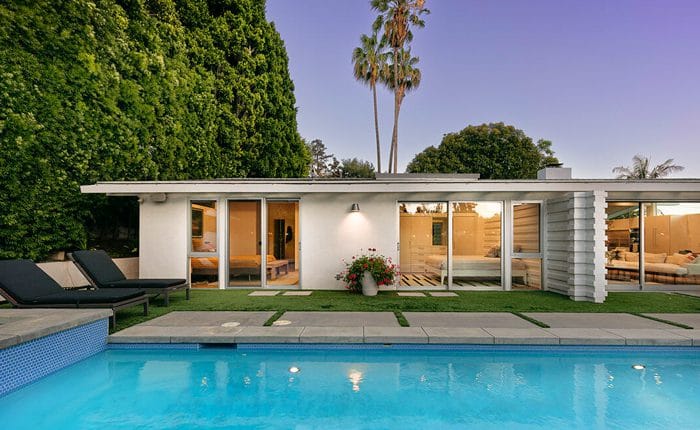
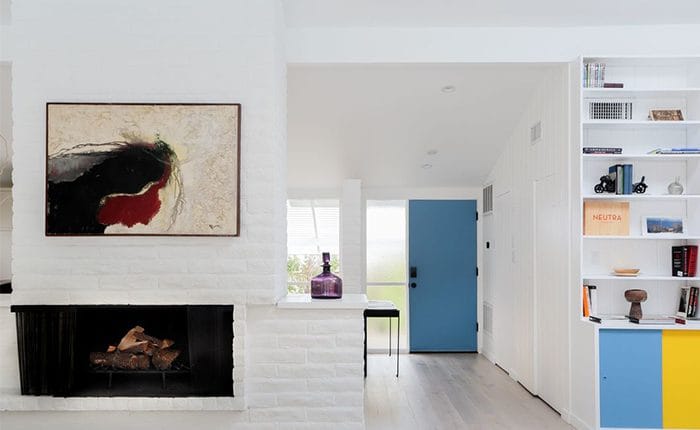
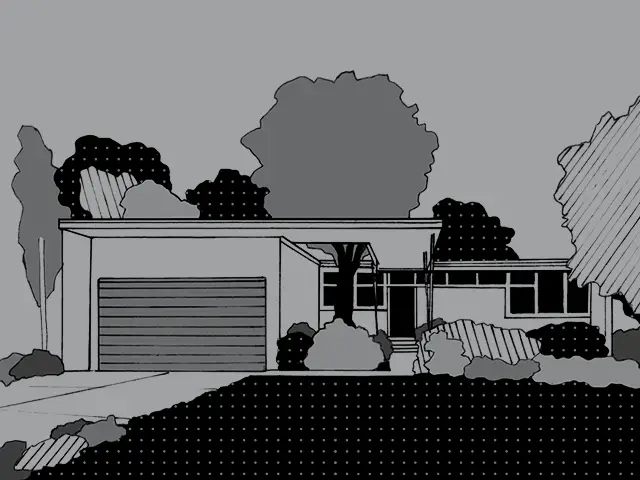
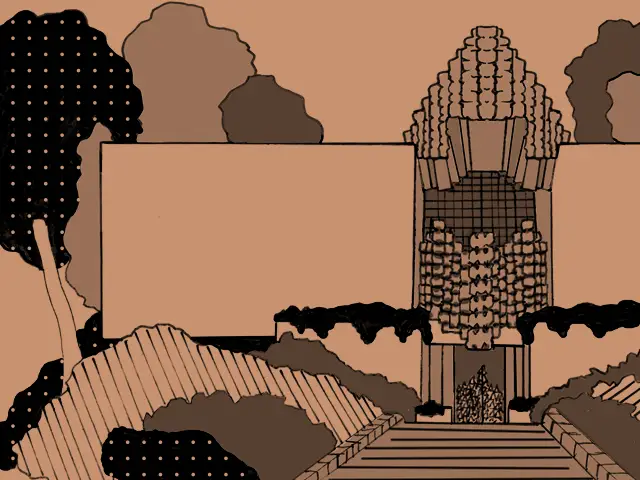
Clean lines and low-slung profiles define Fickett’s architectural language. Natural materials, wood, stone and glass are composed into spaces that feel both tailored and inviting. This double-sided fireplace becomes the focal point of this Fickett living room. His mid-century modern homes remain timeless expressions of clarity, light and relaxed sophistication.
How to Identify an Edward Fickett Property
With an estimated 60,000-plus homes to his name, Edward Fickett’s properties are spread across a wide area of Los Angeles County, but not all of them are formally documented or marketed as Fickett designs. Knowing how to identify one can be valuable for buyers and enthusiasts alike. The most reliable method is permit research. Los Angeles building department records often list the architect of record on original permits. If a home was built between the late 1940s and the 1980s and shows the design characteristics described above, a permit search can confirm or rule out Fickett’s involvement. Title records and original sales documents occasionally also reference the designer. Visual identification is also useful, though less definitive. The combination of low-pitched rooflines, clerestory windows, post-and-beam construction, open floor plans and careful indoor-outdoor integration creates a recognizable profile that sets Fickett homes apart from contemporary builder-grade construction and from the work of other modernist architects of the era. Neighborhood context also offers clues. Certain tracts and subdivisions in the San Fernando Valley, Westside and other parts of Los Angeles were developed entirely or primarily with Fickett designs. If neighboring homes share the same design DNA, there’s a reasonable chance the home in question is part of a Fickett-designed community. Our neighborhood explorer can help you orient yourself within the Los Angeles architectural landscape.Edward Fickett Notable Projects and Houses
Residential Communities and Tract Developments
- Meadowlark Park — San Fernando Valley, Reseda, CA (1953). One of Fickett’s landmark tract developments, cited by the AIA and NAHB for design excellence. Features curved streets and cul-de-sacs typical of his master-planning approach.
- Rollingwood Estates — Palos Verdes, CA (1955). Hillside residential community demonstrating Fickett’s ability to design for challenging, “unbuildable” terrain while maintaining his modernist vocabulary.
- Sherwood Park — Hollywood Hills, Los Angeles, CA (1956). Research House prototype featured in the LA Times Home Magazine (1957–58); surviving example at 3624 Woodcliff Road, Sherman Oaks. One of two Research House models built as an accessible counterpart to the Case Study Houses.
- Hastings Ranch — Pasadena, CA (1940s–1950s). One of Fickett’s earliest master-planned communities for Coronet Homes, showcasing his curved-street, cul-de-sac planning philosophy for the postwar housing boom.
- Granda Hills Estates — San Fernando Valley, Granada Hills (1950s). Part of Fickett’s extensive San Fernando Valley output; it contributes to the concentration of Fickett homes that defines the Valley’s mid-century character.
- Grossmont Hills Development — San Diego County, La Mesa, CA (1960). Received an American Home Magazine Citation for Architectural Design. Homes located on La Suvida Drive and surrounding streets.
- Avco Community Developers Housing — San Diego County, La Mesa (1963). Part of Fickett’s broad engagement with planned residential communities throughout Southern California.
Landmark Custom Residences
- Jacobson House — Los Angeles, CA (1965). Los Angeles Historic-Cultural Monument No. 674, the first contemporary structure to receive Landmark Status from the City of Los Angeles. Located on the same hillside street as the Lovell Health House, overlooking Eastern Hollywood and Barnsdall Park. Commissioned by Dr. and Mrs. George Jacobson; embodies the full range of Fickett’s design hallmarks.
- Fickett Residence (Own Residence #1) — Beverly Hills, CA (1947). The first home Fickett designed for himself, an early demonstration of his emerging California Modern residential vocabulary.
- Fickett Residence (Own Residence #2) — Beverly Hills, CA (1973). Built by Robert Feldman. Fickett’s later personal residence, sold in 2000 and again in 2021.
- Celebrity Residences — Various Locations, Southern California. Throughout his career, Fickett designed private homes for celebrities and public figures including, Dick Clark, Steve Lawrence, Barbara Walters and Georgia Frontiere, earning him the “Architect to the Stars” designation.
- Nichols Canyon Colony Residences — Hollywood Hills, West Hollywood, CA (from 1959 Multiple custom post-and-beam homes in this exclusive enclave. Well-documented surviving examples retain original Fickett design DNA: clerestory windows, open plans and indoor-outdoor flow.
Civic, Institutional and Government
- Los Angeles City Hall Tower Renovation — Downtown, Los Angeles, CA (until his death in 1999). Historic and seismic renovation of the City Hall Tower (Phase I). One of Fickett’s most significant civic preservation projects, balancing historical integrity with structural safety requirements.
- West Hollywood Park Master Plan — West Hollywood, CA (1958-60). Multi-structure “atomic modern” park village with Olympic-sized pool and modernist library featuring a full wall of glass, one of the first libraries designed with this feature. Won multiple awards. Received an LA Conservancy Preservation Award for renovation of adjacent LA Fire Department Station No. 30 (originally built 1913).
- Los Angeles Police Academy — Los Angeles, CA. Fickett designed facilities for the LAPD Academy, extending his practice into the architecture of law enforcement institutions.
- Nethercutt Antique Car Museum Extension — Sylmar, Los Angeles, CA. New extension to the Nethercutt Collection, one of the world’s premier antique automobile museums. Demonstrates Fickett’s range across cultural building types.
- African American Firefighters Museum — Los Angeles, CA. Conversion and renovation of LA Fire Station No. 30 (built 1913). Received an LA Conservancy Preservation Award, recognizing Fickett’s sensitive adaptive reuse work.
- Military Installations — Various Locations, Southern California. Edwards Air Force Base, Lancaster, CA – Naval Air Station, Los Alamitos, CA – Murphy Canyon Heights Naval Base, San Diego, CA – Naval housing at Ponte Vista, San Pedro, CA. Fickett’s Navy background directly informed his expertise in military facility design.
Commercial, Hospitality and Restaurants
- Port of Los Angeles Terminals — San Pedro, CA, Los Angeles, CA. Fickett master-planned and designed the Passenger and Cargo Terminals at the Port of Los Angeles. Featured in Arts and Architecture magazine (August 1963) and the German publication Baumeister (January 1964).
- Dodger Stadium Club and Concessions — Chavez Ravine, Los Angeles, CA. Fickett designed all concessions, executive suites, the clubhouse, restaurants and bars at Dodger Stadium, including the iconic color-coded parking scheme conceived in collaboration with Dodgers owner Walter O’Malley.
- Spago Restaurant — Sunset Strip, West Hollywood, CA. Fickett designed the original Spago, Wolfgang Puck’s celebrated flagship restaurant, one of the most culturally significant dining spaces in Los Angeles history.
- Bistro Gardens Restaurant — Beverly Hills, CA. A landmark Beverly Hills dining destination that Fickett designed and that became one of the city’s most celebrated restaurants of the era.
- Additional Restaurants — Los Angeles, CA and Inglewood, CA. Scandia Restaurant, Los Angeles – Nick’s Fish Market Restaurant, Los Angeles – Olie Hammond’s Restaurant, Los Angeles – Hollywood Park Racetrack Restaurant and Clubhouse, Inglewood (demolished).
- Tower Records — Sunset Strip, West Hollywood, CA. Fickett designed the original Tower Records building on the Sunset Strip, an iconic presence on the boulevard for decades.
- La Jolla Fashion Center — La Jolla, San Diego, CA. Retail commercial development demonstrating Fickett’s engagement with shopping and commercial design in coastal Southern California.
- La Costa Resort and Country Club — San Diego County, Carlsbad, CA. Major resort and country club development near San Diego. Published in San Diego & Point magazine (July 1966). Part of Fickett’s extensive work across the resort and hospitality sector.
- Mammoth Mountain Inn — Mammoth Lakes, CA. Fickett designed the Inn at Mammoth Mountain, extending his hospitality work into California’s Eastern Sierra resort region.
- Hotel Cabo San Lucas / Las Cruces Resort — Baja California Sur, Mexico. International hospitality projects show the geographic reach of Fickett’s practice beyond California into the Mexican resort market.