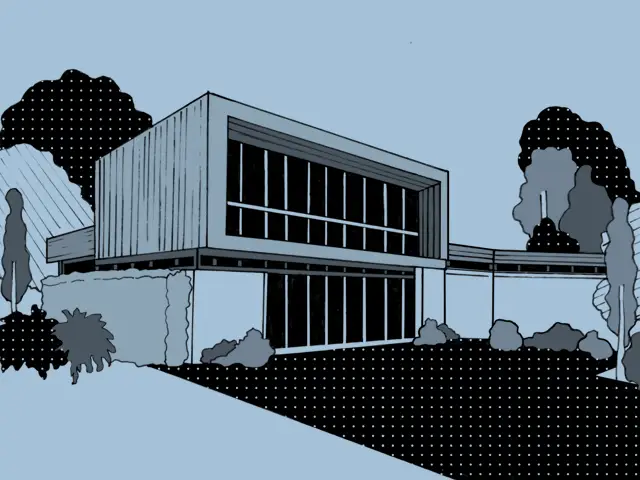
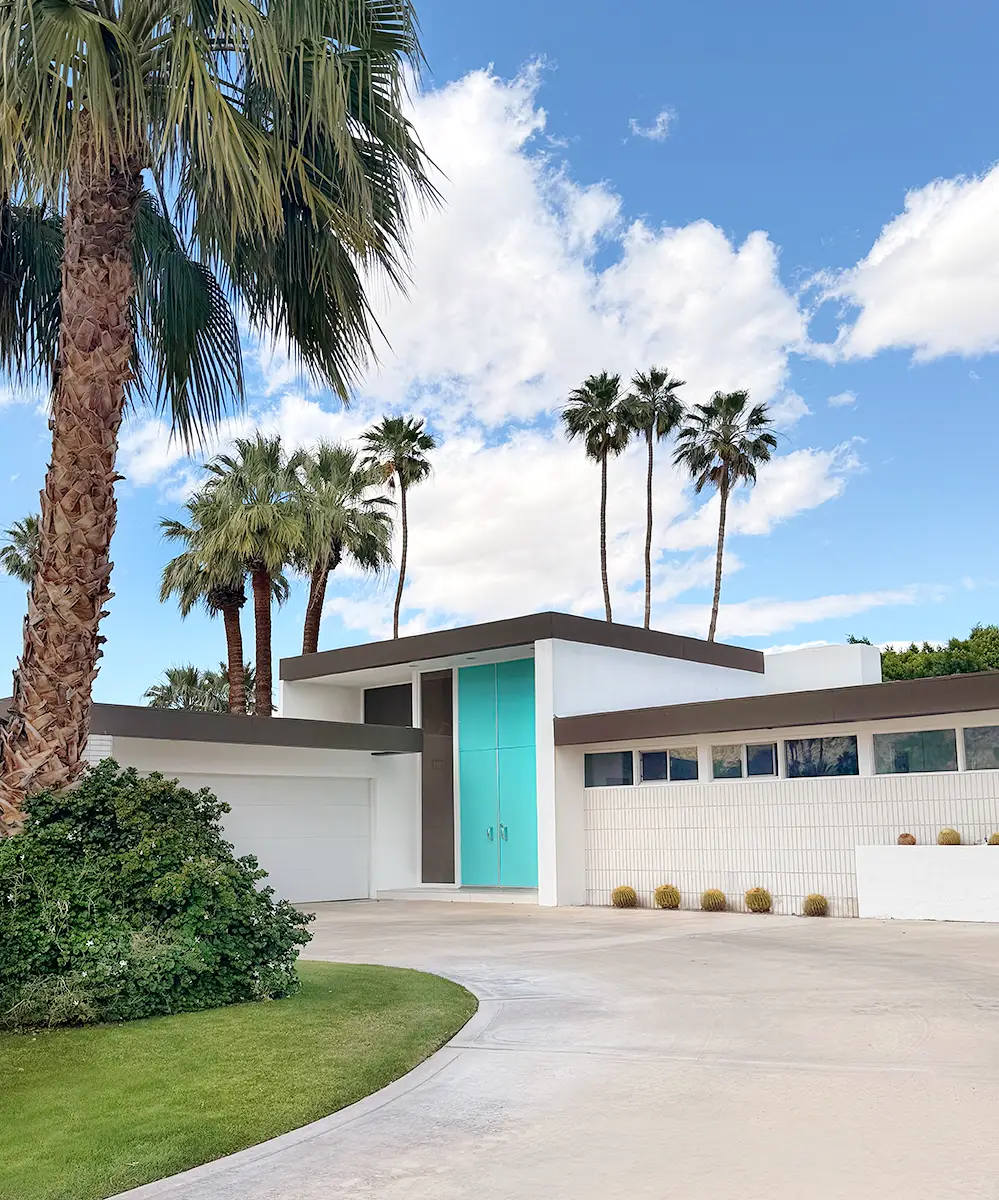
Craig Ellwood Architecture: The Visionary Who Defined Los Angeles Modernism
Craig Ellwood (1922–1992), born Jon Nelson Burke, was an American modernist architect based in Los Angeles, California, whose practice spanned the early 1950s through 1977. Self-taught and never formally licensed, Ellwood built his reputation through a disciplined fusion of Miesian structural formalism and California indoor-outdoor living. He is best known for designing three houses for the Case Study House Program, Case Study House #16 (Salzman House, Bel Air, 1953), Case Study House #17 (Hoffman House, Beverly Hills, 1956) and Case Study House #18 (Fields House, Beverly Hills, 1958) and for the steel-truss Art Center College of Design Hillside Campus in Pasadena (1976). His residential work, concentrated in Los Angeles, Malibu and Pasadena, is defined by slim black steel frames, floor-to-ceiling glazing, flat rooflines and natural wood infill. Ellwood retired to Italy in 1977 to pursue painting.
Craig Ellwood’s architecture represents one of the most elegant and disciplined expressions of California modernism ever realized. A self-taught designer who rose from construction estimator to internationally celebrated architect, Ellwood produced a body of work that fused steel-frame precision with serene, open-plan living, a fusion that still resonates deeply with architects and homeowners today. His buildings do not shout for attention; they earn it through proportion, material honesty and an almost meditative sense of calm.
Craig Ellwood – Architect Profile
- Born: April 22, 1922 — Clarendon, Texas (born Jon Nelson Burke)
- Died: May 30, 1992 — Pergine Valdarno, Italy (age 70)
- Style: California Modernism, International Style, Mid-Century Modern, Steel-Frame Minimalism
- Known For: Fusing the structural formalism of Mies van der Rohe with the informal indoor-outdoor spirit of California modernism. Signature use of slim black steel frames, floor-to-ceiling glazing and natural wood infill panels. Three Case Study Houses for Arts & Architecture magazine. Self-taught designer who became one of the most recognized modernist architects in postwar Los Angeles.
- Key Project Locations: Bel Air, Beverly Hills, Brentwood, Malibu, Pacific Palisades, Pasadena, West Hollywood, Los Angeles
- Notable Work: Case Study House #16 – Salzman House (1951–53), Case Study House #17 – Hoffman House (1954–56), Case Study House #18 – Fields House (1955–58), Hunt House (1955–57), Rosen House (1961–62), Kubly House (1965), Art Center College of Design – Hillside Campus (1976)
From the eucalyptus-lined hillsides of Los Angeles to the sunny campuses of Southern California institutions, Ellwood left an indelible mark on the built environment of the region. His contributions to the Case Study House Program alone would have secured his legacy, but he went on to design corporate headquarters, art centers and private residences that demonstrate a rare consistency of vision. If you are drawn to architecturally significant properties in Los Angeles, Ellwood’s work is essential. Explore our curated selection of architectural homes for sale to see how this legacy endures in today’s market.
In This Article
- Who Was Craig Ellwood?
- The Case Study House Program and Ellwood’s Role
- Signature Buildings: Ellwood’s Masterworks in Los Angeles
- The Design Philosophy Behind Craig Ellwood Architecture
- Steel, Glass, and the California Dream
- Ellwood’s Influence on Mid-Century Modern Design
- Acquiring an Ellwood Home: What Buyers Should Know
- The Enduring Relevance of Craig Ellwood Today
- FAQs About Craig Ellwood Architecture
Who Was Craig Ellwood?
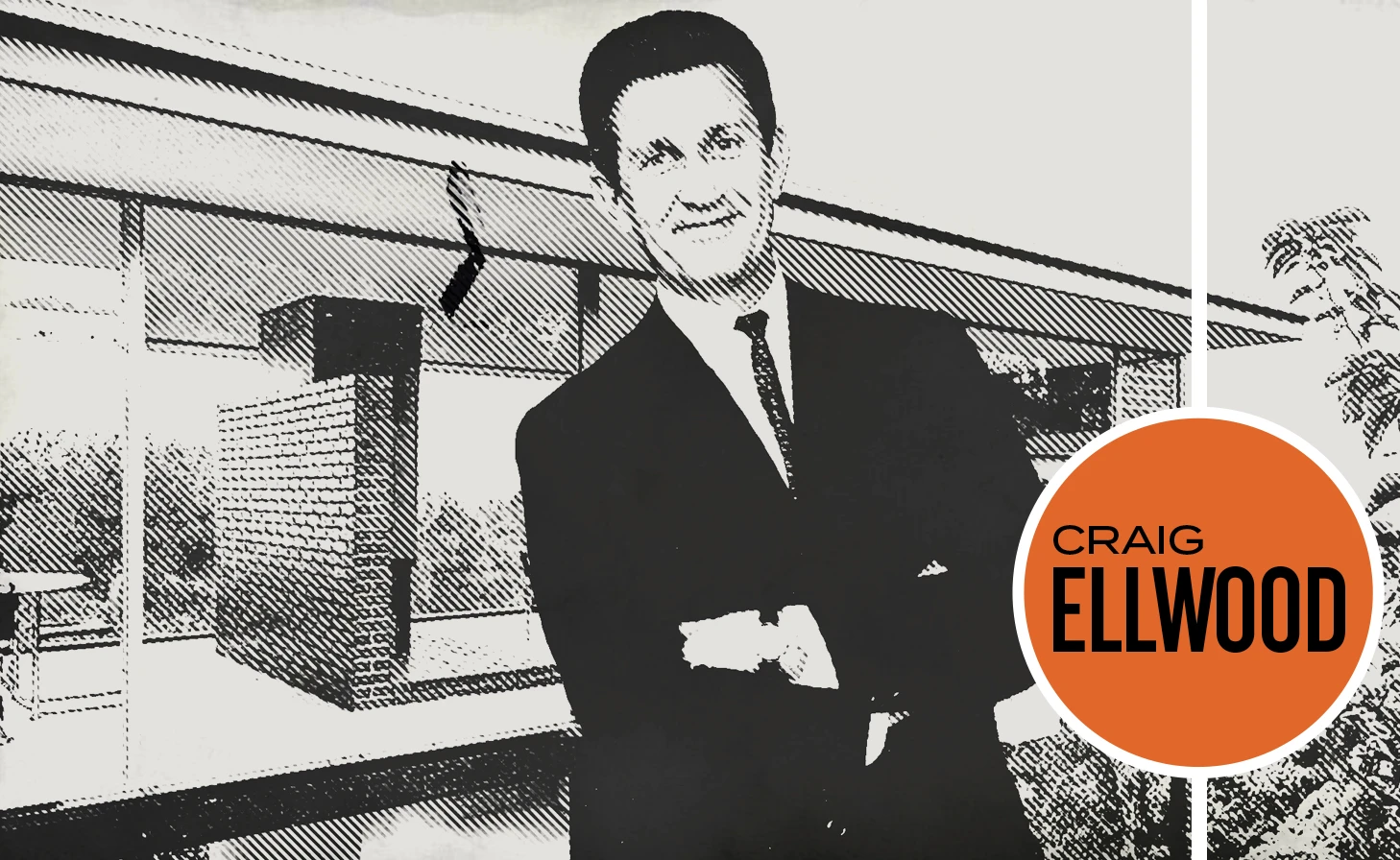
In Craig Ellwood’s architecture, modernism is distilled to its most elegant essentials. Steel frames, disciplined grids and expanses of glass create homes that feel both precise and ethereal. His work embodies a refined West Coast interpretation of international modernism, reshaping the idea of California living.
Craig Ellwood was born Jon Nelson Burke in 1922 in Clarendon, Texas and spent much of his early life moving across the American South before eventually landing in Los Angeles. Unlike most architects of his era, Ellwood never attended architecture school. He was entirely self-taught, absorbing technical knowledge while working as a cost estimator for a construction firm in the late 1940s. What he lacked in formal credentials, he more than compensated for with an obsessive study of modernist principles, particularly the work of Ludwig Mies van der Rohe.
Ellwood opened his own practice in 1951 and quickly caught the attention of Arts & Architecture magazine editor John Entenza, who invited him to participate in the landmark Case Study House Program. From that point forward, his career accelerated rapidly. He cultivated a persona as much as a practice, presenting himself as a debonair intellectual who moved easily between the worlds of architecture, art and Hollywood. By the 1960s, he was one of the most recognized modernist architects in California, with commissions ranging from hillside residences to institutional buildings.
In 1977, Ellwood made a dramatic departure from architecture, relocating to Italy and largely abandoning his practice to pursue painting. This abrupt exit added an air of mystery to an already compelling biography. He died in Pergine Valdarno, Italy, in 1992, leaving behind a relatively small but extraordinarily refined body of work that continues to attract serious scholarly and market attention.
The Case Study House Program and Ellwood’s Role
The Case Study House Program, launched by Arts & Architecture magazine in 1945, was one of the most ambitious architectural experiments in American history. The program commissioned leading modernist architects to design affordable, innovative homes that could serve as models for postwar residential construction. The participating architects read like a who’s who of California modernism: Richard Neutra, Charles and Ray Eames, Pierre Koenig and Craig Ellwood, among others.
Ellwood contributed three houses to the program: Case Study House #16 (1953) in the Bel Air area, Case Study House #17 (1956) in Beverly Hills and Case Study House #18 (1958), also known as the Fields House, in Beverly Hills. Each represented a progression in his thinking about how steel-frame construction could be used to create light, airy and livable residential spaces. His Case Study homes were not just demonstrations of construction technique; they were fully resolved visions of a new California lifestyle.
Case Study House #18 is often cited as Ellwood’s finest contribution to the program. Its plan organizes a series of pavilion-like rooms around an outdoor courtyard, dissolving the boundary between interior and exterior with characteristic Ellwood elegance. The house was widely published and helped cement his international reputation. For those interested in the broader context of this era, ArchDaily’s archives on the Case Study House Program provide an excellent overview of the participating architects and their contributions.
Signature Buildings: Ellwood’s Masterworks in Los Angeles
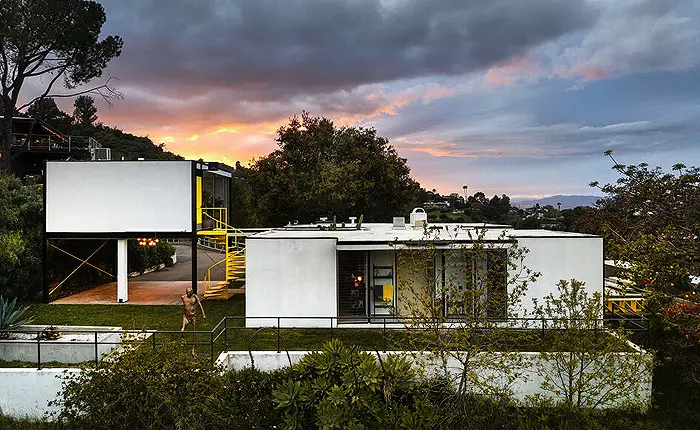
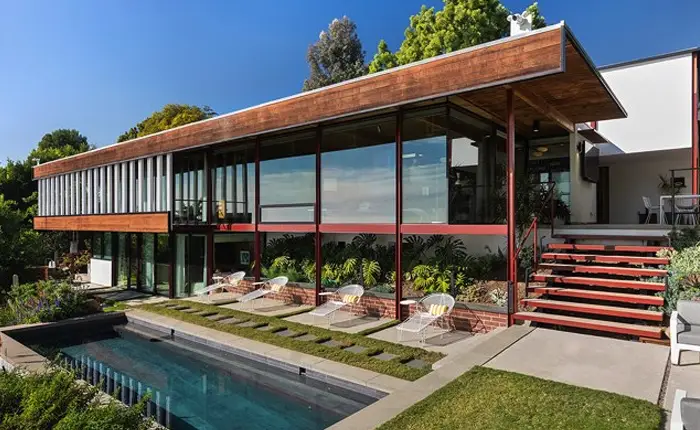
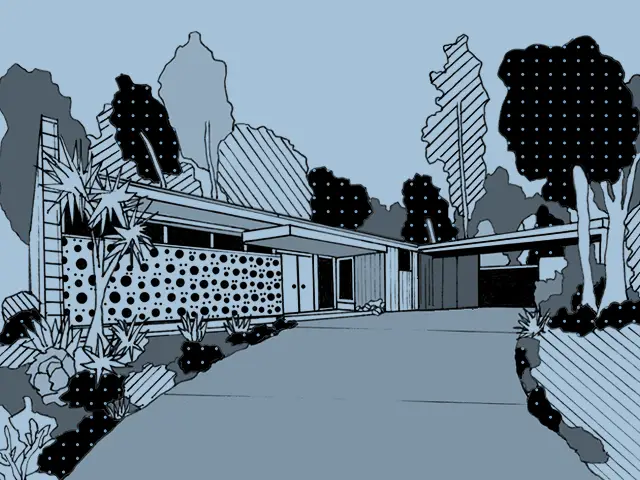
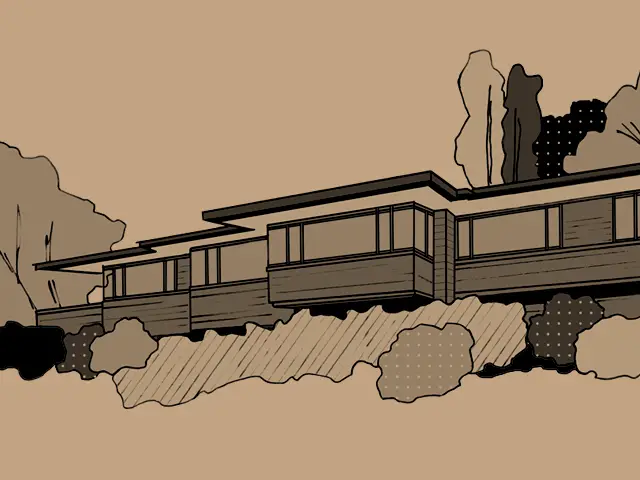
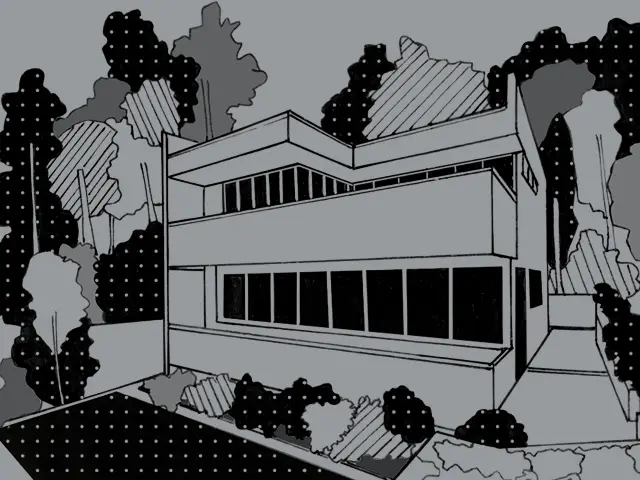
Craig Ellwood approached residential architecture with the clarity of an engineer and the restraint of a minimalist. Structure is expressed honestly, with slender steel members defining luminous, open interiors. The result is architecture that feels rigorous, balanced and quietly powerful, exemplified in the pleasing aesthetic design of the Kuderna House.
Beyond the Case Study Houses, Ellwood’s portfolio in Los Angeles spans a remarkable range of building types and scales. The Hale House (1951) in Beverly Hills is considered one of his earliest mature residential works, demonstrating even at that early stage the restraint and structural clarity that would define his career. The Hunt House (1955-57) in Malibu takes those principles to a dramatic clifftop site, hovering above the Pacific with a poise that makes the architecture feel inevitable rather than imposed.
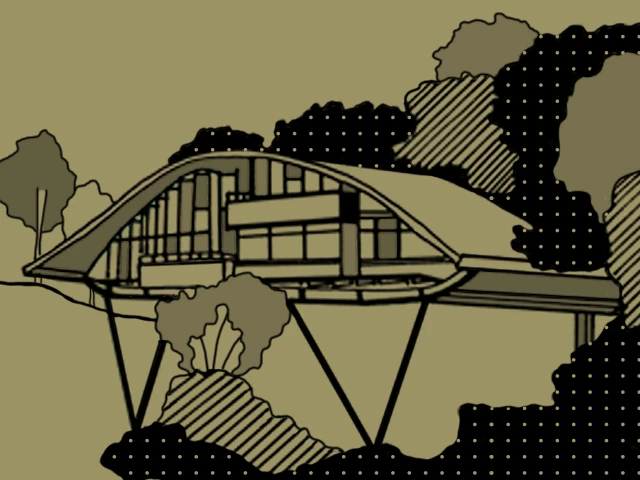
Perhaps Ellwood’s most celebrated non-residential project is the Art Center College of Design in Pasadena (1976), completed near the end of his American career. The building bridges a ravine on a series of steel trusses, creating a dramatic suspended form that is both functionally clever and visually unforgettable. It remains one of the most distinctive institutional buildings in Southern California and is still in use today.
Other notable Los Angeles-area projects include the Rosen House (1961-62) in Brentwood and the Daphne Residence (1953) in Hillsborough, California, which, while outside Los Angeles proper, shows his architectural sensibility. Collectively, these buildings trace an architectural career of remarkable consistency and ambition. Browse our mid-century modern homes for sale in Los Angeles to discover properties inspired by this extraordinary period of design.
The Design Philosophy Behind Craig Ellwood Architecture
To appreciate Craig Ellwood’s architecture is to understand a specific and disciplined set of convictions about how buildings should be made. Ellwood was, above all, a structuralist. He believed that the expression of a building’s structural system was not merely an aesthetic choice but an ethical obligation. Every beam, column and connection in an Ellwood building is visible, legible and carefully considered. There is no concealment, no applied ornament, no false modesty about how the building stands up.
This structural honesty was filtered through a deep appreciation for proportion. Ellwood studied Mies van der Rohe extensively and absorbed the German master’s conviction that architecture achieves beauty through the perfection of its parts and their relationships. But where Mies could be austere to the point of severity, Ellwood introduced a warmth that felt authentically Californian. He used natural materials like wood and stone as infill within his steel frames, softening the industrial precision with organic texture.
The Indoor-Outdoor Connection
Perhaps the most distinctly Californian aspect of Ellwood’s philosophy was his commitment to dissolving the boundary between inside and outside. His houses open onto gardens, terraces and courtyards with a generosity that reflects the particular pleasures of Southern California living. Floor-to-ceiling glazing, sliding glass panels and seamless transitions between paved and planted surfaces create an experience of inhabitation that feels simultaneously sheltered and expansive. This quality is one of the reasons his homes remain deeply desirable today, as contemporary buyers continue to prize indoor-outdoor living above almost every other residential amenity in Los Angeles.
Steel, Glass and the California Dream
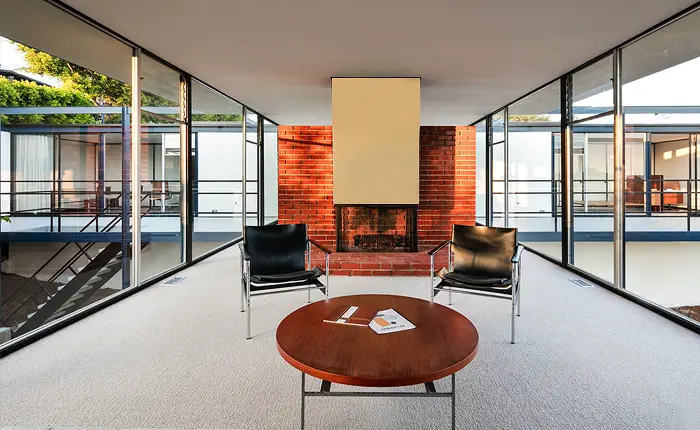
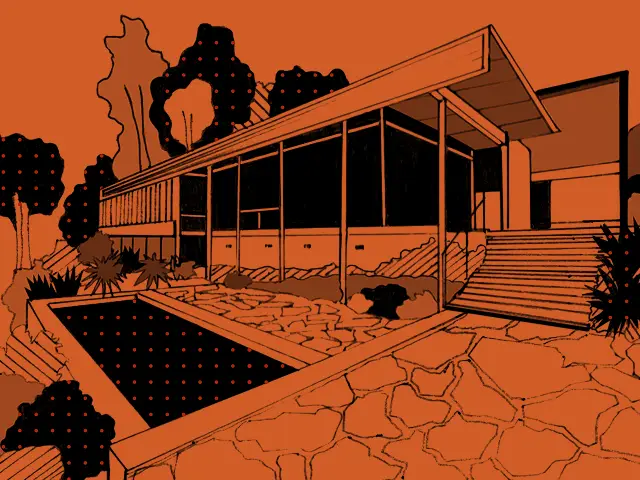
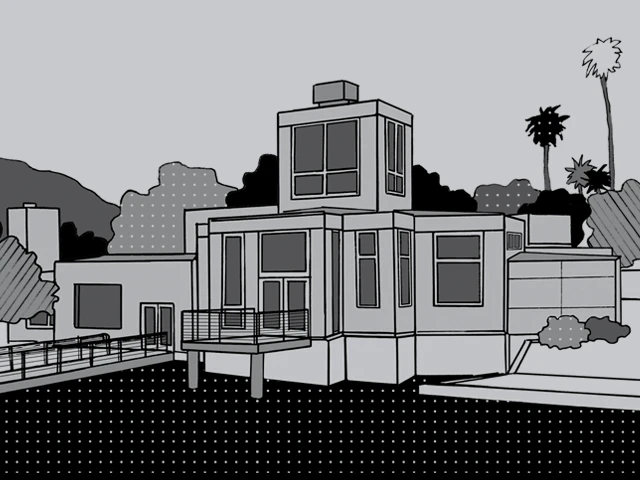
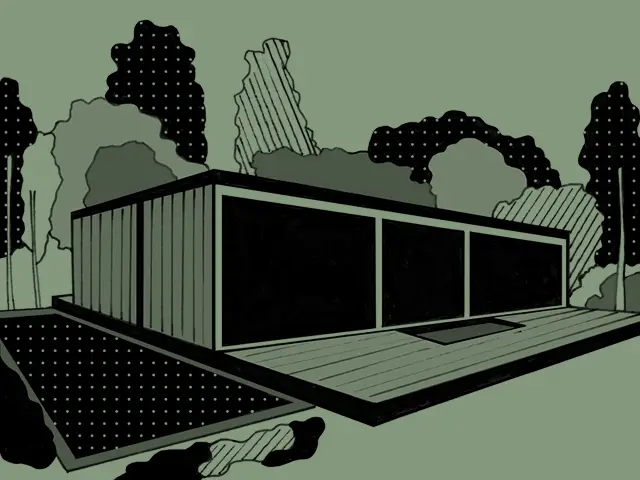
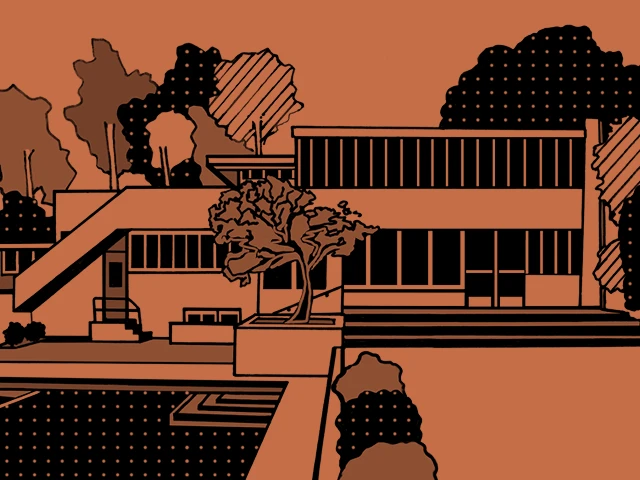
At the Smith House, Ellwood’s disciplined steel-and-glass vocabulary reaches a lyrical clarity. Slender structural lines frame the surrounding landscape like a living artwork. The home stands as a bold expression of modern precision and California light.
Ellwood’s choice of steel as his primary structural material was both pragmatic and ideological. In postwar California, steel was readily available, dimensionally precise and could be fabricated off-site and assembled quickly on a hillside lot or a flat suburban parcel. It also aligned perfectly with Ellwood’s conviction that architecture should express the technology of its time rather than disguise it behind historical pastiche.
His steel frames are characteristically slim and elegant. Rather than the heavy industrial sections associated with commercial construction, Ellwood specified light, wide-flange sections that give his buildings a delicacy entirely at odds with the material’s industrial origins. The frames are typically painted a dark color, most often black, which creates a strong graphic contrast with the lighter infill panels of glass, plaster, or wood. This black-and-white palette, sometimes enriched with natural wood tones, became a recognizable signature of his work.
Glass in Ellwood’s buildings does more than admit light; it creates continuity between the constructed and the natural. In his hillside houses, the glazed walls frame views of the surrounding landscape like living paintings, changing with the season, the time of day and the weather. In his flat-site houses, glass brings the garden into the living spaces, blurring the distinction between room and courtyard. This relationship between architecture and landscape was central to the California modernist project and Ellwood pursued it with particular consistency and refinement. Discover more about the architectural home styles that define Southern California on our home styles guide.
Ellwood’s Influence on Mid-Century Modern Design
The influence of Craig Ellwood on mid-century modern design in Los Angeles and beyond is difficult to overstate. His work demonstrated that the principles of European modernism could be adapted to the specific conditions of California life without losing their intellectual rigor. The result was an architecture that was simultaneously cosmopolitan and local, universal in its structural logic yet deeply rooted in the pleasures of the Southern California climate and landscape.
Architects who came after Ellwood consistently cite his work as a touchstone. His attention to the detail of connections, the rhythm of structural bays and the relationship between built form and planted landscape established standards of refinement that raised the bar for residential modernism across the region. Contemporary architects working in the modernist tradition frequently reference Ellwood’s Case Study Houses when discussing the origins of their own design sensibility.
Beyond architecture proper, Ellwood’s work has influenced product, furniture and interior design in ways that are harder to trace but no less real. The clarity of his structural logic, the precision of his detailing and the serenity of his interiors have provided a visual vocabulary for a certain kind of aspirational California living that continues to appear in shelter and fashion magazines, design blogs and real estate listings. His buildings have been widely photographed and published, ensuring that his visual language has permeated design culture far beyond the community of architects who know his name. For deeper research into his contemporaries and collaborators, Dezeen’s architecture section regularly publishes profiles of mid-century modern masters and their lasting influence.
Acquiring an Ellwood Home: What Buyers Should Know
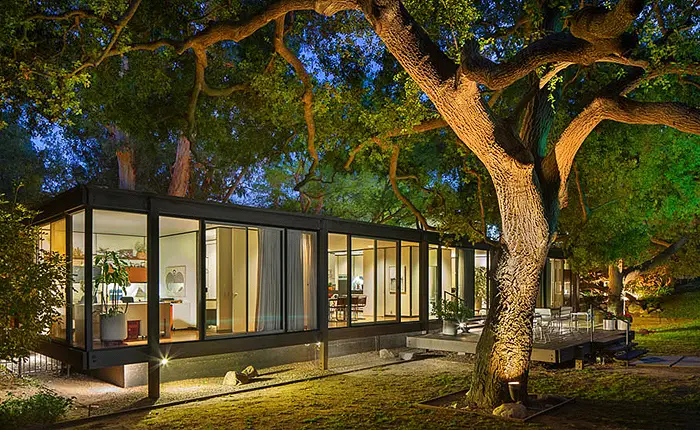
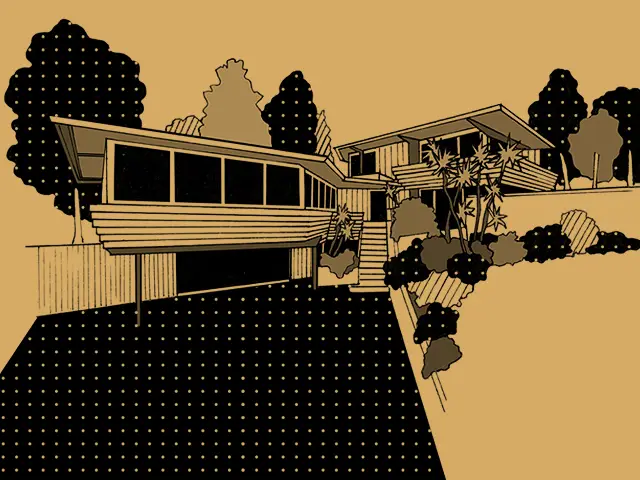
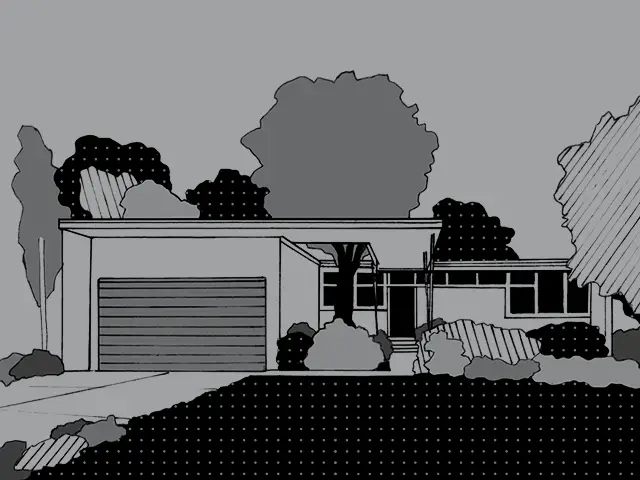
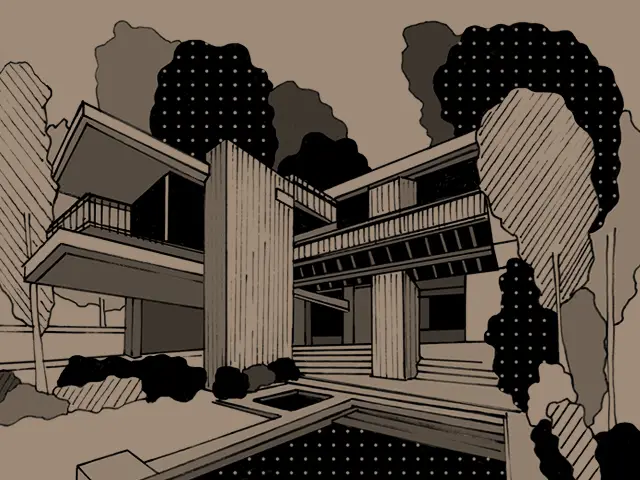
With meticulous proportion and a devotion to structure, Ellwood elevated the modern house into a study of rhythm and light. Steel columns march in measured intervals while glass dissolves the boundary between room and landscape as seen in his design for the Kubly House. Rumor has it that Ellwood designed this house on a napkin at lunch. His homes feel as calm and exacting, like a perfectly composed line drawing.
Authentic Craig Ellwood homes are rare and when they come to market, they attract significant attention from collectors, architects, design professionals and buyers who understand the value of architectural provenance. Because Ellwood’s output was relatively small and his buildings are concentrated in Los Angeles and the surrounding region, acquiring one represents a genuine opportunity to own a piece of architectural history.
Prospective buyers should understand that Ellwood homes require a particular kind of stewardship. The steel frames, while durable, require regular maintenance and expert attention when repairs are needed. The large glazed surfaces that define the aesthetic also create specific considerations around energy performance, which can be addressed with modern glazing technologies that preserve the visual character of the originals. Working with contractors experienced in modernist restoration is strongly advisable and buyers should budget for this expertise from the outset.
Alterations and additions raise additional considerations. Many Ellwood homes have been modified over the decades and the degree to which those modifications are sympathetic to the original design significantly affects both the experience of living in the house and its value in the market for architecturally significant properties. An architecturally focused real estate professional can help buyers assess a property’s integrity and understand how existing modifications affect its standing within Ellwood’s body of work. Our team at Beyond Shelter specializes in exactly this kind of nuanced assessment. Visit our real estate team page to learn more about our expertise in architecturally significant properties.
The Enduring Relevance of Craig Ellwood Today
In an era when architectural fashion moves quickly and the definition of contemporary style is constantly renegotiated, Craig Ellwood’s work holds its ground with remarkable confidence. His buildings look as fresh and purposeful today as they did when they were first published in the pages of Arts & Architecture. That durability is not an accident; it is the result of design decisions rooted in structural logic, material honesty and a deep respect for the pleasures of daily life.
The market for Ellwood homes has strengthened considerably over the past two decades as appreciation for mid-century modern architecture has moved from niche enthusiasm to mainstream recognition. Buyers who acquired Ellwood properties in the 1990s and early 2000s have seen substantial appreciation and the pool of buyers for truly authentic examples continues to grow as awareness of the period deepens. Ellwood’s homes occupy a prestigious position in this market, alongside the work of Richard Neutra, Pierre Koenig and Raphael Soriano, as the most coveted residential buildings of the California modernist era.
For anyone drawn to architecturally significant living in Los Angeles, Craig Ellwood’s work represents a compelling and enduring standard. His buildings offer not just architectural prestige but a genuinely pleasurable way of inhabiting space, one defined by light, openness, precision and a profound attentiveness to the Southern California landscape. Whether you are a first-time buyer exploring the modernist tradition or a seasoned collector adding to an architectural portfolio, an Ellwood home is a rare and rewarding find. Explore the remarkable neighborhoods where these homes are found on our Los Angeles neighborhoods guide.
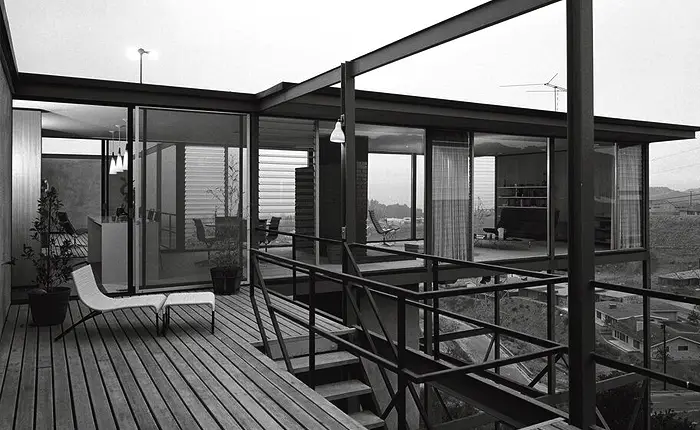
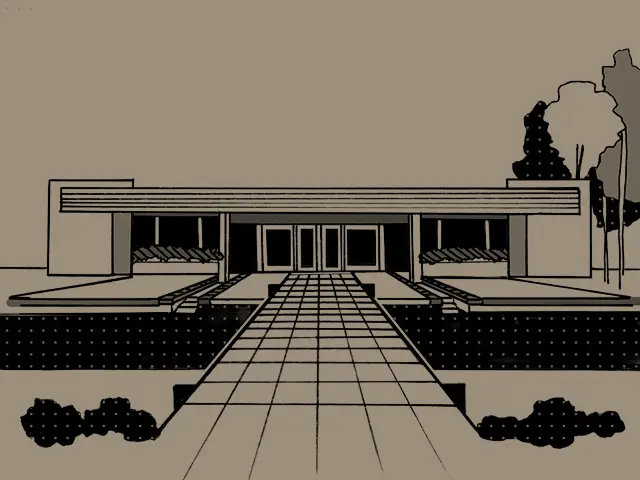
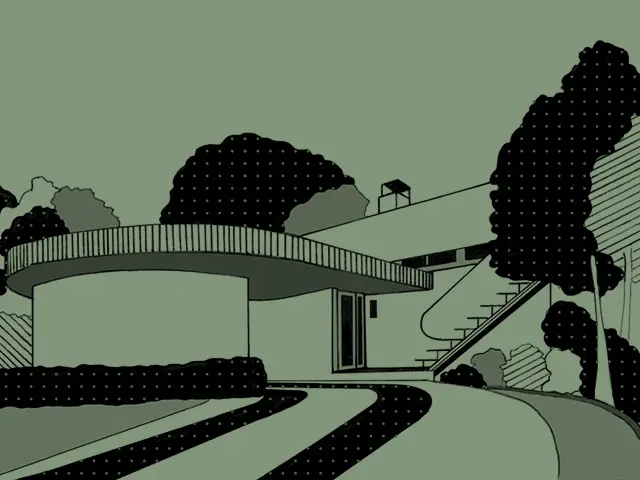
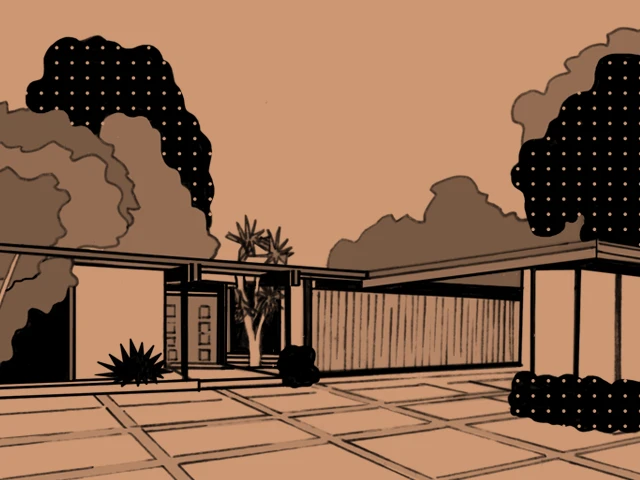
Craig Ellwood’s architecture reveals a profound respect for order and proportion. Every beam, joint and pane of glass is composed with deliberate restraint and intention. The result is a body of work that feels timeless, modernism refined into quiet perfection.
Craig Ellwood Notable Projects & Houses
Residential – Case Study Houses
Case Study House #16 – Salzman House
Bel Air, Los Angeles, CA (1951-53) – The first of Ellwood’s three Case Study Houses and the only one of the three that remains intact. A steel-frame pavilion on a hillside site in Bel Air with sweeping city views. Widely published and considered one of the most important postwar California homes. Listed for $5.4 million in 2025.
Case Study House #17 – Hoffman House
Beverly Hills, CA (1954-56) – Ellwood’s second contribution to the Case Study program. A refined steel-and-glass residence in Beverly Hills. Altered beyond recognition from its original form.
Case Study House #18 – Fields House
Beverly Hills, CA (1955-58) – Widely regarded as Ellwood’s finest Case Study contribution and a high point of mid-century modern residential design. Organized around an outdoor courtyard with pavilion-like rooms and seamless indoor-outdoor flow. Also altered significantly over the decades.
Residential – Los Angeles
Ellwood-Zimmerman House
Brentwood, Los Angeles, CA (1950) – One of Ellwood’s earliest residential commissions. A five-bedroom steel-and-glass home considered a significant early modernist work. Purchased by Chris Pratt and Katherine Schwarzenegger in 2023 for $12.5 million and demolished in 2024, drawing international attention from preservationists.
Johnson House
Laurel Canyon, Los Angeles, CA (1953) – A published steel-and-glass hillside residence described as the third of Ellwood’s recorded hillside homes. Notable for its transparency and horizontal composition among mature trees.
Smith House
Brentwood, Los Angeles, CA (1958) – A characteristic steel-and-glass residence demonstrating Ellwood’s mature residential vocabulary of slim black frames, natural infill materials, and strong indoor-outdoor connection.
Anderson House
Pacific Palisades, Los Angeles, CA (1954) – A formative project in which Ellwood began to fully explore the simplified box for living, moving away from earlier Wright and Le Corbusier influences toward his distinctive steel-frame minimalism.
Rosen House
Brentwood, Los Angeles, CA (1961-62) – Often cited as one of Ellwood’s most fully resolved residential designs, representing the peak refinement of his steel-frame approach. The project distills structure and detail to their primal function, with the details serving as the design itself.
Moore House
Los Angeles, CA (1964) – A world-class design employing clean modernist architecture with remarkable city and ocean views, considered a strong example of Ellwood’s work during his most productive period.
Residential – Pasadena
Kubly House
Pasadena, CA (1965) – Commissioned by Don and Sally Kubly. Don Kubly was a future President of ArtCenter College of Design, giving this house a direct connection to Ellwood’s most celebrated institutional commission. A transparent horizontal box elevated as a pavilion among massive gum and oak trees. Considered a rare and exceptional example of an Ellwood residence outside Los Angeles proper.
Residential – Malibu and Beyond
Hunt House
Malibu, CA (1955) – One of Ellwood’s most celebrated residential works and among his best-known Malibu commissions. Sited dramatically on a clifftop above the Pacific, the house hovers with poise, making the architecture feel inevitable. A textbook example of how Bauhaus ideals combined art and industry through modest industrial materials to create beauty and joy for California living.
Bobertz House
San Diego, CA (commissioned 1953, completed 1955) – Ellwood’s notable project outside Los Angeles, demonstrating the reach of his residential practice. Lovingly restored to original condition in the early 2000s, including original landscaping.
Daphne House
Hillsborough, CA (1960-61) – A significant residential commission in Northern California, showing how Ellwood’s sensibility translated beyond Southern California to a different climate and setting.
Max Palevsky House
Palm Springs, CA (1968) – A late residential commission for the technology entrepreneur, demonstrating Ellwood’s ability to adapt his structural vocabulary to the desert environment of Palm Springs.
Harris House
Cincinnati, OH (commissioned 1971, completed 1972) – The last house designed by Ellwood’s office. Project architect James Tyler. Still owned by the original client family as of 2022, making it a rare documented Ellwood house in continuous original ownership.
Commercial and Institutional
Art Center College of Design – Hillside Campus
Pasadena, CA (published 1976) – Commissioned by Don and Sally Kubly. Don Kubly was a future President of ArtCenter College of Design, giving this house a direct connection to Ellwood’s most celebrated institutional commission. A transparent horizontal box elevated as a pavilion among massive gum and oak trees. Considered a rare and exceptional example of an Ellwood residence outside Los Angeles proper.
Rand Corporation Headquarters Master Plan
Santa Monica, CA – A significant corporate commission demonstrating Ellwood’s capacity for large-scale planning alongside his residential practice.
Scientific Data Systems Offices
El Segundo, CA and Pomona, CA (1966-69) – A series of corporate buildings for the technology company, illustrating the breadth of Ellwood’s commercial practice during the height of his firm’s output.
Xerox and IBM Offices
Various locations, Southern California (1960s-1970s) – A series of corporate buildings for the technology company, illustrating the breadth of Ellwood’s commercial practice during the height of his firm’s output.
Carson-Roberts Office Building
West Hollywood, CA (1958-60) – A commercial project completed during Ellwood’s most productive residential period, demonstrating his parallel ability to work in the commercial sector with equal refinement.
South Bay Bank
Los Angeles, CA (1956) – An early commercial commission showing Ellwood’s ability to apply his residential steel-frame vocabulary to a financial institution program.
Frequently Asked Questions About Craig Ellwood Architecture
Looking for a Craig Ellwood Home for Sale in Los Angeles?
Craig Ellwood’s legacy lives on in the homes and neighborhoods of Los Angeles and Beyond Shelter is here to help you find your place within it.
Our team combines deep architectural knowledge with real estate expertise to guide design-conscious buyers toward properties that reward both the eye and the investment. Whether you are searching for an original Ellwood home, a property in the modernist tradition, or simply a home with genuine architectural character, we offer the guidance you need to make a confident and informed decision.
Browse Architectural Homes: View additional architectural homes
Explore Mid-Century Modern Properties: Mid-century modern homes for sale
Service Areas: Los Angeles and Southern California
About Beyond Shelter
Beyond Shelter is a premier architecture and real estate firm serving Los Angeles and Southern California. With deep expertise in modernist architecture, historic preservation, and architectural history, we help clients discover, understand, and acquire architecturally significant properties. Our team combines architectural knowledge with real estate expertise to provide comprehensive guidance for design-conscious buyers, sellers, and architecture enthusiasts.