Rudolph Schindler Architecture: The Visionary Who Defined Modern Los Angeles
Rudolph Schindler – Architect Profile
- Born: September 10, 1887 — Vienna, Austria-Hungary
- Died: August 22, 1953 — Los Angeles, California (age 65)
- Education: Vienna Academy of Fine Arts (Akademie der bildenden Künste Wien), Technische Hochschule Wien (now TU Wien), degree in architecture (1911); Studied under Otto Wagner and Carl König
- Style: California Modernism, Space Architecture, Proto-Modernism, Organic Architecture, Expressionist Modernism
- Known For: Pioneering the indoor-outdoor living concept in American residential architecture; tilt-slab concrete construction; open-plan interiors; site-responsive hillside design; the Kings Road House (1922), one of the first truly modern houses in the United States
- Key Project Locations: Los Angeles, CA (West Hollywood, Silver Lake, Los Feliz, Hollywood Hills, Bel Air, Westside) – Newport Beach, CA – Catalina Island, CA – San Diego, CA
- Notable Work: Kings Road House – Schindler House, West Hollywood, CA (1922); Lovell Beach House, Newport Beach, CA (1926); How House, Silver Lake (1925); Wolfe House, Catalina Island, CA (1928); Tischler House, Bel Air (1950)
- Influences: Otto Wagner (Viennese Modernism), Adolf Loos, Frank Lloyd Wright (Organic Architecture), Spatial theories of Heinrich Wölfflin, Japanese domestic architecture and spatial sequencing
- Awards and Honors: Los Angeles Historic-Cultural Monument designation for the Kings Road House (No. 942, designated 2013); California Historical Landmark designation for the Kings Road House; National Register of Historic Places listing for the Kings Road House (listed 1971); Schindler’s work recognized by AIA Los Angeles and the Los Angeles Conservancy; posthumous critical rehabilitation through major retrospective exhibitions organized by the MAK (Museum für angewandte Kunst), Vienna, 1994; Schindler received limited formal recognition during his lifetime, his reputation was largely rehabilitated posthumously.
- Archive: Architecture and Design Collection, Art, Design & Architecture Museum, University of California, Santa Barbara (UCSB) – primary repository of Schindler drawings, correspondence and project records; MAK Center for Art and Architecture at the Schindler House, 835 N. Kings Road, West Hollywood, CA 90046
In This Article
- Who Was Rudolph Schindler?
- The Kings Road House: A Manifesto in Concrete
- Schindler’s Architectural Philosophy
- Iconic Schindler Buildings Across Los Angeles
- Schindler vs. Neutra: Two Visions of California Modernism
- The Schindler House Today: MAK Center for Art and Architecture
- Owning a Schindler Home: What Buyers Should Know
- Schindler’s Enduring Legacy in Los Angeles
- FAQs About Rudolph Schindler Architecture
Who Was Rudolph Schindler?
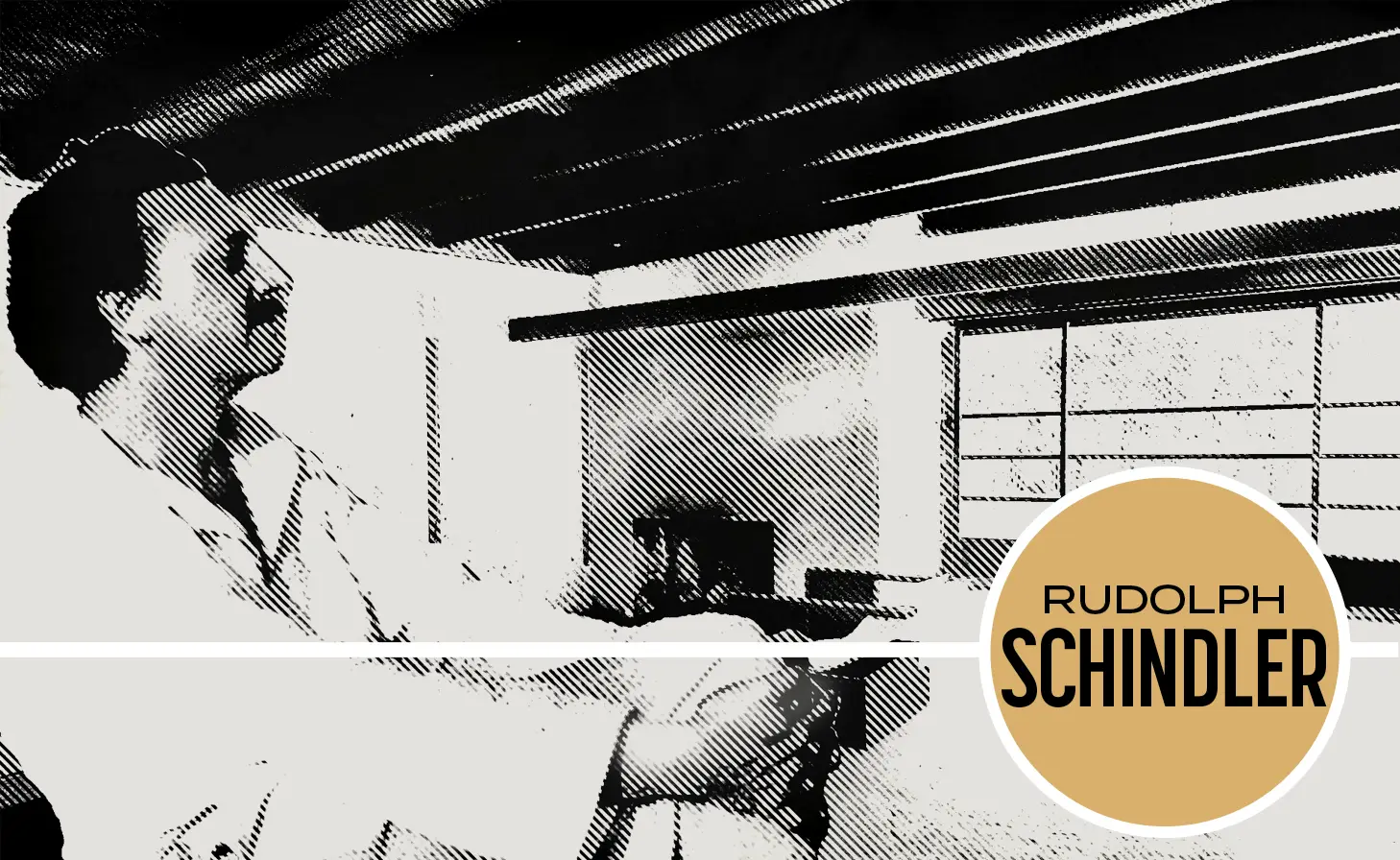
Rudolph M. Schindler brought a distinctly European intellectual tradition to the emerging modernist landscape of Los Angeles, producing buildings that remain radical in their conception to this day. Schindler rejected traditional notions of rooms in favor of fluid, interconnected spaces. His architecture unfolds through shifting planes, changes in level, and carefully framed light. The result is a spatial experience that feels dynamic, intimate and ahead of its time.
The Kings Road House: A Manifesto in Concrete
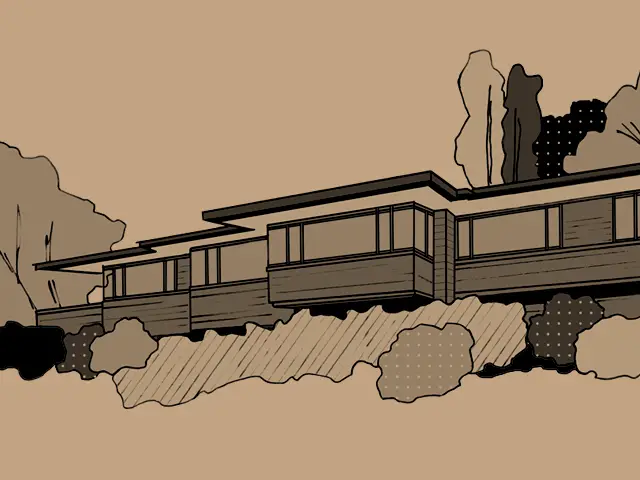
No discussion of Rudolph Schindler’s architecture is complete without a thorough examination of the Kings Road House in West Hollywood. Built in 1922 and designed as a cooperative live-work residence for two couples, Schindler and his wife, Pauline Gibling Schindler, shared the property with Clyde and Marian Chace, the engineer who had helped build it.The Kings Road House was unlike anything being built in America at the time. Schindler employed a construction technique he called “tilt-slab,” in which concrete panels were cast horizontally on the ground and then tilted up into their vertical positions. The result is a low, horizontal structure that reads almost as an extension of the earth itself. Redwood was used extensively for screens, sliding panels and roof elements, creating a dialogue between the raw concrete and the warmth of natural wood.The plan is genuinely revolutionary. Rather than organizing the house around a hierarchy of rooms, Schindler created a series of interlocking L-shaped studios, each opening directly onto a shared garden through sliding glass panels. Each resident had a private sleeping porch on the roof. The kitchen was communal. There were no traditional bedrooms in the conventional sense; instead, the interior and exterior were treated as a single flowing environment. Indoor fireplaces were placed in the garden as well as inside, making the outdoor spaces feel like true rooms.The Kings Road House anticipated ideas that would not become mainstream in American architecture for another two or three decades: open plans, the dissolution of the indoor-outdoor boundary, flexible and multi-use spaces and the rejection of stylistic ornament in favor of spatial experience. It remains one of the most important buildings in the history of American residential architecture. Schindler lived and worked there until his death in 1953.Schindler’s Architectural Philosophy
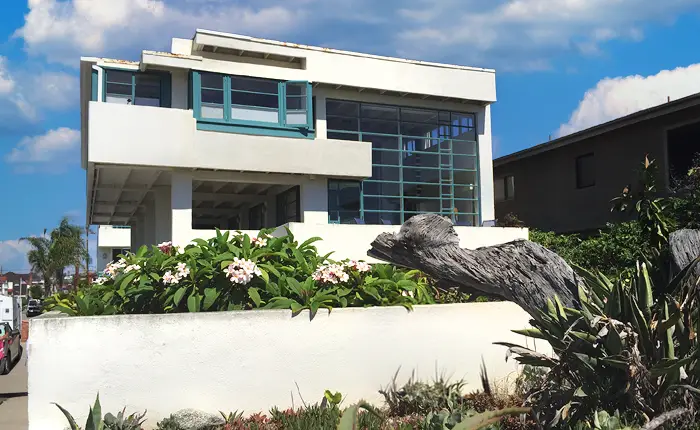
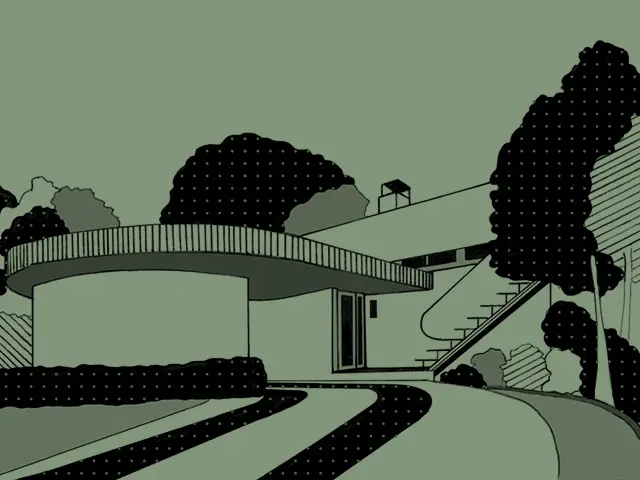
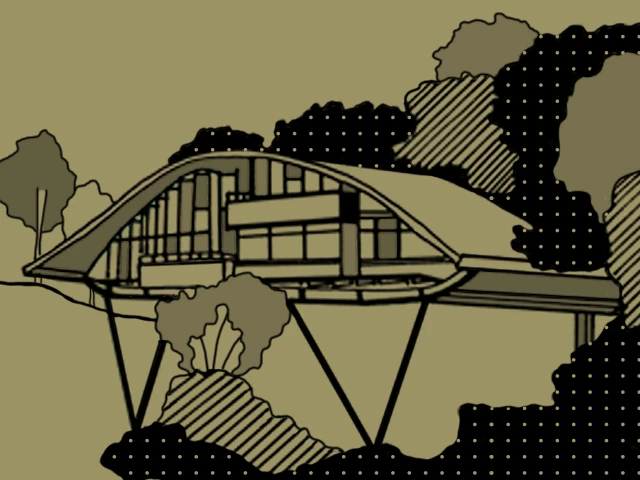
With the iconic Lovell Beach House in Newport Beach (1926), Schindler transformed structural necessity into sculptural form. Elevated concrete frames lift the living spaces above the sand, creating a rhythmic composition along the shoreline. The house stands as a bold expression of engineering and architectural imagination, a precursor to many iconic California modern homes. Photo: Kim Hayden Holt Studio
Iconic Schindler Buildings Across Los Angeles
Schindler’s output was prolific and geographically spread across greater Los Angeles. A handful of buildings stand out as essential landmarks of his career and of California modernism more broadly.The Lovell Beach House in Newport Beach (1926) is often cited as one of the first truly modern houses in the United States. Schindler suspended the main living floor above the beach on five concrete frames, lifting the communal spaces into the coastal breeze and views while creating sheltered space below. The structure is bold and inventive, demonstrating that Schindler was not simply making aesthetically pleasing buildings but was genuinely rethinking what a house could be at the structural and spatial levels.The How House in Silver Lake (1925) is a more intimate expression of his ideas, a compact hillside residence that uses a series of interlocking volumes and terraces to create a far larger sense of space than its footprint would suggest. The Wolfe House on Catalina Island (1928) is another significant early work, using a stepped section to respond to a dramatically sloped site. The Oliver House in Los Feliz (1933), the Bethlehem Baptist Church in South Los Angeles (1944) and the Tischler House in Bel Air (1950) all demonstrate the range and consistency of his thinking across different building types, budgets and decades.Schindler worked across Los Angeles neighborhoods, including Silver Lake, Los Feliz, Hollywood Hills, and West Hollywood, leaving a constellation of buildings that reward careful exploration. Many remain in private hands; others have been designated as historic. For those interested in exploring Los Angeles neighborhoods through the lens of architectural history, tracing Schindler’s work across the city is one of the most rewarding routes.Silver Lake: Schindler’s Creative Heartland
Silver Lake deserves special mention as the neighborhood most closely associated with Schindler’s practice. The hilly terrain, relatively affordable land and concentration of artists, intellectuals and progressive clients made it a natural home for experimental residential architecture. Several of his most inventive houses cluster here and the neighborhood’s architectural culture in the 1930s and 1940s was in large part shaped by his presence and influence.Schindler vs. Neutra: Two Visions of California Modernism
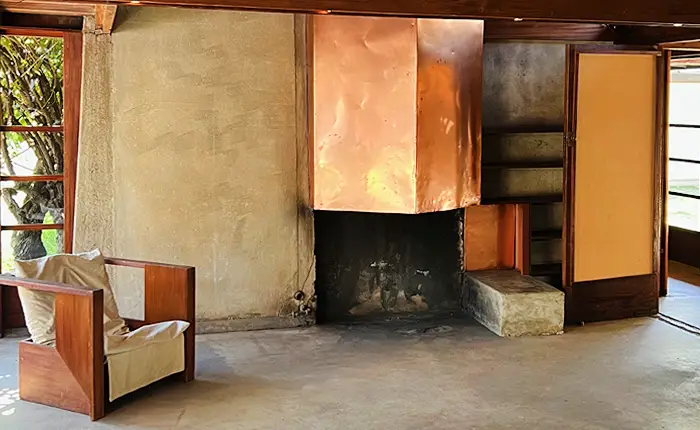
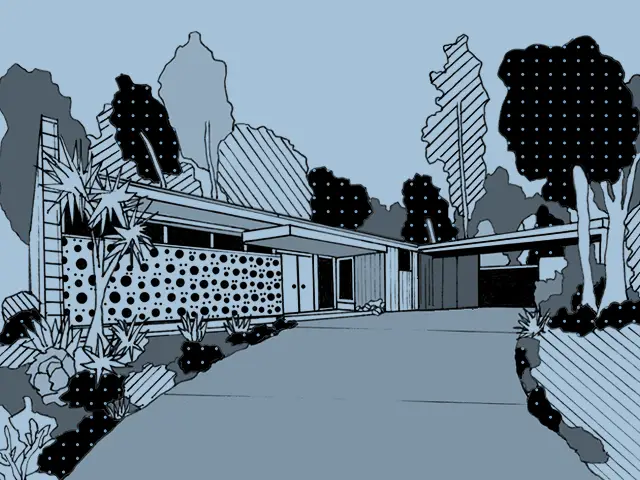
At the groundbreaking Kings Road House in West Hollywood, CA, Schindler redefined domestic architecture in Los Angeles. Built in 1922 as a live-work commune, the home features interlocking studios, filtered light, shared courtyards, minimal private space and the seamless transition between interior and exterior environments. It remains one of the most influential prototypes of modern living in California. Photo: Kim Hayden Holt Studio
The Schindler House Today: MAK Center for Art and Architecture
The Kings Road House has had a remarkable afterlife. After Schindler’s death in 1953, the house remained in the Schindler family until June 1980, when the Friends of the Schindler House (FoSH) acquired it. On August 10, 1994, FoSH partnered with the Museum of Applied Arts Vienna to create the nonprofit MAK Center for Art and Architecture, with FoSH retaining ownership while the MAK Center operates the building as both a historic site and a living cultural venue. It is one of the few Schindler buildings regularly open to the public.The MAK Center hosts exhibitions, residencies and public programs that connect Schindler’s legacy to contemporary architectural discourse. The building has been carefully restored and maintained, though the restoration philosophy has been thoughtfully calibrated to preserve the sense of a working, lived-in environment rather than creating a museum-static facsimile. Visitors can walk through the studios, explore the gardens and experience firsthand the spatial ideas that Schindler embedded in concrete and redwood a century ago.The MAK Center also manages two other Schindler-designed properties in Los Angeles: the Mackey Apartments (1939) on South Cochran Avenue, which houses artist residencies and the Fitzpatrick-Leland House (1936) in the Hollywood Hills. Together, these three sites constitute a remarkable resource for anyone seeking to understand Schindler’s work in depth. The MAK Center website provides current hours, events and admission information.Owning a Schindler Home: What Buyers Should Know
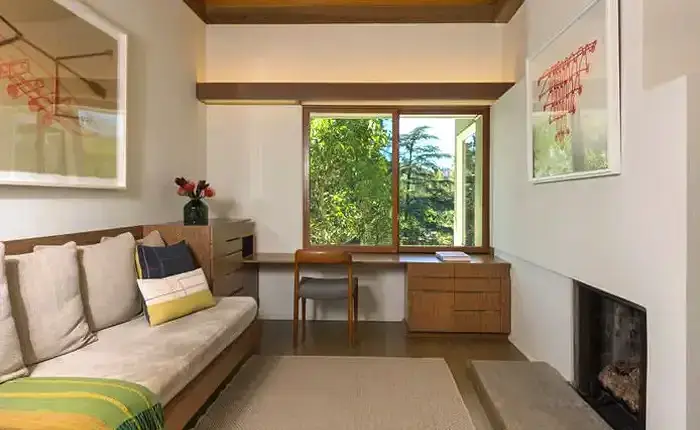
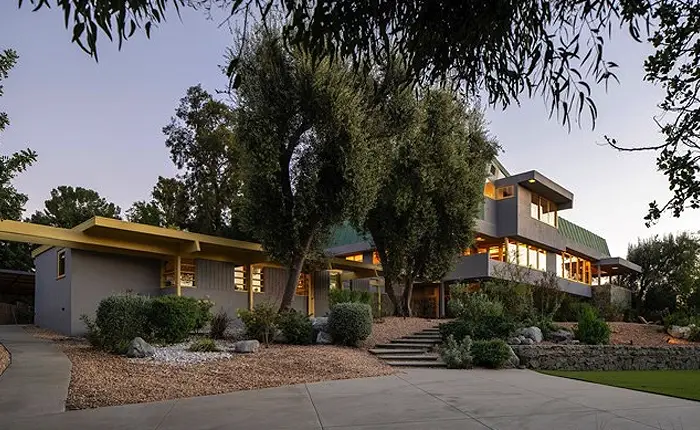
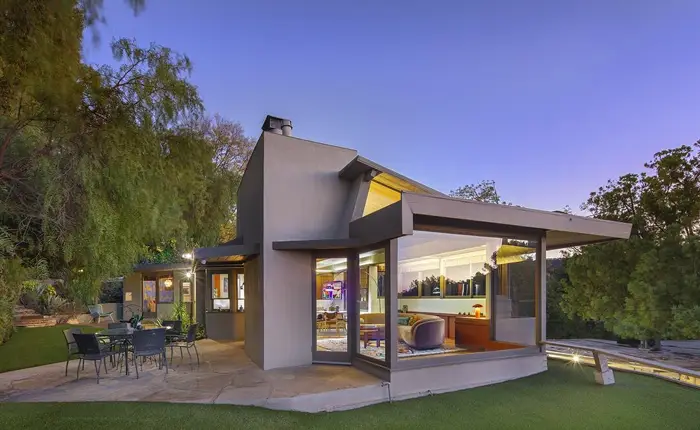
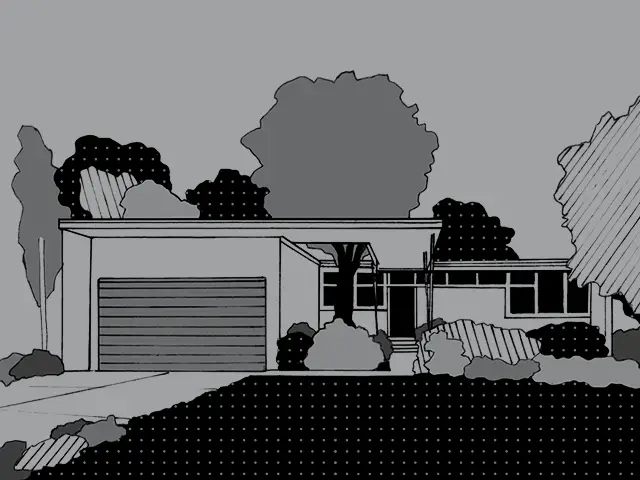
At the Goodwin House, Rudolph Schindler explored architecture as a sequence of layered, human-scaled spaces. Wood, concrete and carefully framed openings create a tactile environment that feels both experimental and deeply livable. The home reflects Schindler’s enduring belief that architecture should be shaped not by convention, but by the rhythms of daily life. His hillside residences are prized for their integration with the landscape, their quality of light and the ingenuity with which they create expansive spatial experiences on compact, often challenging lots.
Schindler’s Enduring Legacy in Los Angeles
Rudolph Schindler spent more than three decades working in Los Angeles and the city’s architectural culture bears his imprint in ways that are still being understood and appreciated. His influence on subsequent generations of California architects has been substantial: the Case Study House architects, the Los Angeles school of the 1960s and beyond and contemporary practitioners working in the tradition of sensitive site-specific modernism all owe debts to the body of ideas Schindler developed and tested.His reputation underwent significant rehabilitation in the decades following his death. European critics, particularly in Austria and Germany, were among the first to recognize the scale of his achievement. A major retrospective exhibition organized by the MAK in Vienna in 1986/1990s helped establish Schindler’s international canonical importance. In Los Angeles itself, the preservation community has worked steadily to identify, document and protect his buildings, with considerable success: many of his most important works survive in good condition and continue to be occupied as residences.For the design-conscious buyer in Los Angeles today, Schindler’s buildings represent a particular kind of opportunity: they are not simply historically interesting but genuinely pleasurable to inhabit. The spatial sequences he devised, the quality of light he cultivated and the relationships between inside and outside that he pioneered remain as experientially compelling today as they were when the concrete was first poured. These are buildings that reward daily life. Explore our full portfolio of mid-century modern homes for sale in Los Angeles and our broader range of architectural homes to find properties that carry this extraordinary legacy forward.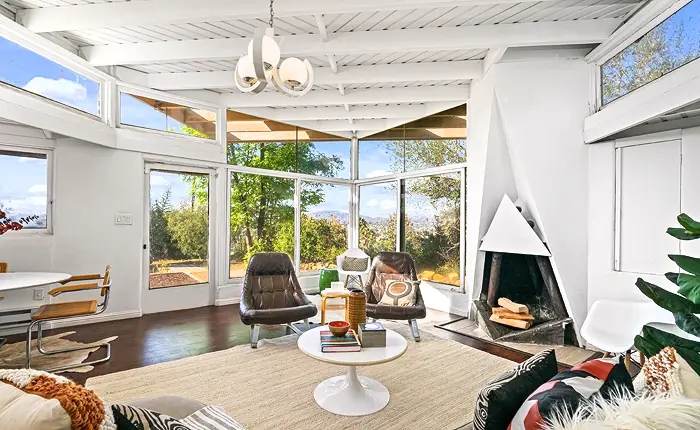
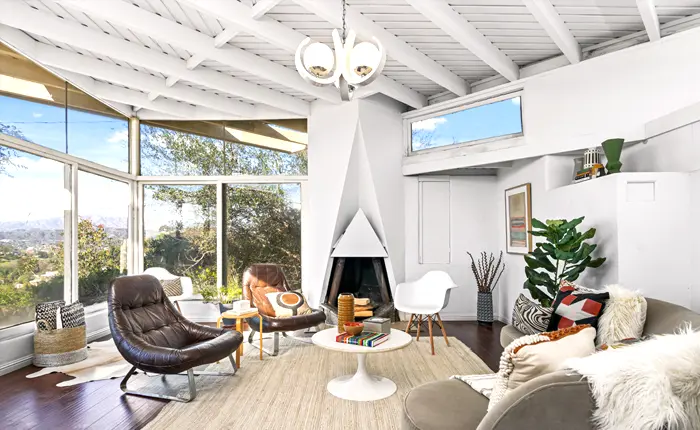
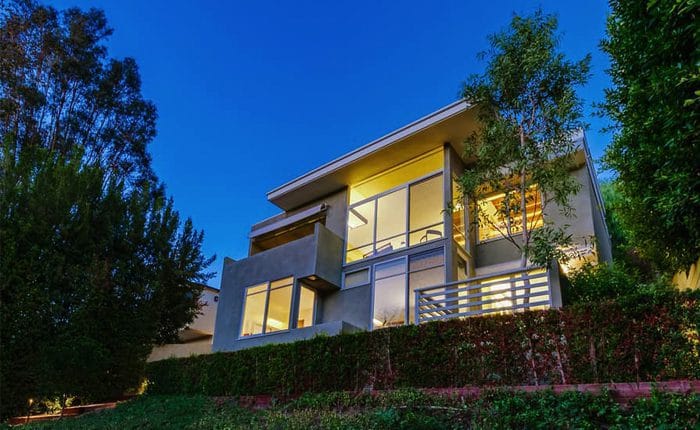
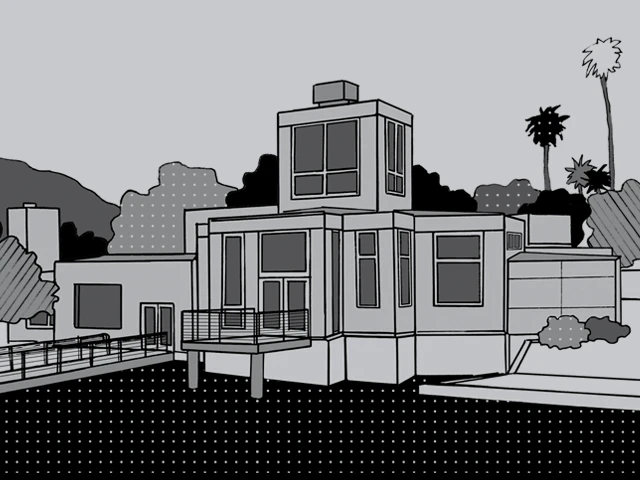
In the remodel of The Howenstein Residence in South Pasadena, CA, Schindler brought his classic design language, with emphasis on light-filled spaces, to the home of one of his closest friends and colleagues. Throughout Southern California, Schindler developed a language of architecture rooted in space rather than style. He described his work as “space architecture,” focusing on how people move, gather, and live within it. His ideas continue to influence generations of architects and designers.
Rudolph Schindler — Notable Projects and Houses
- Kings Road House (Schindler House) (1922) — West Hollywood, CA. Cooperative live-work residence designed for two couples; built using Schindler’s tilt-slab concrete technique with redwood screens and sliding glass panels. Each studio opens directly onto a shared garden; rooftop sleeping porches replace traditional bedrooms. Now the MAK Center for Art and Architecture. Listed on the National Register of Historic Places (1971) and designated a Los Angeles Historic-Cultural Monument.
- Pueblo Ribera Court (1923) — La Jolla, San Diego, CA. Twelve-unit cooperative housing complex organized around shared courtyard space; explored modular, standardized unit planning and communal living principles. One of Schindler’s earliest experiments in multi-family housing design.
- How House (1925) — Silver Lake, Los Angeles, CA. Compact hillside residence using interlocking L-shaped volumes and cascading terraces to create a sense of spatial generosity far exceeding its modest footprint. A characteristic example of Schindler’s early Silver Lake work.
- Lovell Beach House (1926) — Newport Beach, CA. Main living spaces suspended above the beach on five exposed concrete frames, lifting the residence into coastal breezes and views while sheltering the ground level. Widely cited as one of the first fully modern houses built in the United States for client Philip Lovell.
- Wolfe House (1928) — Avalon, Catalina Island, CA. Stepped-section hillside residence responding to a dramatically sloped island site; cascading terraces provide panoramic ocean views from multiple levels. Demonstrates Schindler’s ability to translate his hillside strategies to non-mainland sites.
- Elliot House (1930) — Silver Lake, Los Angeles, CA. Hillside residence making expressive use of retaining walls as architectural elements; characteristic integration of building and landscape. Part of the Silver Lake concentration of Schindler’s residential work from the late 1920s and early 1930s.
- Oliver House (1933) — Los Feliz, Los Angeles, CA. Residential design exploring Schindler’s mature approach to the California hillside house; redwood and concrete combined to mediate between landscape and interior. Representative of his Depression-era output, when budget discipline shaped spatial invention.
- Fitzpatrick-Leland House (1936) — Hollywood Hills, Los Angeles, CA. Hillside residence built during Schindler’s mature middle period; now managed by the MAK Center for Art and Architecture as part of its artist residency program. A preserved example of his late-1930s residential vocabulary.
- Mackey Apartments (1939) — Mid-Wilshire, Los Angeles, CA. Multi-unit residential building demonstrating Schindler’s application of his spatial ideas to the apartment typology. One of three Schindler-designed properties now operated by the MAK Center for Art and Architecture, currently housing artist residencies.
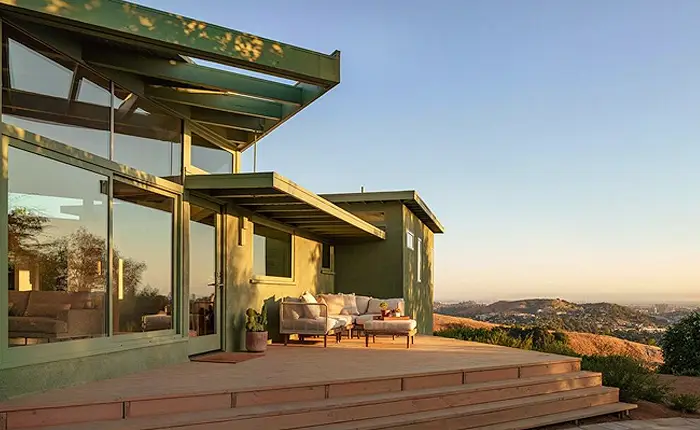
- Howenstein Residence (1943) — Monterey Hills, Los Angeles, CA. Remodeled for his friends Karl and Edith Howenstein, Schindler uses deep overhangs to protect expansive glass while preserving sightlines. Double-height ceilings and clerestories amplify light and openness.
- Bethlehem Baptist Church (1944) — South Los Angeles, CA. One of Schindler’s few religious commissions demonstrates the transferability of his spatial thinking beyond the residential program. Designated a Los Angeles Historic-Cultural Monument.
- Tischler House (1950) — Bel Air, Los Angeles, CA. Angular, cantilevered form on a steep hillside lot; one of Schindler’s final completed residential works and considered a summation of his late spatial thinking. Built three years before his death. Designated a Los Angeles Historic-Cultural Monument.