Lloyd Wright Architecture: The Visionary Who Shaped Los Angeles
Lloyd Wright (1890-1978), born Frank Lloyd Wright Jr., was an American architect and landscape architect based in Los Angeles, California and the eldest son of Frank Lloyd Wright. He practiced independently from 1916 until his death in 1978, completing more than 60 years of work across Southern California. Wright is best known for the Wayfarer’s Chapel (1951) in Rancho Palos Verdes, a glass-and-redwood Swedenborgian sanctuary listed on the National Register of Historic Places. His other significant works include the Sowden House (1926) and Samuel-Novarro House (1928) in Los Angeles, the Hollywood Bowl band shells (1926–1928) and the Institute of Mentalphysics campus in Joshua Tree (1946–1957). Working in a style rooted in organic architecture and California Modernism, Wright treated buildings and landscapes as unified compositions. His son, Eric Lloyd Wright (1929–2023), continued the family’s architectural legacy in Southern California.
Lloyd Wright – Architect Profile
- Born: March 31, 1890 — Oak Park, Illinois
- Died: May 31, 1978 — Santa Monica, California (age 88)
- Full Name: Frank Lloyd Wright Jr.
- Father: Frank Lloyd Wright (1867–1959), architect
- Son: Eric Lloyd Wright (1929–2023), architect
- Education: University of Wisconsin (agronomy and engineering); Olmsted and Olmsted landscape firm, Boston (1911)
- Style: Organic Architecture, Textile Block Construction, California Modernism, Expressionism
- Known For: Wayfarer’s Chapel (Rancho Palos Verdes, CA); Sowden House (Los Feliz); Hollywood Bowl Band Shells (1927-1928); Institute of Mentalphysics Campus (Joshua Tree, CA); Landscape architecture integrated with building design
- Key Project Locations: Los Feliz – Hollywood Hills – West Hollywood, CA – Rancho Palos Verdes, CA – Glendale, CA – Pasadena, CA – Joshua Tree, CA – Silver Lake – Santa Monica, CA – Los Angeles, CA
- Notable Work: Wayfarer’s Chapel (1951), Sowden House (1926), Samuel-Novarro House (1928), Hollywood Bowl Shells (1926–1928), Institute of Mentalphysics (1946–1957)
- Practice Active: 1916–1978 (independent practice from 1916; primarily Los Angeles)
Unlike many architects who worked in the shadow of a famous parent, Lloyd Wright turned that legacy into fuel for innovation rather than imitation. He developed a style rooted in the California landscape, drawing on organic forms, lush garden design and a deep sensitivity to light and topography. For design-conscious buyers and architecture enthusiasts, his homes are among the most coveted properties in Southern California. Explore our curated selection of architectural homes for sale to discover properties shaped by this tradition.
In This Article
- Who Was Lloyd Wright? Stepping Out of His Father’s Shadow
- The Frank Lloyd Wright Connection: Collaboration and Independence
- Lloyd Wright’s Defining Design Philosophy
- Iconic Lloyd Wright Buildings in Los Angeles
- The Wayfarer’s Chapel: A Masterpiece of Organic Architecture
- Lloyd Wright Homes: Residential Genius in the Hills
- Lloyd Wright’s Landscape Architecture and Garden Legacy
- Buying a Lloyd Wright Home: What You Need to Know
- FAQs About Lloyd Wright Architecture
Who Was Lloyd Wright? Stepping Out of His Father’s Shadow
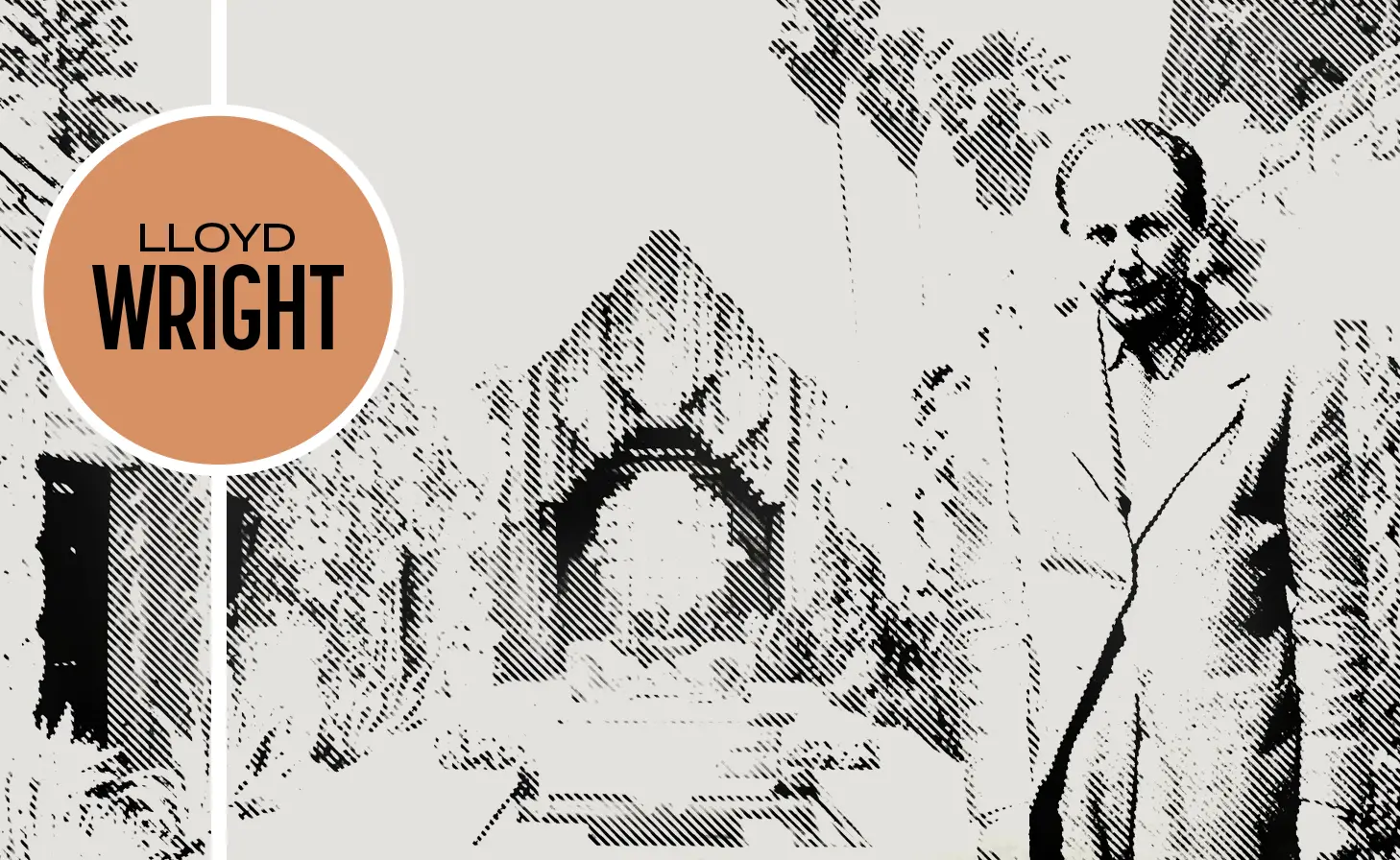
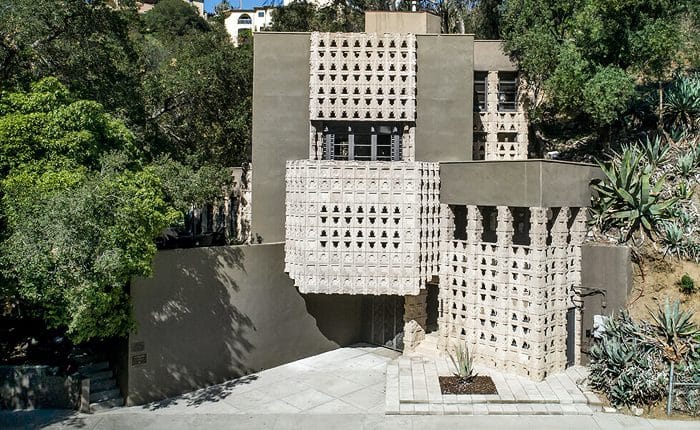
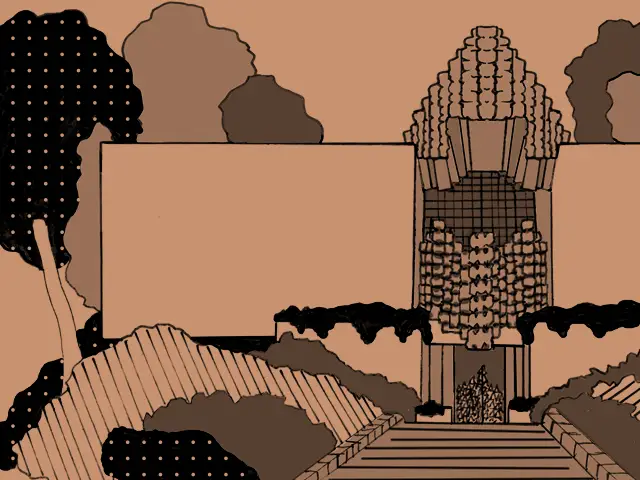
Lloyd Wright (Frank Lloyd Wright Jr.) spent most of his career in Los Angeles, where he developed a deeply personal architectural voice rooted in California’s natural landscape. With the enigmatic Sowden House, Lloyd Wright created one of Hollywood’s most unforgettable architectural statements. Inspired by Mayan temples and the emerging fascination with pre-Columbian motifs, its dramatic concrete-block facade rises like a sculpted monument along Franklin Avenue in Los Feliz. The house remains a bold reminder that Los Angeles modernism often embraced imagination as much as innovation.
Frank Lloyd Wright Jr. was born in 1890 in Oak Park, Illinois, the eldest son of one of the most famous architects in American history. He adopted the professional name Lloyd Wright to carve out his own identity and by the 1910s, he had relocated to Los Angeles, a city that would become the canvas for his life’s work. He died in 1978, leaving behind a body of work that spans residential homes, community buildings, garden design and landscape architecture.
What makes Lloyd Wright’s story particularly compelling is how deliberately he chose to define himself. Rather than trade on his father’s name or replicate the Prairie Style that made Frank Lloyd Wright famous, he turned toward the California environment for inspiration. The hills, canyons, native plants and airy Pacific light became the raw material of his architecture. He studied engineering at the University of Wisconsin-Madison and briefly trained under the Olmsted Brothers and Irving Gill; his sensibility was always oriented toward the wild, sun-drenched character of Southern California. Over the course of more than six decades of practice, Lloyd Wright completed projects ranging from intimate hillside residences to one of the most photographed chapels in the United States. His influence on Los Angeles architecture is profound, even if his name is less well-known than it deserves. Today, his buildings are recognized as essential threads in the city’s architectural fabric and they attract buyers who value design integrity and historical significance.
The Frank Lloyd Wright Connection: Collaboration and Independence
The relationship between Lloyd Wright and his father, Frank Lloyd Wright, was complex, productive and at times strained. The two collaborated on several significant California projects during the early 1920s, a period when Frank Lloyd Wright was experimenting with his innovative textile block construction system. Lloyd Wright served as the on-site supervisor for several of his father’s commissions in Los Angeles, including the Hollyhock House for Aline Barnsdall, completed in 1921 and the Ennis House, completed in 1924. These early collaborations gave Lloyd Wright hands-on experience with the textile block method, where precast concrete blocks with decorative geometric patterns were interlocked to create walls, ceilings and facades. He absorbed the technique deeply and later applied it in his own work, though always with his own interpretive twist. The collaboration also gave him valuable insight into the kind of bold, site-specific design thinking that would become central to his own practice. After his father returned to Wisconsin and then Arizona, Lloyd Wright remained in Los Angeles and began establishing his independent reputation. He consciously moved away from the Prairie style and toward something more organically Californian. Where his father’s work was often monumental and commanding, Lloyd Wright’s residential work tends to feel more intimate, woven into the landscape rather than placed upon it. The distinction matters: his buildings feel like they belong to Southern California in a way that speaks to decades of careful observation and affection for the region. Architecture historians and enthusiasts interested in tracing this lineage can explore several of Frank Lloyd Wright’s Los Angeles works alongside Lloyd Wright’s own buildings, creating a fascinating architectural dialogue across generations. Browse our home styles guide for context on how these architectural traditions continue to shape the Los Angeles market.
Lloyd Wright’s Defining Design Philosophy
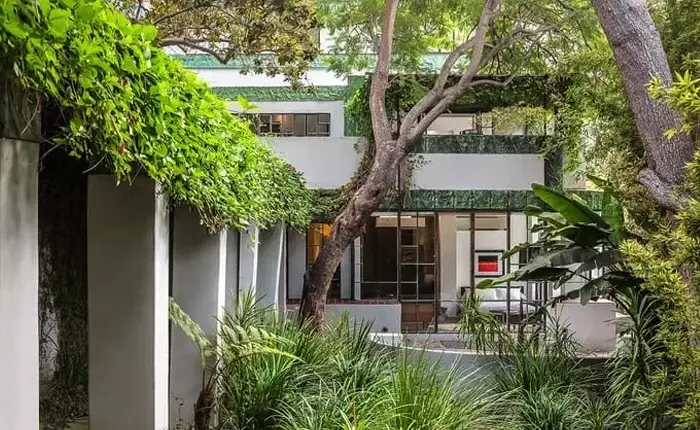
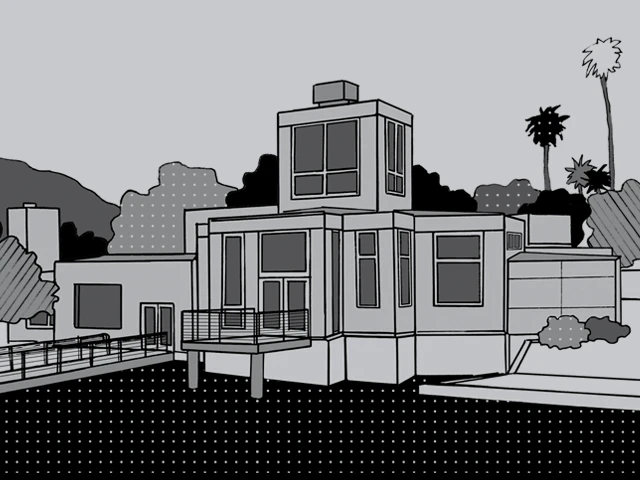
At the striking Samuel Novarro House in Los Feliz, Lloyd Wright pushed his fascination with texture and ancient form even further. The home’s sculptural geometry is wrapped in shimmering copper cladding that catches the California sun and deepens to a rich patina over time. Both dramatic and refined, the residence reveals Wright’s ability to transform modern architecture into something timeless, tactile and quietly cinematic.
Lloyd Wright’s architecture is best understood through three interlocking principles: organic integration, landscape immersion and contextual sensitivity. He believed buildings should grow from their sites the way plants grow from soil, responding to slope, light, view and vegetation rather than imposing a predetermined geometry on the land. This philosophy aligns with the broader tradition of organic architecture, but Lloyd Wright applied it with a distinctly Californian accent. His training as both a landscape architect and an architect gave him a fundamentally different perspective from most of his contemporaries. He did not think of a building and its gardens as separate elements to be designed and then joined. Instead, they were conceived simultaneously as a unified environment in which walls, terraces, plantings and pathways all played equal roles. This holistic approach produces homes that feel genuinely inseparable from their settings, which is one reason they tend to age so gracefully. Lloyd Wright was also deeply attentive to natural materials. He favored concrete, wood, stone and handcrafted ceramic tile, often combining them in ways that celebrated texture and the passage of time. His concrete block work draws on his father’s textile block experiments but incorporates softer, more naturalistic surface patterns. His residential interiors frequently feature built-in furniture, dramatic roof overhangs and carefully framed views that turn the landscape into an element of the architecture itself. For architecture enthusiasts, one of the most rewarding aspects of studying Lloyd Wright is tracing how his ideas evolved over decades. His early California work shows the influence of his father and of Arts and Crafts traditions, while his later buildings demonstrate a more confident, fully realized personal style. The Wayfarer’s Chapel, completed in 1951, represents perhaps the fullest expression of his mature vision, a vision that can be traced through dozens of residential projects across the Los Angeles hills.
Iconic Lloyd Wright Buildings in Los Angeles
Los Angeles contains a remarkable concentration of Lloyd Wright’s work, scattered across the hills, canyons and coastal bluffs of the city and its surroundings. Some of his most notable buildings have achieved landmark status, while others remain in private hands and are known primarily to dedicated architecture enthusiasts and real estate professionals with specialized expertise. The Sowden House, completed in 1926 in Los Feliz, is among his most dramatic and frequently discussed works. Its concrete-block facade features bold, pre-Columbian-influenced geometric patterns and the interior is organized around a central courtyard that floods the home with natural light. The house is a striking example of how Lloyd Wright absorbed his father’s textile block technique and pushed it in a more theatrical, almost mythological direction. The Sowden House has attracted considerable attention over the years for its architectural significance, cinematic appearance, and its complicated history. The Samuel-Novarro House, also known as the Navarro House, built in 1928 in the Hollywood Hills, demonstrates Lloyd Wright’s ability to create intimate luxury. Perched in the hills with commanding views, it uses concrete block construction to create a sense of shelter and enclosure that also opens dramatically to the landscape. The James Daniel Derby House in Glendale, designed in the same era, shows his ability to adapt the textile block approach to a more modest residential scale without sacrificing design quality.
Lesser-Known Gems Worth Knowing
Beyond these well-documented works, Lloyd Wright completed dozens of residential commissions throughout Los Angeles that remain less publicly known but no less significant. Many of these homes sit in West Hollywood, Los Feliz and the Hollywood Hills neighborhoods, where his architectural sensibility found a natural home in the hilly terrain. Buyers looking to acquire architecturally significant properties in these neighborhoods benefit greatly from working with real estate specialists who can expertly guide them. Our team at Beyond Shelter brings exactly that depth of knowledge to every search.
The Wayfarer’s Chapel: A Masterpiece of Organic Architecture
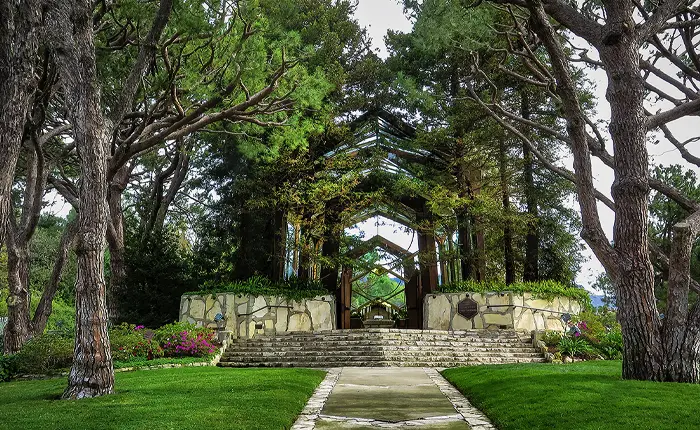
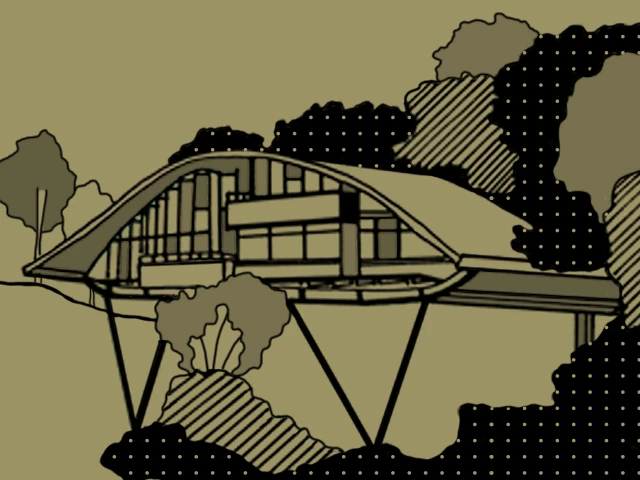
The Wayfarer’s Chapel in Rancho Palos Verdes, completed in 1951, is one of Lloyd Wright’s most celebrated works. Its glass walls, redwood structure and stone elements create a sanctuary that feels fully integrated with the surrounding Pacific bluffs and mature plantings. Lloyd Wright achieved a poetic harmony between architecture and nature here. Slender redwood frames and walls of glass allow the ocean and the surrounding grove of trees to become the chapel’s true ornament. The structure feels less like a building and more like a spiritual clearing shaped by light. Photo: Mark Thornberry
No discussion of Lloyd Wright architecture would be complete without a close look at the Wayfarer’s Chapel in Rancho Palos Verdes. Commissioned by the Swedenborgian Church and completed in 1951, it is almost certainly the most visited and widely recognized building Lloyd Wright ever designed. It has been photographed countless times, used as a wedding venue for decades, and consistently included in surveys of California’s most beautiful buildings. The chapel is a glass, redwood and stone structure set on a dramatic promontory above the Pacific Ocean. Its walls are almost entirely transparent, creating the impression of worshipping within a living garden rather than inside a conventional building. Towering redwood trees planted by Lloyd Wright himself frame and filter the light, while the stone floor and altar anchor the space with a sense of geological permanence. The entire composition reflects his conviction that spiritual architecture should dissolve the boundary between the interior and the exterior, between human construction and the natural environment. The Wayfarer’s Chapel was designated a National Historical Landmark in 2023 and is listed on the National Register of Historic Places. Recently, the chapel has been disassembled due to the massive land movement in the Portuguese Bend area of Ranch Palos Verdes. Preservation and restoration are the goals here, with the hope of eventually reassembling the structure on another secure site.
For more information on LA’s unique areas, visit our Los Angeles neighborhoods guide.
For those interested in the broader tradition of organic architecture in California, the Wayfarer’s Chapel stands alongside works by Rudolph Schindler, John Lautner and Greene and Greene as evidence of the state’s exceptional contribution to twentieth-century design. Architecture journalists at ArchDaily have extensively covered the chapel’s significance and its recent restoration efforts following structural challenges from coastal erosion.
Lloyd Wright Homes: Residential Genius in the Hills
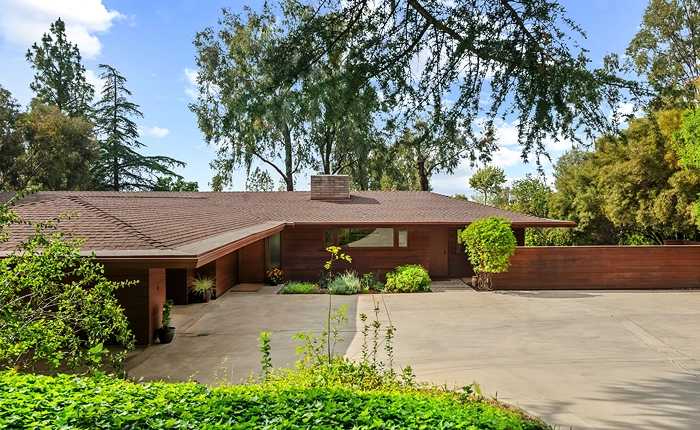
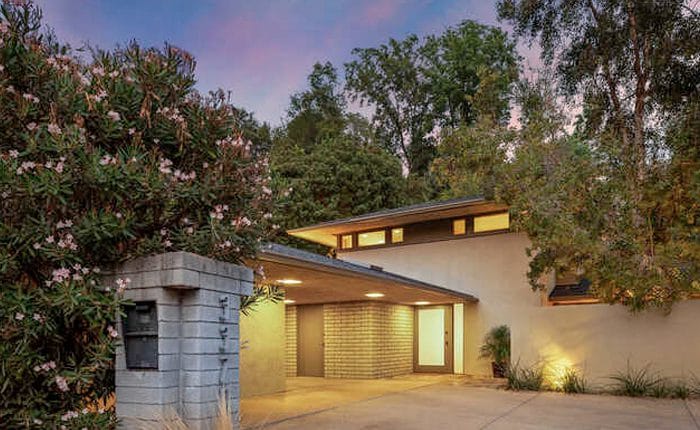
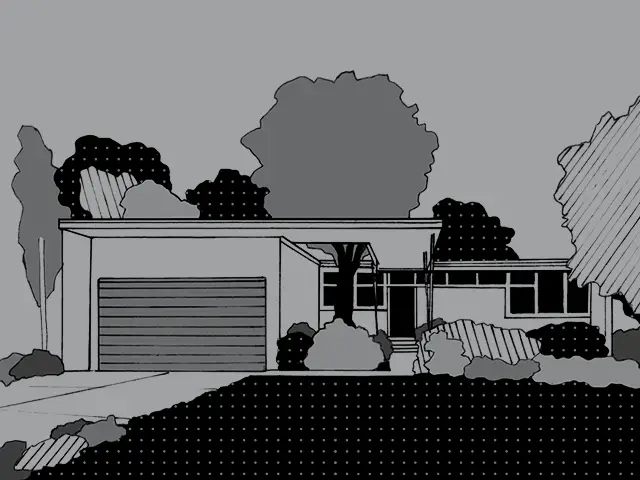
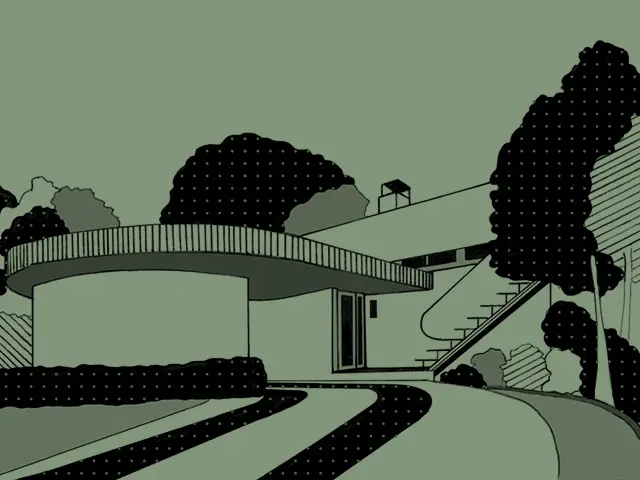
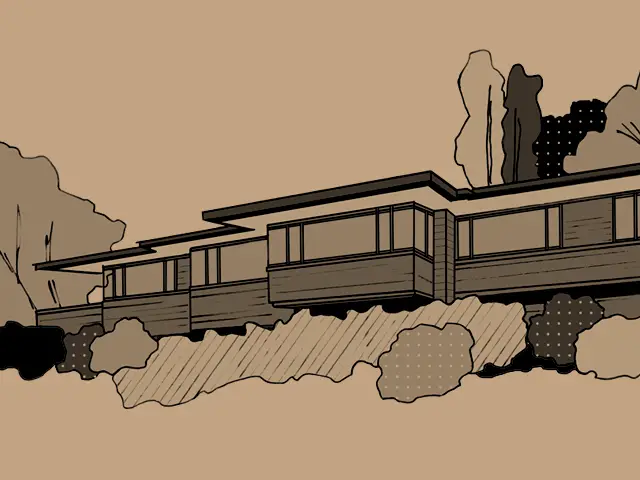
While the Wayfarer’s Chapel is Lloyd Wright’s most public work, his residential portfolio is arguably his most personally expressive. Across more than five decades, he designed homes throughout Los Angeles that demonstrate an extraordinary range of approaches, from modest hillside cottages to sweeping multi-level estates with panoramic views. What unites them is the consistency of his underlying philosophy: every house is designed as a specific response to its specific site. His residential work from the 1920s and 1930s frequently employs the textile block system, creating exterior walls with intricate surface patterns that cast complex shadows throughout the day. Inside, these homes tend to feature open, flowing plans with strong horizontal lines, generous built-in storage and a seamless relationship between interior living spaces and terraces or gardens. The homes are not merely interesting to look at from the street; they are genuinely pleasurable to live in and infrequently come to the real estate market. By the postwar period, Lloyd Wright’s residential work shifted toward lighter, more transparent structures that embraced California’s indoor-outdoor living culture with even greater enthusiasm. Post-and-beam construction, floor-to-ceiling glass and native plant landscapes became more prominent features. These later houses feel entirely at home in contemporary conversations about sustainable and environmentally responsive design, even though they predate those formal frameworks by decades. Buyers considering a Lloyd Wright home should understand that these properties offer something rare in the current market: genuine architectural pedigree combined with the livability of a well-crafted California house. Explore our mid-century modern homes for sale in Los Angeles to see the kinds of architecturally significant properties available in the Los Angeles area.
Lloyd Wright’s Landscape Architecture and Garden Legacy
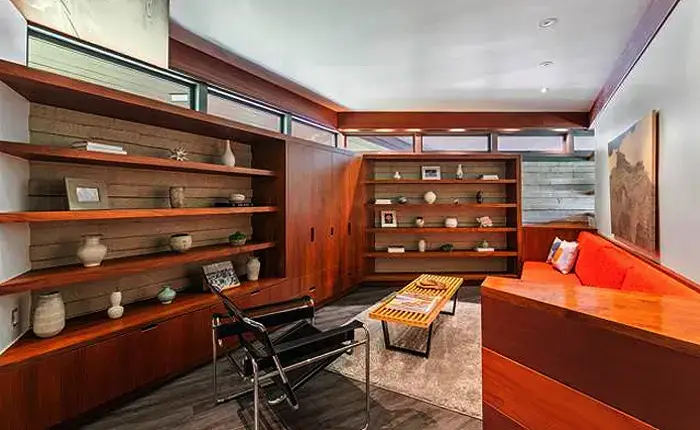
Though shaped by Frank Lloyd Wright’s influence, Lloyd Wright ultimately forged a uniquely Californian modernism. His buildings combine ancient inspiration, experimental materials and a deep sensitivity to landscape. Together they form a legacy of architecture that feels bold, expressive and unmistakably original. Long before establishing his own reputation, Lloyd Wright collaborated with his father on the landscape design of Hollyhock House at Barnsdall Art Park. Terraced gardens, pathways and plantings helped frame the iconic structure within its dramatic hilltop setting. The project offered an early glimpse of Wright’s ability to choreograph architecture, garden design and landscape together.
One aspect of Lloyd Wright’s practice that often surprises people unfamiliar with his full body of work is the scale and quality of his landscape architecture. He was a licensed landscape architect and a building architect. He brought the same rigor and creativity to garden design as to structural work. His gardens are not afterthoughts or decorative additions; they are integral components of a unified design vision. Lloyd Wright worked extensively with native California plants, choosing species that thrived in the region’s dry summers and mild winters while also contributing to the visual character of his compositions. He favored bold-textured plants, dramatic succulents and flowering trees that rewarded close observation without requiring excessive maintenance. His planting schemes tend to layer levels of height and texture in ways that evoke the natural chaparral landscape of Southern California rather than the manicured gardens imported from wetter climates. His landscape commissions ranged from private residential gardens to more public projects and in each case, he brought a designer’s eye to the relationship between land, water and planting. Several of his garden designs have been preserved alongside the buildings they accompany, creating exceptionally complete examples of his total design philosophy. When you encounter a Lloyd Wright property where both the architecture and the garden survive intact, you are experiencing a rare built environment conceived and executed as a single, coherent work of art. For buyers considering Lloyd Wright properties, a well-maintained Lloyd Wright garden adds significant value and is itself a form of historic preservation. Learn more about our approach on our contact page.
Buying a Lloyd Wright Home: What You Need to Know
Acquiring a home designed by Lloyd Wright can be incredibly rewarding for someone who appreciates architecture and design, but it helps to go in with a bit of preparation and perspective. These homes sit at a unique intersection of architecture, history and real estate, and understanding that context makes the process smoother. One of the first things to look at is whether the property has any preservation status. Some Lloyd Wright buildings are recognized as local, state, or national landmarks. That can come with certain limitations on renovations or changes, but it can also provide benefits such as preservation tax incentives and protections that help preserve the home’s historic character. Knowing what applies to a particular property in advance can avoid surprises later. The condition of the original materials is also an important part of the conversation. Lloyd Wright often used distinctive construction techniques, especially his well-known textile-block designs, which require thoughtful maintenance. Over time, blocks can become susceptible to moisture if mortar joints aren’t maintained and repairing them properly usually requires craftspeople who understand historic construction. The same goes for original woodwork, tile and custom hardware. These homes tend to reward careful stewardship rather than quick updates. It can also be helpful to work with someone who understands the architectural side of these properties. An experienced real estate professional can often provide context on a home’s design history, connect buyers with preservation specialists or contractors familiar with historic materials and guide the process so that expectations align with the realities of owning an architectural property. At Beyond Shelter, we specialize in exactly this kind of work. Visit our architectural homes for sale listings to see homes currently on the market and reach out to discuss how we can support you in your search. You can also browse Dezeen for current coverage of how Lloyd Wright’s legacy is being discussed in the wider architectural community.
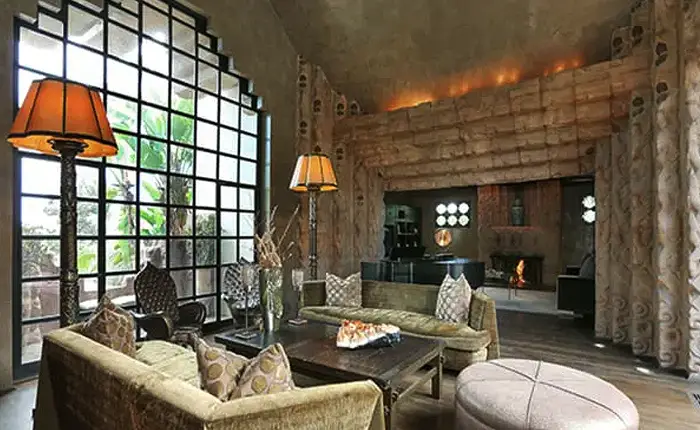
At the Sowden House, Lloyd Wright transformed a Hollywood residence into something resembling a ceremonial temple. The towering entry and rhythmic block patterns draw visitors inward toward a secluded courtyard oasis. It is architecture that feels both mysterious and cinematic, perfectly suited to Los Angeles’s mythology. As the son of Frank Lloyd Wright, Lloyd Wright inherited a powerful architectural legacy, yet quickly developed a voice entirely his own. While his father championed prairie horizontality and organic planning, Lloyd Wright explored textured concrete blocks, theatrical courtyards and richly patterned ornament. His work reveals a designer eager to reinterpret modernism through a distinctly Californian lens.
Lloyd Wright – Notable Projects and Houses
- William Weber House (1921) — Los Angeles, CA. One of Lloyd Wright’s earliest independent residential commissions, completed shortly after he began his own practice.
- Otto Bollman House (1922) — Hollywood, Los Angeles, CA. Among Wright’s first concrete block explorations; a precursor to the textile block experiments he would undertake with his father in the following years.
- Martha Taggart House (1922–1924) — Los Feliz, Los Angeles, CA. Lloyd Wright’s first major residential commission; built for the mother of his future wife, Helen Taggart. A registered Los Angeles Historic-Cultural Monument, sited adjacent to Griffith Park.
- Henry Bollman House (1923) — Hollywood, Los Angeles, CA. Featured a repeated pattern of concrete blocks that directly anticipated Frank Lloyd Wright’s textile block system; designed the same year Lloyd Wright began supervising his father’s Los Angeles block houses.
- Oasis Hotel (1923–1925) — Palm Springs, CA. One of Lloyd Wright’s few commercial hospitality commissions; partially demolished.
- Harry and Alice Carr House (1925) — Los Feliz, Los Angeles, CA. Mid-decade residential work demonstrating Wright’s growing confidence in hillside siting and integrated landscape design.
- Herbert Howe House (1925) — Beverly Hills, CA. Designed for journalist and Hollywood columnist Herbert Howe, one of several Beverly Hills commissions from Wright’s most productive residential decade.
- John Sowden House (1926) — Los Feliz, Los Angeles, CA. Wright’s most theatrical residential design, built for painter and photographer John Sowden. The concrete textile block facade is organized around a central open-air courtyard with Pre-Columbian-inspired geometric block patterns. Later owned by physician George Hodel. Los Angeles Historic-Cultural Monument.
- Calori House (1926) — Glendale, CA. Residential commission in the Chevy Chase area of Glendale; one of several Wright houses built in this canyon neighborhood.
- John Daniel Derby House (1926) — Glendale, CA. Built for businessman James Daniel Derby in the Chevy Chase Canyon area of Glendale. Features concrete textile block construction with Pre-Columbian-influenced patterning, a two-story living room with floor-to-ceiling fireplace, double-height ceilings, and a high balcony library. Wright also designed the landscaping. Listed on the National Register of Historic Places; designated under the Mills Act.
- Millard House Studio (1926) — Pasadena, CA. Adjacent studio building added to the Alice Millard property; Wright had designed the grounds for his father’s 1923 Millard House on the same site three years earlier.
- Farrell House (1926) — Los Feliz, Los Angeles, CA. Residential commission in the Los Feliz hills neighborhood where Wright completed several projects during his most productive mid-decade period.
- Hollywood Bowl Band Shell #2 (1927) — Hollywood, Los Angeles, CA. Pyramidal form with design influences drawn from Southwest Native American architecture; acoustics were regarded as the finest in the Bowl’s history. Demolished at end of the 1927 season due to its unconventional appearance.
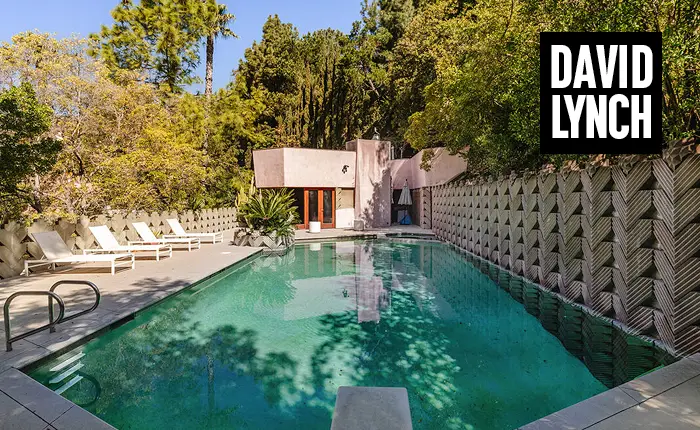
- Lloyd Wright Home and Studio (1927) — West Hollywood, CA. Wright’s own live-work residence, designed with interlocking concrete blocks featuring a stylized Joshua tree motif. He lived and worked here from 1927 until his death in 1978. The LA Conservancy holds a conservation easement on the property. Los Angeles Historic-Cultural Monument.
- Hollywood Bowl Band Shell #3 (1928) — Hollywood, Los Angeles, CA. Wooden shell with the now-familiar concentric ring motif; covered a 120-degree arc and was designed to be dismantled seasonally. Stood until 2003 when it was replaced.
- Samuel-Novarro House (1928) — Los Feliz, Los Angeles, CA. Designed for Hollywood manager Louis Samuel, a four-level Mayan Revival and Art Deco residence integrated into a steep hillside lot in The Oaks neighborhood. Features smooth concrete surfaces, oxidized copper accents, and horizontal bands of windows. Ramon Novarro assumed ownership in 1931 and later commissioned Wright to expand the garden, music room, and bedroom suite. Past residents include Leonard Bernstein, Jerome Robbins, Diane Keaton, and Christina Ricci. Los Angeles Historic-Cultural Monument #130.
- Claudette Colbert House (1935) — Los Angeles, CA. Residential commission for Academy Award-winning actress Claudette Colbert. Demolished in 2014.
- C. Warwick and Lysabeth Evans House (1936) — Brentwood, Los Angeles, CA. Later known as the Warwick Evans House, a significant postwar-era residential work. Remodeled in 1984 and again in 1991 by subsequent architects.
- Institute of Mentalphysics Campus (1946–1957) — Joshua Tree, CA. The largest single collection of Lloyd Wright buildings anywhere in the United States; constructed in phases over eleven years for the Institute of Mentalphysics on a large Mojave Desert site. Now known as the Joshua Tree Retreat Center.
- Wayfarer’s Chapel (1951) — Rancho Palos Verdes, CA. Wright’s best-known and most widely published work; a glass, redwood and stone Swedenborgian chapel perched above the Pacific Ocean on the Palos Verdes Peninsula. Wright planted a grove of coastal redwoods to frame and enclose the nearly transparent structure. California Historical Landmark; listed on the National Register of Historic Places. The full project spanned 1946–1971. Currently disassembled and in storage.
- John P. Bowler House (1963) — Rancho Palos Verdes, CA. Known as the “Bird of Paradise” House, among Wright’s last realized residential projects, notable for its use of projecting blue fiberglass roof fins as a primary design element.
Frequently Asked Questions About Lloyd Wright Architecture
Searching for a Lloyd Wright Home for Sale in Los Angeles?
Beyond Shelter specializes in connecting design-conscious buyers with the architecturally significant properties of Southern California.
Whether you are actively searching for a Lloyd Wright home, exploring the broader landscape of modernist and historic properties, or considering selling a distinctive residence, our team brings the architectural knowledge and real estate expertise you need. We understand what makes these properties special and how to navigate their unique considerations.
Browse Current Listings: Mid-Century Modern Homes for Sale in Los Angeles Explore by Architecture Style: Architectural Homes for Sale Service Areas: Los Angeles and Southern California. Contact our team to start your search →
About Beyond Shelter
Beyond Shelter is a premier architecture and real estate firm serving Los Angeles and Southern California. With deep expertise in modernist architecture, historic preservation, and architectural history, we help clients discover, understand, and acquire architecturally significant properties. Our team combines architectural knowledge with real estate expertise to provide comprehensive guidance for design-conscious buyers, sellers, and architecture enthusiasts. Learn more about our services →