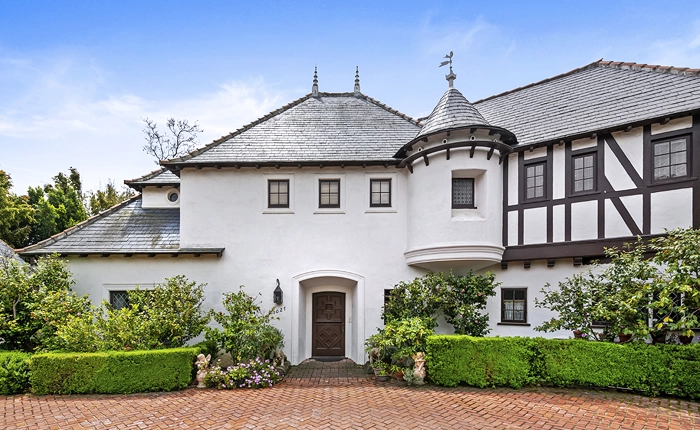
Los Angeles historic homes show a rich architectural history, from Spanish Colonial Revival estates to Craftsman bungalows and early Modernist houses. These properties are more than design artifacts; they reflect the city’s cultural evolution, craftsmanship, historic roots and classic appeal. A visit to one of LA’s historic neighborhoods, such as Hancock Park, feels like stepping back in time, letting one experience the stories, dreams and ambitions of earlier generations. These historic homes have a unique story to tell, each a reminder of Los Angeles’ rebellious spirit and endless capacity for reinvention.
LA is known for its Hollywood glitz and glamour, stylish living set against a modern skyline complete with iconic mid-century homes, palm-lined streets and jetliner views. Yet beyond this contemporary image lies an equally compelling world of historic and revivalist architecture. From Italianate villas and Tudor manors to French Norman residences and Spanish Revival estates, these homes speak to a different rhythm, one rooted in tradition, artistry and a sense of permanence. These stylish residences offer a window into the city’s vibrant past and cinema-rich heritage. The classic residences narrate a unique story of the individuals who owned them, the architects who brought them to life and the dreams and desires of the world at the time they were built.
In a city defined by reinvention, historic homes provide true authenticity and a distinct sense of place. These residences carry the imprint of another era, where artisanal craftsmanship, proportion and detail were intentional. Elements like handmade Batchelder tile, carved woodwork, wrought-iron railings, sunlit courtyards and intimate rooms reveal a more measured and thoughtful way of living. Life in these homes is about experiencing the passage of time embodied in an architectural form.
In This Article
- The Architectural Legacy of Los Angeles Historic Homes
- Historic Home Love: Finding Your Soulmate
- Historic Homes: Architectural Styles and The Period Revival Revolution
- Craftsman Homes and the Arts & Crafts Movement
- Notable Architects of Los Angeles Historic Homes
- Top Neighborhoods for Finding Your Los Angeles Historic Home
- Preserving History: Los Angeles Historic Homes
- Find Your Place in Los Angeles’ Architectural History
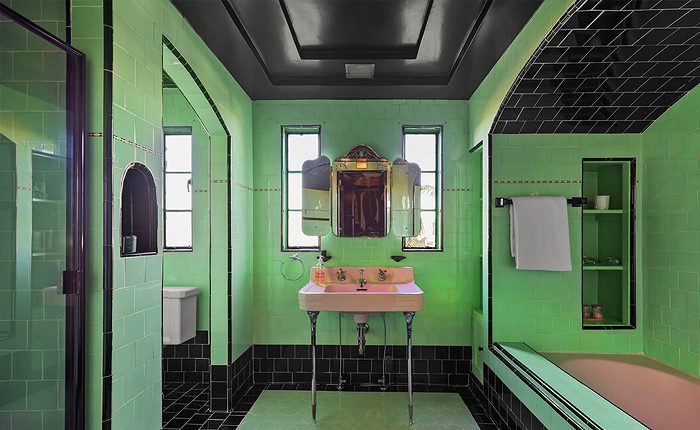
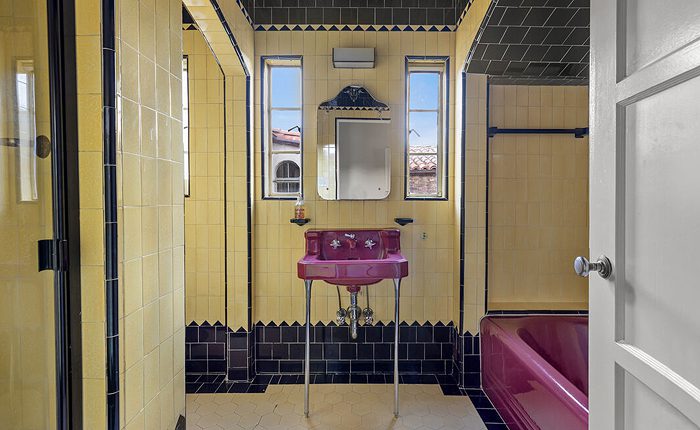
A celebration of Art Deco glamour, these vintage bathrooms are wrapped in richly saturated, two-toned tile patterns that feel graphic and timeless. Sculptural console sinks lend a sense of lightness, their clean lines contrasting beautifully with the bold geometry surrounding them. Colorful porcelain fixtures, bathtubs and sinks in vivid hues become focal points, infusing each space with personality and charm. Together, they evoke a playful yet refined moment in Los Angeles design history, where color, craftsmanship and form were unapologetically expressive.
The Architectural Legacy of Los Angeles Historic Homes
Offering the perfect blend of fantasy and reality, revivalist architecture boomed in Los Angeles during the 1920s. Fueled by Hollywood and the burgeoning film industry, these styles transformed homes and neighborhoods throughout the city into nostalgic old-world visions from exotic locales. It was a time of progressive construction methods, wood framing, brick and stone veneers combined with creative inspiration coming from the film industry that allowed architects and developers to create beautiful renditions of charming European structures. The city also saw the rise of luxury apartment structures with Chateauesque rooflines and French Norman towers mirroring multi-storied Loire chateaux.
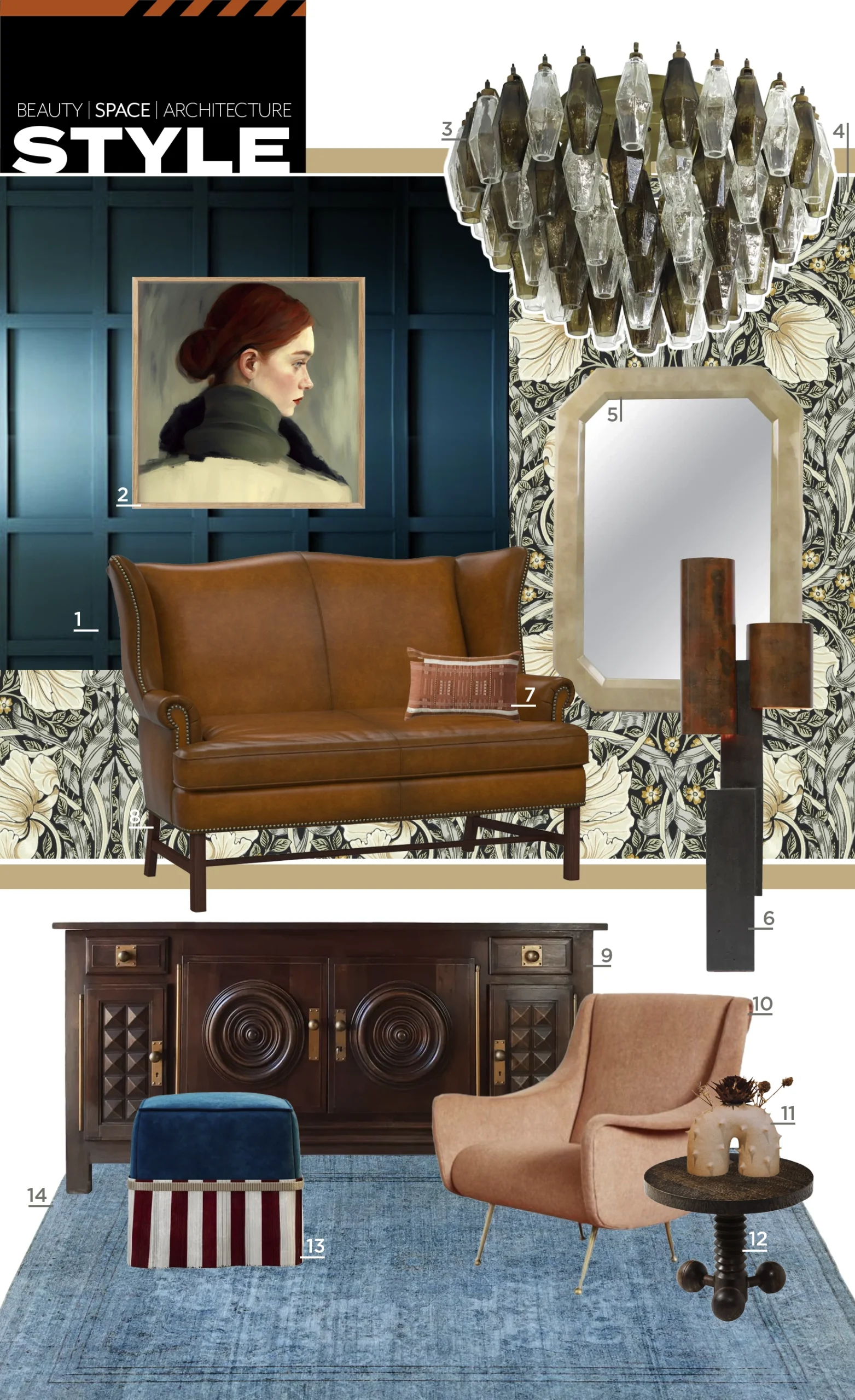
HISTORIC HOME LOVE: FINDING YOUR SOULMATE
1 Cerulean Blue Paint 2 Female Portrait 3 Vintage Murano Poliedri Ceiling Light 4 Pimpernel Wallpaper 5 Vintage Tessellated Mirror 6 Contemporary Copper Floor Lamp 7 Lumbar Accent Pillow 8 Leather Setee 9 Charles Dudouyt Sideboard 10 Gigi Radice Chairs 11 Harmful Flower Holder 12 Charles Dudouyt Side Table 13 Le Moderne Velvet Pouf 14 Vintage Persian Overdyed Rug
HISTORIC HOMES: ARCHITECTURAL STYLES AND THE PERIOD REVIVAL REVOLUTION
Spanish Colonial Revival Homes in Los Angeles – Rustic Yet Refined
Spanish Colonial Revival homes gained prominence in the early 20th century as one of Los Angeles’ most popular period revival styles. With Southern California’s Spanish colonial roots, this architectural style blends perfectly with Los Angeles’ historic homes, combining Moorish, Renaissance and Baroque design influences. With thick stucco walls, warm earth tones, red-tile roofs, wrought-iron details and arched doorways and windows, this period revival architectural style is one of Los Angeles’ most recognized and charming historic home styles.
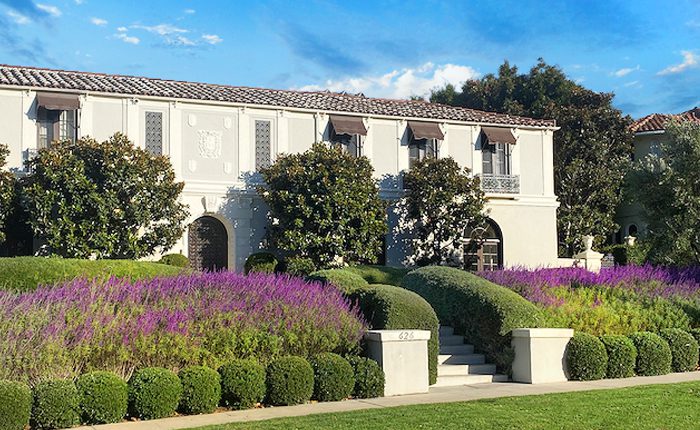
This period revival estate is set within LA’s Hancock Park, a neighborhood long celebrated for its collection of distinguished historic residences. Built in 1925, the home draws from Italian Renaissance and Mediterranean influences, expressed through balanced architectural symmetry and a classic barrel-tile roofline. A grand arched entrance opens to interiors detailed with inlaid marble tile, reflecting a level of craftsmanship rarely found today. Outside, a formal structured garden completes the composition, offering a timeless sense of order, beauty and quiet refinement in the heart of Los Angeles.
Italianate Period Revival Architecture – Sophisticated Style
The Italianate Period Revival style exudes a kind of timeless charm. Blending classical influences with Victorian exuberance, Italianate homes are characterized by low-itched rooflines, wide overhanging eaves and frequently are highlighted by cupolas or towers, tall narrow windows and elaborate moldings. These classic architectural elements combine to create a home that is inviting and filled with verve. On the interiors, the opulence continues with grand foyers, high ceilings and ornate plasterwork. Additionally, period revival Italianate houses may incorporate verandas with elegantly turned balusters, offering an inviting outdoor space that complements the historic home’s architecture.
English Tudor Revival Homes - Character-filled Coziness
There is no denying the aesthetic drama and historical charm of English Tudor-style homes. Originating in England in the late 1400s, this revival style has been seen in many neighborhoods throughout Los Angeles. Timber-framed construction, steeply pitched rooflines and leaded or diamond-patterned glass windows are all features of a Tudor-style house. These houses have a rustic, storybook feel, as if they have come to life from the pages of a medieval fairy tale. With classic built-in bookcases, hand-carved moldings, and elaborate ceiling details, these Los Angeles historic homes display an extraordinary level of craftsmanship and old-world charm.
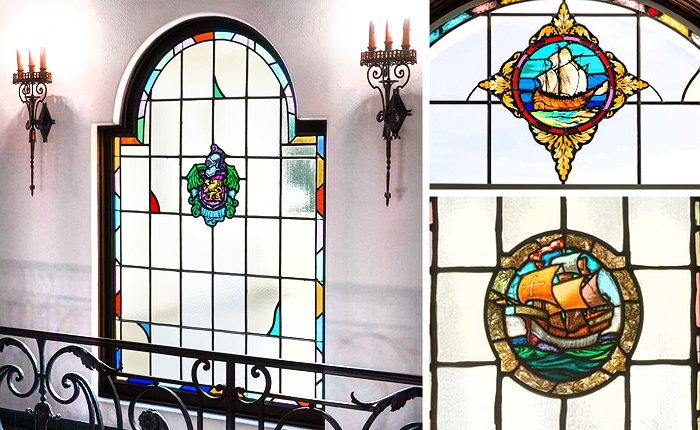
Stained glass windows that tell a story, these artisanal compositions found in Los Angeles’ historic homes unfold like illuminated manuscripts in glass. Intricate scenes of exotic sea-faring ships drift across jewel-toned panels, their sails catching imagined winds from distant, storied horizons. Nearby, medieval knights celebrate the chivalry, legacy and the romance of ancient medieval dynasties. Together, the windows transform light into narrative, casting color, history and myth across interiors in a way that feels both timeless and transportive.
French Normandy Style Houses
One of our favorite period revival architectural styles, the French Norman or Normandy home blends rustic elegance with historical European influences. These classic homes recall visions of grand medieval castles in the French countryside. The exteriors of the French Norman style home are generally constructed of stone, brick or stucco and occasionally decorative half-timbering. These aesthetically appealing residences are highlighted by silo-like towers with conical roofs. Their steeply pitched rooflines are clad in shingles or slate. On the interiors, these homes feature wooden beams and exposed trusses which add to their rustic elegance. This classic style remains a favorite choice for Los Angeles residents who appreciate the historical romance and distinctive features that define French Norman Revival architecture.
Each of these historic Los Angeles Period Revival home styles offers a unique set of details, old-world charm and classic character to celebrate history and culture while paying homage to a particular place and time.
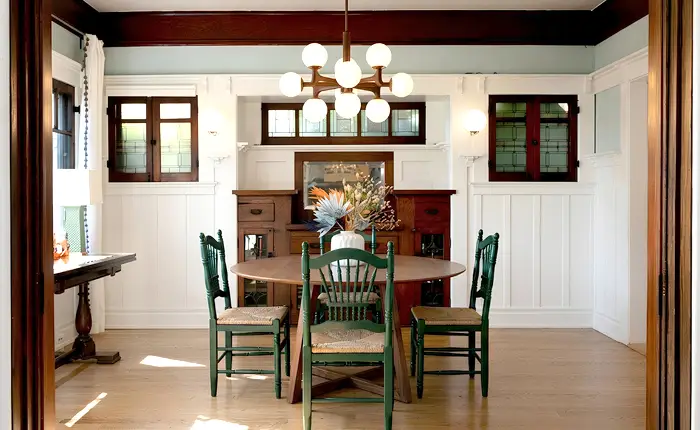
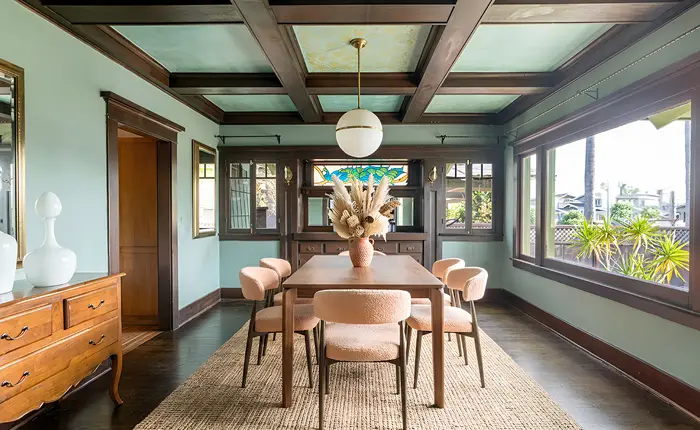
Craftsman interiors are defined by an honest expression of material and craft, where rich wood paneling, built-in cabinetry and finely detailed millwork create a cohesive, grounded aesthetic. Coffered, boxed-beam ceilings add depth and structure, framing each room with a sense of quiet architectural rhythm. Every surface feels intentional, handcrafted, tactile and designed to age gracefully over time. These homes feel deeply welcoming, where warmth, comfort and a sense of belonging are built into every detail.
Craftsman Homes and the Arts & Crafts Movement
Craftsman homes in Los Angeles reflect the ideals of the Arts & Crafts Movement, where simplicity, honesty of materials and handcrafted detail define the architecture, an influence deeply rooted in Pasadena, the movement’s Southern California epicenter. It was here that architects Charles Sumner Greene and Henry Mather Greene refined a distinctly Californian interpretation of Craftsman design, including deep overhanging eaves, open floor plans, and exposed wood joinery, with regional materials and climate-responsive living. Their masterpiece, the Gamble House, set the standard for the genre, where every element, from joinery to lighting, was conceived as part of a unified whole.
Across Los Angeles, this Pasadena influence is evident in the rich woodwork, exposed beams, integrated seating, bookcases, dining nooks and finely crafted built-ins that define Craftsman interiors and blur the line between architecture and interior design. Beyond the Gamble House, residences like the Blacker House (1907) and the Lummis House (1897) further illustrate the movement’s influence, offering enduring examples of craftsmanship and a distinctly Californian interpretation of Arts & Crafts living, warm, grounded and deeply connected to place. The architectural language of the movement continues to resonate throughout LA’s historic neighborhoods from bungalows to iconic Craftsman residences, with the Arts & Crafts aesthetic adapting to modern lifestyles.
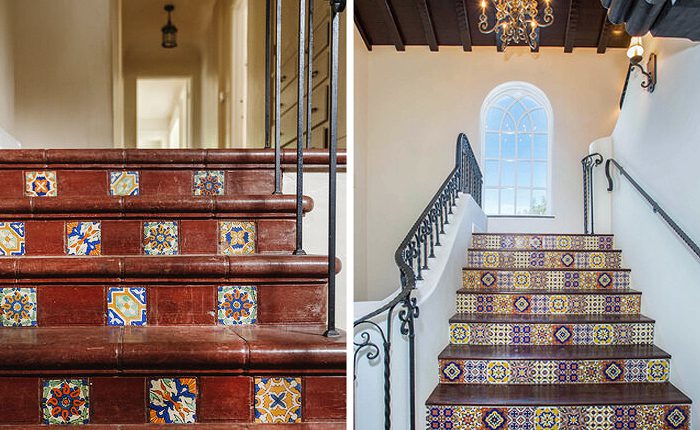
The stairways in these Spanish Revival historic homes celebrate a level of craftsmanship rarely seen today, where material and artistry meet with quiet confidence. Smooth expanses of magnasite, a hand-troweled artisanal process, forms a seamless canvas underfoot, prized for both its durability and refined finish. Set within it, richly patterned Spanish-style tiles emerge as focal points, their color and geometry guiding the eye upward along the stair’s rhythm. Together, they create a layered composition of texture and tradition, capturing the art of handcrafted design from a more deliberate era.
Notable Architects of Los Angeles Historic Homes
The architects behind some of Los Angeles’ historic homes shaped not only individual residences, but an entire cultural and architectural identity anchored in climate, craft and a sense of place. Visionaries like Irving Gill helped define an early modern language in Southern California, stripping away ornament in favor of clean lines, concrete forms, and an almost spiritual simplicity that predated European modernism. In contrast, Charles Sumner Greene and Henry Mather Greene, known collectively as Greene & Greene, embraced the handcrafted ethos of the Arts & Crafts Movement, creating deeply expressive homes, influenced by Japanese design, where architecture, interiors, and furnishings were conceived as one. Their work in Pasadena established a regional design vocabulary that emphasized natural materials, artisanal wood joinery and an intimate relationship between structure and landscape. These architects built the foundation for a distinctly Californian approach to residential design, balancing innovation with warmth, restraint with detail.
As Los Angeles grew, a new generation of architects expanded on these ideas, shaping the romantic and revivalist styles that came to define many of the city’s most iconic neighborhoods. Wallace Neff became synonymous with the California interpretation of Spanish Colonial Revival, designing elegant estates for Hollywood’s early elite that blended Mediterranean influences with indoor–outdoor living. Roland Coate brought a refined, storybook quality to his homes, often working in Tudor and French Norman styles with a focus on proportion and detail. Architects like Reginald D. Johnson and Paul R. Williams continued to elevate Los Angeles’ historic architectural landscape, creating residences that ranged from grand estates to thoughtfully scaled homes, each reflecting the aspirations of an evolving city.
TOP NEIGHBORHOODS FOR FINDING YOUR LOS ANGELES HISTORIC HOME
If you love historic homes, there are many neighborhoods in Los Angeles where you can find your perfect house. Many areas and even entire neighborhoods have been designated an HPOZ (historic preservation overlay zone). This protects the distinctive architecture, historical details and character of the neighborhood and/or structure. Additionally, there is historic real estate for sale throughout Los Angeles.
Hancock Park | Luxury estates and classic residences in various Period Revival styles, English Tudor, Spanish Colonial, Monterey and American Colonial Revival architectural styles can be seen here. This neighborhood has been home to many prominent individuals in Los Angeles society, including Howard Hughes, Mae West and Nat King Cole. Hancock Park became an HPOZ in 2008 and remains one of the city’s most coveted neighborhoods for finding a historic home.
Carthay Circle | Spanish Colonial Revival, Tudor, French, and American Colonial Revival styles. Each home in the neighborhood is unique, as it was individually designed by notable Los Angeles architects, including Paul Williams, Robert Byrd and Irving Gill. It was one of LA’s first planned communities, which incorporated underground utilities. Carthay Circle was designated an HPOZ in 1998.
West Adams Terrace | This area in south Los Angeles was initially developed for businessmen and their families who wanted to move out of downtown while still being close enough to commute. There are expansive, lavish homes here as well as more modest Victorian-era cottages. Craftsman and Mission Revival bungalows and more prominent Period Revival architecture can be seen here. West Adams Terrace was designated an HPOZ in 2003.
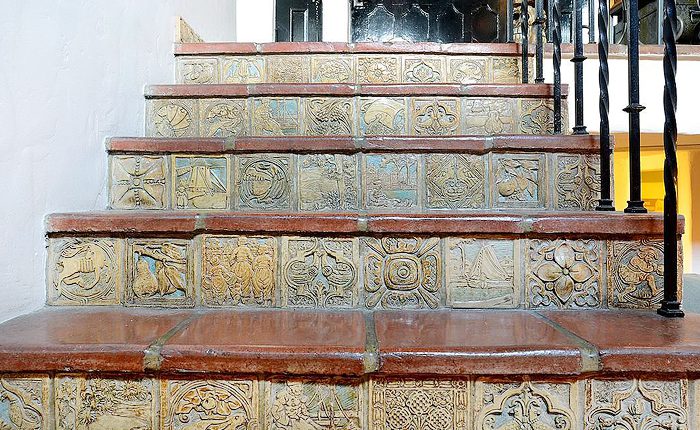
An extraordinary stairway adorned with tiles by Ernest A. Batchelder brings a sense of artistry and narrative to this classic Hollywood Hills English Tudor home. Originating in early 20th-century Los Angeles, Batchelder tile emerged from the Arts & Crafts movement, emphasizing handcraft, texture and artisanal design. Each whimsical relief tile tells its own story, with earthy glazes and sculpted motifs that feel both grounded and expressive. From Craftsman bungalows to Tudor and Storybook residences, these tiles remain a defining element of Southern California’s historic architectural character.
Whitley Heights | A historic enclave just east of the Hollywood Bowl, this picturesque neighborhood celebrates all there is to love about classic architecture and old-world charm. Many of the homes here are in the Spanish Colonial Revival style. This historic district has been home to many of Hollywood’s Gold Age elite. Rudolph Valentino, Tyrone Power, Gloria Swanson, Judy Garland and Marlene Dietrich all called Whitley Heights home. Listed in the National Register of Historic Places, LA’s City Council declared the neighborhood an HPOZ in 1992.
Spaulding Square | This historic neighborhood is located right off Sunset Boulevard, which was quite convenient for up-and-coming stars and others in the film industry to settle in. It was situated between the studios and celebrity homes of Beverly Hills. Classic craftsman bungalows with white picket fences look as fresh today as when they were first built. Spaulding Square became an HPOZ in 1993.
Angelino Heights | If you dream of living in a Victorian-style home, the historic neighborhood of Angelino Heights is your perfect choice. Perched on a hilltop between Los Angeles’ Chinatown and Echo Park, this charming community is home to some of the most coveted Queen Anne-Eastlake Victorians around. You will also find some California bungalows, Craftsman and Streamline Moderne homes here. Angelino Heights became LA’s first HPOZ in 1983.
Many additional examples of homes in the Period Revival style exist in the Beachwood Canyon neighborhood, known as Hollywoodland, under the iconic sign. The coveted lush verdant neighborhood of Los Feliz is filled with Period Revivalist-style homes and estates with expansive gardens and grounds. For luxury historic properties and noteworthy estates look no further than Beverly Hills, Holmby Hills or Bel Air.
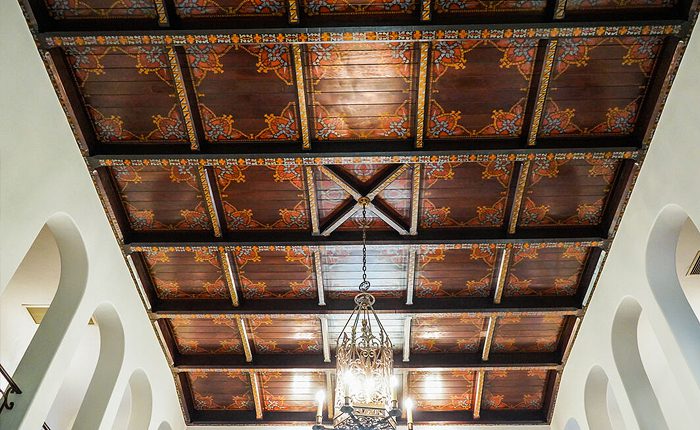
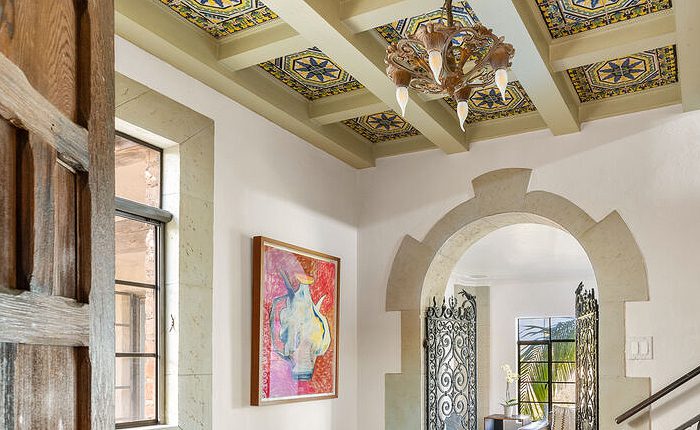
Don’t forget to look up! In some of Los Angeles’ most remarkable historic homes, ceilings become canvases rich with pattern, color and intention. Hand-painted beams, intricate stenciling and coffered geometries create layered compositions that draw the eye upward. Deep ochres, muted blues and burnished golds interplay with natural wood tones, adding warmth and depth to each room. These ceilings transform everyday spaces into immersive works of art, where craftsmanship and design elevate the entire experience of the home.
PRESERVING HISTORY: LOS ANGELES HISTORIC HOMES
Find Your Place in Los Angeles’ Architectural History
There’s a reason certain homes linger in memory long after you’ve left them. Los Angeles’ historic homes have a unique character hard to find elsewhere. Spaces where materials have aged gracefully, proportions feel intentional and every detail tells a story. Historic houses are more than residences; they feel personal and inviting, offering a unique lifestyle in Los Angeles. These homes encourage you to slow down and notice how the light shifts through a window or how each space connects to the next.
If you’re considering buying or selling a historic home in Los Angeles, a thoughtful, design-driven approach makes all the difference. For buyers, explore our curated listings or connect with Beyond Shelter Real Estate Group to begin your search. Our knowledgeable team specializes in helping buyers and sellers of classic mid-century modern, historic and architectural houses.