A. Quincy Jones Architecture: The Visionary Who Shaped Modern Los Angeles Living
A. Quincy Jones – Architect Profile
- Born: April 29, 1913 — Kansas City, Missouri
- Died: August 3, 1979 — Los Angeles, California (age 66)
- Style: Mid-Century Modern, Post-and-Beam Residential, Humanist Modernism, California Modernism
- Known For: Collaboration with developer Joseph Eichler to produce mass-market modernist homes, custom residential design throughout Los Angeles, integration of Japanese spatial principles into California architecture, post-and-beam construction, indoor-outdoor living, and long tenure as Dean of the USC School of Architecture
- Key Project Locations: Los Angeles (Bel Air, Brentwood, Pacific Palisades, Hollywood Hills), San Fernando Valley, Bay Area Eichler tracts, USC Campus in Los Angeles
- Notable Work: Eichler Homes Series (with Frederick Emmons), Mutual Housing Association Projects, USC Campus Buildings, custom hillside residences throughout Los Angeles, and community facilities for the National Park Service
In This Article
- Who Was A. Quincy Jones?
- The Design Philosophy Behind the Work
- Iconic Buildings and Landmark Projects
- The Eichler Collaboration: Democratizing Modern Design
- A. Quincy Jones Homes in Los Angeles
- Materials, Details, and Signature Touches
- Preservation and Legacy
- Why A. Quincy Jones Homes Remain So Sought After
- FAQs About A. Quincy Jones Architecture
Who Was A. Quincy Jones?
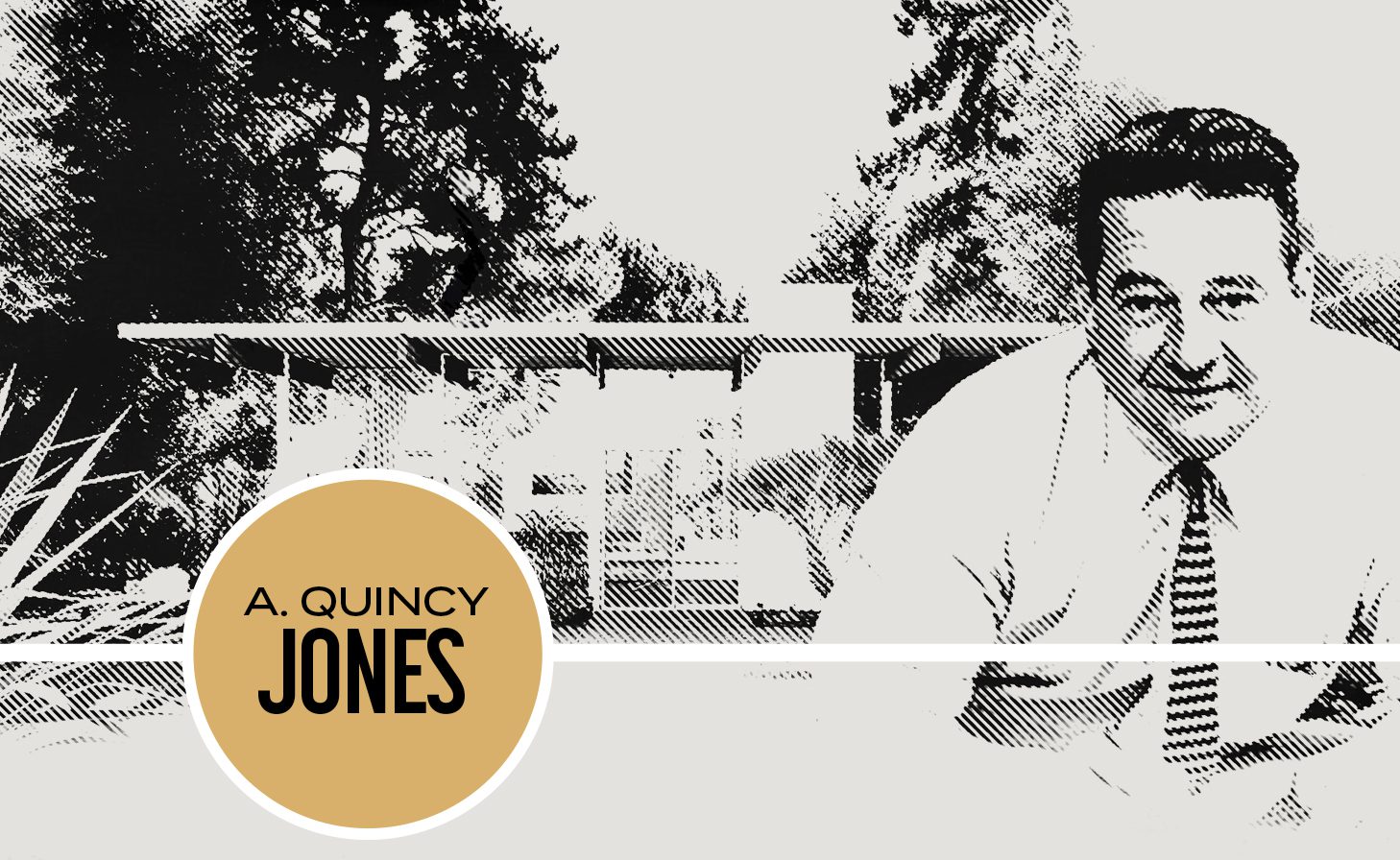
Through modular grids and honest materials, A. Quincy Jones elevated everyday living into an architectural experience. Expanses of glass capture horizon views while preserving intimacy within. His homes feel simultaneously expansive and grounded in modernism.
The Design Philosophy Behind the Work
At the core of A. Quincy Jones’s architecture is based on the belief that good design should improve everyday life. Jones approached each project with the question: how will people actually live here? This deceptively simple starting point led to spaces that feel both carefully considered and effortlessly natural, as though the house had always been exactly this way. Jones was deeply influenced by Japanese architecture, particularly the concept of shakkei, or “borrowed scenery,” the idea that the landscape beyond a building’s walls should be visually incorporated into the interior experience. In his residential work, this translated to generous glazing, sliding walls and carefully oriented rooms that frame garden views and bring the outdoors in. Post-and-beam construction was his structural language of choice, allowing open floor plans and large expanses of glass that were revolutionary in their day. He also placed enormous value on craft and material honesty. Wood, brick, concrete and glass were used in ways that celebrated their inherent qualities rather than disguising them. His homes feel grounded and tactile; you’re always aware of the materials underfoot and overhead. This sensibility, combined with his mastery of natural light, gives even his most modest projects a unique quality that resonates with design-conscious buyers today. Browse our collection of architectural home styles to see how these principles translate into the properties we represent.Iconic Buildings and Landmark Projects
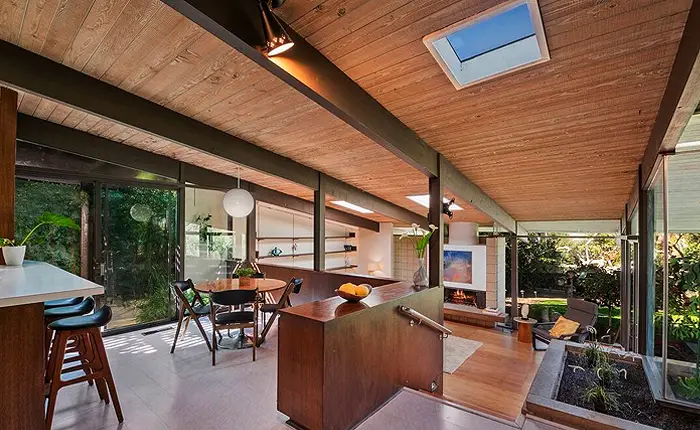
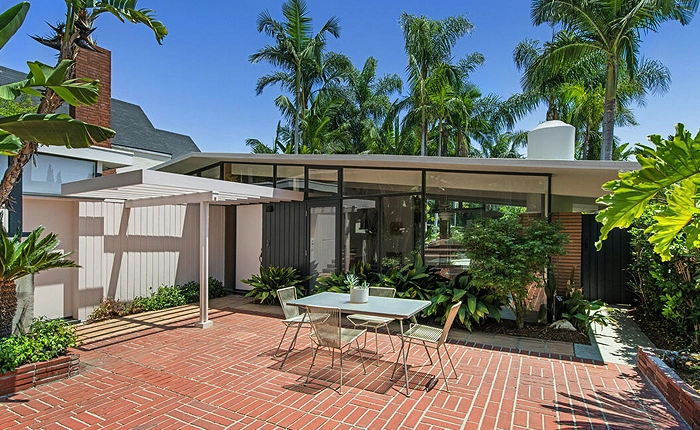
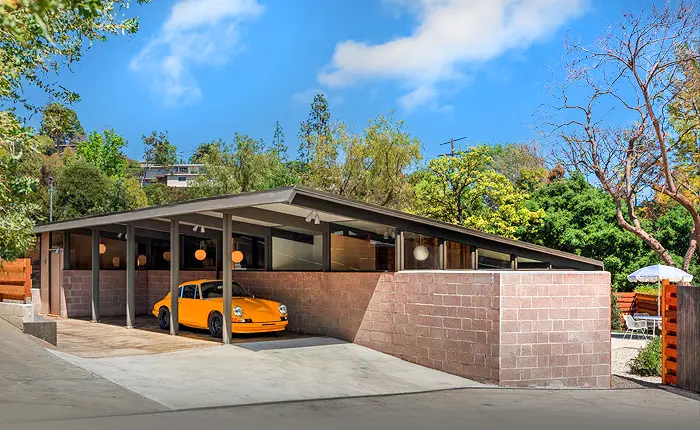
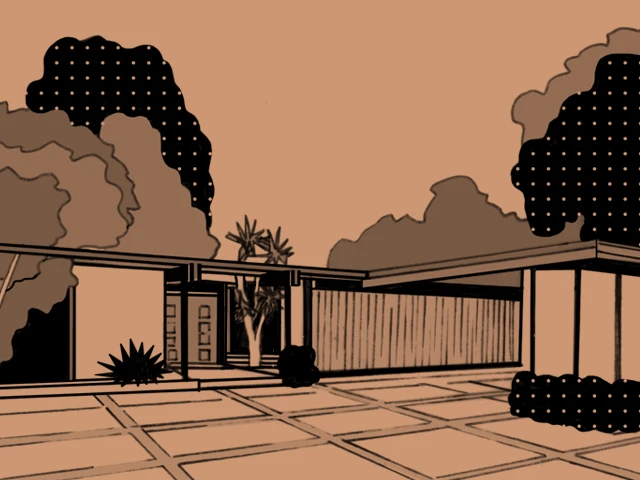
Inviting nature into the daily ritual of living. A. Quincy Jones shaped residences that breathe with their surroundings. In his plan, each line feels intentional, yet never rigid, mid-century architecture composed with quiet confidence. This interior space is highlighted by disciplined geometry, generous glazing, changes in elevation and structural beams as expressive design components.
The Eichler Collaboration: Democratizing Modern Design
Perhaps the most far-reaching chapter of A. Quincy Jones’s career was marked by his long collaboration with developer Joseph Eichler. Beginning in the early 1950s, Jones and his partner Frederick Emmons designed hundreds of homes for Eichler Homes, the developer who made modernist design accessible to ordinary middle-class buyers across California. These Eichler homes, with their post-and-beam construction, atrium entries, radiant-heated concrete slab floors and floor-to-ceiling glass walls, brought the California modern lifestyle to suburban neighborhoods that might otherwise have been filled with conventional tract housing. The Jones-Emmons designs for Eichler are particularly distinguished by their thoughtfulness and variety. While working within the constraints of tract home production, standardized components, controlled budgets and efficient construction methods, they managed to produce homes that felt custom and considered. Each model offered meaningful variations in layout, orientation and detail that prevented the neighborhoods from feeling monotonous.The Lasting Eichler Legacy in Los Angeles
Eichler communities designed by Jones and Emmons can be found throughout the San Fernando Valley and other parts of Los Angeles and they have become sought after by buyers who value architectural authenticity. Well-preserved examples command premiums in today’s market and they represent one of the best opportunities to acquire a genuine piece of California modernist history at a relatively accessible price point compared to one-off architect-designed homes. Our team specializes in these properties, learn more about mid-century modern homes for sale in Los Angeles and how we can help you find yours.A. Quincy Jones Homes in Los Angeles
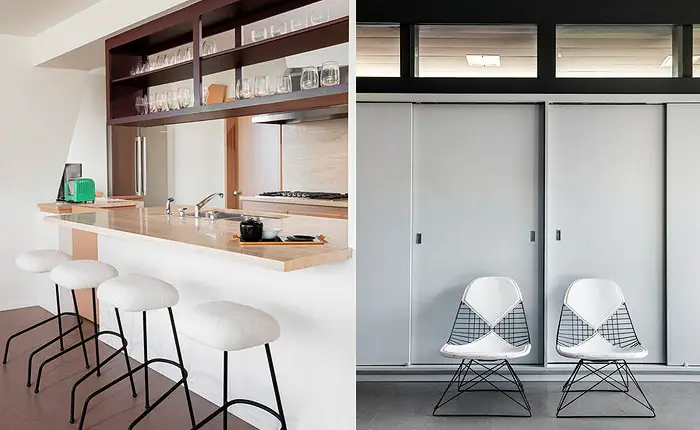
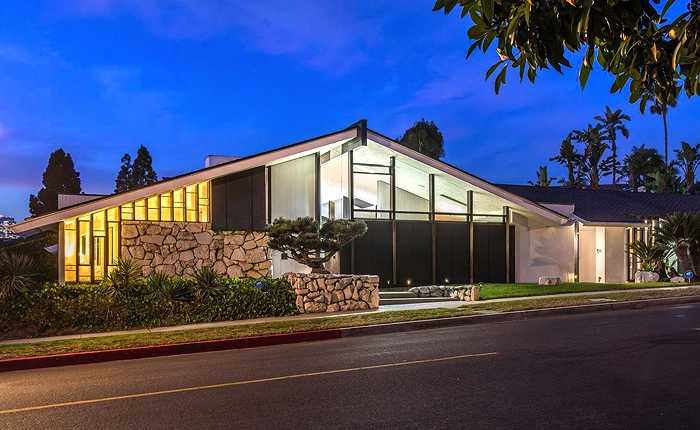
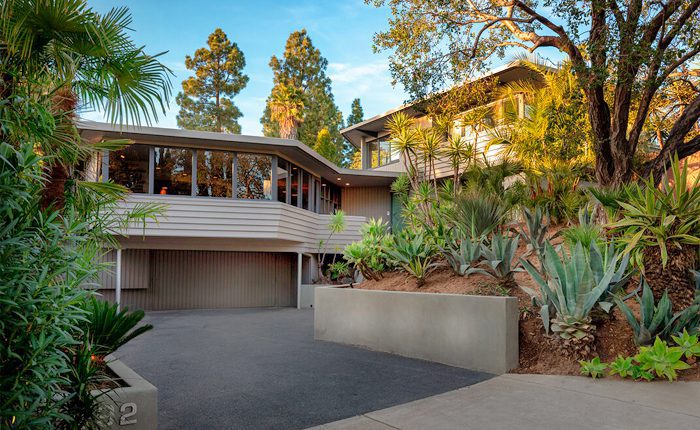
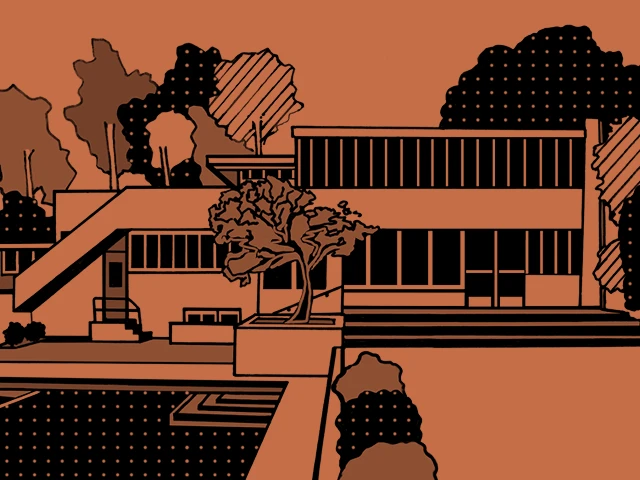
Designed for thoughtful California living, A. Quincy Jones approached residential design as a dialogue between proportion and landscape. Timber, glass and stone are arranged into compositions that feel effortless yet exacting. Jones incorporated vertical space into his designs with clerestory windows and open, floating shelving. The atmosphere is calm and curated, the perfect backdrop for classic mid-century modern pieces.
Materials, Details, and Signature Touches
A. Quincy Jones’ homes are full of thoughtful design details that distinguish them from lesser mid-century work: the way a beam connects to a post, the pattern of a brick floor, the proportions of a window wall, the transition from an interior space to a covered terrace. These details weren’t ornamental; they grew organically from structural and functional considerations and they give Jones homes a distinctive architectural quality. Wood was Jones’s most expressive material. He favored exposed redwood, cedar and Douglas fir for structural and finish elements, used in ways that celebrated the grain and warmth of the material. Brick appeared frequently as a grounding element, hearths, accent walls and paved terraces, providing visual weight and tactile richness that balanced the lightness of the glass and steel. Concrete, often polished or left with a smooth aggregate finish, completed his material palette. His kitchens and bathrooms, while obviously updated in many homes over the years, originally featured the same material sensibility as the living spaces. Built-in cabinetry, clever storage solutions and thoughtful spatial planning made even small service areas feel generous and well-considered. For buyers researching this classic era of design, Dezeen’s mid-century modern archive provides valuable visual reference for authentic period details.Preservation and Legacy
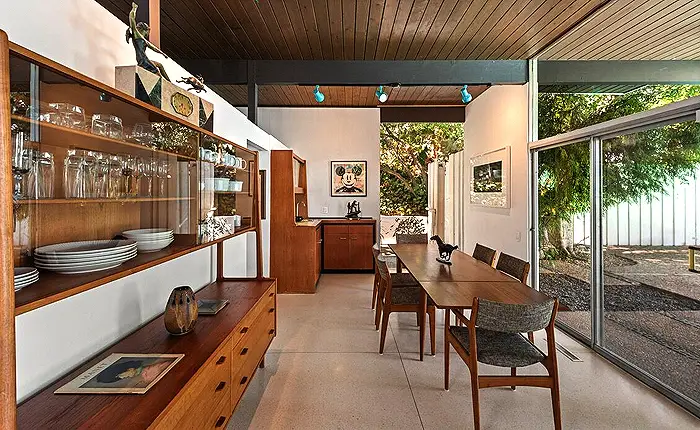
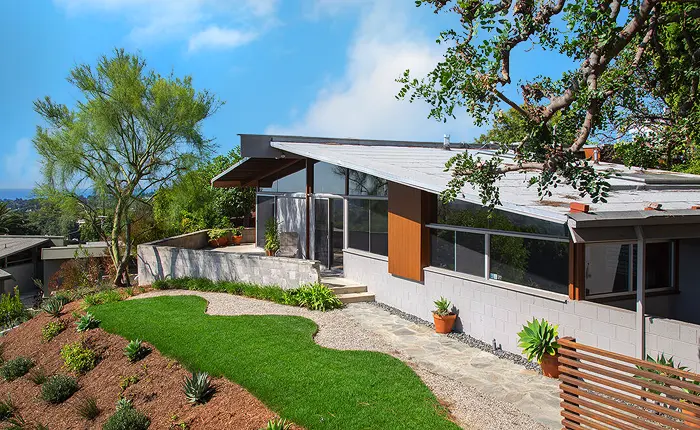
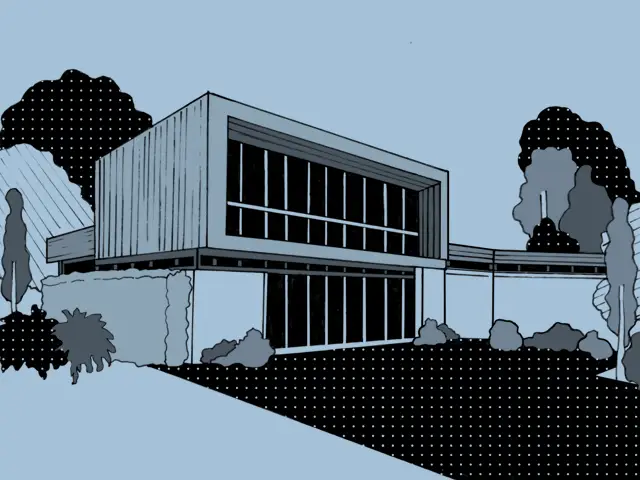
A. Quincy Jones expressed a belief in architecture as a framework for community and connection. Spaces open fluidly, encouraging gathering without sacrificing retreat. This dining room offers floor-to-ceiling windows, terrazzo flooring and pony walls, allowing for separation of space without isolation. His design language is both rational and warm, balancing clarity with comfort.
Why A. Quincy Jones Homes Remain So Sought After
In a real estate market as competitive as Los Angeles, the appeal of a classic A. Quincy Jones home is ever-present. Decades after they were built, these houses still feel fresh, livable and aspirational. The reasons are rooted in the fundamental quality of the architecture itself: good bones, intelligent planning and a relationship to the California landscape that will never go out of style. There’s also a cultural dimension to their appeal. Jones’ homes have been photographed, published and admired since they were built. The houses appear in design books, shelter magazines and TV and film productions. Owning one connects a buyer to a legacy of California living, a piece of a larger story about what aspirational modern life can be. From an investment perspective, authentic mid-century modernist homes by recognized architects have consistently outperformed the broader market in recent years, as buyer appreciation for architectural quality has grown and the supply of well-preserved examples has contracted. Whether you’re a buyer looking for a home that reflects your values, an investor seeking a property with lasting appreciation potential, or a seller wanting to position an A. Quincy Jones home correctly in today’s market, our team at Beyond Shelter has the expertise you need. Contact us today to discuss your goals.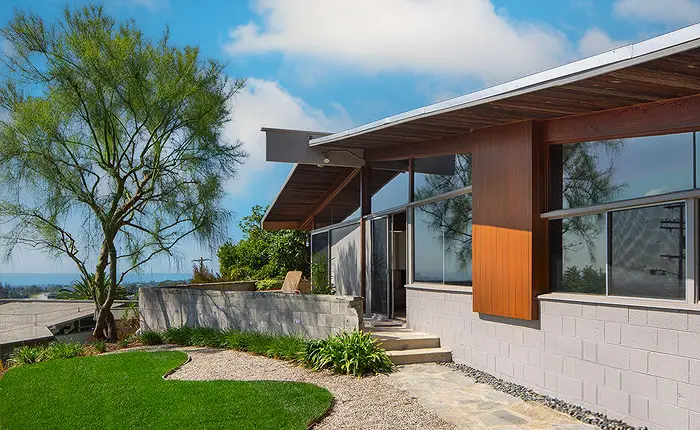
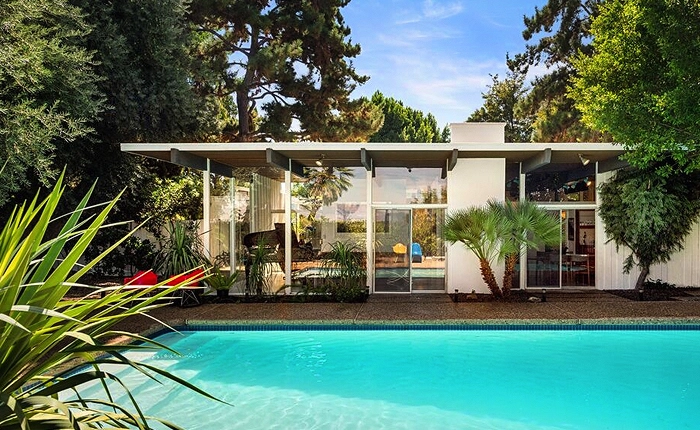
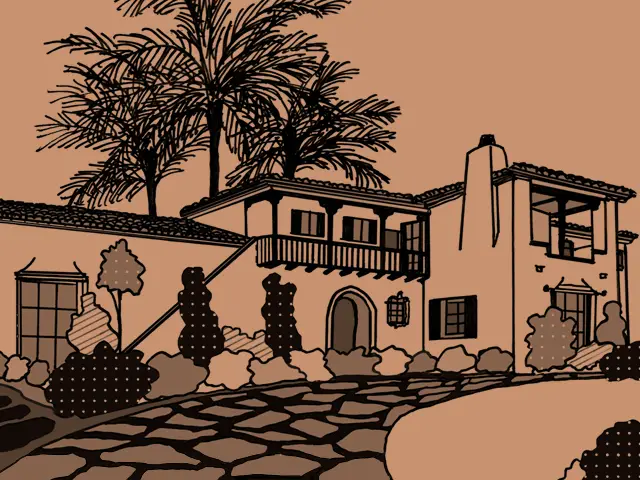
In the work of A. Quincy Jones, structure becomes poetry, precise post-and-beam frames are softened by light and landscape. His homes unfold in measured planes of glass and wood, dissolving boundaries between shelter and sky. The result is modernism made human: refined, livable and serenely Californian.
A. Quincy Jones – Notable Projects and Houses
- Jones House and Studio (1939) — West Hollywood, Los Angeles, CA. Jones’s own home and working studio, built on a lot he purchased that others deemed unbuildable. Two adjacent structures were later joined in 1950. Featured in Arts & Architecture (March 1947) and the LA Times Magazine (September 1974). A designated Los Angeles Historic-Cultural Monument.
- Palm Springs Tennis Club Addition (1947) — Palm Springs, CA. Designed in collaboration with Paul R. Williams for one of Palm Springs’s earliest social institutions. The joint design transformed the original Amalfi-inspired property into a modernist desert-responsive complex using natural wood, stone, unpainted brick and wraparound glass. Designated a Class 1 Historic Site in April 2016.
- Town & Country Restaurant (The Center) (1948) — Palm Springs, CA. Commercial and restaurant complex designed with Paul R. Williams on South Palm Canyon Drive. Part of a broader block redevelopment completed through 1955. Designated a Palm Springs Class 1 Historic Site in April 2016.
- Mutual Housing Association Development (Crestwood Hills) (1948–1950) — Brentwood, Los Angeles, CA. Cooperative housing development of more than 160 homes designed with architect Whitney R. Smith and structural engineer Edgardo Contini. One of the only successful cooperative housing developments built in postwar California. Homes finished in natural-state materials: concrete block, redwood siding, exposed Douglas fir plywood and tongue-and-groove ceiling planks. Jones designed his own residence within the community in 1954.
- Nordlinger House (1948) — Bel Air, Los Angeles, CA. One of Jones’s earliest significant residential commissions and among his first homes designed for a private client. A designated Los Angeles Historic-Cultural Monument.
- Sidney and Frances Brody House (1948–1951) — Los Angeles, CA. Landmark custom residence designed for prominent art collectors Frances and Sidney Brody. At 11,511 sq ft, a major example of Jones’s large-scale residential work combining modernist glamour with California indoor-outdoor living. Documented extensively in the 2013 Hammer Museum retrospective.
- Romanoff’s on the Rocks (1950) — Palm Springs, CA. Restaurant designed in collaboration with Paul R. Williams, part of a series of Palm Springs commissions that established Jones’s reputation for desert-responsive design, integrating indoor and outdoor dining.
- Jones and Emmons Office Building (1954–1959) — Los Angeles, CA. Purpose-built studio for the Jones and Emmons practice, constructed in two phases (1954–55 and 1957–59). Served as a working laboratory for the firm’s residential and commercial ideas. Documented in the 2013 Hammer Museum retrospective.
- Jones House, Tigertail Road (1955) — Brentwood, Los Angeles, CA. Jones’s personal residence within Crestwood Hills, a steel-frame structure representing his experiments with steel as an alternative to post-and-beam wood construction. Destroyed in the Bel Air fire of November 1961.
- Eichler Steel House X-100 (1956) — San Mateo, CA. Prototype “House of the Future” designed with Frederick Emmons for developer Joseph Eichler. An all-steel frame structure featuring an interior garden atrium, radiant floor heating and a bold open plan. Widely published and influential on California residential design.
- Lido Sands Development (1957) — Newport Beach, CA. Planned community of 82 homes designed with Frederick Emmons for Eichler Homes. An example of Jones’s conviction that greenbelt planning and community design were as important as individual home design.
- Shorecliff Tower Apartments (Ocean Aire) (1963) — Santa Monica, CA. Multi-unit residential tower on Ocean Avenue, demonstrating Jones’s ability to apply his residential sensibility and material intelligence to larger-scale urban housing.
- IBM Aerospace Headquarters (1963) — Westchester, Los Angeles, CA. Major corporate commission representing Jones’s expansion into large-scale office and institutional design in the 1960s. Integrated mechanical systems into the architectural logic of the building.
- Sunnylands (Annenberg Estate) (1963–1966) — Rancho Mirage, CA. Jones’s most celebrated non-residential commission. A 25,000 sq ft midcentury modern estate on 200 acres for media magnate Walter and Leonore Annenberg, known for its pyramidal pink roof, Mexican lava stone walls, central skylight atrium, and dramatic indoor-outdoor integration. Construction began in 1963; completed in 1966. Hosted seven U.S. presidents during the Annenbergs’ lifetime. Designated a Rancho Mirage historic site in 1990. Now operated by the Annenberg Foundation Trust and is open to the public.
- Country Club Estates (c. 1960s) — Palm Springs, CA. Planned residential community of 30 homes. Designated a Palm Springs Historic District in 2024.
- USC Annenberg School for Communication and Journalism, Unit I (1976) — University of Southern California, Los Angeles, CA. The first phase of the communications school building for the institution where Jones served as professor and dean from 1951 to 1967. One of several USC campus buildings Jones designed over his career.
- USC Annenberg School for Communication and Journalism, Unit II (1979) — University of Southern California, Los Angeles, CA. The second phase of the Annenberg building was completed the year of Jones’s death. Among his final built works and a lasting contribution to the campus, he shaped as an educator for nearly three decades.