Charles and Ray Eames’ pioneering integration of mass-production techniques and human-centered aesthetics transformed twentieth-century creativity and established a new benchmark for functional art. Their impact on design history can be seen through a study of their mid-century revolution, core philosophy, furniture legacy and continued inspiration and influence today.
What Is the Impact of Charles and Ray Eames on Design History?
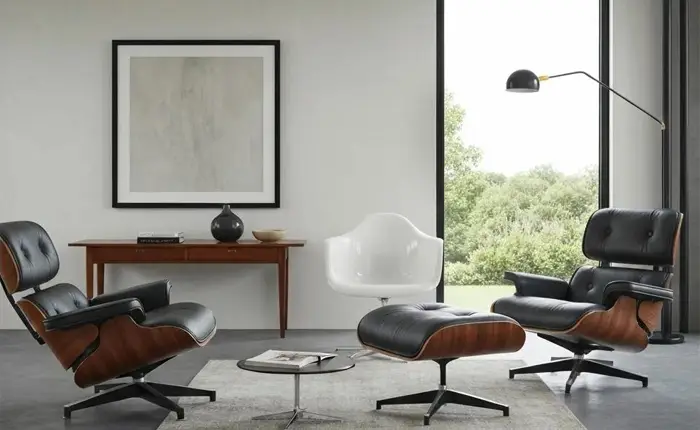
Charles and Ray Eames changed the course of design history by combining industrial methods with a focus on people’s needs, making quality furniture more widely available. They brought their technique of molded plywood and fiberglass into everyday items. This approach led to their key mid-century modern designs and their work with Herman Miller. Their most famous furniture piece, the Eames Lounge Chair and Ottoman, became a symbol of affordable luxury.
Charles and Ray Eames’ Influence on Design
The pair used everyday materials in creative ways, as shown in their famous plywood chairs, focusing on both design and comfort. Their furniture pieces became a symbol of affordable luxury and inspired later designers to balance looks and comfort. Their impact on design history and on contemporary furniture is also on full display at the legendary Eames House. Marcel Breuer, Eero Saarinen and Alexander Girard all played important roles in creating the much-loved mid-century modern aesthetic.
How Did Charles and Ray Eames Revolutionize Mid-Century Modern Design?
Eames revolutionized mid-century modern design by integrating molded plywood and fiberglass resin shells, enabling lightweight mass production and ergonomic seating. This method reduced material waste and lowered costs while preserving sculptural forms. The 1956 Lounge Chair (Model 670) represents their process, combining industrial efficiency with handcrafted quality. Such breakthroughs redefined expectations for residential and office furniture, guiding designers toward material experimentation and user-first ergonomics.
Which Key Principles Define Charles and Ray Eames’ Design Philosophy?
Their design philosophy rests on clear principles that remain influential in modern design today.
– Form follows function, assuring every single curve and angle serves comfort or purpose.
– Honesty in materials, embracing the innate qualities of plywood, steel and resin.
– Playful experimentation, inviting prototypes and model iterations.
– Human-centered innovation, focusing on user experience and intuitive interaction.
These pillars informed every creation and underpin contemporary design thinking, reinforcing why their legacy remains today.
How Have Charles and Ray Eames Designs Influenced Contemporary Furniture?
The couple’s designs still set the standard for comfortable seating and stylish design, thanks to their use of light materials and simple shapes. They showed that efficient production can go hand in hand with good design, inspiring new designers to mix technology with craftsmanship. Many brands now copy their focus on curves and comfort, especially in top office and home chairs.
What Are their Most Iconic Furniture Pieces?
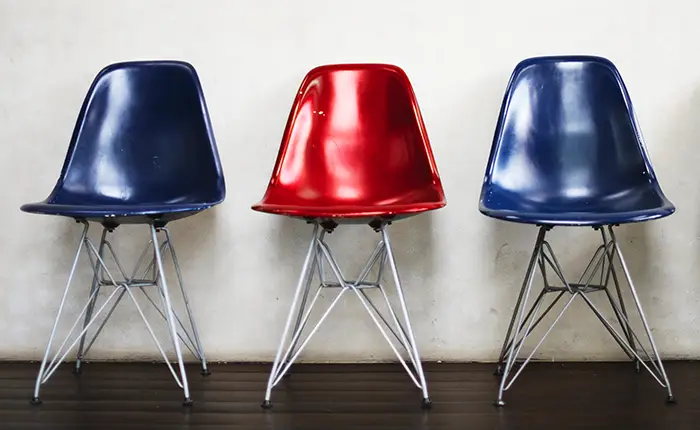
The Lounge Chair (670) with its curved plywood shell and leather upholstery serves as a benchmark for luxury office seating and appears in mid-century modern homes throughout Los Angeles. The Molded Plastic Chair, with a one-piece fiberglass seat, has inspired budget-friendly café seating and modular stacking chairs. The plywood Elephant Stool influences playful side tables and today’s multifunctional stools.
An enduring icon of 20th-century design, the Eames Shell Chair remains highly sought after more than 50 years after its debut. Born from years of experimentation by Charles Eames and Ray Eames, the chair evolved from an unrealized molded-plywood concept into a breakthrough in fiberglass, and later plastic—bringing their vision of a single, sculptural shell to life.
How Do Charles and Ray Eames Materials and Techniques Inspire Modern Makers?
Today’s designers use the design language of Charles and Ray Eames, utilizing molded plywood, fiberglass shells and bent steel-tube frames to make strong, flexible and affordable furniture. 3D-printed models now copy Eames’ focus on style and comfort before final production. Their wood-veneer lamination from the 1940s inspires today’s sustainable furniture. This mix of technique and material still shapes eco-friendly and creative design work.
Why Does Charles Eames' Approach Continue to Inspire Modern Designers?
Charles Eames combined careful engineering with creative design, making prototypes that became classic products. He and Ray encouraged teamwork across fields such as film, architecture and graphics, which added depth to their work. Their iconic film “Powers of Ten” showed how scale changes what we see, a lesson still used in design today.
How Do Designers Apply Charles Eames’ Functional and Aesthetic Balance?
Designers implement Eames’ balance through:
– Integrating simple joinery that highlights material integrity.
– Prioritizing user comfort with contour-fitting forms.
– Exposing structural elements as visual features.
– Embracing modular, reconfigurable systems.
These methods sustain a lineage of human-centered design and point toward sustainable innovation.
What Role Does Charles Eames Play in Sustainable and Innovative Design?
Charles Eames supported designing products that could be taken apart and shipped easily, which helped cut waste and lower carbon emissions. Their stackable, nesting furniture made shipping worldwide more efficient. Today, this way of thinking inspires circular design and the use of eco-friendly materials. Their focus on sustainability continues to guide green product development.
What Are the Cultural and Historical Contexts of Eames’ Influence?
Eames’ influence emerged from a post-war environment that demanded affordable style and celebrated American ingenuity. Their multidisciplinary practice merged exhibition design, filmmaking and furniture, reflecting a culture eager for innovation. Partnerships with IBM and MoMA exhibitions amplified their reach. These contexts provided fertile ground for ideas that continue to impact design education and industry practice. During the post-war boom, mass production technologies enabled large-scale furniture fabrication. A mass media expansion through education films and exhibitions extended the reach of modern design principles through multimedia storytelling. Consumer demand for progress paired with cultural optimism drove experiments in materials and form.
How Did Post-World War II America Shape Eames’ Design Impact?
After World War II, America’s growing industry and middle class wanted stylish but affordable products. Charles Eames met this need with molded materials and mass production. Working on exhibitions and educational films made them key cultural figures. Their mix of consumer needs and technology led to designs that were both useful and inspiring, changing how people saw everyday items.
Post-War Design Context
Post-war America’s industrial capacity and the rise of the middle class created a demand for stylish, accessible products. The Eames’ response to this demand, through mass-market distribution and collaborations, established their role as cultural interpreters, defining how people related to everyday objects.
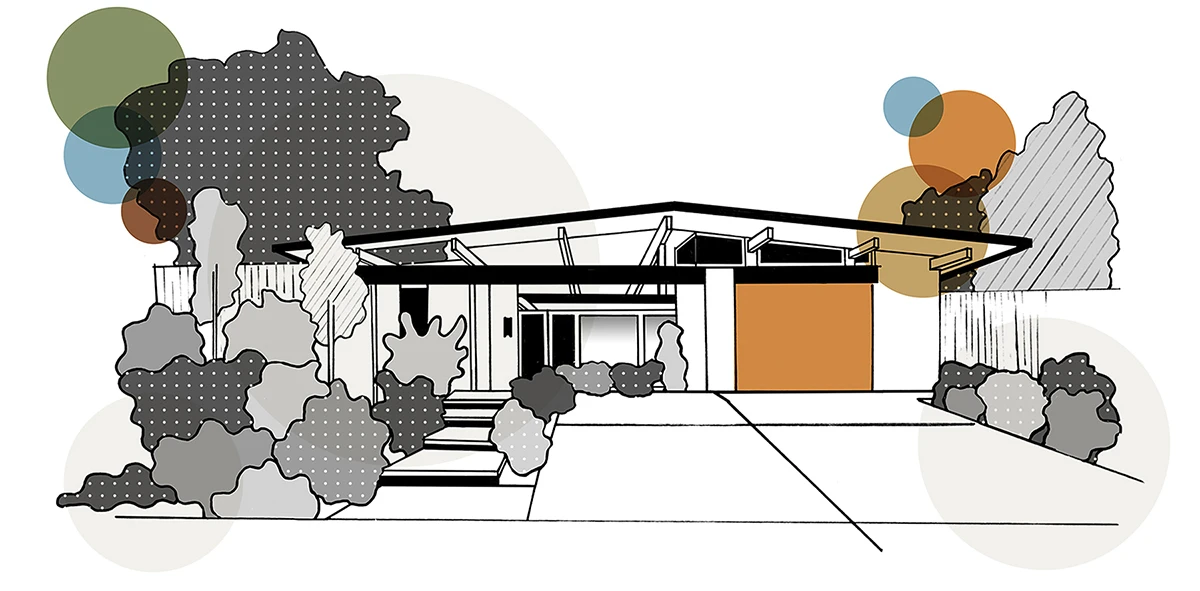
The living room of this mid-century modern home is furnished with classic pieces from the era, including an Eames Molded Plywood Lounge Chair, a Knoll Sofa and a Knoll Coffee Table. The home’s architectural design celebrates the classic Mid-Century Modern (MCM) open floor plan and the integration of exterior spaces.
In What Ways Did Charles Eames Reflect and Shape Popular Culture?
By creating educational films, multimedia displays and MoMA shows, the Eameses shared a vision of modern life that went beyond furniture to encompass architecture, graphics, and industry. Their positive outlook shaped what people expected from modern design and made modernism feel open to everyone. For example, their molded-plastic chair became a symbol of modern style worldwide.
How Can You Recognize Charles and Ray Eames’ Lasting Impact in Today’s Design Trends?
Eames’ legacy surfaces in minimalist silhouettes, ergonomic contours and honest materials across residential, commercial and product design sectors. Their emphasis on prototype-driven iteration and user-centered testing remains a core studio practice. Modern creatives reference their material palettes and form logic when developing chairs, tables and lighting. Next, we’ll identify specific motifs and review institutional efforts to preserve this heritage.
What Modern Design Elements Trace Back to Charles Eames Innovations?
Designers continue to adopt hallmark Eames motifs:
– Eames chair and ottoman: molded seats that conform to human posture.
– Visible joints and exposed hardware celebrate construction.
– Neutral color palettes paired with natural wood veneers.
– Modular storage units that adapt to a variety of spaces.
These features guide what to look for in contemporary interiors, signaling an enduring respect for thoughtful functionality.
How Do Museums and Exhibitions Preserve Eames’ Legacy?
Institutions such as the
Vitra Design Museum and the Museum of Modern Art host retrospectives, workshops and archival displays showcasing the original prototypes, sketches and correspondence of Charles Eames and George Nelson. These programs contextualize their methods within wider contexts of art, technology and culture. Annual exhibitions and digital archives foster ongoing scholarship and engage new audiences with hands-on experiences. Such preservation ensures that future designers continue to learn from their pioneering model. The Eameses’ mix of form, function, and context changed modern design and set standards that still matter today.
Eames’ integration of form, function and context changed the trajectory of modern design and set benchmarks that remain relevant. Their fusion of industrial innovation with human-centered principles continues to guide furniture makers, architects and creative studios worldwide. By studying their methods and motifs, designers can draw inspiration for sustainable methodologies and timeless aesthetics. Recognizing this legacy empowers practitioners to craft the next generation of iconic designs.
Los Angeles features a diverse range of architecture, from Mid-Century Modern and Spanish to classic historic homes. Beyond Shelter Real Estate Group connects buyers with current and off-market listings, arranges private showings, and offers tailored services for our clients. Our design expertise allows us to advise on how architectural details impact lifestyle, comfort and long-term value as well as to offer practical guidance on updates and home restoration.
Whether you are buying or selling, our team is ready to guide you. Contact us at 323-745-1160 or livebeyond@beyondshelter.com. If you are preparing to sell, our Ready. Set. Show. Plan ensures your home makes an outstanding debut and achieves maximum value.