

7144 Hockey Trail, Los Angeles, CA | $2,995,000 | 2 BD | 2 BA
The Foster Carling Residence, designed by renowned architect John Lautner for composer Foster Carling is an extraordinary example of mid-century design. Carling, known for his work on film scores during the 1940s and ’50s, had a specific vision for his living space: an open plan that could accommodate his grand piano and serve as a gathering spot for friends and collaborators. Lautner elegantly fulfilled this request by crafting a remarkable structure void of internal columns, allowing a fluid and expansive living area. The hexagonal main space is supported by innovative external steel cantilevered beams. The structural design enhances the aesthetic appeal and embodies the spirit of creativity that Carling sought in his home. Lautner designed the perfect backdrop for musical inspiration and social gatherings.
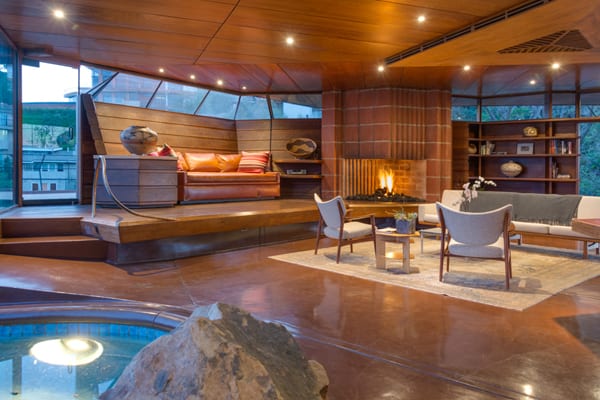
The Carling House marked the start of a successful collaboration between architect Lautner and builder John de la Vaux. De la Vaux, who transitioned from boat building to home construction, was open to Lautner’s innovative structural concepts. This allowed for the realization of ambitious designs that pushed the boundaries of traditional architecture. Completed in 1949, the house features stunning redwood cladding and is strategically positioned on a hillside, providing breathtaking 360-degree views of the Los Angeles landscape. This partnership not only resulted in a remarkable residence but also set the stage for many successful projects between the architect and builder, influencing mid-century modern architecture for years to come.
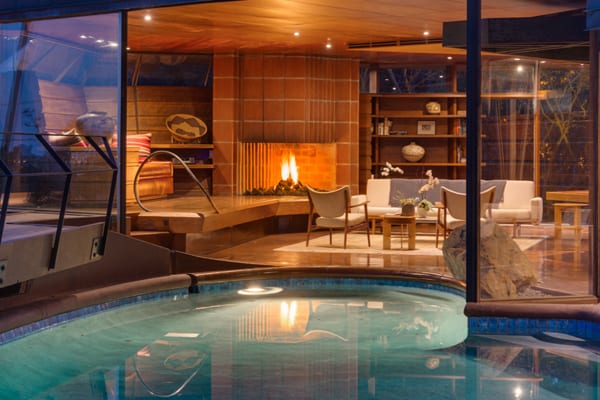
The Carling House is a prime example of John Lautner’s architectural philosophy, which aims to seamlessly integrate indoor and outdoor living spaces. This early work reflects Lautner’s dedication to designing environments where nature and architecture harmoniously blend. The floor-to-ceiling glass on the southern facade provides stunning panoramic views of the surrounding landscape, effectively bringing the outdoors inside.
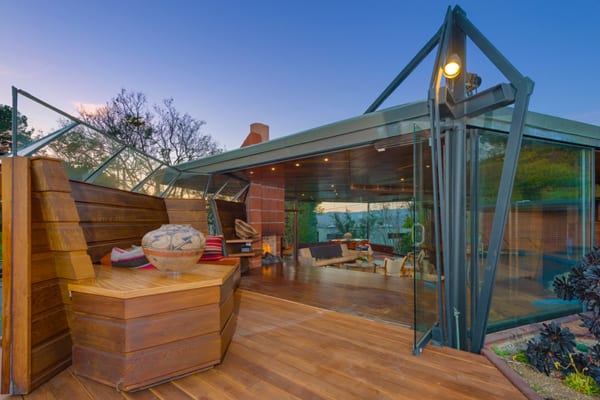
Lautner’s innovative use of a pool that cascades from the terrace into the living room, facilitated by a retractable glass wall, is particularly striking. This seamless transition enhances the visual connection to nature and creates an immersive experience. The famous hydraulic swing-out wall serves as an example of John Lautner‘s bold design approach, erasing the boundaries between indoors and out, and allows the environment to effortlessly intertwine with the comforts of home. Some sources link this hydraulic wall to the Hawaiian concept of “hikea,” or a “platform of gatherings.”
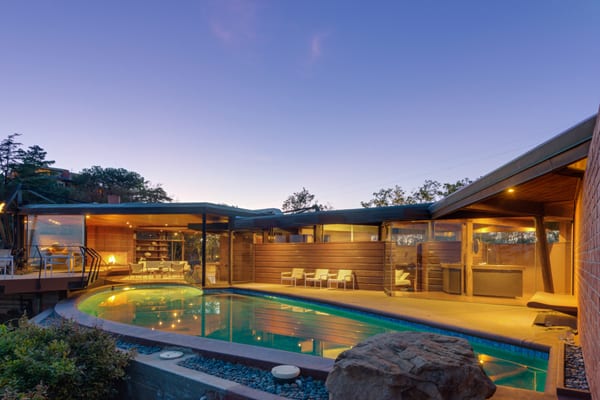
The Carling House underwent multiple transformations as Lautner continually sought to improve its functionality and allure. Later, in 1991, Lautner revisited the residence to convert the carport into an additional bedroom, showcasing his dedication to customizing the spaces he designed to meet the changing needs of its occupants. This property stands as a testament to Lautner’s belief that a residence of such remarkable quality should be shared, serving not only as a personal sanctuary but also as a dynamic backdrop for gatherings, creativity and good living.
Interested in seeing The Foster Carling Residence by John Lautner, contact us at 323-745-1160 for a private showing. For more Los Angeles homes for sale, email livebeyond@beyondshelter.com. Considering selling your home… Beyond Shelter would love the opportunity to work with you. Through our personalized Ready. Set. Show. Plan, we will prepare your home for showtime and maximize its value in the marketplace. Find out more about our Seller experience here.
SOLD – Listing courtesy of Brian Courville, Compass