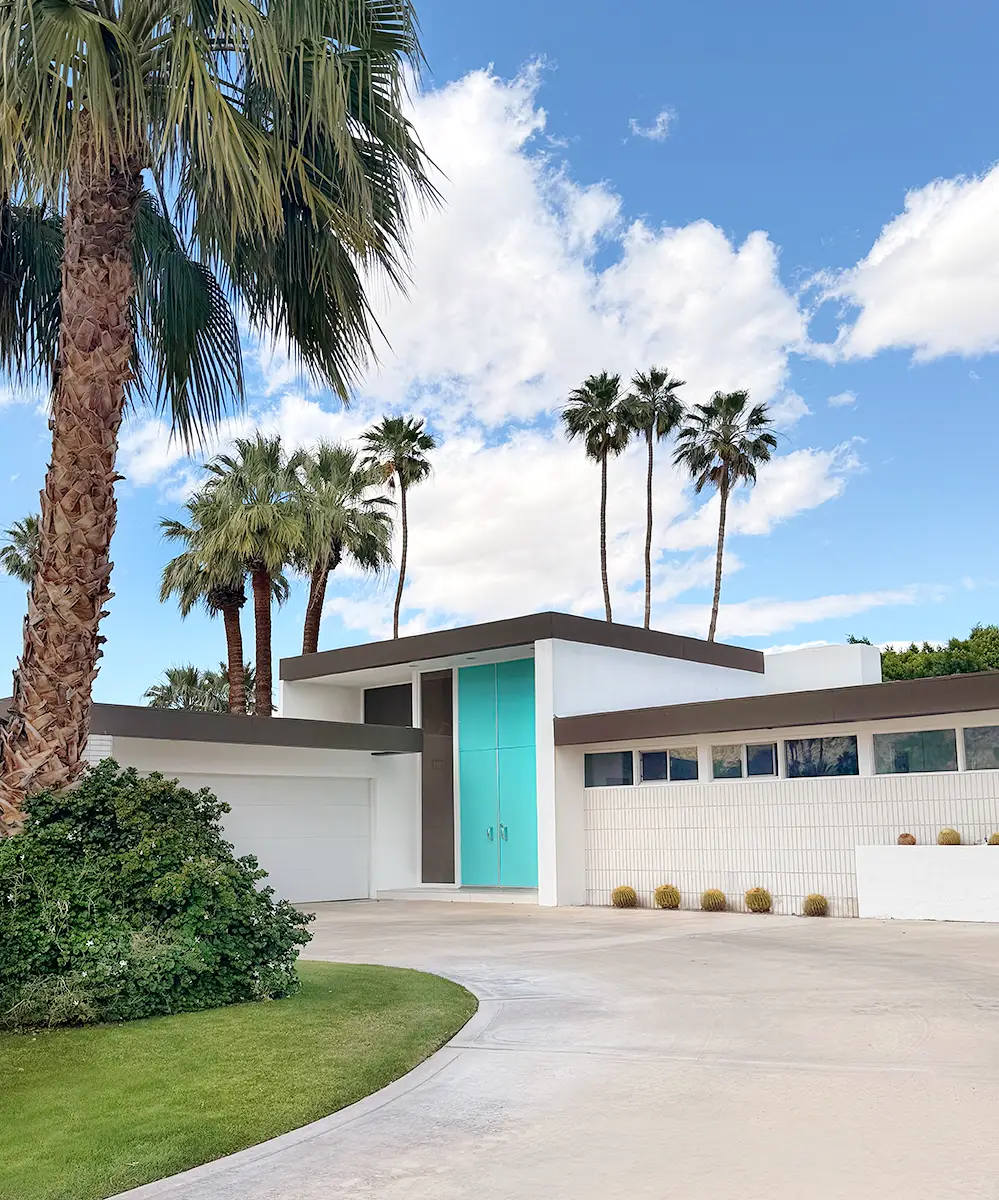
John Lautner Architecture: Visionary Designs That Define Los Angeles Modernism
John Lautner (1911-1994) was an American architect renowned for pioneering organic modernist residential designs in Los Angeles and Southern California. Born July 16, 1911, in Marquette, Michigan, Lautner apprenticed under Frank Lloyd Wright at Taliesin from 1933 to 1939 before establishing his independent practice in Los Angeles in 1938. His 55-year career produced over 200 architectural projects, with iconic works including the Chemosphere (1960), a UFO-like octagonal house perched on a single concrete column in the Hollywood Hills; the Sheats-Goldstein Residence (1961-1963) in Beverly Hills, donated to LACMA in 2016; and Silvertop (1957-1976) in Silver Lake, showcasing his mastery of monolithic concrete construction. Lautner’s revolutionary design principles emphasized site-specific architecture, dramatic cantilevers, seamless indoor-outdoor integration and innovative structural engineering. His homes frequently appeared in films including “The Big Lebowski,” “Body Double,” and “Diamonds Are Forever.” The John Lautner Foundation, established in 1996, preserves his architectural legacy. Lautner received the AIA Los Angeles Gold Medal in 1993.
John Lautner – Architect Profile
- Born: July 16, 1911 — Marquette, Michigan
- Died: October 24, 1994 — Los Angeles, California (age 83)
- Education: Apprenticed under Frank Lloyd Wright at Taliesin Fellowship (1933-1939)
- Style: Organic Modernism, California Modernism, Googie Architecture
- Known For: Gravity-defying residential designs, innovative use of concrete, seamless indoor-outdoor integration, site-specific architecture
- Key Project Locations: Los Angeles, CA – Hollywood Hills – Silver Lake, Los Angeles, CA – Beverly Hills, CA – Palm Springs, CA – Southern California – Acapulco, Mexico
- Notable Work: Chemosphere (Malin Residence), Sheats-Goldstein Residence, Silvertop (Reiner-Burchill Residence), Garcia House, Elrod House, Arango House
- Practice: Established independent practice in Los Angeles, 1938; Licensed architect, 1952
- Career Span: 55 years (1939-1994), designed over 200 architectural projects
- Recognition: AIA Fellow (1970), AIA Los Angeles Gold Medal (1993)
- Archive: Getty Research Institute, Los Angeles, CA
John Lautner’s architectural philosophy married bold structural innovation with a deep respect for the natural landscape. Unlike many of his contemporaries, Lautner rejected the rigid box forms of International Style modernism, instead creating organic, site-specific designs that seemed to grow from their hillside locations. At Beyond Shelter, we specialize in architecturally significant properties and Lautner’s work represents the pinnacle of Southern California’s contribution to modern design. Learn more about our mid-century modern homes.
In This Article
- The Lautner Legacy: From Frank Lloyd Wright to Architectural Icon
- The Chemosphere: Lautner’s UFO Above Los Angeles
- Sheats-Goldstein Residence: A Living Architectural Experience
- Silvertop: Lautner’s Concrete Masterpiece
- Lautner’s Revolutionary Design Principles
- Structural Innovation and Engineering Marvels
- Cultural Impact and Preservation Efforts
- Investing in Lautner-Era Architecture Today
- FAQs About John Lautner Architecture
The Lautner Legacy: From Frank Lloyd Wright to Architectural Icon
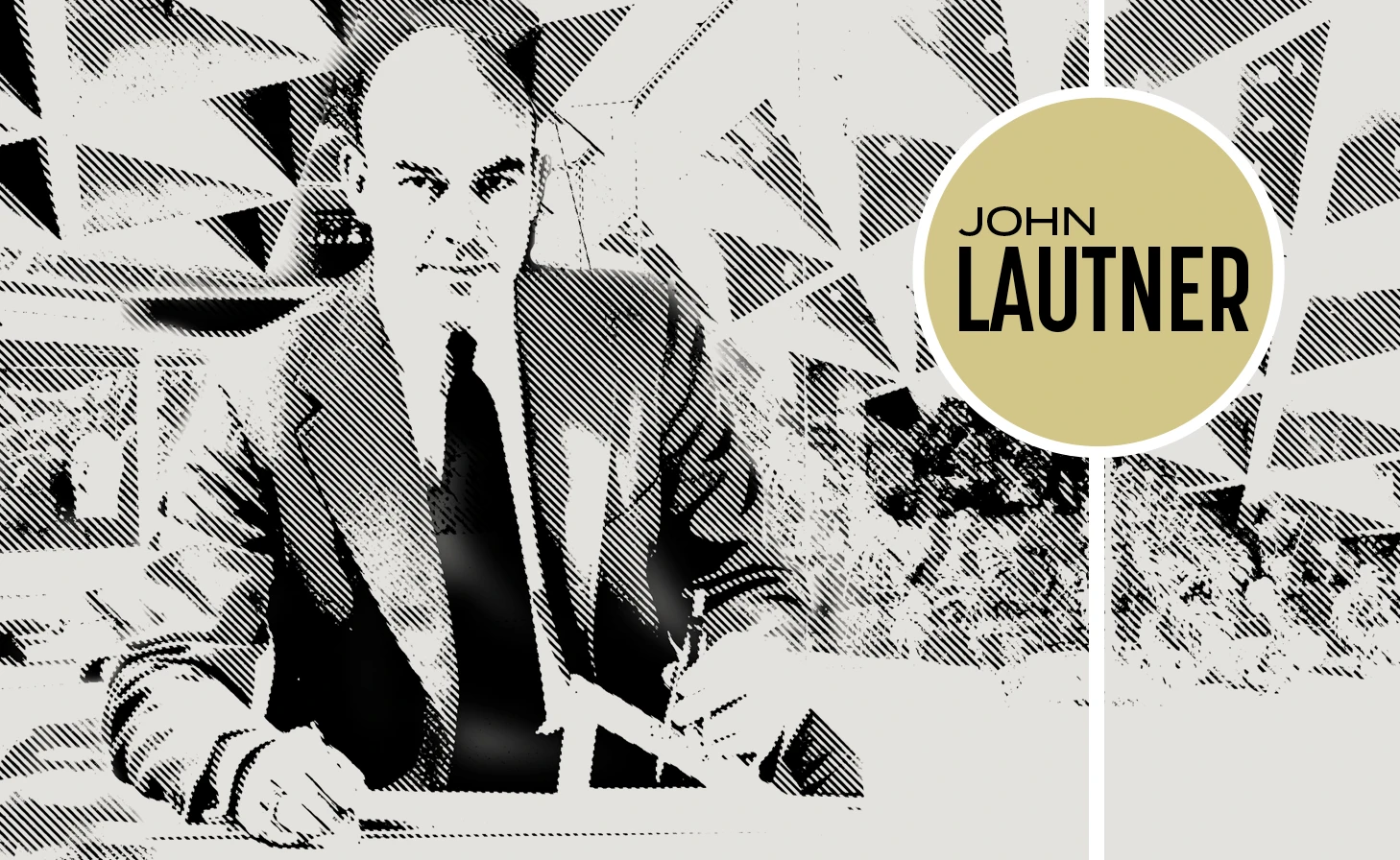
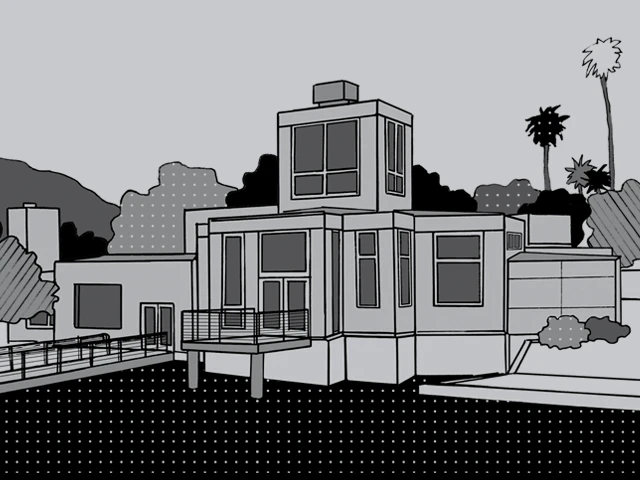
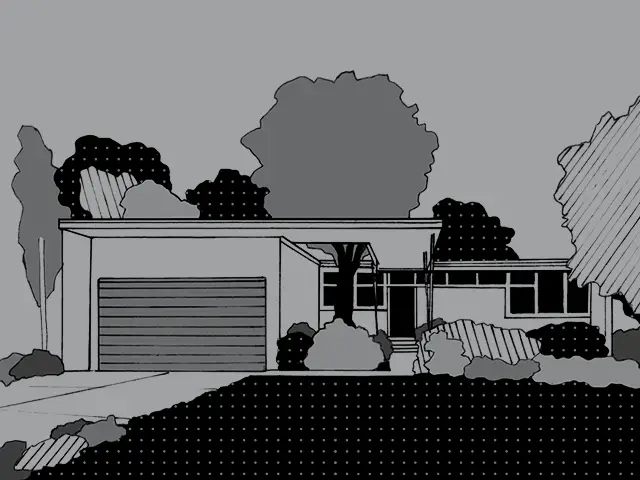
In the visionary work of John Lautner, architecture feels sculpted from the earth itself. Concrete arcs, sweeping glass and gravity-defying forms create spaces that are primal yet futuristic. His homes are not simply designed, they are experiences.
John Lautner’s architectural journey began under the mentorship of Frank Lloyd Wright at Taliesin, where he absorbed Wright’s philosophy of organic architecture while developing his own distinctive vision. Born in 1911 in Marquette, Michigan, Lautner worked directly with Wright for six years before establishing his independent practice in 1938. This apprenticeship profoundly influenced his approach to architecture, particularly Wright’s emphasis on harmony between buildings and their natural settings.
However, Lautner’s work evolved far beyond his mentor’s Prairie School aesthetic. While Wright favored horizontal lines and earthbound forms, Lautner embraced vertical drama and structural audacity. His buildings often cantilever from hillsides, creating the illusion of weightlessness. This departure from Wright’s principles established Lautner as an original voice in American architecture, one who combined his mentor’s organic philosophy with Space Age optimism and cutting-edge engineering techniques.
Throughout his five-decade career, Lautner designed over 200 projects, primarily residential projects scattered across Southern California. His work gained recognition slowly, as many clients and critics initially found his designs too radical. Today, however, John Lautner homes in Los Angeles are celebrated as visionary masterworks that anticipated contemporary architectural concerns about sustainability, site sensitivity, and experiential design. Learn more about other influential architectural homes that have shaped Los Angeles’s design landscape.
The Chemosphere: Lautner’s UFO Above Los Angeles
Perhaps no John Lautner architecture project captures the imagination quite like the Chemosphere. Completed in 1960, this octagonal house appears to hover above the Hollywood Hills, supported by a single concrete column. The design emerged from a practical challenge: how to build on a steep, unbuildable hillside lot. Lautner’s solution was as elegant as it was unprecedented—elevate the entire structure on a pedestal, creating a 360-degree viewing platform that maximizes panoramic views while minimizing site disturbance.
The Chemosphere’s 2,200-square-foot interior revolves around a central fireplace and kitchen core, with floor-to-ceiling windows offering unobstructed vistas of Los Angeles. The octagonal plan allows for efficient circulation and creates distinct zones for living, dining and sleeping without traditional walls. Access to the house is via a funicular railway that ascends alongside the support column, a dramatic arrival sequence that reinforces the structure’s otherworldly character.
This iconic residence has appeared in countless films, photographs and architectural publications, cementing its status as one of the most recognizable examples of modernist architecture worldwide. The building’s preservation and meticulous restoration by subsequent owners demonstrate the enduring appeal of Lautner’s vision. For architecture enthusiasts, the Chemosphere represents the perfect synthesis of bold structural engineering, site-specific design, and livable space.
Sheats-Goldstein Residence: A Living Architectural Experience
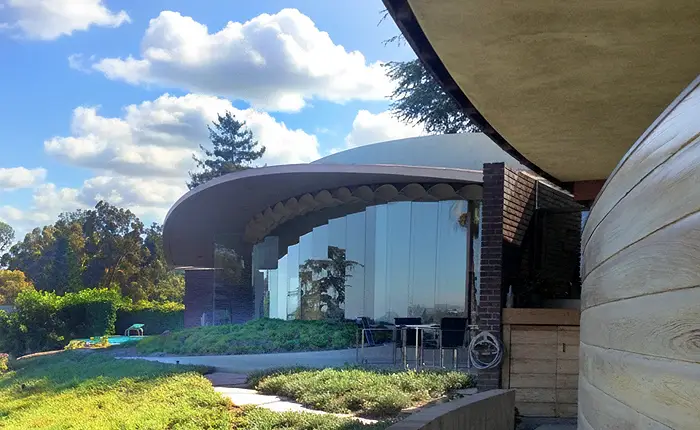
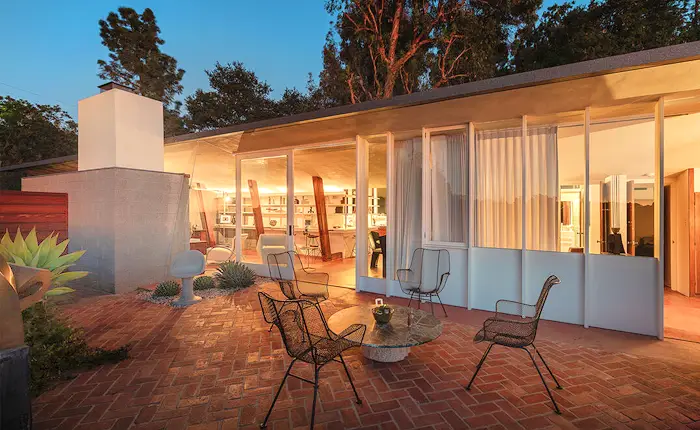
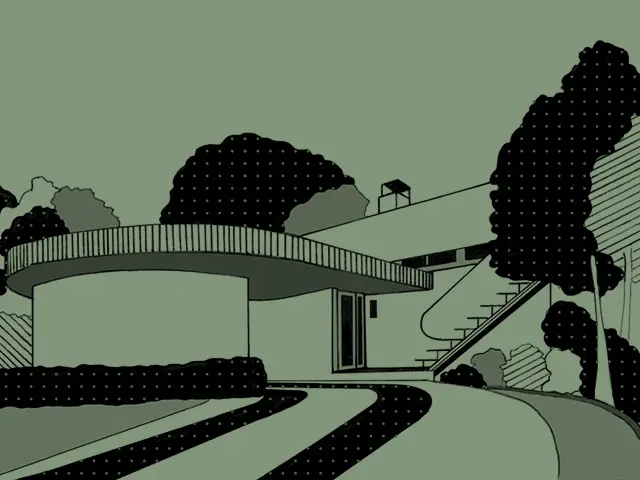
At Silvertop, sweeping curves and a soaring concrete canopy crown the hillside with quiet authority. Glass walls slide away, inviting the city lights into the interior composition. It is a masterclass in structure, landscape and light in perfect dialogue.
The Sheats-Goldstein Residence, perched in the Beverly Crest neighborhood, exemplifies Lautner’s mature style and his commitment to creating architecture as an evolving work of art. Originally completed in 1963 for Helen and Paul Sheats, the house underwent continuous refinement by Lautner in collaboration with subsequent owner James Goldstein for over three decades. This ongoing evolution reflects Lautner’s belief that great architecture should adapt and improve over time.
The residence features Lautner’s signature triangular skylights, which create ever-changing patterns of light and shadow throughout the day. The concrete structure flows seamlessly into the hillside, with the living spaces opening onto terraces that overlook the city below. The famous infinity pool and outdoor entertaining areas blur the distinction between interior and exterior, a hallmark of Southern California modernism taken to its logical extreme.
What distinguishes the Sheats-Goldstein Residence from other Lautner works is its completeness as a total design environment. Lautner designed not just the architecture but also much of the built-in furniture, lighting fixtures and landscape elements. This Gesamtkunstwerk, or total work of art, approach creates an immersive experience where every detail reinforces the overall architectural concept. The residence was donated to the Los Angeles County Museum of Art in 2016, ensuring its preservation for future generations.
Silvertop: Lautner’s Concrete Masterpiece
Silvertop, completed in 1963, represents John Lautner’s most ambitious residential project. This 4,721-square-foot concrete residence in the Silver Lake neighborhood showcases Lautner’s late-career mastery of poured-in-place concrete construction. The building’s curved walls and vaulted ceilings create cave-like interiors that feel simultaneously protective and expansive, demonstrating how concrete can be both structurally daring and aesthetically warm.
The house takes its name from its distinctive roofline, which appears to float above the hillside site. Lautner designed the structure to follow the natural contours of the land, with each room positioned to capture specific views and solar orientations. The result is a building that feels deeply rooted in its site while maintaining a futuristic quality that remains fresh nearly fifty years after completion.
Silvertop’s restoration and preservation have become case studies in the maintenance of mid-century modern architecture. The house demonstrates that, while innovative, Lautner’s concrete construction techniques require specialized knowledge to maintain properly. For those interested in Los Angeles neighborhoods with significant architectural heritage, Silver Lake offers numerous examples of important modernist works alongside Lautner’s masterpiece.
Lautner’s Revolutionary Design Principles
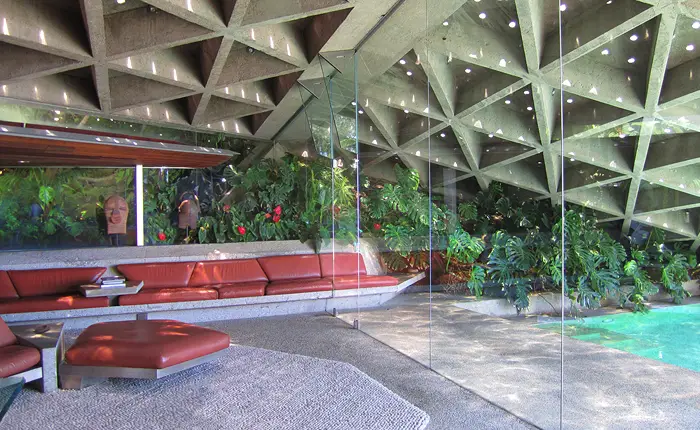
At the Sheats-Goldstein Residence, light filters through geometric skylights, casting rhythmic shadows across sculpted concrete planes. The home’s open-air living spaces blur the edge between interior and canyon, inviting breeze and birdsong inside. Lautner’s attention to structural detail created buildings that were both engineering marvels and livable homes.
At the core of John Lautner’s architecture lies a set of design principles that distinguished his work from mainstream modernism. First, Lautner prioritized the experiential quality of space over formal aesthetics. He designed buildings to be lived in and felt, not merely looked at. This emphasis on human experience led him to create dramatic interior volumes, unexpected views and carefully choreographed movement sequences through his buildings.
Second, Lautner insisted on site-specificity. He never imposed a predetermined formal vocabulary on a project; instead, each design emerged from careful analysis of the site’s topography, climate, views and vegetation. This approach resulted in buildings that appear inevitable, as if they could only exist in their specific locations. Whether perched on steep hillsides or set into level lots, Lautner’s buildings engage their sites with remarkable sensitivity.
Third, Lautner embraced structural expression and innovation. He didn’t hide structural elements behind decorative finishes; instead, he made them integral to the architectural experience. Exposed concrete columns, dramatic cantilevers and visible roof structures become focal points that celebrate the engineering achievements, making these daring designs possible. This honest expression of structure influenced generations of architects and remains relevant to contemporary sustainable design practices.
Structural Innovation and Engineering Marvels
John Lautner’s architectural achievements would have been impossible without his close collaborations with innovative structural engineers. He worked regularly with engineers who shared his willingness to push technical boundaries, developing new construction methods and structural systems to realize his visionary designs. The Chemosphere’s single-point support, for instance, required sophisticated calculations to ensure stability against both gravity and seismic forces.
Lautner’s use of reinforced concrete was particularly revolutionary. At a time when most residential architects favored wood framing or steel, Lautner recognized concrete’s sculptural potential and structural capabilities. He developed techniques for creating thin-shell concrete roofs, curved walls and cantilevered slabs that seemed to defy gravity. These innovations weren’t merely aesthetic gestures; they enabled new ways of organizing interior space and connecting buildings to their sites.
The engineering challenges in Lautner’s work extended beyond structure to encompass waterproofing, climate control and building systems integration. His buildings often featured complex roof geometries that required innovative flashing and drainage solutions. Similarly, his commitment to transparency and open plans necessitated creative approaches to heating and cooling. These technical challenges pushed the entire construction industry forward, influencing building practices far beyond Lautner’s individual projects. According to ArchDaily’s coverage of Lautner’s work, his structural innovations continue to inspire contemporary architects worldwide.
Cultural Impact and Preservation Efforts
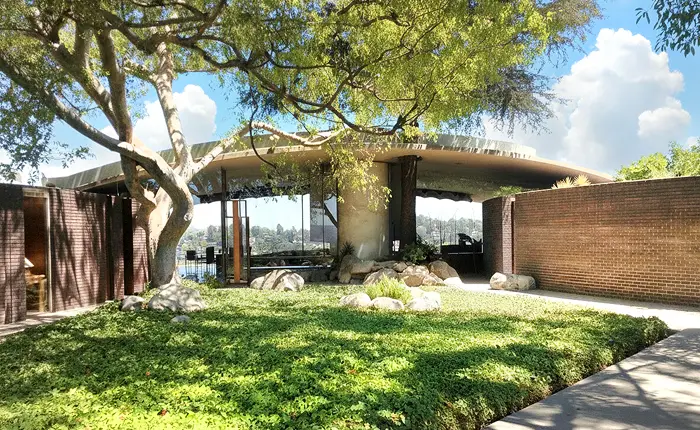
For Lautner, glass was not simply a material but a lens to the world beyond. Panoramic vistas become living murals, constantly shifting with time of day and season, shown here at Silvertop. His homes elevate everyday life into a cinematic experience.
John Lautner’s architecture has profoundly influenced popular culture, appearing in numerous films, television shows and photography books. The Chemosphere was featured in “Body Double” (1984), while the Sheats-Goldstein Residence appeared in “The Big Lebowski” (1998) and “Charlie’s Angels: Full Throttle” (2003). This media exposure introduced Lautner’s work to audiences who might never visit these houses in person, establishing them as cultural icons that transcend architectural circles.
Beyond popular culture, Lautner’s influence on subsequent generations of architects has been substantial. Contemporary architects cite his work as inspiration for their own explorations of organic form, structural expression and site-specific design. His willingness to challenge conventional wisdom about what residential architecture could be opened new possibilities that architects continue to explore today. The principles underlying John Lautner homes in Los Angeles, bold structural gestures, environmental responsiveness and experiential richness, remain relevant to current architectural discourse.
Preservation of Lautner’s built legacy faces ongoing challenges. Many of his houses require specialized maintenance and sympathetic restoration to preserve their original design intent. Organizations like the Los Angeles Conservancy and the John Lautner Foundation work to document, protect and advocate for these important buildings. Several Lautner houses have received historic designation, providing legal protection against inappropriate alterations. For homeowners and buyers, understanding these preservation issues is essential when considering architecturally significant properties.
Investing in Lautner-Era Architecture Today
The market for John Lautner’s architecture and comparable modernist properties has strengthened significantly over the past two decades. Original Lautner houses rarely come on the market and when they do, they command premium prices reflecting their architectural significance and cultural cachet.
Investing in mid-century modern architecture requires understanding both the aesthetic and practical considerations. These homes often need updating to meet contemporary expectations for comfort, technology and energy efficiency. The key is undertaking renovations that respect the original design intent while improving functionality. Working with architects and contractors experienced in modernist architecture is essential to maintaining a property’s value and integrity.
From an investment perspective, architecturally significant homes have demonstrated strong appreciation potential, particularly in the desirable Los Angeles neighborhoods. The limited supply of authentic period examples, combined with growing appreciation for modernist design, creates favorable market dynamics. Potential buyers should carefully evaluate maintenance requirements, restoration costs and any historic preservation restrictions before purchasing. The expertise of a real estate team specializing in architectural properties proves invaluable in navigating these complex transactions.
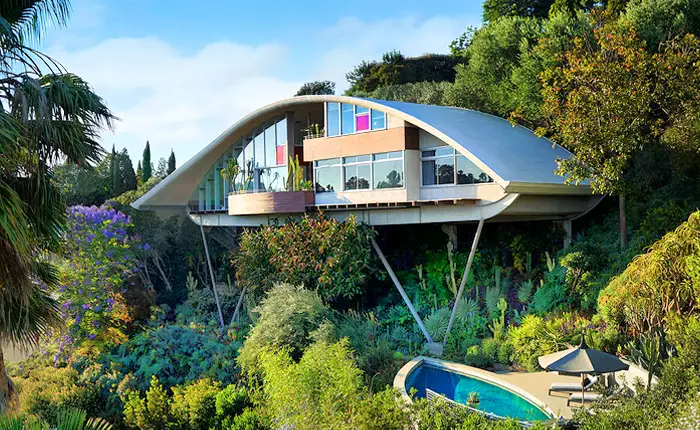
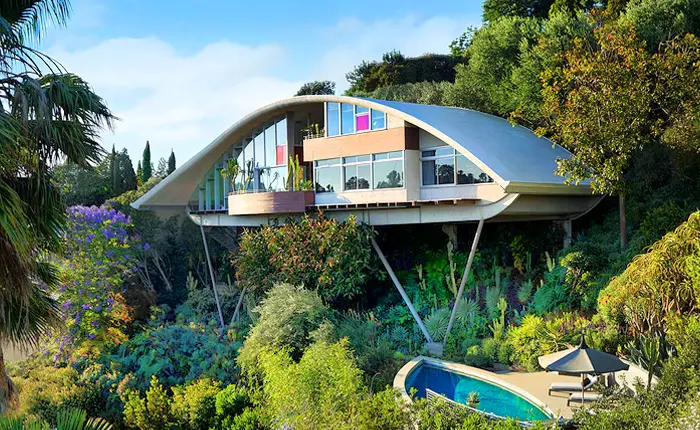
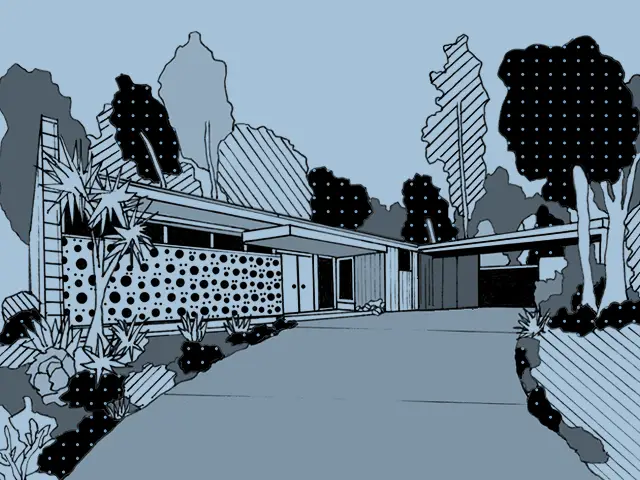
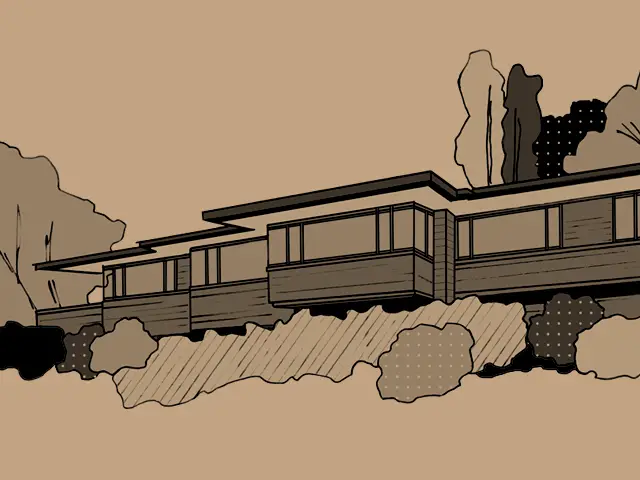
With visionary precision, Lautner sculpted dwellings that respond to gravity, terrain, and sky. Deep overhangs, radiant geometry, and expressive engineering define Lautner’s unmistakable language. He rejected convention in favor of organic form, allowing each site to shape the architecture. The result is modernism untethered, sensuous, daring and deeply site-specific as shown in The Garcia House. His iconic residences remain touchstones of expressive modernism, where engineering and emotion intersect. To inhabit one is to live within a work of art shaped by daring imagination.
John Lautner – Notable Projects and Houses
- Lautner House (Own Residence) (1939) — Silver Lake, Los Angeles, CA. Lautner’s first independent commission, a 1,244 sf modest home built on a steep hillside lot, featured in California Arts & Architecture (June-July 1940) and praised by Henry-Russell Hitchcock as “the best house in the United States by an architect under thirty.”
- Bell House (1940-1942) — Los Angeles, CA. Influenced by Frank Lloyd Wright’s design; quickly completed and consolidated Lautner’s early reputation; featured in Los Angeles Times, Arts & Architecture (1940’s) and House and Garden (1944), which declared it “the model house for California living.”
- Carling House (1947) — Hollywood, Los Angeles, CA. Hexagonal main living area with external steel cantilever beams creating column-free interior space; featured movable wall-seat on casters; an outdoor swimming pool that flows beneath a glass wall and into the main living area, dissolving the boundary between interior and exterior living;360-degree views; built with boat builder John de la Vaux; featured in New York Times Magazine (August 1951).
- Shaffer House (1949) — Glendale, CA. An early example of Lautner’s organic style, where wood and glass blend the interior with natural surroundings, featured in the film “A Single Man” (2009) as Colin Firth’s character’s home; smaller in scale, but it demonstrates harmony with nature.
- Googie’s Coffee Shop (1949) — Sunset Boulevard, Los Angeles, CA (demolished). Pioneered the “Googie” architectural style; soaring ceilings and glass-front design became a model for coffee shops across America; featured expansive glass walls, arresting form and exuberant signage oriented to automobiles.
- Bergren House (1951-1953) — Hollywood Hills, Los Angeles, CA. Features: V-shaped roof, chevron-shaped massing, non-rectangular rooms, avant-garde use of concrete and wood; represents Lautner transcending Wright’s influence to develop a unique architectural vocabulary.
- Deutsch Residence (1954) — Hollywood Hills, Los Angeles, CA. Sleek personification of Lautner’s early work; dramatic angles and buff brick-clad walls; open floor plan interior space; 2 bedrooms, 3 bathrooms.
- Tyler House (1953) — Los Angeles, CA. Built on solid geometric matrix with material honesty combining wood and concrete; recurring triangular theme in floor plan determines directionality and interior space disposition; marked Lautner’s full development of unique architectural language.
- Harpel Residence (1956) — Hollywood Hills, Los Angeles, CA. Elegant hillside house designed for panoramic views of Los Angeles; extensively altered by later owners but faithfully restored by Marc Haddawy after his purchase in 2006.
- Pearlman Cabin (1957) — Idyllwild, San Jacinto Mountains, CA. Vacation home designed within a forest setting; circular unified area with six cedar log pillars supporting large glass windows; synthesizes nature and domestic space; open spacing for kitchen, beds, dining and music area.
- Chemosphere (Malin Residence) (1960) — Hollywood Hills, Los Angeles, CA. Octagonal “flying saucer” house perched atop single 30-foot concrete column; 2,200 sf; designed for aerospace engineer Leonard Malin; accessed via funicular railway; cost $140,000 (Malin paid $80,000, remainder sponsored by Southern California Gas Company and Chem Seal Corporation). Declared Los Angeles Historic-Cultural Monument (2004). Featured in “Body Double” (1984), “The Outer Limits” (1964), “Charlie’s Angels” (2000), “The Simpsons,” “Tomorrowland” (2015).
- Wolff House (1961) — Sunset Strip, Los Angeles, CA. Stone, glass and copper construction; one of Lautner’s “Favorite Five” commissions; described as homage to Wright’s Fallingwater; close relationship with topographical context; sold to Amanda Hearst and Joachim Rønning (2020), then to Nicolas Ghesquière (2022).
- Sheats-Goldstein Residence (1961-1963, continuous refinement through 1994) — Beverly Hills, CA. Features Lautner’s signature triangular skylights (750 drinking-glass skylights in the coffered ceiling); continuous architectural refinement by Lautner and owner James Goldstein for three decades; and a total design environment including furniture, lighting and landscape. Donated to LACMA (2016). Featured in “The Big Lebowski” (1998), “Charlie’s Angels: Full Throttle” (2003) and numerous music videos.
- Garcia House (Rainbow House) (1961-1962) — Mulholland Drive, Los Angeles, CA. Construction began in 1960, completed in 1962; designed for composer Russ Garcia and his wife; split into two distinct halves under a single curving parabolic roof; stained glass windows inspired the nickname “Rainbow House”; featured in “Lethal Weapon 2” (1989). Restored by Marmol Radziner.
- Silvertop (Reiner-Burchill Residence) (1957-1976, commissioned 1956, largely completed 1963, finished 1976) — Silver Lake, Los Angeles, CA. 4,721 sf with 3 bedrooms, 4 bathrooms; Lautner’s first major use of monolithic poured-in-place concrete; curved walls and vaulted ceilings; a series of interlocking circles and half-circles; a cantilevered concrete driveway (only 4 inches thick, no support columns); infinity pool; commissioned by industrialist Kenneth Reiner, completed by Philip and Jacklyn Burchill. Budget rose from $75,000 to nearly $1 million. Restored by Bestor Architecture (2007-2010). Featured in “Less Than Zero” (1987).
- Elrod House (1968) — Palm Springs, CA. Commissioned by interior designer Arthur Elrod a circular 60-foot diameter concrete canopy dome with triangular radiating windows, natural rock outcroppings integrated as interior walls and halfway up the slope positioning. Featured in James Bond “Diamonds Are Forever” (1971) in a famous fight scene with Bambi and Thumper.
- Walstrom House (1969) — Los Angeles, CA. Light all-wood architecture that appears to float in the landscape; a poster child for wood construction, in contrast to Lautner’s concrete works.
- Arango House (Marbrisa) (1973) — Acapulco, Mexico. Dramatic concrete arches; oceanfront location; demonstrates Lautner’s international reach and mastery of site-specific design on challenging coastal terrain.
- Hope House (1979) — Southridge, Palm Springs, CA. Commissioned by entertainer Bob Hope, 17,531 sf with 6 bedrooms, 10 bathrooms; built by Wally Niewiadomski; located in a gated community; one of Lautner’s last major residential projects; represents the culmination of late-career concrete mastery.
- Round House (E.S. Lautner House) (1958) — Pensacola, FL. Designed for Lautner’s cousin E.S. Lautner, the circular plan (72 feet in diameter) with brick walls that taper, 67 radial Douglas Fir beams, and a 14-foot central pillar, demonstrates Lautner’s geometric exploration beyond California.
- Foster House (1950) — Sherman Oaks, CA. A curvilinear culmination of world-class design and detail; demonstrates Lautner’s residential work in the San Fernando Valley.
- Bubbling Well Resort (1940s) — Desert Hot Springs, CA. 160-acre resort with four units and a swimming pool; listed for sale in 1951 for $99,500 furnished; represents Lautner’s commercial hospitality work.
- United Productions of America Office Building (1950s) — Burbank, CA. Built by Kelly Construction Co.; demonstrates Lautner’s commercial architectural work beyond residential commissions.
- Shusett House (1951) — Beverly Hills, CA (demolished 2010). Represents significant loss to Lautner’s architectural legacy; demolition highlights ongoing preservation challenges for mid-century modern architecture.
Frequently Asked Questions About John Lautner Architecture
Discover Architecturally Significant Properties in Los Angeles
Are you captivated by John Lautner’s visionary approach to modernist architecture? Beyond Shelter specializes in architecturally significant properties throughout Southern California. Our team combines deep architectural knowledge with real estate expertise to help clients discover, evaluate and acquire homes that represent the finest examples of modernist design. Whether you’re searching for a Lautner-era masterpiece or other iconic mid-century modern properties, we provide the specialized guidance you need. Explore Our Services: Mid-Century Modern Homes for Sale Browse Architectural Styles: Explore Home Styles Service Areas: Los Angeles and Southern California Contact our architectural real estate specialists today →
About Beyond Shelter
Beyond Shelter is a premier architecture and real estate firm serving Los Angeles and Southern California. With deep expertise in modernist architecture, historic preservation, and architectural history, we help clients discover, understand, and acquire architecturally significant properties. Our team combines architectural knowledge with real estate expertise to provide comprehensive guidance for design-conscious buyers, sellers, and architecture enthusiasts. Learn more about our services →