Buff and Hensman Architecture: Los Angeles Modernist Masterworks
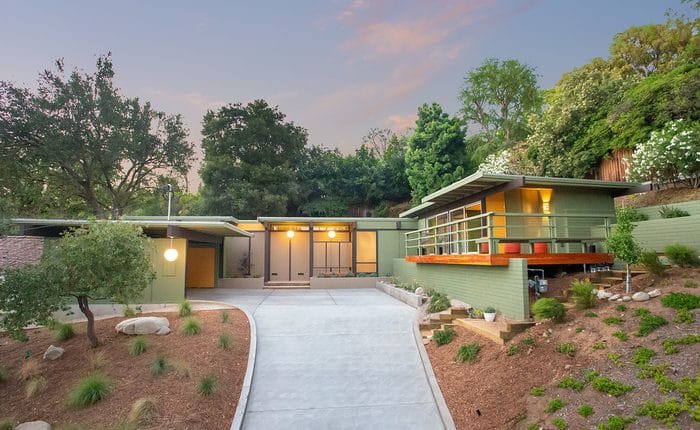
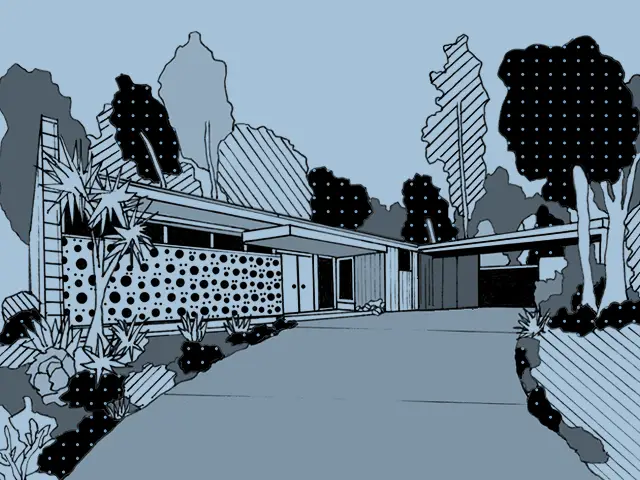
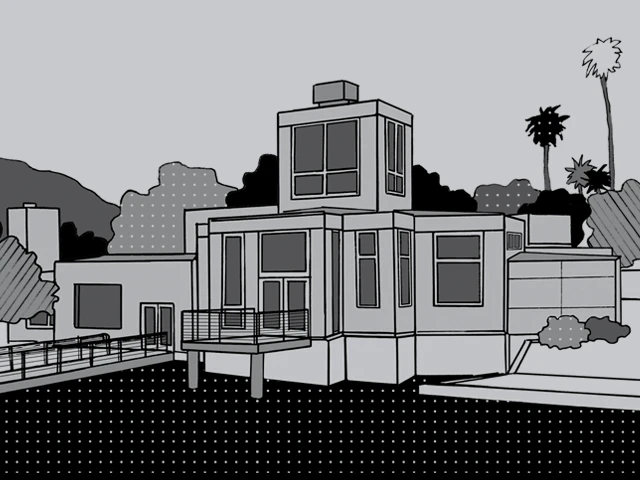
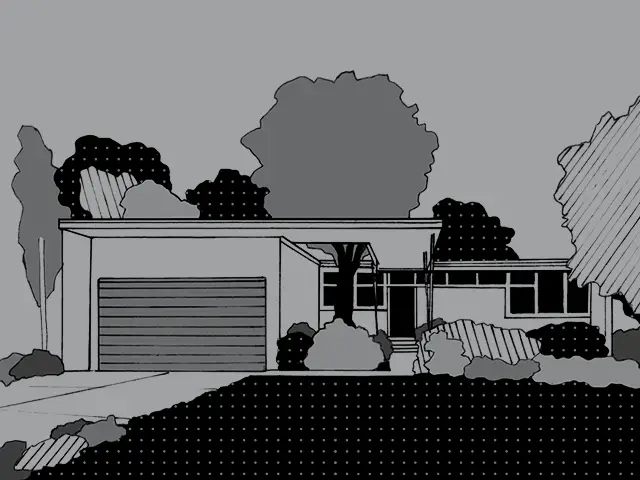
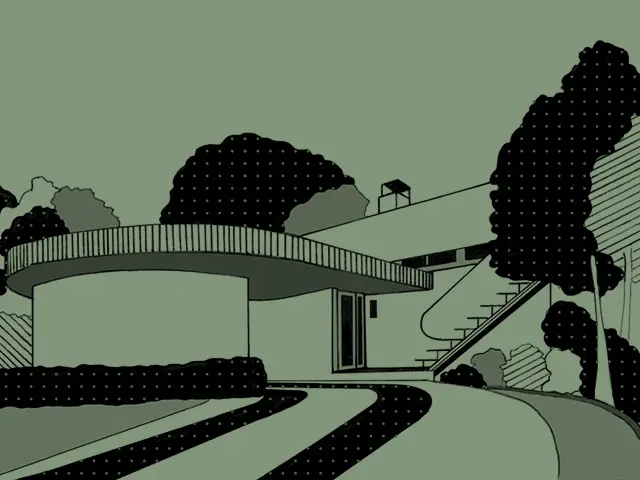
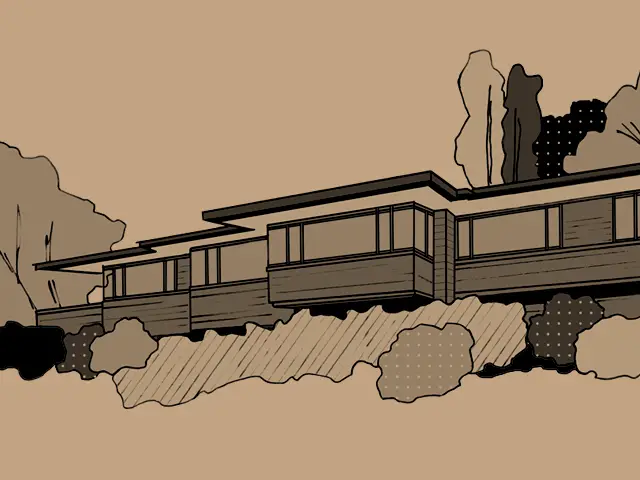
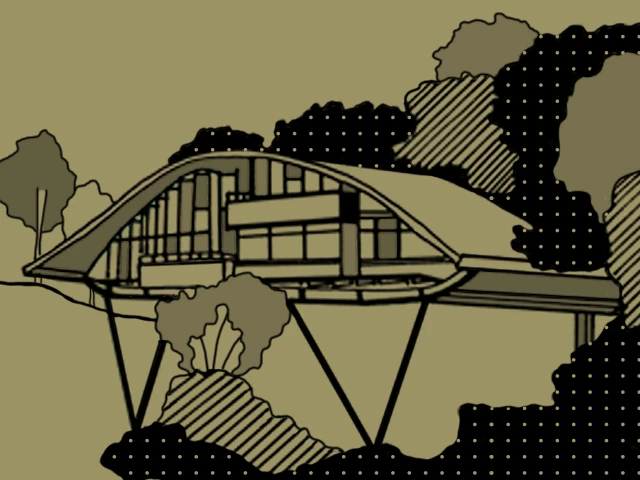
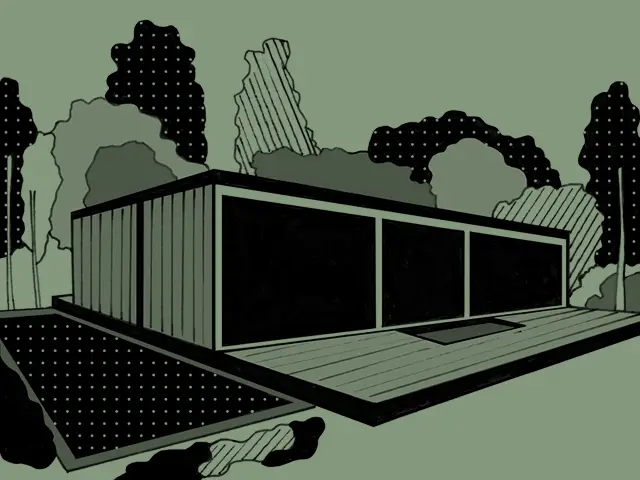
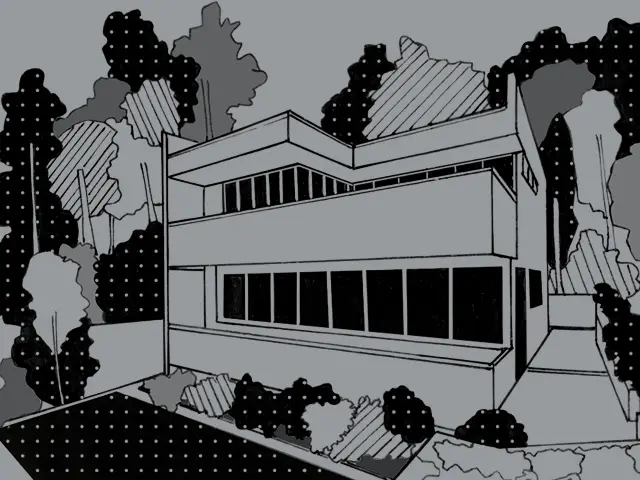
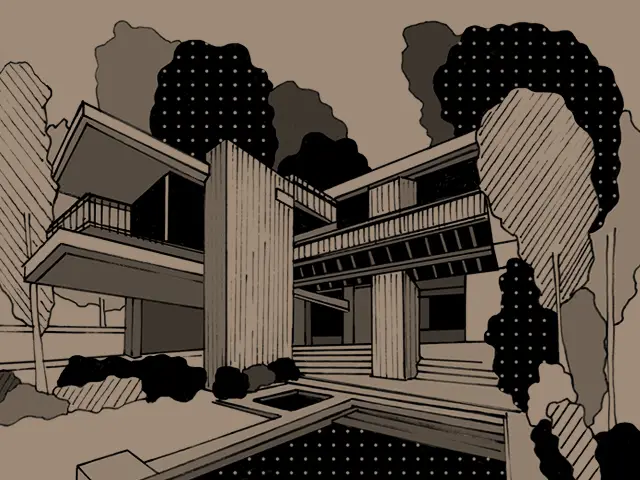
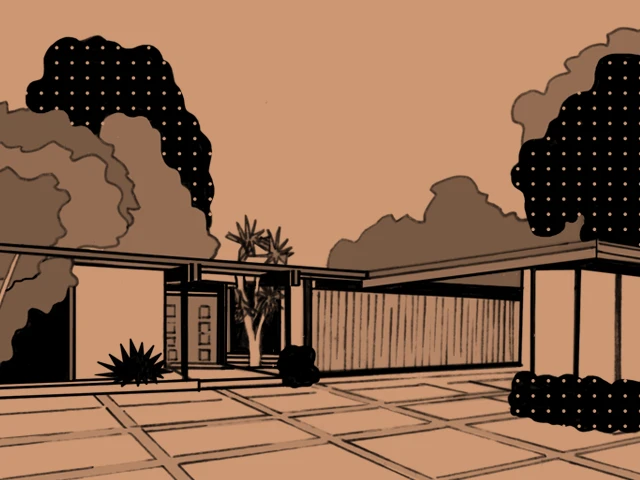
Buff and Hensman (also known as Buff, Straub and Hensman; Buff, Hensman and Associates; and Buff, Smith and Hensman) was a Los Angeles-based architectural firm founded by Conrad Buff III (1926-1988) and Donald Hensman (1924-2002), both graduates of the USC School of Architecture (1952). The firm practiced from 1952 through the late 1990s, designing over 200 significant residential buildings across Southern California, with the greatest concentration in Pasadena, Altadena and Beverly Hills. Buff and Hensman are recognized as leading figures of California mid-century modern architecture, known for post-and-beam wood construction, floor-to-ceiling glazing and indoor-outdoor integration. Their defining work is Case Study House #20 (the Bass House, Altadena, 1958), commissioned by graphic designer Saul Bass. They also completed Case Study House #28 (Thousand Oaks, 1965-66), listed on the National Register of Historic Places. Both partners held faculty positions at USC and received FAIA designation from the American Institute of Architects.
Conrad Buff III, FAIA – Architect Profile
- Born: August 5, 1926 — Eagle Rock, Los Angeles, California
- Died: October 10, 1988 — Los Angeles, California (age 62)
- Style: California Mid-Century Modern, Post-and-Beam Residential Modernism, Indoor-Outdoor Modernism
- Known For: Post-and-beam wood construction, warm natural material palette (redwood, cedar, Douglas fir), floor-to-ceiling glazing, seamless indoor-outdoor integration, Case Study House Program participation, over 6,000 residential designs across Southern California
- Key Project Locations: Pasadena, Altadena, San Marino, Beverly Hills, Hollywood Hills, Malibu, Palm Springs and throughout greater Los Angeles
- Notable Work: Case Study House #20 (Bass House) – Altadena, CA (1958); Case Study House #28 – Thousand Oaks, CA (1965–66); Harvey House I – Beverly Hills, CA (1962); Harvey House – Palm Springs, CA (1969)
Donald C. Hensman, FAIA – Architect Profile
- Born: October 19, 1924 — Omaha, Nebraska (grew up in Hollywood, California)
- Died: December 9, 2002 — Pasadena, California (age 78)
- Style: California Mid-Century Modern, Post-and-Beam Residential Modernism, “Pasadena School” of architecture
- Known For: Structural precision and simplicity within the post-and-beam vocabulary, the “Pasadena School” approach combining modernist technology with sensitivity to Southern California landscape, landmark contributions to the Case Study House Program, long association with the Pasadena architectural community
- Key Project Locations: Pasadena, Altadena, La Canada Flintridge, Beverly Hills, Hollywood Hills, Thousand Oaks and throughout greater Los Angeles
- Notable Work: Case Study House #20 (Bass House) – Altadena, CA (1958); Case Study House #28 – Thousand Oaks, CA (1965–66); Harvey House I – Beverly Hills, CA (1962); Soucek King House (Arroyo del Rey) – Pasadena, CA (1979), a Pasadena Historic Monument
- Teaching: Assistant Professor, USC School of Architecture (1952–1963); Chairman, joint USC/American Institute of Architecture education committee
- Awards: FAIA (Fellow, American Institute of Architects); 30+ AIA residential design awards (firm total)
Few architectural firms captured the spirit of postwar Los Angeles as authentically as Buff and Hensman. Where other modernists embraced steel and glass as a statement of technological progress, Buff and Hensman favored warm wood, exposed post-and-beam structure and an almost landscape-driven sensitivity to site. The result was a body of work that feels simultaneously of its time and completely timeless. At Beyond Shelter, we specialize in helping buyers and sellers navigate the world of architecturally significant properties and Buff and Hensman homes are among the most rewarding we encounter.
In This Article
- Who Were Buff and Hensman?
- The Design Philosophy Behind the Work
- Post-and-Beam: Their Signature Structural Language
- Iconic Buff and Hensman Buildings in Los Angeles
- The Case Study House Connection
- Indoor-Outdoor Living: A California Modernist Ideal
- Preservation and Legacy in Southern California
- Buying a Buff and Hensman Home Today
- FAQs About Buff and Hensman Architecture
Who Were Buff and Hensman?
Architects Conrad Buff and Donald Hensman formed their partnership in the early 1950s and went on to design over 200 homes across Southern California. In their work, California modernism takes on a quiet warmth. Their architecture blends post-and-beam structure with natural wood, creating homes that feel deeply rooted in the landscape. Buff and Hensman’s residential designs are celebrated for their warm materialism and sensitive response to the California landscape. Each residence unfolds as a dialogue between shelter, light and nature.
Conrad Buff and Donald Hensman met while studying at the University of Southern California’s School of Architecture, where they both came under the influence of modernist thinking filtering in from the East Coast and Europe. They started their practice in 1948 while attending USC and quickly establishing a reputation for residential design that felt distinctly Californian, neither the austere International Style nor the showy glamour of Hollywood Regency, but something warmer and more grounded. Over the course of their collaboration, Buff and Hensman designed more than 6000 projects, primarily in Pasadena, San Marino and the greater Los Angeles area. Their client base included educators, artists and professionals who wanted homes that were modern in spirit but livable in practice. The firm also produced commercial and institutional work, though it is their residential output that has earned them a lasting place in the canon of California modernist architecture. Both architects were deeply engaged in the professional community, with Buff serving on the board of the Southern California chapter of the American Institute of Architects and Hensman teaching at USC for many years. Their academic and civic involvement helped spread their ideas beyond the boundaries of their own practice, influencing a generation of Southern California architects who followed in their footsteps.
The Design Philosophy Behind the Work
At the heart of Buff and Hensman’s approach was a conviction that modern architecture should serve human life rather than make ideological statements. While they were undeniably influenced by the broader currents of mid-century modernism, the open plan, the honest expression of structure and the rejection of applied ornament, they consistently tempered these principles with a commitment to warmth, comfort and a sense of belonging to the California landscape.
Wood was central to their material palette in a way that set them apart from contemporaries who favored steel and concrete. Redwood, cedar and Douglas fir appeared throughout their buildings as structural elements, cladding and interior finishes, giving their homes a tactile richness that photographs struggle to fully convey. Visitors to a Buff and Hensman house invariably notice the quality of light filtered through timber screens and clerestory windows and the way the natural grain of wood surfaces anchors the open, flowing interiors.
Their plans typically organized living spaces along a central spine, with sleeping quarters separated from public areas but connected by covered walkways or breezeway passages that reinforced the indoor-outdoor dialogue. Gardens were not afterthoughts, but integral components of the design, and many Buff and Hensman homes feature landscaping designed in close collaboration with the architecture. Explore more about the home styles and architectural traditions that define Southern California’s built environment.
Post-and-Beam: Their Signature Structural Language
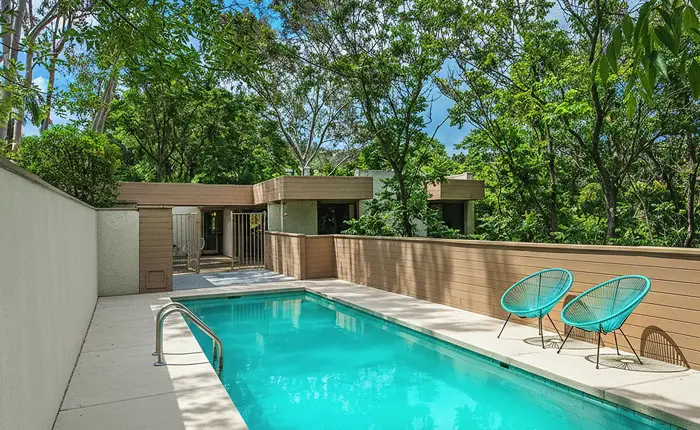
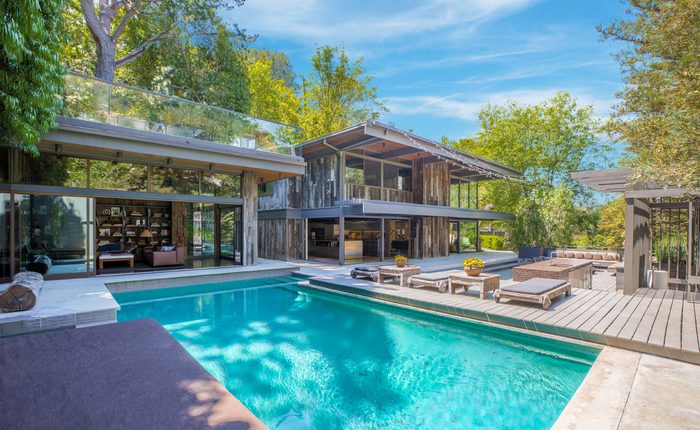
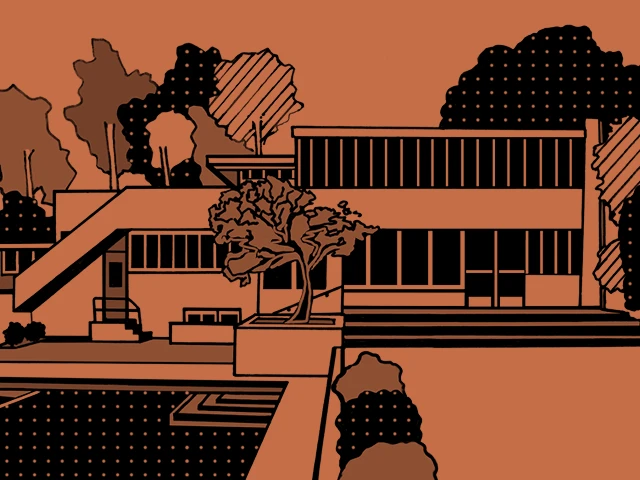
For Conrad Buff and Donald Hensman, the pool was never simply an amenity; it was an extension of the architecture itself. Tucked beneath mature trees, this expansive rectilinear pool and deck converge to create a tranquil outdoor room at this home in Sherman Oaks. The result is a quintessential California moment where modern living unfolds between house, garden and sky.
If there is a single technical hallmark of Buff and Hensman architecture, it is the post-and-beam structural system. By separating the load-bearing structure from the enclosing walls, they were able to open their buildings to light and landscape in ways that conventional stud-frame construction could not. Walls became screens rather than supports and glass could extend from floor to ceiling without structural compromise.
This system also had significant aesthetic consequences. The exposed columns and beams of post-and-beam construction give Buff and Hensman interiors a rhythm and legibility that are immediately recognizable. You can read the structure of the building from inside it, the regular cadence of posts along a wall, the deep overhangs supported by cantilevered beams, the long horizontal lines that tie the composition together. This structural honesty was a moral position as much as an aesthetic one, rooted in the modernist conviction that buildings should express how they are made.
The post-and-beam approach also gave their homes remarkable flexibility. Because interior walls were non-structural, floor plans could be adapted over time, and many Buff and Hensman homes have been sensitively updated by subsequent owners without compromising the essential character of the original design. This adaptability is one reason these homes have aged so gracefully and remain so desirable in today’s market. Browse our current mid-century modern homes for sale in Los Angeles to see examples of this enduring architecture.
Iconic Buff and Hensman Buildings in Los Angeles
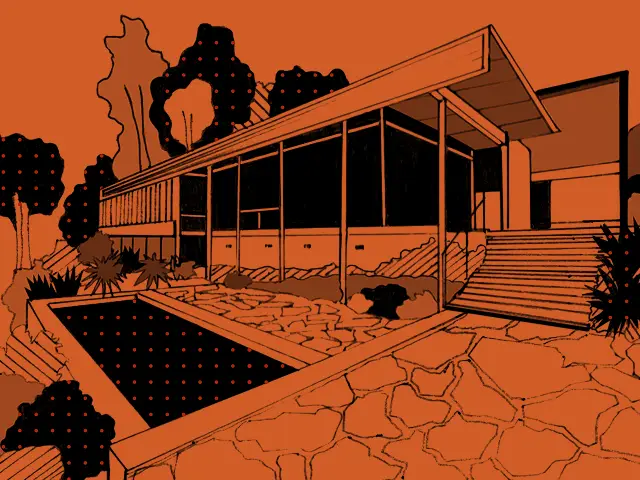
Among Buff and Hensman’s most celebrated works is Case Study House #20, also known as the Bass House, completed in 1958 in Altadena. This home exemplifies their ability to choreograph a procession from street to garden to interior, using changes in level, material and enclosure to create a sense of arrival and discovery. The Bass House was widely published at the time of its completion and remains a touchstone reference for architects and historians studying the period.
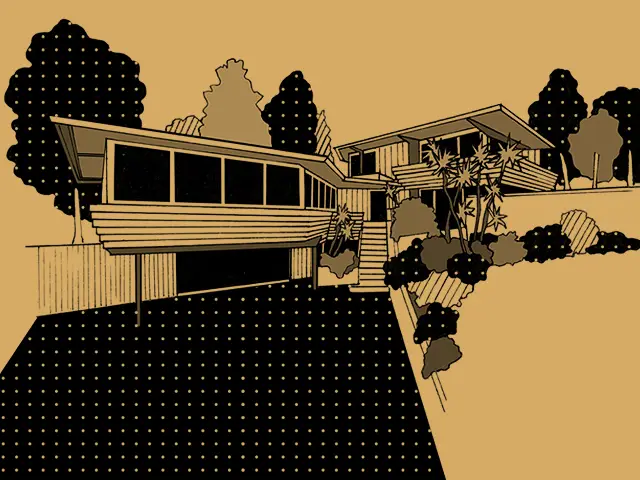
In Pasadena, the firm produced a remarkable concentration of houses in the neighborhoods north of the Arroyo Seco, where the hilly topography gave them opportunities to explore split-level plans and hillside siting that their flatter-site commissions could not accommodate. These Pasadena houses often feature dramatic overhangs that shelter deep terraces, creating shaded outdoor rooms that extend the living space into the garden through much of the year.
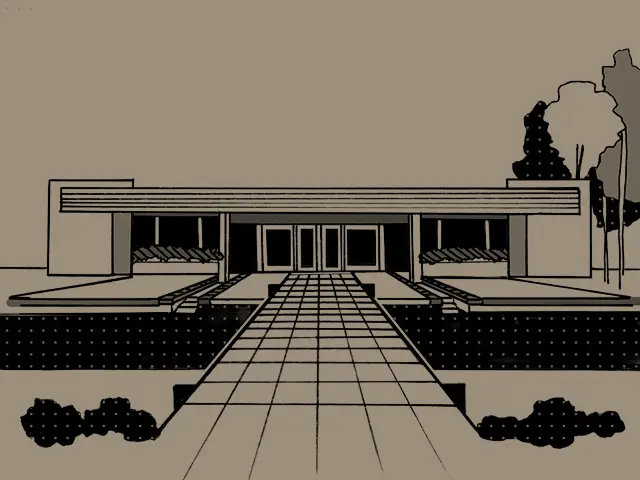
Their commercial and institutional work, while less well-known, includes several notable buildings in the greater Los Angeles area. The firm designed campus facilities, professional offices and community buildings that applied the same post-and-beam logic to larger-scale programs, demonstrating the versatility of their structural approach. Architecture critics and historians have written extensively about their contribution, publications like ArchDaily continue to feature mid-century California modernism as one of the most significant regional architectural traditions in American history.
Notable Residential Projects
Beyond the Case Study houses, Buff and Hensman completed dozens of private residences across the San Gabriel Valley and Los Angeles basin that have never been widely published but are equally accomplished. Many remain in private hands, passed down through families or sold quietly to buyers who understood their significance. Finding and acquiring these homes requires the kind of specialized knowledge and network that experienced architectural real estate professionals bring to the process.
The Case Study House Connection
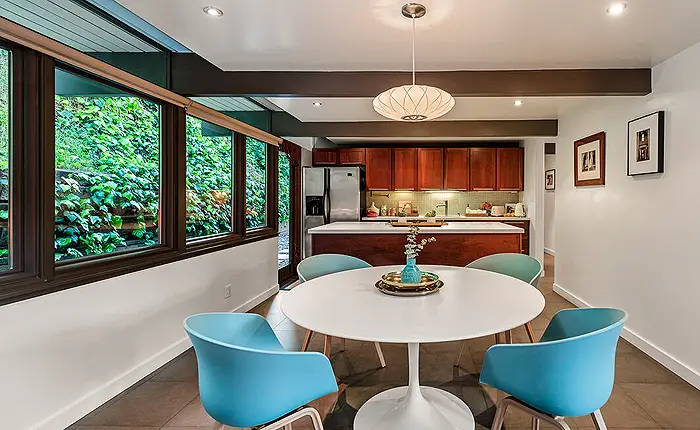
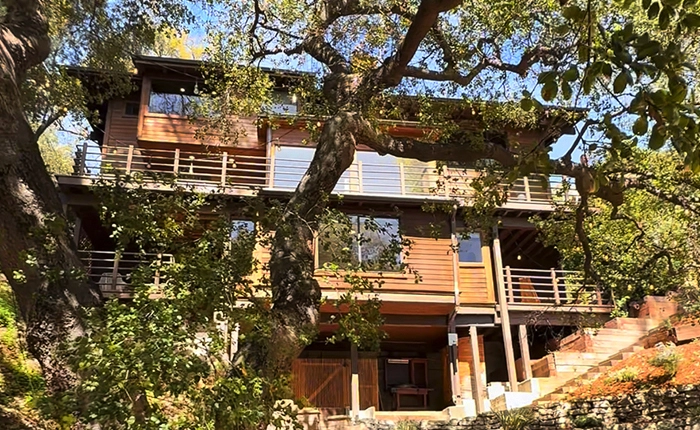
Buff and Hensman approached design with a reverence for site and materials. Slender beams, cedar siding and expansive glass dissolve the line between architecture and hillside terrain. Post-and-beam construction blends with warm modernism to create a dialogue with the landscape in this mid-century dining room and kitchen. Their homes feel less imposed on the land than gently woven into it, like they have been there all along.
The Case Study House Program, sponsored by Arts & Architecture magazine from 1945 to 1966, challenged leading architects to design model homes that could be built efficiently for postwar families. Buff and Hensman’s participation in this program placed them in distinguished company, among the other architects involved were Richard Neutra, Charles and Ray Eames, Pierre Koenig and Craig Ellwood. Their contributions to the program are among the most livable and least austere of all the Case Study Houses, reflecting their consistent prioritization of human comfort over architectural theory.
The Case Study program gave Buff and Hensman a national and international platform that their largely private residential practice might not otherwise have provided. Their houses were published in Arts & Architecture and picked up by shelter magazines and architectural journals worldwide, establishing their reputation beyond Southern California. This visibility brought them a broader client base and cemented their position as leading figures in California modernist design.
Today, the Case Study Houses are among the most intensely studied and documented buildings in American architectural history. Scholars, students and enthusiasts make pilgrimages to view them, and the handful that come to market typically attract significant attention. If you are interested in architecturally significant properties with this kind of historical pedigree, our team at Beyond Shelter has the expertise to guide you through the process.
Indoor-Outdoor Living: A California Modernist Ideal
No aspect of Buff and Hensman’s work has proven more durable or more influential than their treatment of the relationship between interior and exterior space. In a climate as benign as Southern California’s, the boundary between inside and outside can be almost entirely dissolved, and Buff and Hensman pursued this dissolution with remarkable consistency and ingenuity across their career.
Sliding glass walls that retract fully into pockets, broad roof overhangs that shelter outdoor terraces from sun and occasional rain and gardens planted to be visible from every major room are recurring features of Buff and Hensman houses that transform the experience of living in them. On a warm evening in a Buff and Hensman home, with the glass walls open and the sound of a garden fountain drifting in, the boundary between the built and the natural world becomes genuinely ambiguous in the most pleasurable way.
This approach to indoor-outdoor living was deeply rooted in California’s specific landscape and climate, but it also had broader cultural resonances. The postwar generation of California homeowners was seeking a new way of life as much as a new style of architecture and Buff and Hensman’s homes provided a physical framework for that life, casual, open, connected to nature and free from the formality of the prewar domestic interior. Discover how this ethos connects to Los Angeles neighborhoods where this architectural tradition remains a living part of the built environment.
Preservation and Legacy in Southern California
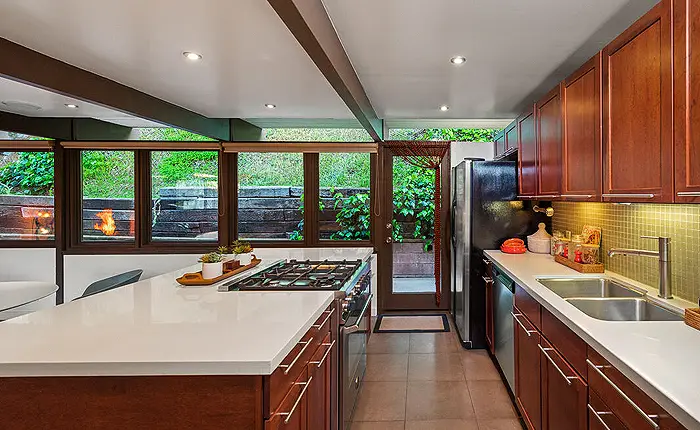
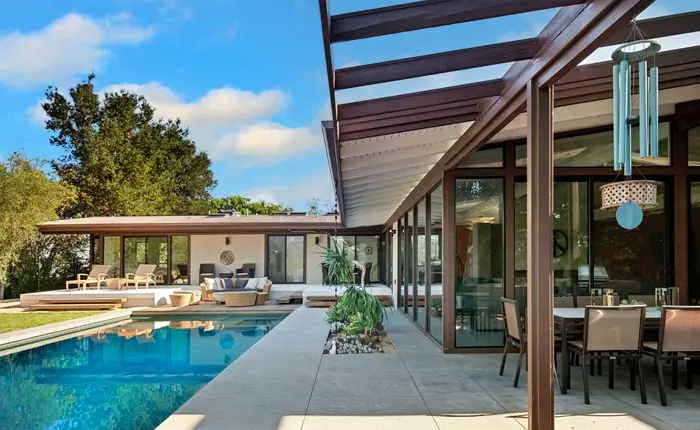
A characteristic Buff and Hensman interior featuring an exposed post-and-beam structure, floor-to-ceiling glazing and the warm wood tones that define their residential work. Curated views from the indoors to the outdoors take center stage in this sensitively preserved Buff and Hensman residence in the Pasadena area, where the firm’s work is particularly concentrated. Preservation of these homes requires understanding their original design intent and materials palette.
The preservation of Buff and Hensman homes presents particular challenges and opportunities. Wood, the primary material in their buildings, requires ongoing maintenance, unlike steel and concrete. Roof membranes, wood siding and exposed structural timbers all need periodic attention, and deferred maintenance can create significant problems over time. At the same time, wood is an entirely repairable material and a Buff and Hensman home that has been well maintained, or thoughtfully restored, can be brought back to its original condition in ways that are simply not possible with more industrial materials. The interest in mid-century modern architecture has been a significant force for preservation, creating a market of informed buyers who understand the value of these homes and are willing to invest in their care. Organizations such as the Los Angeles Conservancy and Pasadena Heritage have also played important roles in documenting and advocating for Buff and Hensman buildings, several of which have been designated as historic resources at the local or state level.
For prospective buyers, the historic status of a Buff and Hensman home can be both a protection and a complication. Mills Act contracts, which provide property tax reductions in exchange for commitments to maintain historic character, are available for many of these properties in California municipalities and can make ownership more financially accessible. Understanding these programs and their implications is an important part of the due diligence process when acquiring an architecturally significant property. Resources like Dezeen also regularly cover the broader global conversation around mid-century modern preservation.
Buying a Buff and Hensman Home Today
The market for Buff and Hensman homes today is active and well-informed. Buyers seeking these properties tend to be deeply knowledgeable about mid-century modern architecture and often have specific buildings or neighborhoods in mind. Competition for the most significant examples can be intense and homes that come to market with strong provenance, good condition and original features command substantial premiums over comparable conventional properties.
Working with a real estate professional who specializes in architecturally significant properties is essential when buying or selling a Buff and Hensman home. The valuation of these properties requires an understanding of architectural history, preservation standards and the specific features that distinguish an important example from a more typical one. Beyond the transaction itself, knowledgeable representation can help buyers understand what they are acquiring, the history of a specific house, the quality of any renovations and the opportunities and constraints that come with owning a historic architectural work.
If you are considering acquiring a Buff and Hensman home, or if you own one and are thinking about selling, the team at Beyond Shelter is uniquely positioned to help. Our combination of architectural expertise and real estate experience means we can provide guidance that goes beyond the transaction to help you make the most of an extraordinary property. See additional mid-century modern listings to understand the current landscape of available properties in Southern California.
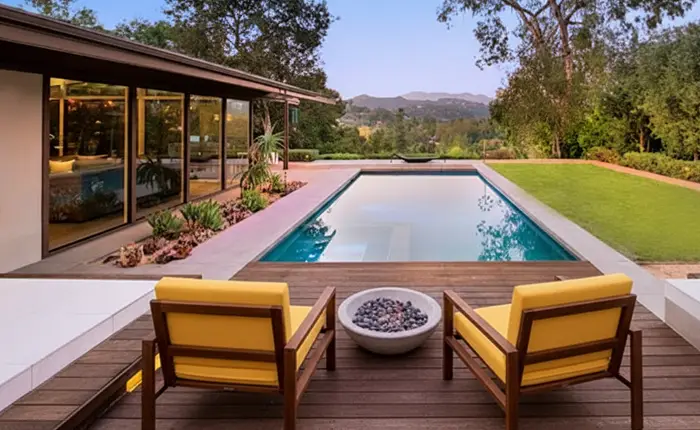
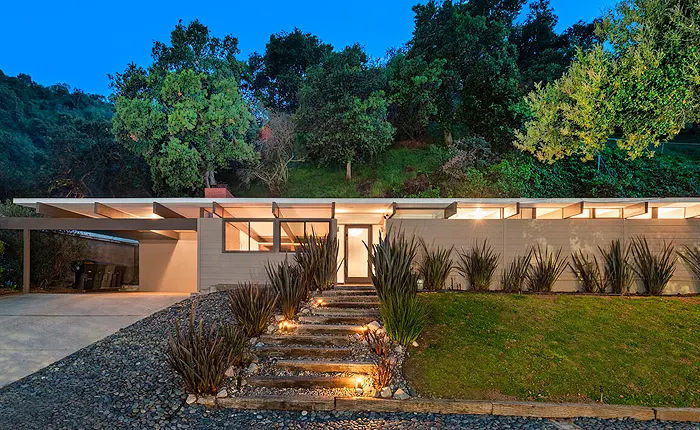
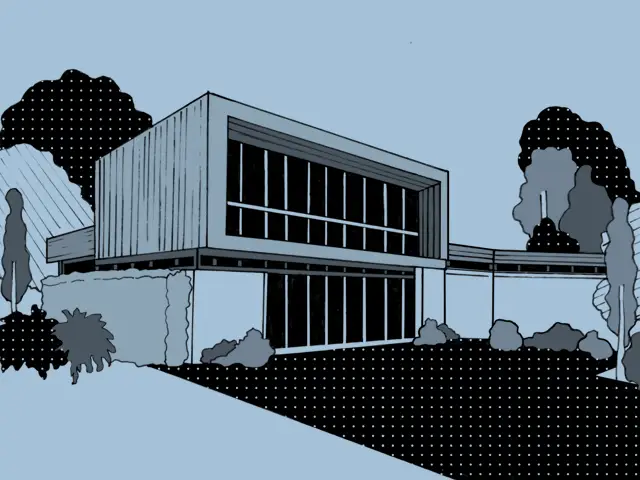
The evening view from a Buff and Hensman residence captures the essential promise of their architecture: a home that opens gracefully to the California landscape, dissolving the boundary between inside and outside in the most pleasurable way. These properties offer not just a place to live, but a way of living that remains as compelling today as it was when Buff and Hensman first imagined it.
Buff and Hensman Notable Projects and Houses
Residential
- Conrad and Mary Buff II Summer Studio — Lake Arrowhead, CA (1952) – One of the duo’s first commissions, designed while still students at USC. Built for Buff’s parents. Featured in the LAHome Magazine, August 1952.
- Roland and Gladys Fisher House — La Canada Flintridge, CA (1952) – Early Buff and Hensman residence. Designed with consulting architect Clayton Baldwin. Featured in the Los Angeles Times, September 1953.
- Willoughby and Helen Cady House — Altadena, CA (1951) – Early Pasadena commission. Helen Cady was Executive Secretary of the AIA Pasadena chapter. Later sold to Eddie and Alex Van Halen. Featured in LA Times Home Magazine, January 1954.
- Case Study House #20 (Bass House) — Altadena, CA (1958) – The firm’s masterwork and defining project of the Case Study House Program. Commissioned by graphic designer Saul Bass and his wife Ruth. Built with factory-produced stressed-skin panels and plywood vaults. Introduced the concept of zoning within an open plan. Published in Arts & Architecture, January 1958. National Historic Landmark.
- Brandow Residence — San Marino, CA (1957) – Photographed by Julius Shulman. Featured on the cover of the LA Times Home Magazine, March 1957. Exhibited in the “Arts of Southern California Architecture” show at the Long Beach Museum of Art.
- Richard Frank House — Pasadena, CA (1957) – Two-story, 3,500 sq ft hillside residence. A prominent example of the firm’s split-level hillside approach in Pasadena. Pool Pavilion photographed by Julius Shulman and featured in publications.
- Halverson Residence — Los Angeles, CA (1959) – Original features include classic open floorplan, beamed ceilings & glass walls give way to the view from most rooms.
- Ajioka House — West Hollywood, CA (1960) – Privately tucked behind gates on nearly an acre of lush, landscaped grounds, the compound unfolds across 4 detached structures.
- Richard Belding House — Los Angeles, CA (1962) – Featured in the LA Times Home Magazine, August 1962. Sold in 2018 and later featured in Architectural Digest (2022) following a sensitive renovation.
- Roth Residence — Beverly Hills, CA (1962) – Sitting on a promontory high above the Beverly Hills Hotel, the home commands views that spread from downtown to the Pacific.
- Laurence Harvey House I — Beverly Hills, CA (1962, remodeled in 1963) – Built for actor Laurence Harvey. Subsequently owned by actress Joan Collins, Will & Grace creator Max Mutchnick and Ellen DeGeneres. Sold in 2022 for $51 million. One of the most storied Buff and Hensman properties.
- William C. and Mary F. Taylor House — Pasadena, CA (1962) – Commissioned by structural engineer William Taylor, a frequent Buff and Hensman collaborator. Deeded to Arizona State University in 1994. Well-documented example of the firm’s Pasadena residential work.
- Harry and Patricia Roth House — Beverly Hills, CA (1962) – Beverly Hills residential commission from the firm’s most prolific period in the early 1960s.
- Case Study House #28 (Janss Development Corp. House) — Thousand Oaks, CA (1965–66) – The last single-family house completed under the Case Study House Program and the only one built in Ventura County. 4,500 sq ft steel frame sheathed in face brick. Listed on the National Register of Historic Places, July 2013. Principal architect: Buff and Hensman associate Richard Fleming.
- Omar Paxon House — Los Angeles, CA (1968) – Well-documented example of the firm’s late-1960s residential output. Sold in 2018.
- Harvey House — Palm Springs, CA (1969) – Desert retreat designed for actor Laurence Harvey. 5,500 sq ft, configured around a central courtyard and pool. Post-and-beam with cedar ceilings and expansive glass. Restored by Marmol Radziner. Featured in Architect magazine’s 2018 Residential Design Awards.
- Wong Residence — Los Feliz, Los Angeles, CA (1969) – Sited in the Los Feliz hills with stunning unobstructed views from downtown to the ocean.
- Brown House (La Costa Beach House) — Malibu, CA (1969) – One of the very few Buff and Hensman oceanfront properties. 2,400 sq ft, three bedrooms. Later owned by Friends writer/producer Marta Kauffman and subsequently by Ellen Pompeo. Listed for $9.8 million in 2023.
- Norman L. Allen House — Newport Beach, CA (1970) – Designed for Don Hensman’s brother-in-law. Sold for the first time in 2008. Extends the firm’s reach into coastal residential work in Orange County.
- Wally and Judith Esacove House — Beverly Hills, CA (1970) – Beverly Hills residential commission.
- Domus Solaris (House of the Sun) — Los Angeles, CA (1975) – Set along the highest ridge above Mulholland, Donald Hensman’s personal residence transforms each arrival into an intimate experience of ascent, elevation and arrival.
- Soucek King House (Arroyo del Rey) — Pasadena, CA (1979) – Designated a Pasadena Historic Monument in 2009. Pavilion added in 1984. Originally pledged to USC. One of the firm’s most significant late-career residential works and a recognized Pasadena landmark.
- Arroyo Terrace Condominiums — Pasadena, CA (1979) – Multi-unit residential project designed with Dennis Smith. Demonstrates the firm’s application of its post-and-beam residential language to a larger-scale program.
Frequently Asked Questions About Buff and Hensman Architecture
Ready to Find a Buff and Hensman Home for Sale?
Los Angeles’s most significant mid-century modern homes deserve representation by specialists who truly understand their value.
At Beyond Shelter, we combine deep architectural knowledge with real estate expertise to help buyers and sellers of architecturally significant properties navigate the Southern California market with confidence. Whether you are searching for a specific Buff and Hensman house or looking to list a mid-century modern property, our team brings a level of expertise and passion that is simply unavailable elsewhere.
Browse Available Listings: Mid-Century Modern Homes for Sale in Los Angeles
Learn About Our Services: Architectural Homes for Sale
Service Areas: Los Angeles, Pasadena, San Marino, and throughout Southern California.
Talk to Our Architectural Real Estate Team →
About Beyond Shelter
Beyond Shelter is a premier architecture and real estate firm serving Los Angeles and Southern California. With deep expertise in modernist architecture, historic preservation and architectural history, we help clients discover and acquire architecturally significant properties. Our team combines architectural knowledge with real estate expertise to provide comprehensive guidance for design-conscious buyers, sellers and architecture enthusiasts. Learn more about our services →