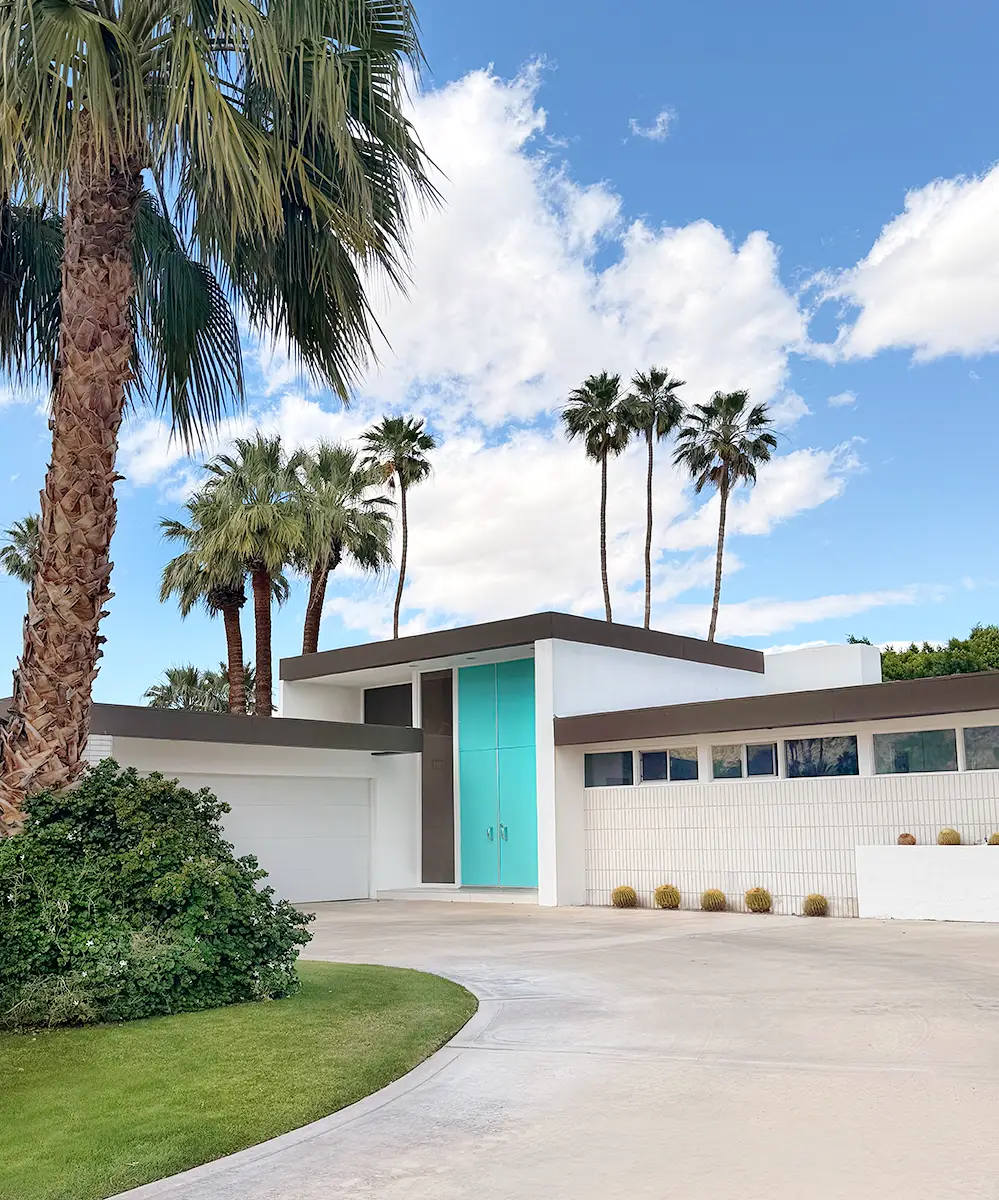
Paul Williams Architecture: The Legendary Architect Who Shaped Los Angeles
Paul Williams (1894-1980), also known as Paul Revere Williams, was a Los Angeles architect who designed more than 3,000 buildings across Southern California over a five-decade career. Known as the Architect to the Stars, Williams created residences for Frank Sinatra, Lucille Ball, Tyrone Power and Barbara Stanwyck, alongside landmark civic projects including the LAX Theme Building (1961) and the Beverly Hills Hotel renovations (1941–1949). A USC-trained architect licensed in California in 1921, Williams became the first African American member of the American Institute of Architects (AIA) in 1923 and the first African American AIA Fellow in 1957. He received the NAACP Spingarn Medal (1953) and the AIA Gold Medal (2017, posthumous) the highest honor in American architecture. His archive is held jointly by the Getty Research Institute and USC. Williams-designed homes remain among the most historically significant and sought-after residential properties in Los Angeles real estate.
Paul Williams – Architect Profile
- Born: February 18, 1894 — Los Angeles, California
- Died: January 23, 1980 — Los Angeles, California (age 85)
- Full Name: Paul Revere Williams
- Education: University of Southern California, USC; Los Angeles School of Art and Design; Beaux-Arts Institute of Design Atelier; Polytechnic High School
- Style: Mediterranean Revival, Spanish Colonial Revival, English Tudor Revival, Regency, French Chateau, Streamline Moderne, International Style Modernism
- Known For: First African American member of the AIA (1923); first African American AIA Fellow (1957); designing celebrity estates across Hollywood’s golden age; the LAX Theme Building (1961); over 3,000 buildings across a five-decade career; AIA Gold Medal recipient (posthumous, 2017)
- Key Project Locations: Beverly Hills – Bel-Air – Holmby Hills – Brentwood – Pacific Palisades – Hancock Park – Windsor Hills – View Park – Pasadena – Palm Springs – Las Vegas, NV – Washington, D.C.
- Notable Work: LAX Theme Building; Beverly Hills Hotel renovations; 28th Street YMCA; Saks Fifth Avenue Beverly Hills; Music Corporation of America Building (Beverly Hills); Golden State Mutual Life Insurance Building; Second Baptist Church (Los Angeles); Pueblo del Rio Housing Project; Frank Sinatra Residence; Lucille Ball & Desi Arnaz Residence
- Archive: Held jointly by the Getty Research Institute and USC
Williams became the first African American member of the American Institute of Architects in 1923, working in an industry and an era that rarely welcomed him. Yet he rose to become the architect of choice for Hollywood royalty, business titans and everyday Angelenos alike. At Beyond Shelter, we have a deep appreciation for architects like Williams whose buildings shaped the residential character of Los Angeles and whose legacy continues to influence property values and design culture today.
In This Article
- Who Was Paul Williams?
- Breaking Barriers in Architecture
- Paul Williams and the Hollywood Celebrity Homes
- Iconic Los Angeles Buildings
- The LAX Theme Building: A Futurist Masterpiece
- Paul Williams’ Architectural Style
- His Lasting Influence on Los Angeles Neighborhoods
- Finding and Owning a Paul Williams Home Today
- FAQs About Paul Williams Architecture
Who Was Paul Williams?
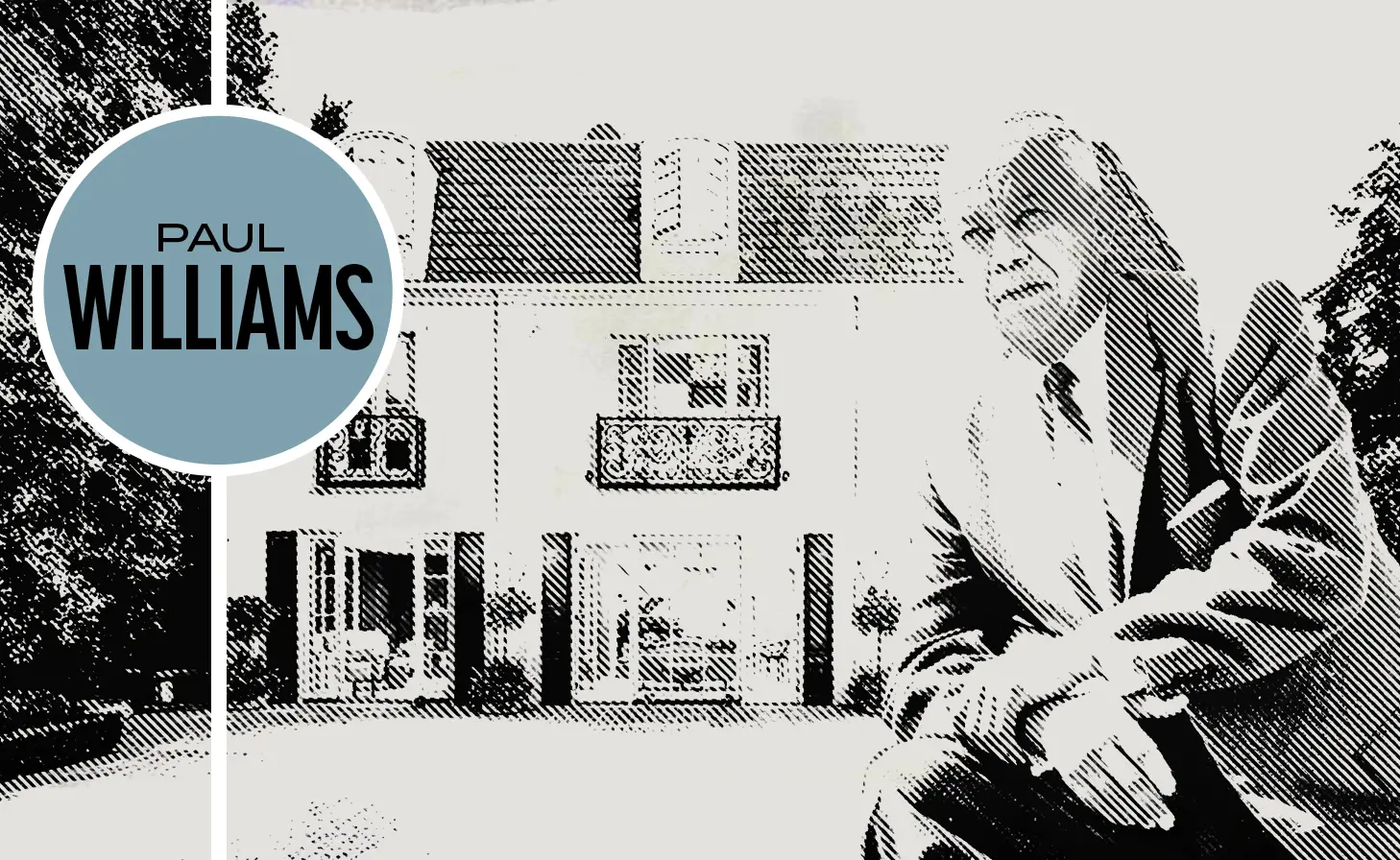
Paul Revere Williams, known as “the Architect to the Stars,” designed over 3,000 structures across Southern California during his five-decade career. His work ranged from modest residential homes to grand civic landmarks. Across Los Angeles, Williams shaped the visual identity of an emerging global city. His buildings balanced classical elegance with modern sophistication, reflecting the optimism of mid-century California. Each project showcased an architect capable of translating glamour into memorable architecture.
Paul Revere Williams was born in Los Angeles in 1894, orphaned at age four and raised by a foster family in a city that was just beginning its transformation into a modern metropolis. From an early age, he demonstrated a gift for drawing and an obsession with buildings. His teachers encouraged him; some warned him that a Black man would never find work as an architect in America. He ignored the warnings. Williams studied at the Los Angeles School of Art and Design, trained under architect Reginald Johnson and earned certification from the California Board of Architecture in 1921. Two years later, he became the first African American to be inducted into the American Institute of Architects as a licensed architect on the West Coast. He was 29 years old. Over the next five decades, Williams designed an estimated 3,000 or more structures, including private residences, commercial buildings, churches, hotels and public facilities. His range was extraordinary. He could design in almost any style a client requested and he executed each commission with meticulous detail and impeccable craftsmanship.
Breaking Barriers in Architecture
The story of Paul Williams’ career cannot be separated from the social climate of mid-20th century Los Angeles. Racial covenants legally prevented Black families from buying homes in many of the same neighborhoods where Williams was hired to design estates. He worked within a system that excluded people who looked like him and he did so with a grace and professionalism that his clients universally admired. One of the most often-cited details of his practice was his habit of learning to draft upside down. Because many white clients were uncomfortable sitting beside him at a drafting table, Williams trained himself to sketch plans so clients could read them from across the desk. It was a small accommodation that spoke volumes about the obstacles he navigated every day. Despite these barriers, Williams built an elite clientele. His reputation spread through word of mouth among Hollywood studios, real estate developers and civic leaders who recognized his talent and trusted his judgment. He was discreet, professional and gifted. By the 1940s, his firm was one of the busiest in Southern California. Williams also made a point of designing affordable housing projects and churches for the Black community in Los Angeles, ensuring that his success extended beyond the Hollywood elite. He believed architecture should serve everyone and his portfolio reflects that conviction. Learn more about the architectural homes he influenced through our guide to Los Angeles home styles.
Paul Williams and the Hollywood Celebrity Homes
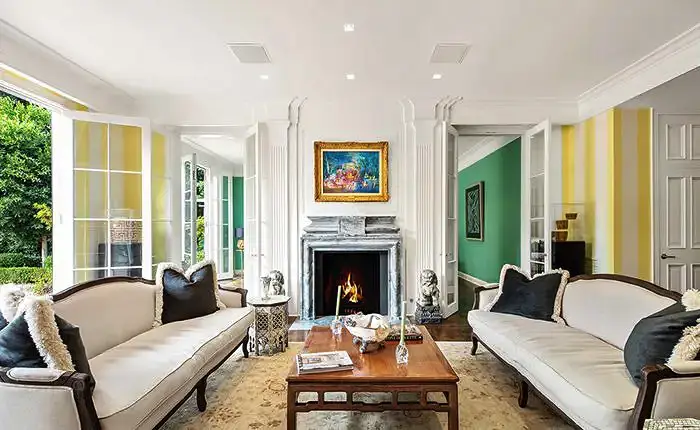
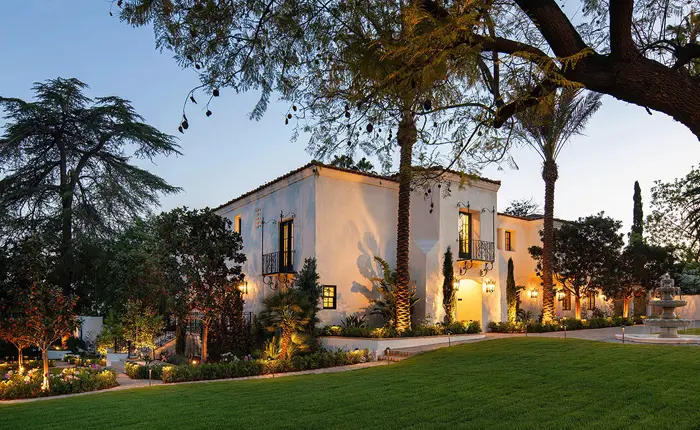
Williams designed homes for some of Hollywood’s biggest names, blending elegance with livability in residences that have stood the test of time. Williams’ architecture is often recognized by its gracious sense of arrival. Curving staircases, elegant porticos and carefully framed entrances create a moment of ceremony before one even steps inside. His buildings remind us that architecture can be both grand and deeply human.
Williams’ connection to Hollywood royalty may have made him a legend in Los Angeles real estate circles. His client list reads like a who’s who of the golden age of American entertainment and culture. Frank Sinatra commissioned him to design his bachelor pad in Trousdale Estates, a striking Moderne-style residence. Known for its advanced technology, the home became famous as the “notorious pushbutton house,” featuring an array of automated gadgets, mechanical systems, and a custom hi-fi sound system. Lucille Ball and Desi Arnaz hired Williams to design their Chatsworth ranch home in the San Fernando Valley. Cary Grant was a client. So was Lon Chaney. Tyrone Power, Bill “Bojangles” Robinson and Bert Lahr all trusted Williams with their most significant personal investments. The actor Anthony Quinn, actress Barbara Stanwyck and film producer Jay Paley also appeared on his client roster. Each of these commissions required Williams to understand not only architecture but also his clients’ personalities and lifestyles. He was known for listening carefully, asking sharp questions and producing designs that felt entirely personal. His celebrity clients appreciated both his talent and his discretion. Stories of his work rarely appeared in gossip columns. His drawings appeared in Architectural Digest. Many of these celebrity properties remain standing today and represent some of the most sought-after residential real estate in Southern California. For buyers interested in a home’s provenance and architectural legacy, a Williams-designed property carries extraordinary cultural weight. Our team at Beyond Shelter specializes in mid-century modern homes with exactly this kind of architectural significance.
Iconic Los Angeles Buildings
Beyond residential work, Paul Williams left a permanent mark on the commercial and civic fabric of Los Angeles. His projects ranged from intimate bungalows to monumental public structures and his influence can be found across the city in buildings that many Angelenos pass daily without realizing their origin. The Beverly Hills Hotel underwent a significant redesign under Williams’ guidance in the 1940s. He softened the facade, added the now-iconic pink exterior and reshaped the interiors into something more elegantly Californian. The result became one of the most recognizable hotels in the world, and it has retained much of its Williams-era character. Williams also designed the interiors and the expansions of the Saks Fifth Avenue building in Beverly Hills, the Music Corporation of America headquarters in Beverly Hills, and numerous institutional and religious structures throughout Los Angeles County. His 28th Street YMCA in South Los Angeles remains a National Historic Landmark.
Williams and the Expansion of Mid-Century Los Angeles
The postwar housing boom gave Williams an enormous platform. He partnered with developers to design entire residential tracts, bringing high-quality design to middle-class buyers who might never have been able to afford a custom architect. His work with housing developers produced affordable homes throughout the greater Los Angeles area. These collaborations helped define the look and layout of postwar suburban Los Angeles, influencing the aesthetic of countless neighborhoods from the Valley to the Westside. For architecture enthusiasts and real estate buyers alike, understanding the breadth of Williams’ civic work adds a new layer of meaning to Los Angeles neighborhoods. Explore the character of these areas through our Los Angeles neighborhoods guide.
The LAX Theme Building: A Futurist Masterpiece
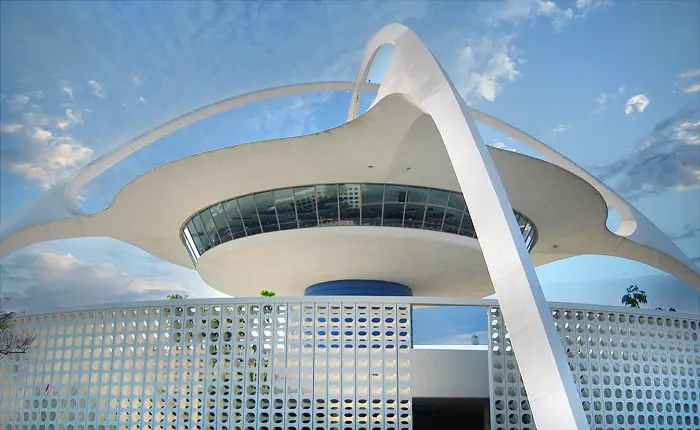
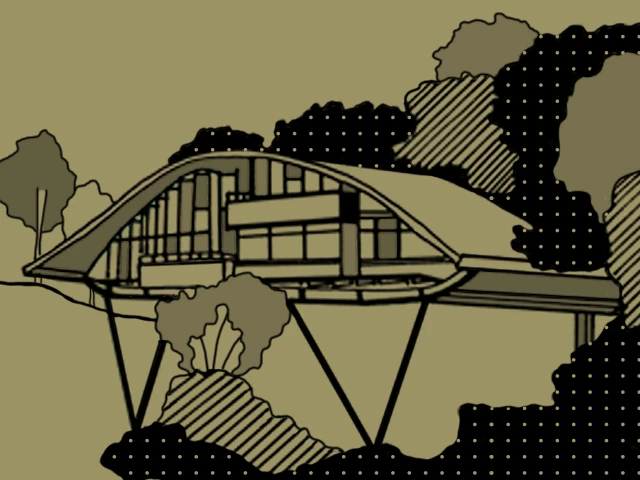
The iconic LAX Theme Building, completed in 1961, was co-designed by Paul Williams and has become one of Los Angeles’ most recognizable symbols of mid-century futurist architecture in the United States. At Los Angeles International Airport, Paul Williams contributed to the visionary design team that shaped the airport’s futuristic Jet Age identity. This iconic Theme Building, with its sweeping parabolic arches, captured the optimism of the early space age. Photo: Kim Hayden Holt
Of all the buildings associated with Paul Williams’ name, perhaps none is more immediately recognizable to the world than the Theme Building at Los Angeles International Airport. Completed in 1961, the structure is a defining image of mid-century futurism: a flying saucer perched atop four sweeping parabolic arches, hovering above the central terminal area as if it had just landed from another era. Williams collaborated on the design with architects William Pereira, Charles Luckman and Welton Becket. The new look for LAX celebrated nearly five decades of growth, from a modest bean-field airstrip with two 2,000-foot oiled runways labeled “Land Only” and “Takeoff” to a hub of global airline terminals.. The building was designed to house a restaurant and observation deck, giving arriving passengers a dramatic introduction to the city below. The Theme Building is now a City of Los Angeles Historic-Cultural Monument and a defining symbol of Space Age architecture. It has appeared in countless films, television shows and photographs as shorthand for a certain kind of optimistic, forward-looking Los Angeles that defined the early 1960s. For architecture enthusiasts, it remains one of the most joyful and inventive structures in the city’s history. According to ArchDaily, the Theme Building is widely regarded as one of the finest surviving examples of Googie architecture in the United States, a style that flourished in Southern California and reflected the era’s obsession with space travel, atomic energy, and the future.
Paul Williams’ Architectural Style
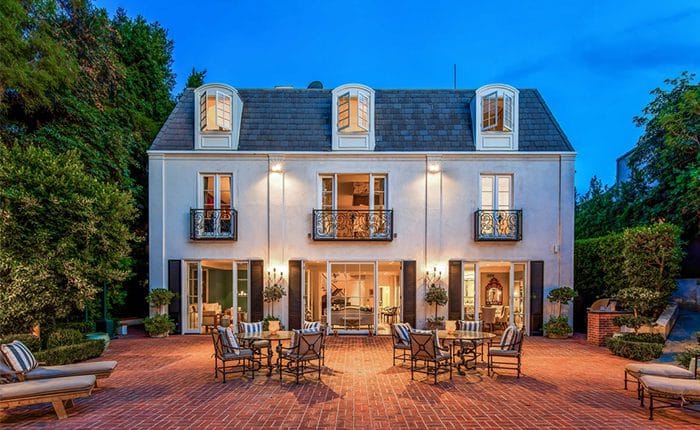
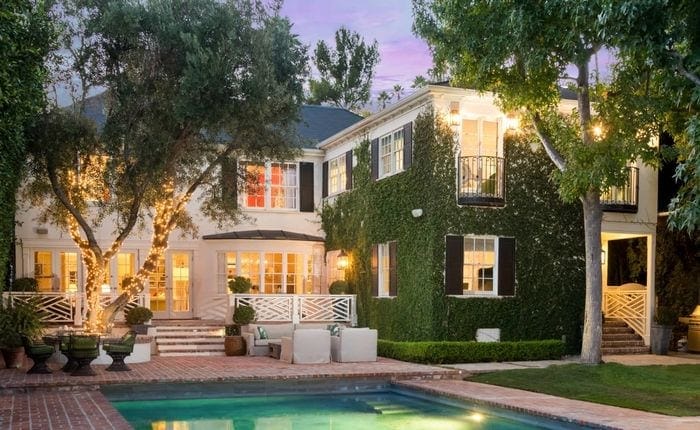
One of the most fascinating aspects of Paul Williams’ career is how difficult it is to pin down a single defining style. Unlike contemporaries such as Richard Neutra or Rudolph Schindler, who became closely identified with a specific modernist vocabulary, Williams was a chameleon. He moved fluently between Colonial Revival, Regency, Spanish Colonial, Streamline Moderne and International Style modernism, depending entirely on what the client and site required. This versatility was not a sign of a lack of conviction. It reflected Williams’ belief that architecture should serve the people who live and work in it. He had no interest in imposing a personal aesthetic on clients who wanted a different kind of home. He was a collaborator first and a stylist second. That said, certain qualities appear consistently across his work regardless of style. Williams favored elegant proportions, refined detailing, and interiors that felt both impressive and livable. His homes were photographed beautifully, but they were designed for daily life. Circulation was thoughtful, rooms related logically to one another, and materials were always carefully chosen. You can see the influence of this philosophy throughout the mid-century and modernist home styles that define so much of Los Angeles residential architecture. His work in the Regency and Colonial Revival styles is particularly admired by historians. These were homes of theatrical elegance, with graceful curved staircases, classical details and formal rooms that felt simultaneously grand and welcoming. His modernist projects, by contrast, were restrained and precise. Both traditions are well represented in his surviving portfolio.
His Lasting Influence on Los Angeles Neighborhoods
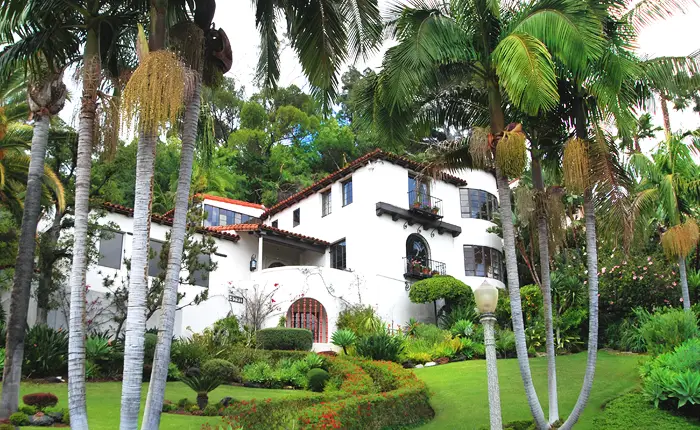
Williams’ influence extends across multiple Los Angeles neighborhoods, from Hancock Park and Windsor Hills to the Crenshaw corridor and the San Fernando Valley, where his residential designs shaped entire streetscapes. Williams designed homes for some of Hollywood’s biggest names, blending elegance with livability in residences that have stood the test of time. His architecture is often recognized by its gracious sense of arrival. Curving staircases, elegant porticos and carefully framed entrances create a moment of ceremony before one even steps inside. His buildings remind us that architecture can be both grand and deeply human. Paul Williams achieved international acclaim while navigating the profound racial barriers of early twentieth-century America. That quiet ingenuity became symbolic of a career defined by resilience, brilliance and grace. The Bruce and Lula E. Blackburn House, Photo: Michael J. Locke
The footprint of Paul Williams’ work is scattered across dozens of Los Angeles neighborhoods, often unnoticed by residents and visitors. Windsor Hills and View Park, historically prosperous African American neighborhoods on the west side of Los Angeles, contain a particularly notable concentration of Williams-designed homes. These properties are a source of enormous community pride and have been the subject of preservation efforts in recent years. Hancock Park, Bel-Air, Brentwood, and Pacific Palisades all contain significant Williams residences. In Holmby Hills and Beverly Hills, his estate-scale commissions for entertainment industry clients gave those neighborhoods much of their mid-century architectural character. Pasadena, San Marino and areas of the San Fernando Valley also bear his influence. Today, homes with a confirmed Williams attribution command premium prices in the real estate market. Buyers seek them out not just for their design quality but for their historical significance and investment potential. A property designed by one of the most important architects in American history carries a story that no new construction can replicate. Our team at Beyond Shelter has extensive experience helping buyers and sellers of architecturally significant homes across Los Angeles. Preservation organizations, including the Los Angeles Conservancy, have documented many of Williams’ surviving structures and advocated for their protection. Awareness of his legacy is notable and his work is recognized as an irreplaceable part of the city’s cultural and architectural heritage. Read more about Williams’ preservation legacy in Dezeen’s architecture coverage.
Finding and Owning a Paul Williams Home Today
For buyers seeking a home with an architectural pedigree, a Paul Williams property represents one of the most compelling opportunities in the Los Angeles market. These homes are relatively rare, increasingly recognized, and deeply connected to the city’s cultural history. Owning one is not just a real estate decision; it is a form of stewardship. The Paul R. Williams Archive at USC has been cataloging his surviving buildings. Architectural archives, building permits, historical photographs and period publications can all contribute to establishing provenance. Buyers should understand the responsibilities that come with owning a historically significant property. Some Williams homes are designated as Historic-Cultural Monuments, which impose specific obligations regarding alterations and maintenance. Others are located in Historic Preservation Overlay Zones (HPOZs) that regulate exterior changes. These protections generally support property values over the long term, but they require informed ownership. Our guides to mid-century modern homes for sale in Los Angeles can help orient buyers new to this market. Beyond the regulatory considerations, Williams’ homes reward their owners with exceptional design quality, generous proportions and a connection to one of the most extraordinary careers in American architecture. Williams received the AIA’s highest individual honor, the Gold Medal, posthumously in 2017, a long-overdue recognition of a career that transformed Los Angeles one building at a time.
Paul Williams – Notable Projects and Houses
- 28th Street YMCA (1926) — Central Avenue, Los Angeles, CA. Spanish Colonial Revival; red clay roof tiles, arched second-floor windows, and bas-relief portraits of Booker T. Washington and Frederick Douglass in terra cotta. Designed during a period of racial segregation as a cultural and recreational hub for the Black community. National Historic Landmark. Now adaptively reused as affordable housing (28th Street Apartments) following a Koning Eizenberg renovation.
- Second Baptist Church (1926) — Los Angeles, CA. Co-designed with Norman F. Marsh, the first African American Baptist church in Los Angeles. Williams stipulated that all construction workers be hired from African American-owned businesses.
- Leistikow House (1923) — Windsor Square, Los Angeles, CA. Tudor-style residence; a stepped bank of windows follows the home’s grand interior staircase. One of Williams’ early confirmed residential commissions in an exclusive Los Angeles neighborhood, documented by the National Trust for Historic Preservation.
- Jay Paley House (1935) — Holmby Hills, Los Angeles, CA. Designed for CBS executive Jay Paley; later, the residence of Barron Hilton. The home served as the exterior “Colby mansion” in the television series The Colbys. Featured in Architectural Digest, 1935.
- Saks Fifth Avenue (1937) — Beverly Hills, CA. Commercial retail building co-designed with John and Donald Parkinson. One of Williams’ earliest high-profile commercial commissions on Wilshire Boulevard.
- MCA Building (1938) — Beverly Hills, CA. Headquarters for the Music Corporation of America, now the Paradigm Talent Agency. Won the AIA Award of Merit in 1939. Widely cited as one of the finest commercial buildings Williams produced.
- Beverly Hills Hotel (renovations, 1941–1949) — Beverly Hills, CA. Williams redesigned the hotel’s interiors and exterior aesthetic following the Great Depression, introducing the banana leaf motif, the iconic candy-stripe palette, and the Fountain Coffee Room with its sweeping curved counter. The Beverly Hills Hotel sign lettering is based on Williams’ own handwriting. The hotel’s Paul Williams Suite preserves his original design.
- Lucille Ball and Desi Arnaz Ranch (Desilu Ranch) (1941) — Chatsworth, Los Angeles, CA. Williams’ first commission for the couple; a working ranch home in the San Fernando Valley. Featured in USModernist and Davis Designs research as a confirmed Williams project.
- Pueblo del Rio Housing Project (1942) — Los Angeles, CA. Co-designed with Richard Neutra, Wurdeman, Becket, Kaufmann, and Wilson as part of the Southeast Housing Architects team. One of the first public housing projects in Los Angeles, a model for public housing nationally. Garden city-inspired plan on 17.5 acres with 57 two-story apartment buildings.
- Palm Springs Tennis Club (1947) — Palm Springs, CA. Collaborative project with A. Quincy Jones, one of at least 20 projects the two architects developed together after 1942.
- Golden State Mutual Life Insurance Building (1949) — West Adams, Los Angeles, CA. Five-story steel and concrete Late Modernist structure designed for one of the oldest and largest African American-owned insurance companies in the country. Includes a 400-seat auditorium and a cafeteria for 150. A landmark of African American commercial architecture in Los Angeles, restored in 2015.
- Lucille Ball and Desi Arnaz Residence (1954) — Thunderbird Country Club, Rancho Mirage, CA. Ranch-style, desert modern home on a lot Desi Arnaz reportedly won in a poker game. 4,400 square feet with six bedrooms, glass curtain wall between patio and living areas, swimming pool, and lanai. Photographed by Julius Shulman, 1955. The first residence completed in the Thunderbird Country Club development.
- Frank Sinatra “Pushbutton House” (c. 1954) — Trousdale Estates, Beverly Hills, CA. Williams designed Sinatra’s Trousdale Estates bachelor pad, known for its advanced automated systems, custom hi-fi sound system and mechanized doors and windows. Referred to in sources as the “notorious pushbutton house.” This is distinct from the Twin Palms estate in Palm Springs, which was designed by E. Stewart Williams.
- Nickerson Gardens (1954) — Watts, Los Angeles, CA. Large-scale public housing complex on 55 acres; 1,110 units with a neighborhood center, gymnasium accommodating 500, playgrounds, theater spaces and landscaped gardens. Praised at the time as a model for community-centered public housing design.
- Los Angeles County Courthouse (1959) — Los Angeles, CA. Designed as part of a collaborative team of associate architects, construction began in 1954 and the building opened in 1959.
- Founder’s Church of Religious Science (1959) — Los Angeles, CA. An elliptically shaped church building commissioned by Ernest Holmes. Williams described the ellipse as “the perfect symbol for the wholeness, unity, unending and all-inclusive power of love.” Listed on the National Register of Historic Places.
- LAX Theme Building (1961) — Los Angeles, CA. Williams was a pivotal contributor to the design of the iconic Theme Building at Los Angeles International Airport. Working alongside firms including Luckman & Pereira and Welton Becket & Associates, he helped shape the landmark’s distinctive, futuristic Googie aesthetic.
- La Concha Motel Lobby (1961) — Las Vegas, NV. Googie-style lobby featuring sweeping concrete parabolic canopy arches. Relocated in 2006 from its original site on South Virginia Street, now preserved as the visitor center for the Neon Museum, Las Vegas.
- St. Jude Children’s Research Hospital (1962) — Memphis, TN. Designed for his friend Danny Thomas, founder of the hospital. Williams had a personal connection to Memphis, the city his parents had moved from before his birth.
- Guardian Angel Cathedral (1963) — Las Vegas, NV. Catholic cathedral; one of Williams’ most significant religious commissions outside California. Still standing as an active parish and a notable example of his mid-century ecclesiastical work.
Frequently Asked Questions About Paul Williams Architecture
Interested in Paul Williams Home for Sale in Los Angeles?
The legacy of Paul Williams lives on in Los Angeles properties that combine history, design and lasting value.
At Beyond Shelter, we specialize in helping buyers and sellers navigate the market for architecturally significant homes across Southern California. Whether you are searching for a confirmed Williams property or exploring mid-century modernism more broadly, our team brings both real estate expertise and genuine architectural knowledge to every transaction.
Browse Current Listings: Mid-Century Modern Homes for Sale in Los Angeles
Explore Architectural Homes: Architectural Homes for Sale
Service Areas: Los Angeles and Southern California. Contact our team to discuss your architectural real estate goals →
About Beyond Shelter
Beyond Shelter is a premier architecture and real estate firm serving Los Angeles and Southern California. With deep expertise in modernist architecture, historic preservation and architectural history, we help clients discover and acquire architecturally significant properties. Our team combines architectural knowledge with real estate expertise to provide comprehensive guidance for design-conscious buyers, sellers and architecture enthusiasts. Learn more about our services →