In This Article
- The Beauty of Mid-Century Modern Architecture
- What to Look for When Buying: Classic Design Elements of a Mid-Century Modern Home
- Key Architects to Know: Architects Who Transformed Mid-Century Modern Design
- Why Los Angeles is the Epicenter of Mid-Century Living: Life in a Mid-Century Modern Home
- Where to Find Your Mid-Century Modern Home
- Creating Your Mid-Century Modern Retreat
- Make Your Mid-Century Home Shine
- Investment Potential: Ready to Find Your Mid-Century Modern Home?
- FAQs: Buying a Mid-Century Modern Home in Los Angeles
THE BEAUTY OF MID-CENTURY MODERN ARCHITECTURE
Mid-century modern architecture and design flourished from the mid-1940s to the late 1960s. The movement celebrates an innovative approach to architecture and furniture design. The architectural style features clean lines, functional forms and an emphasis on merging indoor and outdoor spaces. The welcoming, airy interiors of mid-century modern homes feature large windows, open floor plans, and utilize natural materials such as wood, stone and glass.
Mid-century modern architecture begins with influential architects like Richard Neutra and Rudolph Schindler, who sought to create a new way of living that embraced the modern age. Their innovative work emphasized the importance of form following function, drawing inspiration from the International and Bauhaus movements. These early modernist architects prioritized minimalism and industrial materials, resulting in an innovative architectural style that perfectly suited the post-war optimism of the mid-20th century.
CLASSIC DESIGN ELEMENTS OF A MID-CENTURY MODERN HOME: WHAT TO LOOK FOR WHEN BUYING
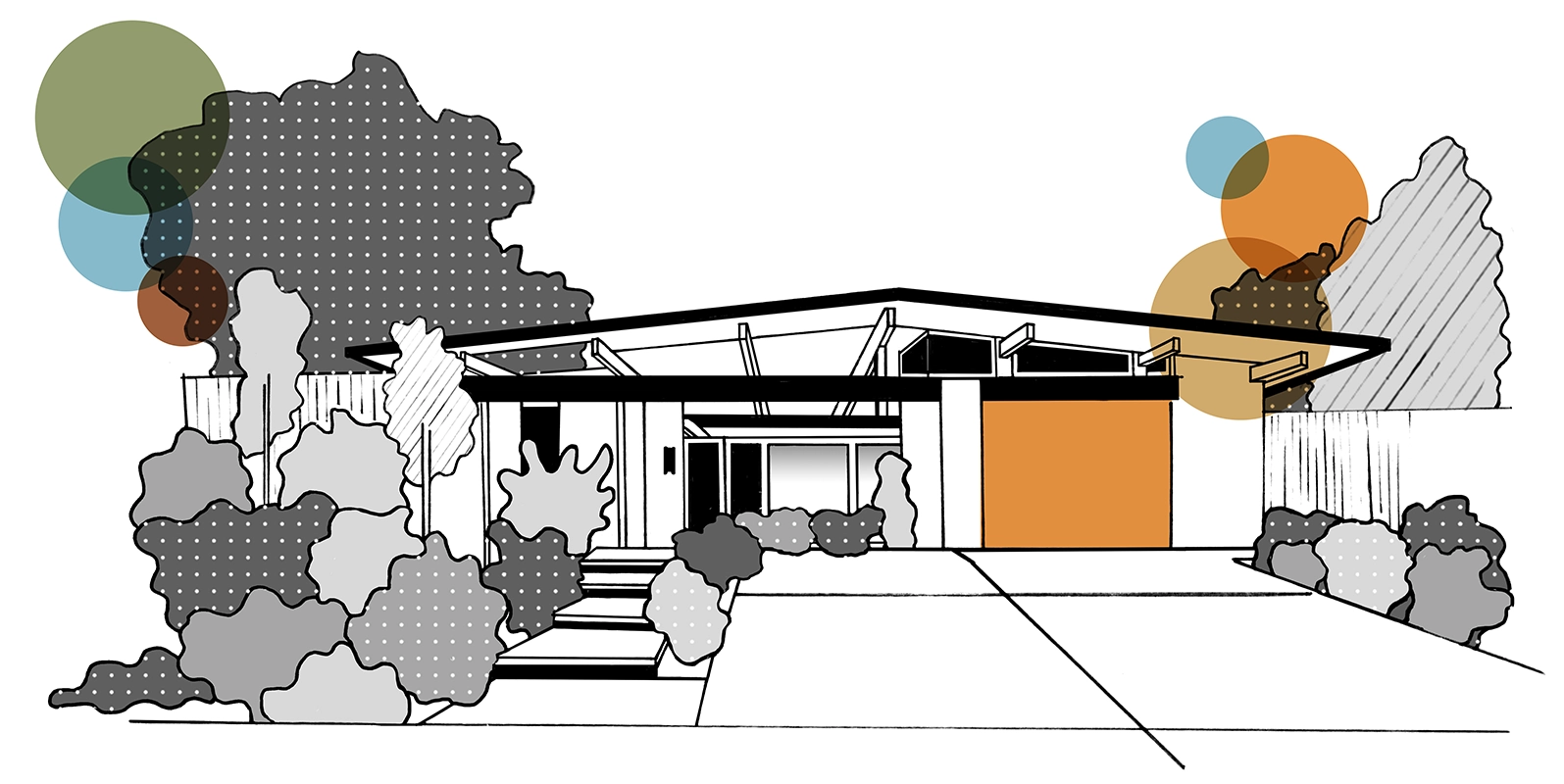
– Horizontal Planes + Geometric Design –
– Asymmetrical Facade –
– Earthy Hues with Pops of Bright Color –
– Flat or Low-Pitched Roofs –
– Connection to Nature –
– Natural Materials and Organic Textures –
– Large Expanses of Glass –
– Post and Beam Construction –
– Floor-To-Ceiling Windows –
– Open Floor Plan –
– Clean Lines + Geometric Shapes –
– Minimal Ornamentation –
– Elevation Changes –
– Integration of Indoor/Outdoor Spaces –
KEY ARCHITECTS TO KNOW: ARCHITECTS WHO TRANSFORMED MID-CENTURY MODERN DESIGN
The mid-century modern movement owes much of its success to the visionary architects who championed its principles. These architects left an indelible mark on Los Angeles’s architectural landscape, creating homes that continue to inspire admiration and reverence.
Richard Neutra | Neutra was a prominent figure in mid-century modern architecture, known for his innovative designs emphasizing harmony with nature. His use of open spaces, large windows and natural materials set the standard for modern homes and his work remains highly collectible today.
John Lautner | Lautner’s designs are characterized by their dramatic forms and organic integration with the surrounding landscape. His homes often feature bold geometric shapes and innovative engineering solutions, making them true works of art. Lautner’s residences are frequently used in film and television as backdrops for compelling storylines and rarely on the market.
Pierre Koenig | Koenig pioneered steel-frame construction, creating homes that embodied the spirit of modernism. His designs are celebrated for their simplicity, functionality and transparent structures that blur the line between interior and exterior spaces. The Stahl House, Case Study 22 and The Baily House, Case Study 21 are his most famous residences.
Craig Ellwood | Ellwood brought a refined, structural clarity to Los Angeles modernism, often working in steel to create bold, rigorously composed homes. Associated with the Case Study House program, his architecture is defined by proportion, precision and a quiet sophistication.
A. Quincy Jones | Jones helped define the optimism of postwar California living, blending modernist principles with warmth, livability and landscape integration. His work, from custom residences to large-scale developments, championed indoor–outdoor flow and a distinctly human-centered modernism.
Buff and Hensman | The partnership of Conrad Buff and Donald Hensman produced some of the most enduring expressions of California modernism. Their post-and-beam homes feel both structural and soulful, layered with texture, warmth and a deep sensitivity to site.
Gregory Ain | Ain approached modern architecture as a social project, designing thoughtful, affordable housing rooted in progressive ideals. His work balanced architectural innovation with community planning, offering a more democratic vision of modern living in Southern California.
Edward Fickett | Fickett translated modernism for a broader audience, designing homes that were both stylish and accessible. Often called the “architect to the stars of suburbia,” his work brought light, openness and modern design to postwar Southern California neighborhoods at scale.
Richard Dorman | Dorman’s work reflects a deeply considered approach to post-and-beam architecture, where structure and landscape exist in quiet dialogue. His homes are understated yet precise, embodying a refined California modernism rooted in craft, proportion and restraint.
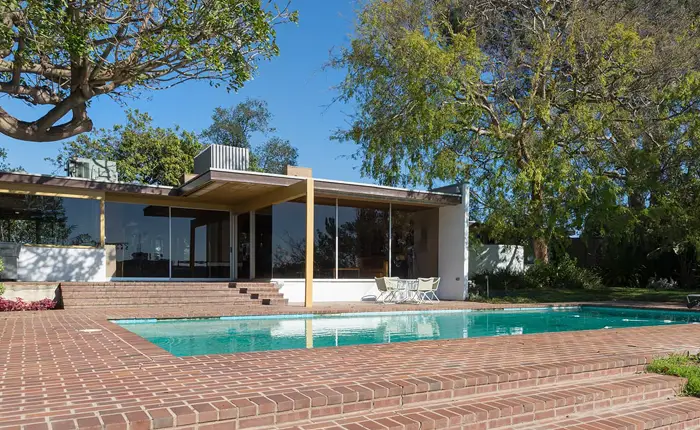
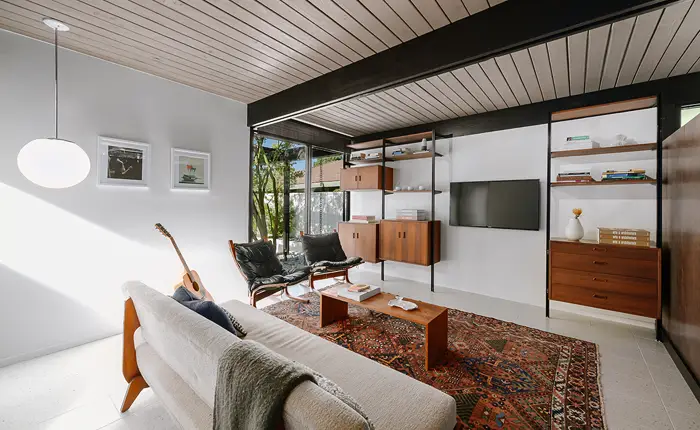
The Shaarman House by Richard Neutra exemplifies Los Angeles modernism with its precise geometry, glass walls and seamless indoor–outdoor living. Designed in the International Style, the residence reflects Neutra’s philosophy of biorealism, connecting architecture to landscape and human experience. This iconic Neutra home remains a benchmark for mid-century modern architecture in Southern California. This post-and-beam interior by Richard Dorman captures the essence of mid-century modern design in Los Angeles, with exposed structure, warm wood and open-plan living. Dorman’s work emphasizes simplicity, light and a strong connection to the surrounding environment through expansive glazing. The space reflects the enduring appeal of California modernism and the refined craftsmanship of post-and-beam architecture.
Buff and Hensman | The partnership of Conrad Buff and Donald Hensman produced some of the most enduring expressions of California modernism. Their post-and-beam homes feel both structural and soulful, layered with texture, warmth and a deep sensitivity to site.
Gregory Ain | Ain approached modern architecture as a social project, designing thoughtful, affordable housing rooted in progressive ideals. His work balanced architectural innovation with community planning, offering a more democratic vision of modern living in Southern California.
Edward Fickett | Fickett translated modernism for a broader audience, designing homes that were both stylish and accessible. Often called the “architect to the stars of suburbia,” his work brought light, openness and modern design to postwar Southern California neighborhoods at scale.
Richard Dorman | Dorman’s work reflects a deeply considered approach to post-and-beam architecture, where structure and landscape exist in quiet dialogue. His homes are understated yet precise, embodying a refined California modernism rooted in craft, proportion and restraint.
Mid-century modern homes embody an aesthetically pleasing lifestyle that prioritizes openness, clarity and a strong connection to nature.
WHY LOS ANGELES IS THE EPICENTER OF MID-CENTURY LIVING: LIFE IN A MID-CENTURY MODERN HOME
The Perfect Southern California Climate
In Los Angeles, mid-century modern architecture found a natural home with abundant sunlight, larger than life glamour and oh so stylish living. Thanks partly to the entertainment industry and a rebellious Wild West attitude, architects embraced a new residential model for living, the mid-century modern home. These captivating residences, with their sleek lines and harmonious connection of indoor and outdoor spaces, are highly sought after by Los Angeles homebuyers and design enthusiasts alike.
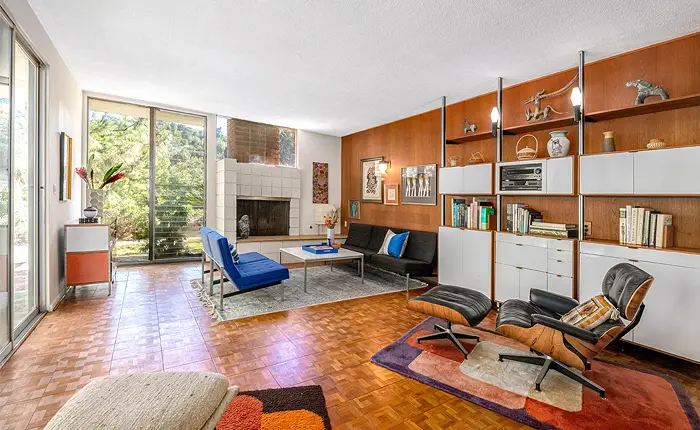
A classic post-and-beam residence in Sherman Oaks, by architect Richard Kearney, designed to dissolve the boundary between the interior and the exterior landscape. The living room is furnished with classic pieces from the era, including an Eames Lounge Chair, a Knoll Sofa and a Knoll coffee table. The home’s architectural design celebrates a classic open floor plan, floor-to-ceiling glass and the integration of nature with the interior living spaces. This mid-century modern home remained in the same family for over sixty years.
The Enduring Appeal of a Mid-Century Modern Home
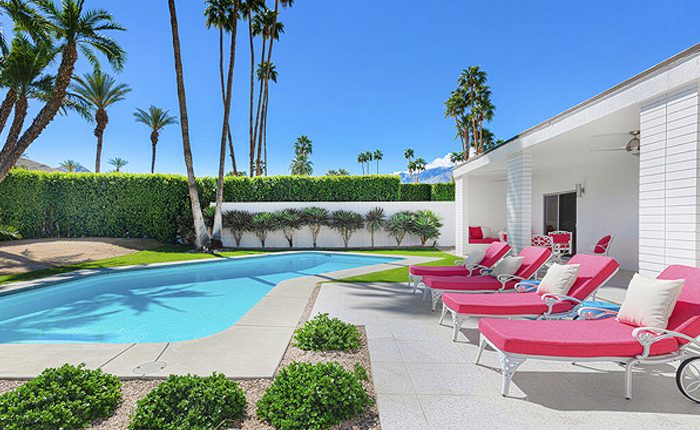
For many clients, owning a mid-century modern home is a lifelong dream. Living in these homes symbolizes an idealized lifestyle celebrated by publications such as Dwell, Architectural Digest and Atomic Ranch. Airy, light-filled spaces provide a sanctuary to relax and recharge against the city’s natural beauty. Many of these classic homes come complete with a sparkling freeform pool and jetliner views. The resurgence of interest in mid-century design over the last couple of decades has elevated these homes to iconic status in the Los Angeles real estate market.
Characteristics of a Mid-Century Modern Home
Mid-century modern homes are celebrated for their sleek, geometric designs emphasizing horizontal planes and flat or low-pitched roofs. Featuring open floor plans, these homes encourage fluid movement and flexible living arrangements. These open plans promote a sense of community and togetherness, making them perfect for families and social gatherings. Large windows and glass walls invite natural light in, fostering a sense of unity and a connection between indoors and out. Natural materials, wood, stone and brick, combine with a neutral color palette to create a warm, inviting interior space.
Living in a Mid-Century Modern House
Our clients who have purchased mid-century modern homes say living in one of these unique houses is an experience that transcends mere aesthetics. The thoughtful design and harmonious integration with nature provide a sense of tranquility and balance that is unparalleled in other architectural styles.
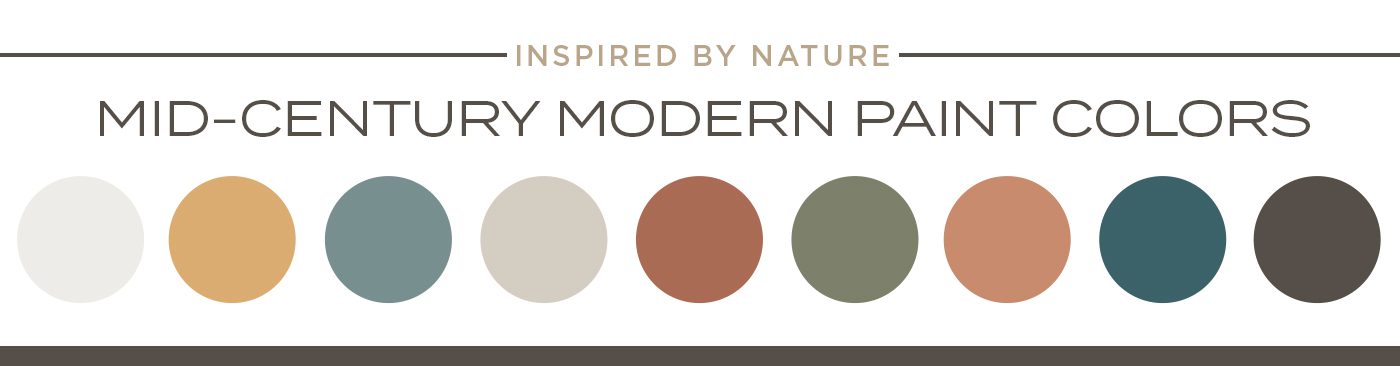
Earthy neutral colors inspired by nature and the outdoors create a calming backdrop for mid-century modern homes. Soft off-whites, light browns, rusts, grays, charcoals and olive greens are tones found just outside the door. If desired, bold, well-balanced accent colors can be added for visual interest in furniture pieces, rugs, doors and decorative accessories.
WHERE TO FIND YOUR MID-CENTURY MODERN HOME
Los Angeles has many neighborhoods with a rich collection of mid-century modern homes. Each area offers unique character and charm, providing homebuyers a diverse range of areas to explore. Mid-century homes are spread throughout the Los Angeles Basin, including the neighborhoods of Laurel Canyon, Mount Washington, Highland Park and Nichols Canyon Colony.
Silver Lake | A vibrant neighborhood located in the heart of Los Angeles. Renowned for its creative energy and eclectic vibe. In Silver Lake, mid-century modernism found one of its most experimental urban footholds, where steep hillsides and reservoir views invited architectural innovation. The neighborhood became a canvas for pioneers like Richard Neutra, whose VDL Research House (1932, rebuilt 1966) served as both residence and laboratory for his ideas on light, transparency and biorealism. Biorealism refers to Neutra’s commitment to designing buildings that respond to human biology and the natural environment, emphasizing well-being and harmony with nature. Rudolph Schindler contributed modest yet spatially radical homes here, while John Lautner pushed boundaries with the dramatic Silvertop (1957–63), a sweeping concrete form perched above the hills. Silver Lake’s mid-century houses often emphasize compact footprints, inventive materials, and a close dialogue with the terrain. This dialogue with the terrain describes how architects designed homes that adapted to the area’s steep topography and natural features, integrating the landscape into the living experience. These qualities were shaped as much by necessity as by ideology. Today, the neighborhood remains one of Los Angeles’ most architecturally layered neighborhoods, where early modernist experimentation coexists with later restorations, continuing to attract design-conscious buyers drawn to its creative legacy.
Los Feliz | Few neighborhoods in Los Angeles carry the architectural weight of Los Feliz. This is where Richard Neutra’s career-defining Lovell Health House (1929) still stands in the hills above Griffith Park, the commission that announced modernism’s arrival in Southern California to the world. Neutra returned to Los Feliz repeatedly throughout his career, including the celebrated Wirin Residence (1949), recognized as one of his finest commissions, with walls of glass overlooking the city below. Gregory Ain, who trained directly under Neutra, also left his mark here with early commissions, including the Ansalem Ernst House (1937), in the coveted Los Feliz Oaks. Raphael Soriano added his own chapter with the Gogol House, a refined example of International Style modernism. Los Feliz homes tend to range from upper $1-2 million for smaller post-and-beam properties to well over $3-5+ million plus for significant architect-designed examples, with landmark-designated homes commanding an additional premium. For buyers drawn to provenance and architectural pedigree, Los Feliz remains one of the most sought-after neighborhoods in all of Los Angeles.
Trousdale Estates – Beverly Hills | Perched above Beverly Hills, Trousdale Estates represents one of the most cohesive concentrations of luxury mid-century modern architecture in Southern California. Developed in the late 1950s and 1960s on the former Doheny estate, the neighborhood attracted leading architects including Wallace Neff, Paul Williams and A. Quincy Jones. Their designs embraced expansive glass walls, low horizontal profiles and seamless indoor–outdoor living, often oriented to capture sweeping views from downtown Los Angeles to the Pacific Ocean. Homes were built for a clientele of entertainment and business glitterati, resulting in a refined yet understated modernism that prioritized privacy and lifestyle. Unlike hillside modernism elsewhere, Trousdale’s relatively flat parcels allowed for larger, more sprawling plans. The neighborhood remains a benchmark for mid-century luxury, where original architecture and carefully executed restorations continue to define its enduring prestige and architectural significance.
Hollywood Hills – Sunset Strip | In the Hollywood Hills and above the Sunset Strip, mid-century modern architecture became synonymous with glamour, innovation and cinematic views. The hillsides above Hollywood offered architects a stage for experimentation, resulting in some of the most iconic modern houses in the world. Pierre Koenig’s Stahl House, 1959 (Case Study No. 22), epitomizes the era, its glass walls framing Los Angeles like a living photograph. Richard Neutra’s Kun House (1936) exemplifies early modernism in the area, integrating glass, steel and terraces into the steep terrain with a refined sensitivity to light and privacy. John Lautner’s Chemosphere (1960) redefined structural daring, perched on a single concrete column above the canyon. Lautner’s Wolff House (1961) pushes this dialogue further, its angular concrete form emerging directly from the hillside. Frank Lloyd Wright’s Hollyhock House (1921) in East Hollywood laid the groundwork for modernist thinking, influencing generations that followed. Mid-century houses in the Hollywood Hills often combine steel, glass and dramatic cantilevers, responding directly to the terrain and the culture of spectacle. These residences remain among the most coveted in Los Angeles, celebrating a vision of modern living that is both architectural and cinematic in its history and visual appeal.
Laurel Canyon | Tucked between Hollywood and the San Fernando Valley, Laurel Canyon offers a more intimate, bohemian interpretation of mid-century modern living, shaped by its winding roads and densely wooded hillsides. Unlike the polished glamour of nearby neighborhoods, the canyon attracted architects and creatives interested in experimentation and retreat. Many Laurel Canyon mid-century homes are modest in scale yet architecturally ambitious, emphasizing verticality, layered outdoor spaces and immersive natural surroundings. The neighborhood’s legacy is as much cultural as architectural, long associated with artists and musicians who embraced its seclusion. Laurel Canyon remains one of Los Angeles’ most atmospheric modernist enclaves, where architecture and landscape merge into a distinctly personal vision of California living.
Pasadena – Altadena – San Rafael Hills | A city steeped in history and architectural significance. The mid-century modern homes in Pasadena reflect its commitment to preserving its cultural heritage. With tree-lined streets and proximity to cultural landmarks, Pasadena offers a serene setting for those seeking a blend of tradition and modernity. Beyond central Pasadena, surrounding areas such as Altadena and the San Rafael Hills became important sites for mid-century experimentation, particularly in the postwar years. These neighborhoods offered larger lots and more rugged topography, ideal for the expressive potential of post-and-beam design. Buff and Hensman were especially active here, designing homes that dissolved boundaries between interior and landscape, often using redwood, glass and exposed structure. Their projects in Altadena helped define a regional interpretation of modernism that was both informal and deeply connected to site. Gregory Ain’s earlier work in nearby communities also influenced the ethos of affordable, community-oriented modern housing. These hillside neighborhoods reflect a quieter chapter of Los Angeles modernism, less about spectacle, more about livability and integration.
Palm Springs | In Palm Springs, mid-century modern architecture achieved one of its most complete and celebrated expressions, shaped by climate, leisure and postwar optimism. Architects such as Richard Neutra designed the iconic Kaufmann Desert House (1946), a masterclass in desert modernism that balances rigor with openness. William Krisel, working with the Alexander Construction Company, brought modern design to a broader audience through the Twin Palms and Vista Las Palmas neighborhoods, where repetitive forms created a cohesive architectural identity. Donald Wexler further advanced the idiom with his steel houses (1961–62), exploring prefabrication and climate responsiveness. Albert Frey, John Lautner, William Cody and E. Steward Williams all contributed significant architectural designs in the area. Palm Springs remains an international destination for modernist architecture, where preservation and lifestyle continue to celebrate its enduring design legacy and its impact on the community.
CREATING YOUR MID-CENTURY MODERN RETREAT
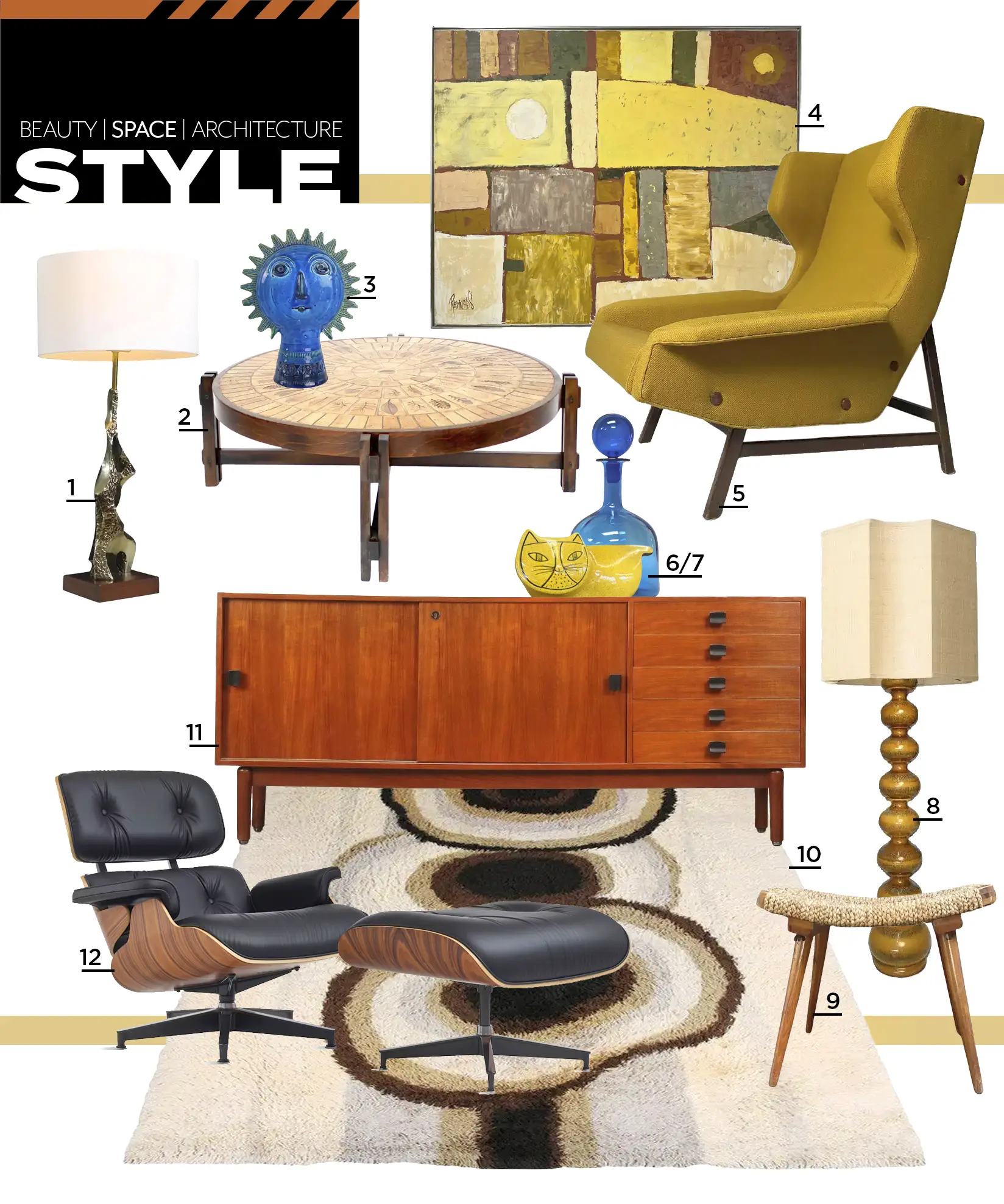
1 Brutalist Table Lamp 2 Capron Tile Table 3 Bitosi “Sun Head” Sculpture 4 Reynold’s Abstract Painting 5 Gianfranco Frattini Wingback Chair 6/7 Ceramic Cat + Blenko Decanter 8 Ceramic Floor Lamp 9 Mid-Century French Stool 10 Rya Rug 11 Harmful Flower Holder 12 Eames Lounge Chair + Ottoman
MAKE YOUR MID-CENTURY HOME SHINE
Personalizing your mid-century modern home presents an exciting opportunity to express your style while honoring the architectural integrity of the residence. With a few thoughtful choices, you can create a cohesive and inviting environment that complements the home’s design.
Furnishings | Begin by selecting furniture pieces that embody the clean lines and minimalist aesthetic of mid-century modern design. Iconic pieces such as the Eames lounge chair or the Noguchi coffee table add an authentic touch to the interior space. Incorporate a mix of materials and textures to create visual interest. Pair sleek wood finishes with plush textiles and incorporate metal accents for a touch of modernity. This balance of elements creates a dynamic yet harmonious interior environment.
Colors and Materials | The color palette and materials used in a mid-century modern home play a crucial role in creating a cohesive and inviting atmosphere. Opt for warm, earthy tones such as terracotta, mustard, and olive green, which complement the natural materials often found in these homes.
Wood is a staple material in mid-century modern design, adding warmth and texture to any space. Consider using walnut or teak for furniture and cabinetry and incorporate stone or brick for architectural elements. Introduce bold accent colors through accessories or artwork to add contrast and interest. A vibrant rya rug or statement piece can inject personality and energy into the space without overwhelming the overall aesthetic.
Renovation and Preservation Considerations | Renovating a mid-century modern home can be an exhilarating journey that allows homeowners to blend the timeless appeal of mid-century design with contemporary enhancements. To preserve the architectural integrity while updating the house, it is crucial to maintain original features such as the clean lines, open spaces and natural materials that define the style.
Preservation involves respecting the original design elements and materials, ensuring that any updates or changes are in harmony with the home’s mid-century modern aesthetic. This can include restoring original features, such as wood paneling, built-in cabinetry and vintage fixtures and sourcing period-appropriate materials and finishes. Similarly, improving energy efficiency through the installation of new windows, insulation and HVAC systems can make the home more comfortable and sustainable while maintaining its architectural integrity.
INVESTMENT POTENTIAL: ARE YOU READY TO FIND A MID-CENTURY MODERN HOME?
FREQUENTLY ASKED QUESTIONS
HOMES
These homes feel like they were designed specifically for the Los Angeles climate, culture and way of life. The houses are visually stunning, cinematic and always ready for their close-up, which is probably why they never really go out of style.
Mid-century modern architecture and design flourished from the mid-1940s to the late 1960s. The style is defined by clean lines, open floor plans, seamless connections between indoor and outdoor spaces, large expanses of glass, and the use of natural materials such as wood, stone and brick. The movement celebrated an innovative approach to both architecture and furniture design and its influence continues to shape contemporary residential design today.
Several Los Angeles neighborhoods have a rich concentration of mid-century modern properties. Silver Lake is known for its hillside homes with city views and creative energy. Pasadena offers a blend of architectural history and tree-lined streets. Other notable areas include Laurel Canyon, Sherman Oaks, Studio City, Sunset Strip, Brentwood (Crestwood Hills) and the Hollywood Hills. Palm Springs, roughly two hours from Los Angeles, is also synonymous with the style and features iconic work by architects Richard Neutra, Albert Frey and John Lautner.
The Case Study House Program was commissioned by Los Angeles-based Arts & Architecture magazine under editor John Entenza. Running from 1945 to 1966, the program invited leading architects, including Richard Neutra, Charles Eames, Pierre Koenig, Craig Ellwood and A. Quincy Jones, to design affordable, replicable model homes. Of the 36 plans submitted, 28 homes were built in Los Angeles, attracting more than 350,000 visitors during public exhibitions. These homes remain among the most historically significant examples of mid-century modern architecture and design today.
Mid-century modern homes are prized for their open floor plans, which are ideal for entertaining and their large windows and sliding glass doors that blur the line between indoor and outdoor living. Natural materials, neutral palettes and a connection to the landscape create a calming, tranquil atmosphere. Many of these homes also feature freeform pools and sweeping views. Residents often describe the experience as one that goes beyond aesthetics, offering a genuine sense of balance and harmony that is uncommon in other architectural styles.
In Los Angeles, many architecturally significant homes are sold before they ever appear on the MLS (Multiple Listing Service). Working with a real estate team that specializes in mid-century and historic properties, like Beyond Shelter Real Estate Group, gives buyers access to off-market listings through agent networks and industry relationships.