James De Long Architecture: The Taliesin Fellow Who Brought Frank Lloyd Wright’s Vision to Los Angeles
James De Long – Architect Profile
- Born: November 4, 1921 — Eagle Rock, Los Angeles, California
- Died: April 10, 2013 — Los Angeles, California (age 91)
- Education: Eagle Rock High School; Pasadena Junior College; Chouinard Institute of Art, Los Angeles (six months, 1940); studied architecture at UC Berkeley (did not complete); Frank Lloyd Wright’s Taliesin West, Scottsdale, Arizona (July 1946 – May 1947) — trained under Wright and chief draftsman Jack Howe; earlier apprenticeship under architect Harry Schwartz
- Style: Usonian Architecture; Organic Modernism; California Mid-Century Modern; Wrightian Regionalism
- Known For: Translating Frank Lloyd Wright’s Usonian design principles into a distinctly California residential idiom; single-story open-plan homes with deep roof overhangs, natural materials, and mitered glass windows that dissolve the boundary between interior space and landscape; a singlehanded solo practice spanning five decades and more than 100 homes; the Sea View Lane houses in Mount Washington, Los Angeles — among the purest expressions of Usonian design in Southern California
- Key Project Locations: Mount Washington — Highland Park — Studio City — Altadena — West Covina — La Habra Heights — Redlands
- Notable Work: William Wolford House, Mount Washington, Los Angeles (1949–1950), Los Angeles Historic-Cultural Monument #614; Robert Scholfield House, Mount Washington, Los Angeles (1950-1951), Los Angeles Historic-Cultural Monument; De Long Parents House, Altadena (1956), featured on the cover of House Beautiful‘s 1959 Frank Lloyd Wright memorial issue; McHale House, West Covina (1956); Walter Keller House (1958); Melzer Residence, Redlands (1960); Nowling Residence, La Habra Heights (1962); Hackett House, Studio City (designed c. 1960s, built 1979)
- Influences: Frank Lloyd Wright (Usonian and Organic Architecture); Jack Howe (Taliesin chief draftsman and De Long’s primary mentor at the Fellowship); the Millard House, Pasadena (Wright, 1923) — the building that first inspired De Long as a teenager in nearby Eagle Rock; A. Quincy Jones (De Long worked under Jones briefly after leaving Taliesin); California landscape, light, and climate as a primary design determinant
- Awards and Honors: Los Angeles Historic-Cultural Monument designation for the William Wolford House (Monument #614, designated 1995) and the Robert Scholfield House (designated 1995), jointly recognized as landmark expressions of postwar California regionalist modernism; Modern Master Award, Los Angeles Conservancy Modern Committee (ModCom), 2011; work published in House Beautiful, The Los Angeles Times, The Los Angeles Examiner, and Journal of the Taliesin Fellows; Altadena Heritage recognized De Long’s contributions to the region’s architectural legacy; De Long received limited formal recognition during his active practice years — his critical reputation was affirmed in later life through preservation designations and the Conservancy honor
- Archive: James De Long Papers (Collection No. 0000340), Architecture and Design Collection, Art, Design & Architecture Museum (AD&A Museum), University of California, Santa Barbara (UCSB) — primary repository holding approximately 5,000 drawings and 10 linear feet of documents, photographs, publications, and correspondence covering De Long’s practice from 1946 to 1988, his Taliesin Fellowship training, and his editorial career at House Beautiful
In This Article
- From Eagle Rock to Taliesin: De Long’s Formative Years
- What Is Usonian Architecture? Wright’s Vision Explained
- Sea View Lane: Where De Long’s Legacy Began
- The Wolford House: Los Angeles Historic-Cultural Monument #614
- The Scholfield House and the Sea View Lane Cluster
- Expanding the Practice: From West Covina to Redlands
- The Melzer Residence: A Usonian Masterwork in Redlands
- De Long’s Editorial Career and Enduring Legacy
- Why James De Long Homes Still Matter for Today’s Buyers
- FAQs About James De Long Architecture
From Eagle Rock to Taliesin: De Long’s Formative Years
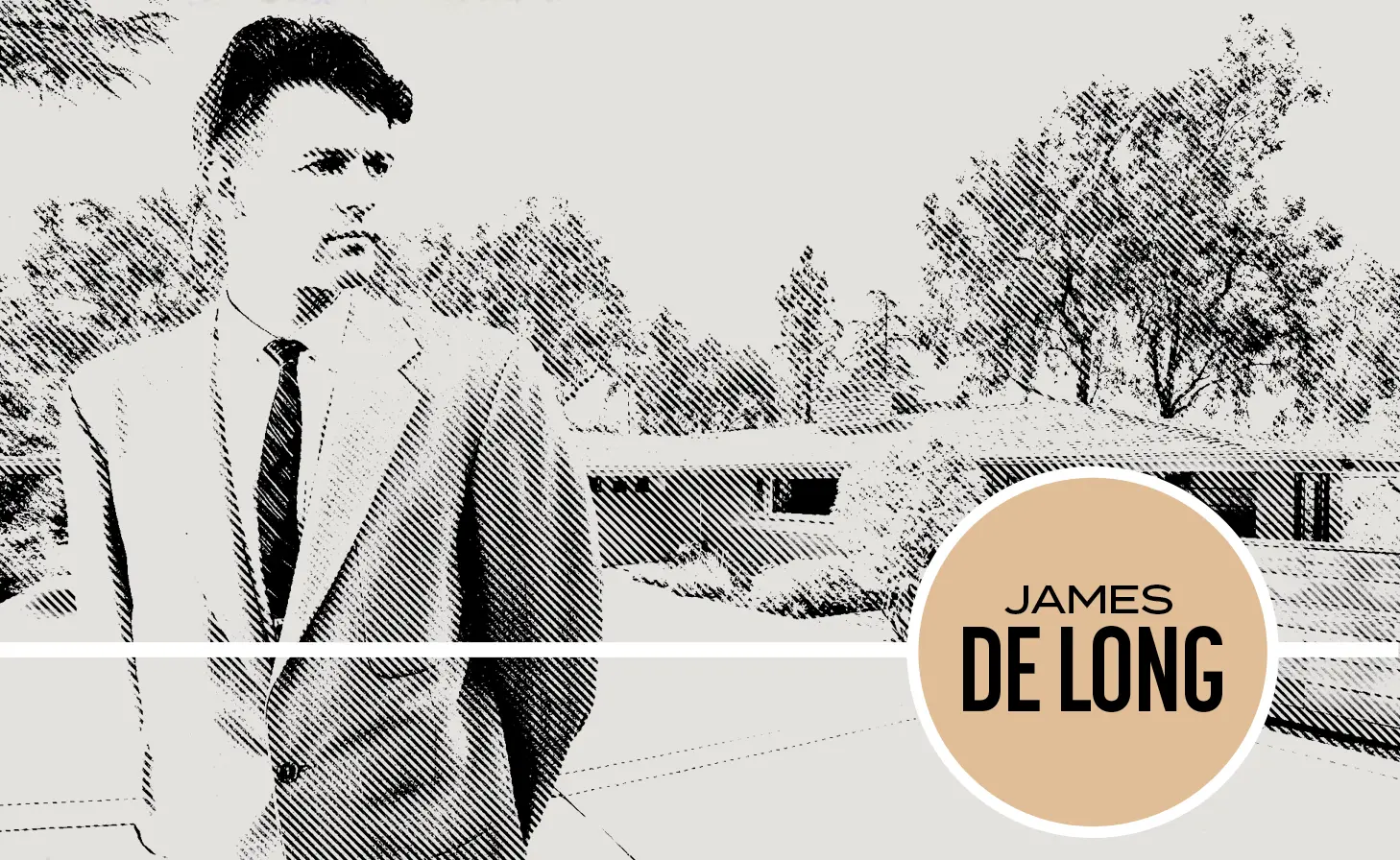
In James De Long’s work, modernism carries the quiet discipline of organic design. Influenced by his time at Taliesin Fellowship, his architecture reflects a deep sensitivity to site, structure and material. At Taliesin, De Long absorbed the principles of architecture as a total environment. His work reveals an understanding that buildings should grow naturally from their surroundings. Each home feels composed rather than imposed, an extension of land and light. That philosophy translates into homes that feel grounded, harmonious, and enduring.
What Is Usonian Architecture? Wright’s Vision Explained
To understand James De Long’s work, it helps to understand the Usonian philosophy he inherited from Wright. The term “Usonian,” a portmanteau Wright used to describe a uniquely American democratic ideal, referred to a specific design program Wright developed during the 1930s aimed at creating affordable, beautifully designed homes for middle-class American families. These were not modest houses in a deprecating sense; they were thoughtfully compact, site-specific and deeply concerned with the relationship between interior space and the natural world outside.Usonian homes share a recognizable vocabulary: single-story layouts that hug the ground rather than tower above it; flat or low-pitched roofs with deep overhangs; natural materials like brick, wood and concrete integrated without finishes that would mask their texture; and expansive windows and glass doors that dissolve the boundary between inside and outside. Carports replaced garages. Built-in furniture eliminated the need for freestanding pieces that would clutter open floor plans. Radiant floor heating, embedded in concrete slabs, kept rooms warm without visible radiators. The effect was a kind of spatial generosity that felt larger than the square footage suggested.De Long absorbed these principles thoroughly at Taliesin, but he brought something of his own to them: a California sensibility attuned to the region’s particular light, landscape and climate. His homes feel less like transplanted Midwest Usonian boxes and more like structures that evolved from the specific hills and canyons of Southern California. That regional adaptation is part of what makes his work so enduring. For more on the mid-century modern tradition De Long worked within, see our guide to Los Angeles home styles.Sea View Lane: Where De Long’s Legacy Began
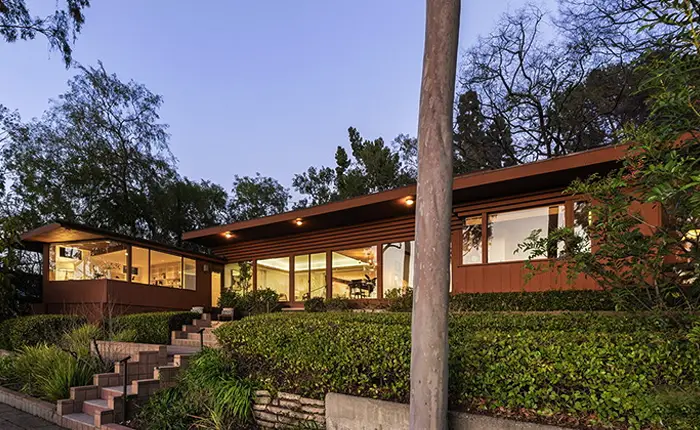
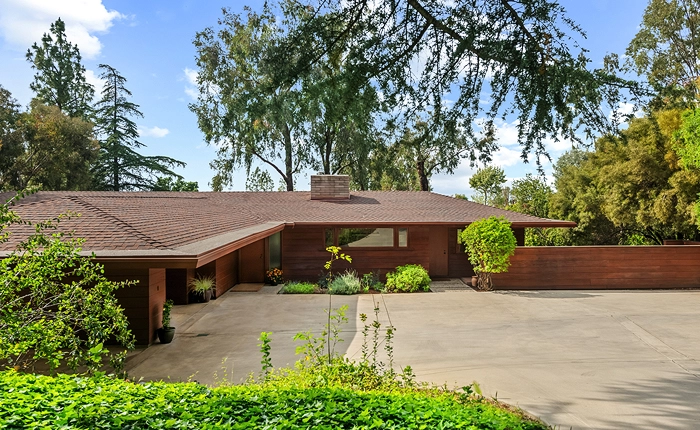
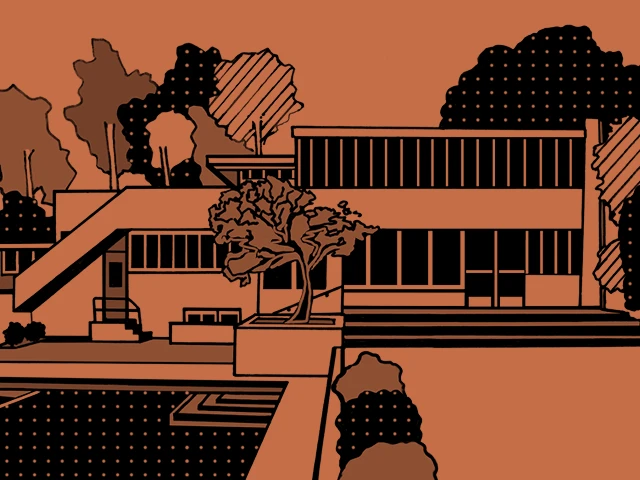
Sea View Lane in Mount Washington, the quietly legendary street that contains two of De Long’s earliest and most celebrated works, both now designated Los Angeles Historic-Cultural Monuments. At the refined Termini Residence, James De Long expresses a quiet mastery of proportion and site. Horizontal lines and natural materials anchor the home into its surroundings, while glass opens each room to light and landscape. The result is a residence that feels both composed and deeply connected to place.
The Wolford House: Los Angeles Historic-Cultural Monument #614
The Wolford House at 4260 Sea View Lane is the project that first established De Long’s reputation beyond his immediate circle. Designed for his friend Richard Wolford and built between approximately 1949 and 1950, it was De Long’s first independent architectural commission following his return from Taliesin. The timing matters: this was a young architect, barely in his late twenties, applying everything he had learned under Wright to a specific hillside in Mount Washington. The result was extraordinary enough to earn Historic-Cultural Monument status from the City of Los Angeles.The house is a near-pure expression of Usonian principles as De Long understood them in a California context. A warm original palette of burnt reddish-orange, a classic Usonian brick fireplace anchoring the living room and matched-grain redwood throughout define the interior character. The frameless mitered-edge windows of the living room face southwest, capturing both brilliant natural light and the long, sweeping views that extend well beyond Mount Washington toward the ocean. Built-in furniture and cabinetry in all living spaces fulfill the Usonian ideal of a total design environment in which nothing is extraneous.What is striking about the Wolford House, even decades after its construction, is how completely it commits to its site. De Long absorbed Wright’s dictum that a house should not merely sit on its landscape but belong to it and the Wolford House embodies that philosophy with the confidence of a building that has always known exactly where it belongs. The designation as Historic-Cultural Monument #614 by the City of Los Angeles recognized both its architectural purity and its importance as a document of postwar Southern California modernism. De Long’s work here connects directly to the broader mid-century modern tradition in Los Angeles that continues to attract passionate buyers today.The Scholfield House and the Sea View Lane Cluster
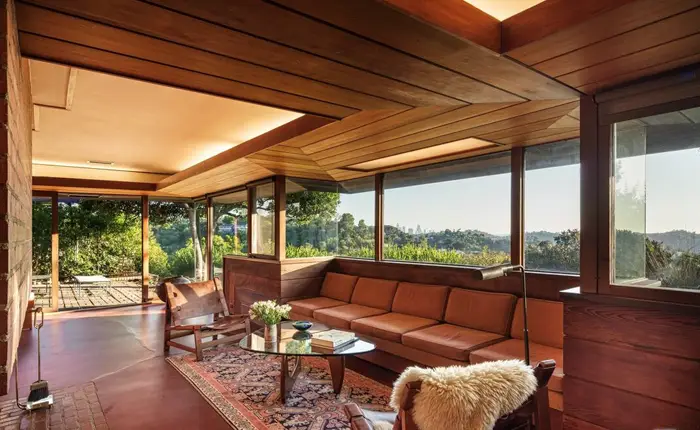
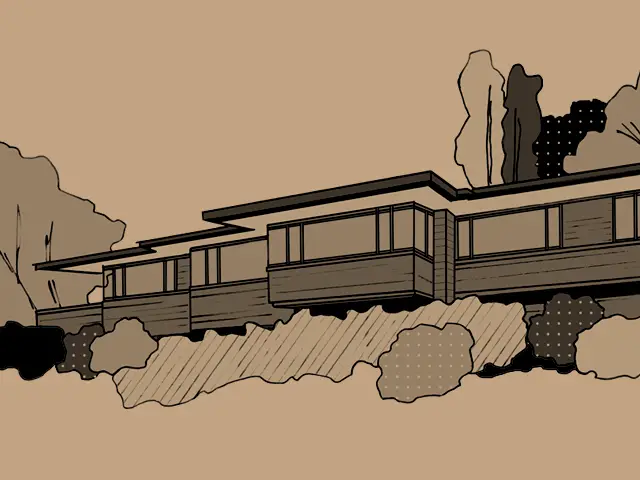
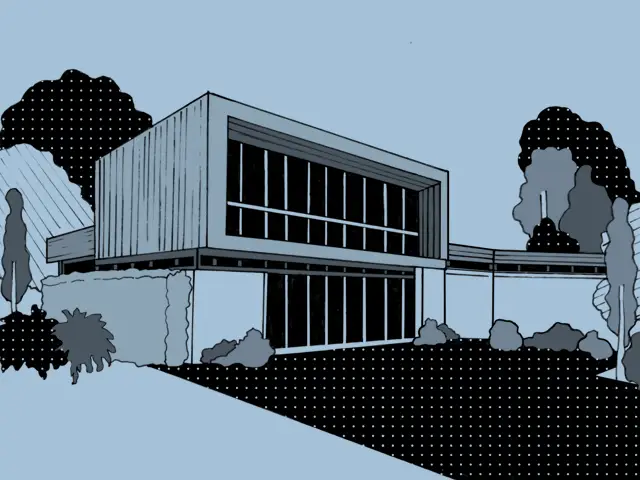
In the Wolford House, De Long’s Taliesin-influenced philosophy takes on a distinctly Californian clarity. Exposed structure, warm materials and carefully framed views create a home that feels both grounded and expansive. It stands as a thoughtful continuation of organic modern design. De Long approached residential design with a craftsman’s attention to detail. Structural elements are not hidden but expressed, creating a rhythm of beams, planes and light. His homes reveal the beauty of construction as an integral part of design
Expanding the Practice: From West Covina to the Nowling Residence
Through the 1950s, De Long’s practice expanded beyond Mount Washington to communities across greater Los Angeles and the Inland Empire. Each project carried his characteristic Usonian vocabulary while responding to the specific conditions of its site. Among the notable works from this period:The McHale House in West Covina (1956) extended his reach into the San Gabriel Valley. That same year, he designed a small cross-planned house for his parents in Altadena, a project that garnered enough attention to earn the cover of House Beautiful’s 1959 memorial issue on Frank Lloyd Wright, a significant recognition that placed De Long’s domestic work within the broader legacy of the man who had trained him.The Walter Keller House (1958) and the Jacobs House in Redlands (1959) further demonstrated his range, with the Redlands commission beginning a meaningful relationship between De Long and the Inland Empire city. De Long also designed his own home on Avenue 43 in Los Angeles, a project that gave him the freedom to implement his ideas without the mediation of a client brief.The Nowling Residence in La Habra Heights, designed in 1962, marked, according to architectural historians, a transitional moment in his practice. More elaborate than his earlier Usonian work, it incorporated extensive cabinetry design, movable furniture and carefully planned gardens, a synthesis of architecture and interior design that pushed his total-environment philosophy further than the compact early houses had allowed. For architecture enthusiasts interested in the full range of De Long’s output, this period reveals an architect willing to evolve while remaining committed to his foundational principles. Explore mid-century modern home styles to understand how De Long’s work fits within the broader landscape of postwar California design.The Melzer Residence: A Usonian Masterwork in Redlands
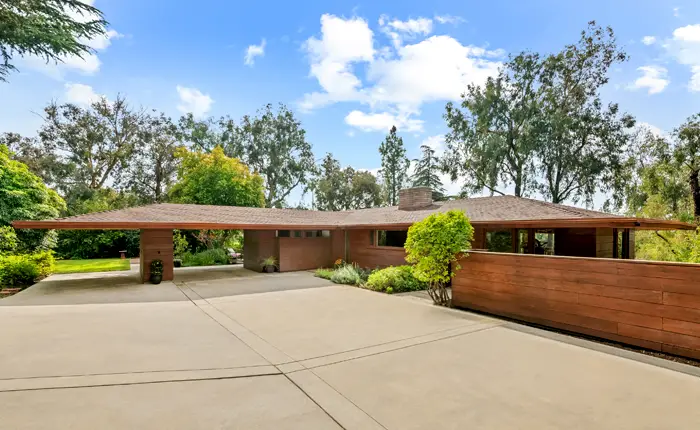
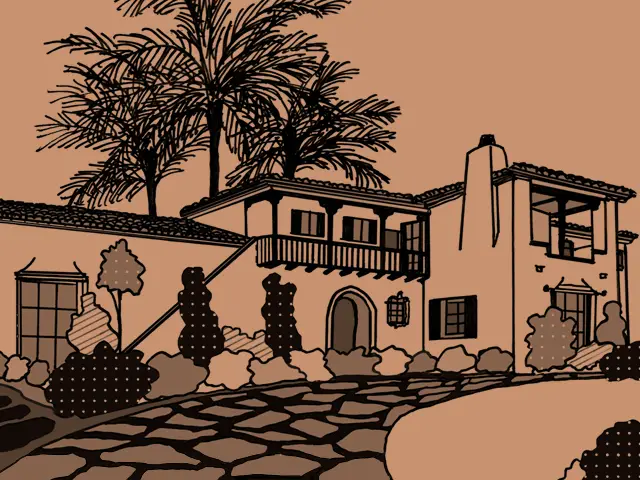
The Melzer Residence (1960) in Redlands, California, was designed by James De Long and has been maintained by the same family for over 60 years. At the serene residence, De Long shapes architecture as a gentle extension of the landscape. Wood, glass and stone are composed into a balanced dialogue of structure and light. The home’s mitered ribbon windows and organic integration with the hillside site exemplify De Long’s Wrightian approach. The residence reflects his enduring belief that modern design should feel both intentional and deeply livable. In hillside settings, especially, James De Long allowed architecture to unfold with the terrain. Terraces, overhangs and carefully oriented glazing frame views while maintaining a sense of shelter. Living within his spaces feels both expansive and protected.
De Long’s Editorial Career and Enduring Legacy
Architecture was not the only arena in which James De Long made his mark. In 1963, Elizabeth Gordon, the influential editor of House Beautiful, invited him to join the magazine as architecture editor. He held that position from 1963 to 1974, working out of New York and shaping the publication’s coverage of residential architecture during one of its most significant decades. Through House Beautiful, De Long reached a national audience with his ideas about organic design, human-scaled spaces and the relationship between architecture and daily life.His editorial work ran parallel to and eventually displaced his active design practice during the 1960s and early 1970s. After leaving House Beautiful in 1974, he returned his focus to California and to a different kind of architectural work: additions, adaptations, remodels and restorations. He described this phase of practice as the field of “adjustment,” bringing the sensibility of a skilled architect to the ongoing lives of existing buildings rather than the creation of new ones. It was modest-sounding work that required considerable skill and he pursued it until ill health curtailed his practice around 1998.De Long also contributed significantly to the institutional memory of the Taliesin Fellowship, serving as editorial advisor to the Journal of the Taliesin Fellows from its founding in 1996 until 1998 and gathering materials on Frank Lloyd Wright for memoirs and reflections during the final decades of his career. In 2011, the Los Angeles Conservancy presented him with a Modern Master Award, recognizing his lifetime of contributions to mid-century modern design in Southern California. For an authoritative overview of the postwar modernist movement De Long worked within, the ArchDaily archive on Usonian architecture provides essential context.Why James De Long Homes Still Matter for Today’s Buyers
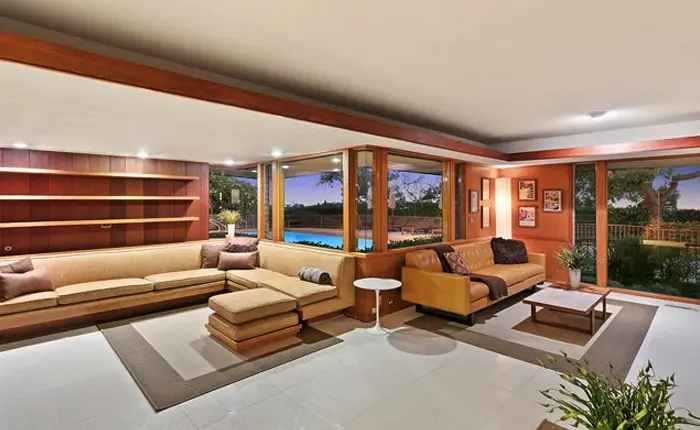
The interior of a De Long Usonian home demonstrates his mastery of natural light, custom built-ins and the seamless connection between inside and outside that defines the best mid-century modern design. Warm wood tones, brick fireplaces and mitered glass corners are the hallmarks of his architectural style. James De Long’s legacy lies in his ability to translate organic principles into modern residential architecture. His homes balance structure with serenity, precision with warmth. They remain thoughtful expressions of a design philosophy shaped by mentorship, place and time.
James De Long – Notable Projects and Houses
- William Wolford House (1949–1950) — Mount Washington, Los Angeles, CA. De Long’s first independent commission, designed for his friend Richard Wolford. Sited on the ridge of Sea View Lane with sweeping views to the ocean. Single-story Usonian plan clad in horizontal redwood banding; classic Usonian brick fireplace; frameless mitered-edge windows facing southwest; original built-in furniture and cabinetry throughout, including stools designed by De Long. Designated Los Angeles Historic-Cultural Monument #614 in 1995. Widely published as one of the purest expressions of Wrightian Usonian design in Southern California.
- Robert Scholfield House (1950–1951) — Mount Washington, Los Angeles, CA. Designed almost simultaneously with the adjacent Wolford House on Sea View Lane. A second Usonian minimal house in redwood and brick, sited to capture panoramic views of the canyons and cityscape. Together with the Wolford House, designated a Los Angeles Historic-Cultural Monument in 1995. Both homes were jointly recognized as landmark works of postwar California regionalist modernism and remain key reference points for the Wrightian small house tradition.
- De Long Residence (early 1950s) — Highland Park, Los Angeles, CA. De Long’s own home, designed and built on Avenue 43 in Los Angeles. Provided De Long an opportunity to implement his Usonian and organic design principles without client constraints.
- De Long Parents House (1950) — Altadena, CA. A compact cross-planned Usonian house designed by De Long for his parents. Featured on the cover of House Beautiful magazine’s 1959 memorial issue devoted to Frank Lloyd Wright, placing De Long’s domestic work within the broader legacy of the architect who trained him.
- McHale House (1956) — West Covina, CA. Extended De Long’s practice into the San Gabriel Valley. A residential commission in the Usonian idiom, documented in the De Long Papers archive at UC Santa Barbara.
- Walter Keller House (1958) — Los Angeles area, CA. Among De Long’s notable late-1950s commissions, continuing his single-story organic residential practice through the period immediately preceding his transition to the Nowling Residence. Documented in the De Long Papers.
- Jacobs House (1959) — Redlands, CA. De Long’s earliest documented commission in the Inland Empire city of Redlands, establishing a regional connection he would deepen with later projects. Documented in the James De Long Papers archive.
- Melzer Residence (1960) — Redlands, CA. One of De Long’s most celebrated and intact surviving works. Sited on nearly one acre of gently sloping terrain above the Redlands Country Club, the four-bedroom, two-bathroom Usonian home was maintained by the same family for over 60 years before coming to market in 2025. Features signature mitered ribbon windows that flood interiors with natural light; floor-to-ceiling brick fireplace; custom cabinetry and built-in banquette; expansive north-facing and south-facing decks. Listed and sold by Beyond Shelter Real Estate Group. Covered by Dwell, CIRCA and several architectural publications at the time of its 2025 debut on the market.
- Nowling Residence (1962) — La Habra Heights, CA. A transitional and widely recognized work marking a more elaborate phase of De Long’s practice. Sited above an old avocado grove with panoramic views of the ocean. Incorporated extensive custom cabinetry, built-ins, movable furniture and landscaped gardens, a total design environment beyond the compact early Usonian model. Wide cantilevered eaves manage seasonal solar gain. Two-story plan with primary suite on the upper level.
- Hackett Residence (designed 1960s; built 1979) — Studio City, CA. Designed during De Long’s editorial years at House Beautiful but not realized until 1979. A Prairie Style-influenced residence set in the Santa Monica Mountains above Studio City. Wide cantilevered overhangs; step-down living room; formal dining room; fine wood detailing; multiple French doors opening to gardens; upper-level orchard and pergola with panoramic canyon views.
- Zorthian Studio (1960s) — Altadena, CA. A large studio complex designed for Jirayr Zorthian, the noted Armenian-American painter and muralist. One of De Long’s few non-residential commissions and a departure from his exclusively domestic practice. Documented in the James De Long Papers archive at UC Santa Barbara.