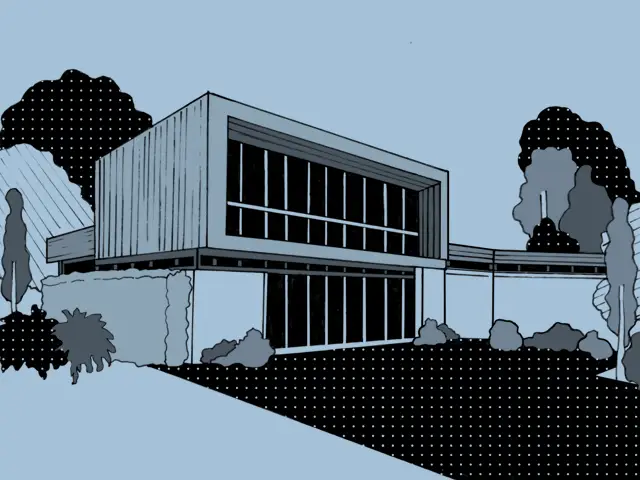
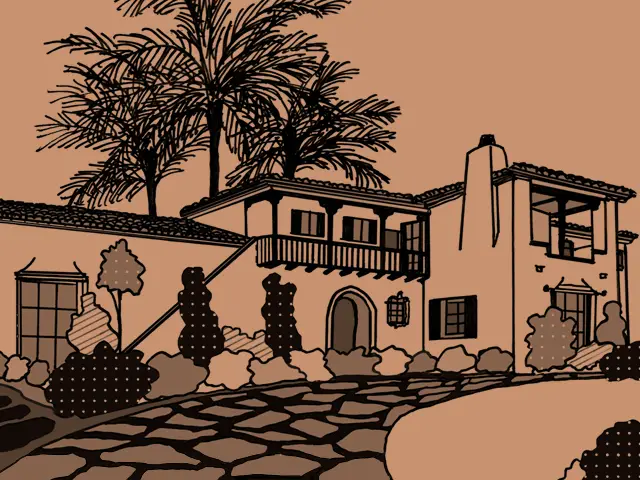
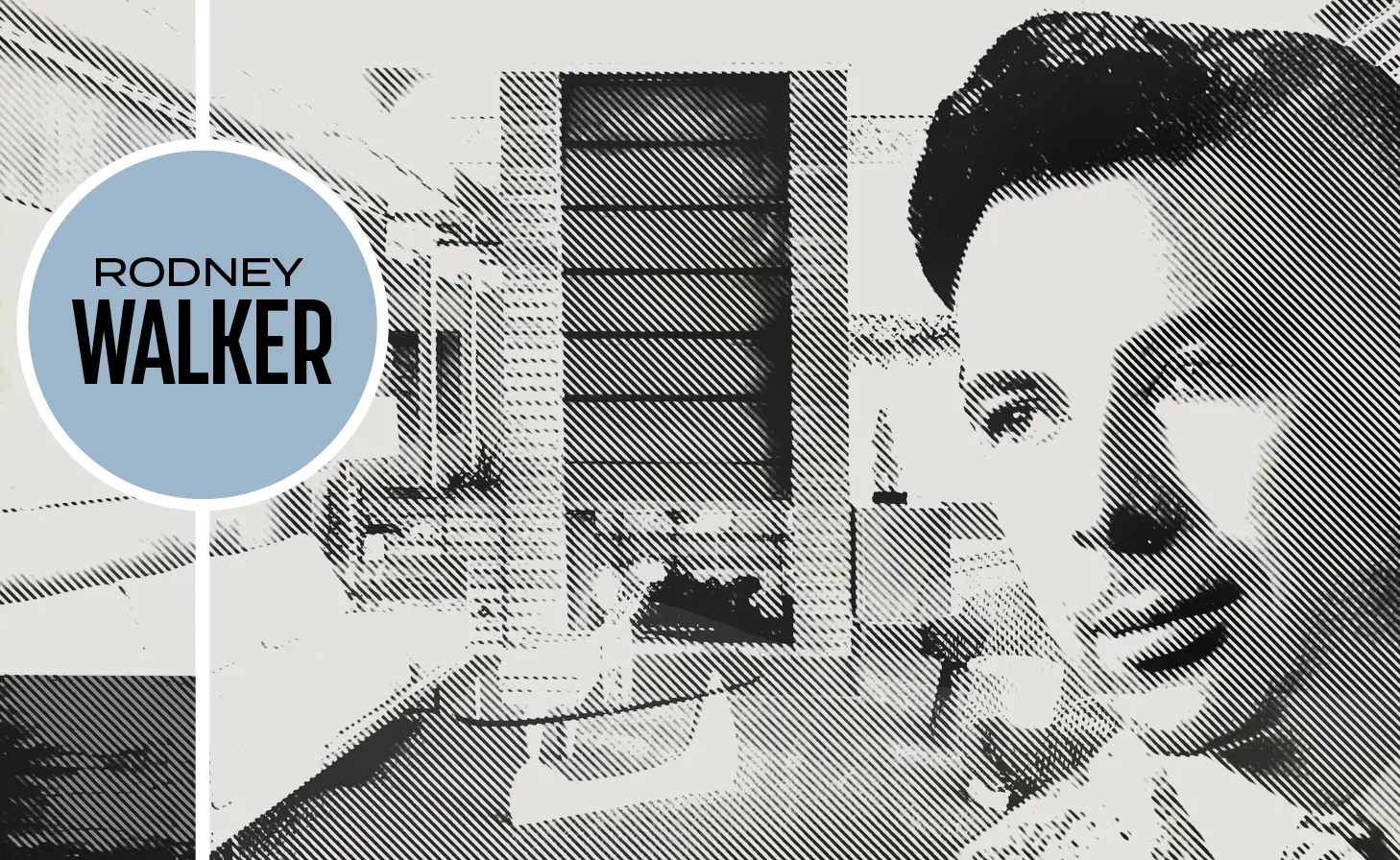
Rodney Walker Architecture: The Unsung Modernist Who Shaped Los Angeles
Rodney Walker, also known as Rodney Asbury Walker (1910–1986), was a mid-century modern architect and builder based in Los Angeles, California. Born in Salt Lake City, Utah, and raised in Ely, Nevada, Walker studied at Pasadena City College and UCLA, then apprenticed under architect Rudolph Schindler in 1937. Working across Southern California from the late 1930s through 1965, Walker designed and built approximately 75 to 100 residential homes. He contributed three designs to the Arts & Architecture Case Study House program: Case Study House #16 (1946, Beverly Hills), Case Study House #17 (1947, Hollywood Hills) and Case Study House #18 (1948, Pacific Palisades), also known as the West House. His design philosophy centered on efficiency without aesthetic compromise, achieved through post-and-beam construction and a three-foot modular grid. Many of his homes were photographed by Julius Shulman. Walker’s personal masterpiece was his hilltop residence in Ojai, California, completed in 1958, where he lived until his death.
From his three landmark contributions to the famous Case Study House program to his dozens of neighborhood homes scattered across the Hollywood Hills, Studio City, Pacific Palisades, and Sherman Oaks, Walker left a quiet yet unmistakable mark on Los Angeles’s built landscape. At Beyond Shelter, we specialize in finding clients architecturally significant properties like these. Explore our curated collection of architectural homes for sale and discover what makes a Walker home so sought after.
Rodney Walker – Architect Profile
- Born: September 15, 1910 — Salt Lake City, Utah: raised primarily in Ely, Nevada
- Died: June 18, 1986 — Ojai, California (age 76)
- Education: Engineering studies, Pasadena City College; B.A. in Art (athletic scholarship), University of California, Los Angeles (UCLA); Draftsman apprenticeship under Rudolph M. Schindler (1937)
- Style: California Mid-Century Modern, Post-and-Beam Residential Modernism, Case Study Modernism
- Known For: Three contributions to the Arts & Architecture Case Study House program (CSH #16, #17, #18); designing and building approximately 75–100 homes in Southern California over three decades; the philosophy of “efficiency without aesthetic compromise”; designing from a three-foot building module to reduce waste and construction costs; serving as both architect and hands-on builder for most of his projects.
- Key Project Locations: Los Angeles, CA (Beverly Hills, Hollywood Hills, Pacific Palisades, Studio City, Sherman Oaks, Beverly Glen, Bel Air) – Ojai, CA
- Notable Work: Case Study House #16 (1946), Beverly Hills; Case Study House #17, Seymour P. Stein House (1947), Hollywood Hills; Case Study House #18, The West House (1948), Pacific Palisades; Walker Residence, Personal Masterpiece (1958), Ojai, CA
- Influences: Rudolph M. Schindler (direct apprenticeship); Frank Lloyd Wright (modular grid systems and organic siting); the Case Study House program and its editor, John Entenza; the Southern California indoor-outdoor living tradition; post-war prefabrication and construction-economy movements.
- Awards and Honors: UCLA Gallery Exhibition of Works, 1948 (brought national recognition); Featured in Arts & Architecture, House Beautiful, Architectural Record, Better Homes and Gardens, Sunset and the Los Angeles Times Home Section; Case Study House #18 (West House) recognized by the Los Angeles Conservancy as a significant historic resource
- Archive: USModernist Archives; Julius Shulman Photography Archive, Getty Research Institute, Los Angeles; Walker held no formal AIA membership or prize record on file; records are limited as Walker disposed of most project documentation upon retirement.
In This Article
- Who Was Rodney Walker? Background and Training
- Walker’s Core Design Philosophy: Economy Without Compromise
- The Case Study House Program and Walker’s Three Contributions
- Case Study House #16: The Beverly Hills Prototype
- Case Study House #17 and #18: Refinement and Legacy
- Signature Design Elements of a Rodney Walker Home
- Walker Homes Across Los Angeles Neighborhoods
- Why Rodney Walker Homes Matter in Today’s Market
- FAQs About Rodney Walker Architecture
Who Was Rodney Walker? Background and Training
In the refined work of Rodney Walker, modernism is softened by warmth and livability. His homes pair clean structural lines with natural materials, creating spaces that feel both sophisticated and inviting. Walker’s mastery of indoor-outdoor living, flat rooflines, floor-to-ceiling glass walls and clean geometric volumes became his architectural signature across Southern California. Walker’s architecture reflects a uniquely Californian balance of style and ease.
Rodney Walker was born on September 15, 1910, in Salt Lake City, Utah, and grew up primarily in Ely, Nevada. His path to architecture was unconventional. He initially studied engineering at Pasadena City College before transferring to UCLA on an athletic scholarship, where he ultimately graduated with a degree in art. That combination of technical grounding and artistic sensibility would define his work for decades to come.
In 1937, Walker and his wife Dorothea built their first house in West Los Angeles while he was still serving as a draftsman in the office of the legendary Rudolph Schindler, one of the founding figures of California modernism. That apprenticeship, though brief, gave Walker direct exposure to the ideas of spatial flow, natural materials, and the dissolution of the barrier between inside and outside that would become central to his own practice.
After World War II, Walker struck out on his own. Over the next three decades, he designed and built approximately 100 homes across Southern California, often working directly alongside the construction crews himself. He was not only the architect of record but frequently the builder as well, a rare combination that gave him unusual control over costs and quality. That hands-on approach became central to his reputation for delivering high-design homes at genuinely accessible price points.
Walker’s Core Design Philosophy: Economy Without Compromise
The phrase most often associated with Rodney Walker’s architecture is “efficiency without aesthetic compromise.” It sounds simple. In practice, it was a radical commitment. The post-war housing boom produced enormous quantities of tract homes that were affordable but uninspiring. Architects who pursued elegance typically drove up costs to levels that excluded working and middle-class families. Walker refused to accept that trade-off.
He worked from a three-foot building module, a disciplined grid that allowed for spatial flexibility while reducing material waste and simplifying construction. Every decision, from the placement of windows to the choice of roofline, was filtered through the dual lens of beauty and economy. The result was homes that felt spacious and sophisticated without relying on square footage or expensive finishes.
Walker was also deeply committed to the Southern California landscape and climate. His homes were designed for a region with 300 days of sunshine, warm evenings, and the kind of informal lifestyle that blurred the line between cooking a meal and eating dinner outside. Outdoor rooms, covered patios, and walls of glass that slid completely open were not decorative gestures in a Walker home but fundamental to how the floor plan worked.
This philosophy earned him recognition from Arts and Architecture magazine, whose editor John Entenza described Walker as one of the few architects who fully grasped what the Case Study House program was actually trying to achieve. Learn more about the home styles that defined Los Angeles modernism.
The Case Study House Program and Walker’s Three Contributions
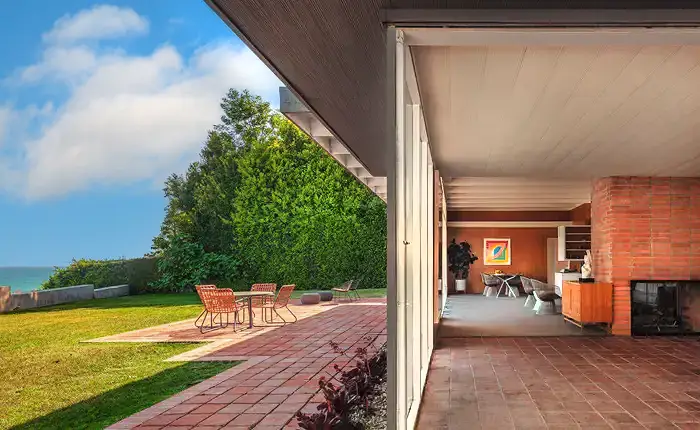
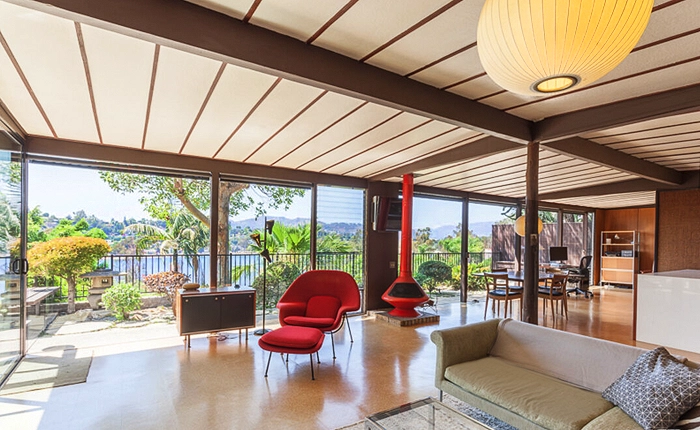
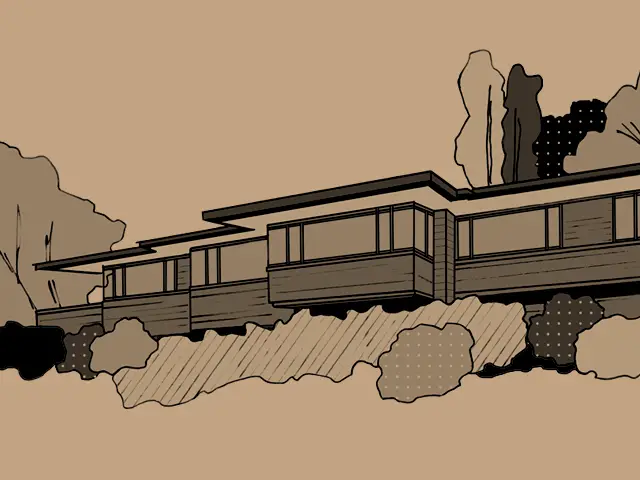
At Case Study House No. 18, also known as the West House, Walker refined his approach to hillside design. The open plan interiors of Walker’s Case Study Houses featured seamless indoor-outdoor flow, a defining characteristic of California mid-century modern design. His structure in Pacific Palisades steps gracefully along the terrain, framing views while maintaining a sense of intimacy within. A dramatic ocean view and a careful balance of openness and enclosure defines the home’s enduring appeal.
The Case Study House program, launched in 1945 by Arts and Architecture magazine under editor John Entenza, was one of the most ambitious architectural experiments in American history. The program invited leading architects to design and build model homes that demonstrated how modern design principles, combined with post-war industrial materials and construction techniques, could produce beautiful, practical, affordable housing for the growing American middle class.
The program ran from 1945 to 1966 and ultimately produced 36 home designs. Participants included some of the most celebrated names in 20th-century architecture: Charles and Ray Eames, Richard Neutra, Pierre Koenig, Craig Ellwood, and Raphael Soriano among them. Rodney Walker contributed three designs during the late 1940s, making him one of the program’s most prolific participants. His three houses were numbered #16, #17, and #18.
Walker’s Case Study contributions were notable not only for their design quality but for how seriously they took the program’s economic mandate. Many Case Study Houses, for all their brilliance, were expensive to build and impractical to replicate at scale. Walker’s designs were different. They were engineered from the ground up to be replicable, to use materials efficiently, and to demonstrate that a family of modest means could live in a home of genuine architectural quality. For an in-depth look at the broader Case Study movement and its place in Los Angeles history, ArchDaily maintains an authoritative archive of Case Study House documentation and photography.
Case Study House #16: The Beverly Hills Prototype
Case Study House #16 was built in 1946 at 9945 Beverly Grove Drive in Beverly Hills, set on an expansive 3.5-acre lot. It was Walker’s first major public statement as a designer-builder, and it made an immediate impact. The open house attracted approximately 4,000 visitors, an extraordinary number that spoke to the public’s hunger for a new kind of domestic architecture.
The house was featured in House Beautiful in 1945, appeared in Home and Garden Magazine in 1948, and made the cover of the Los Angeles Times Home Section on April 20, 1947. Many of its photographs were taken by Julius Shulman, the celebrated architectural photographer whose images did so much to define the visual identity of California modernism for a global audience.
Case Study House #16 demonstrated Walker’s approach at its most distilled: a simple rectilinear volume with a flat roof, floor-to-ceiling glass walls opening to a rear terrace, clean post-and-beam construction, and an open floor plan that made a relatively modest square footage feel genuinely spacious. The house was eventually demolished around 2004, and a new modernist home designed by the firm BO.SHI was constructed on the site around 2009. Its legacy, however, endures in the photographs, publications, and influence it generated during its lifetime.
For buyers and enthusiasts interested in exploring mid-century modern homes for sale in Los Angeles, Case Study House #16 represents the clearest articulation of what Walker was trying to achieve across his entire body of work.
Case Study House #17 and #18: Refinement and Legacy
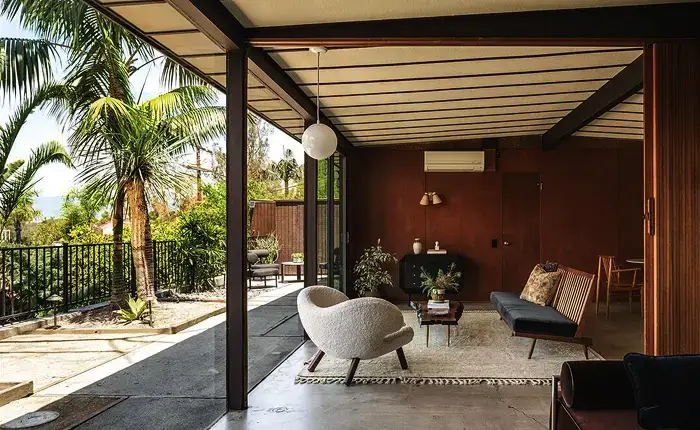
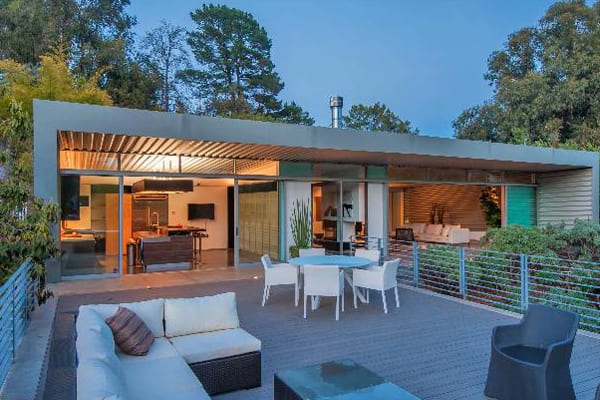
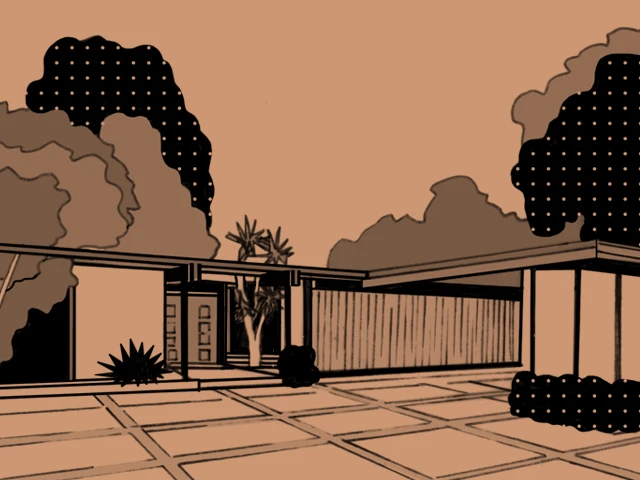
At the thoughtfully composed O’Neill Duplex, Rodney Walker reimagined multi-family living through the lens of modern design. Clean lines, generous glazing and carefully separated volumes create privacy while maintaining a sense of openness and light. The project reflects Walker’s belief that even modest housing can be elevated through proportion, clarity and thoughtful planning. Walker’s legacy lies in his ability to make modernism feel approachable and enduring. His houses are not monuments, but places of everyday beauty and connection.
Case Study House #17, built in 1947 at 7861 Woodrow Wilson Drive in the Hollywood Hills, took Walker’s vocabulary and refined it for a hillside site. The house was originally designed as the Seymour P. Stein House, and the location gave Walker the opportunity to work with dramatic topography and expansive views. The home’s relationship to its canyon setting became as important as its interior organization.
This property has its own celebrity footnote: between 2012 and 2014, actor Zac Efron lived there. The house sold in 2014 for $2.775 million, a figure that reflects both its pedigree and the enduring desirability of Walker’s work on the open market. The property had been through significant alterations over the decades, but its bones and siting remained unmistakably Walker.
Case Study House #18, known as the West House, is perhaps Walker’s most celebrated surviving work. Located in Pacific Palisades, the house features one of Walker’s most distinctive interior gestures: a double-sided fireplace clad in copper that anchors the open-plan living space. Floor-to-ceiling glass walls on multiple sides invite the landscape and ocean views into the interior, while large walled floating windows in the primary suite slide open to connect the bedroom directly to the outdoors. The property, which spans over half an acre, is recognized by the Los Angeles Conservancy as a significant historic landmark. It remains one of the finest surviving examples of Case Study House architecture anywhere in Southern California.
Julius Shulman and the Visual Legacy of Walker’s Case Study Houses
A significant part of what has sustained the reputation of Walker’s Case Study Houses is the photography of Julius Shulman. Shulman photographed many of Walker’s most important commissions for Arts and Architecture, Better Homes and Gardens, Architectural Record, Sunset, and the Los Angeles Times Home magazine. His images transformed Walker’s quiet, economical homes into icons of aspiration, capturing the way light moved through the glass walls, the way furniture occupied open space, and the way the Southern California landscape became an active participant in daily life. Without Shulman’s eye, many Walker houses would be known only to specialists.
Signature Design Elements of a Rodney Walker Home
Knowing what to look for in a Rodney Walker home is part of what makes acquiring one so rewarding. His vocabulary was consistent but never repetitive. Over nearly 100 houses, he explored the same set of ideas from different angles, adapting them to different sites, budgets, and family configurations.
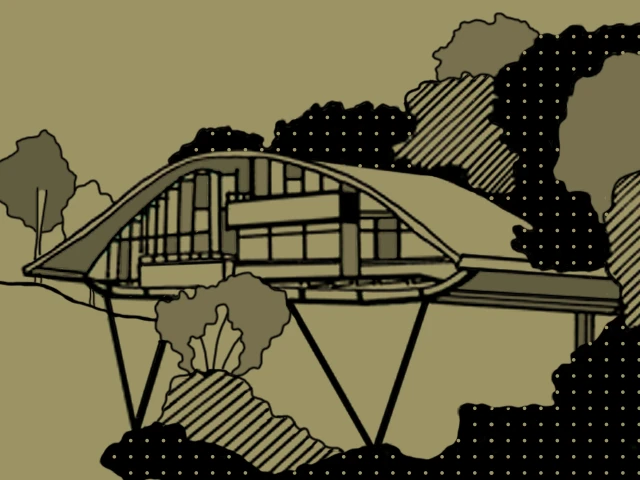
The most immediately recognizable Walker element is the roof plane. Walker was fascinated by the expressive potential of the roofline, and many of his homes feature dynamic, angled, or dramatically cantilevered roof planes that give otherwise simple volumes a strong sculptural presence. Paired with this is his mastery of transparency: large walls of glass, clerestory windows, and skylights that flood interiors with California light throughout the day.
Built-in planters, both interior and exterior, were another Walker signature, blurring the boundary between the garden and the living room. Double-sided fireplaces appear frequently in his work, serving as spatial dividers between living and dining areas while maintaining visual openness. Outdoor rooms, defined by overhanging rooflines and low walls rather than enclosed by glass, extended the usable floor plan into the California climate.
Structurally, Walker consistently worked with post-and-beam construction, a method that allowed for large open spans without load-bearing interior walls. This gave his floor plans a flexibility that was genuinely ahead of its time. Combined with his three-foot modular grid, it meant that a Walker home could be adapted and reconfigured far more easily than a conventional stick-frame house of the same era. Browse our collection of architectural homes for sale to see these principles at work in properties available today.
Walker Homes Across Los Angeles Neighborhoods
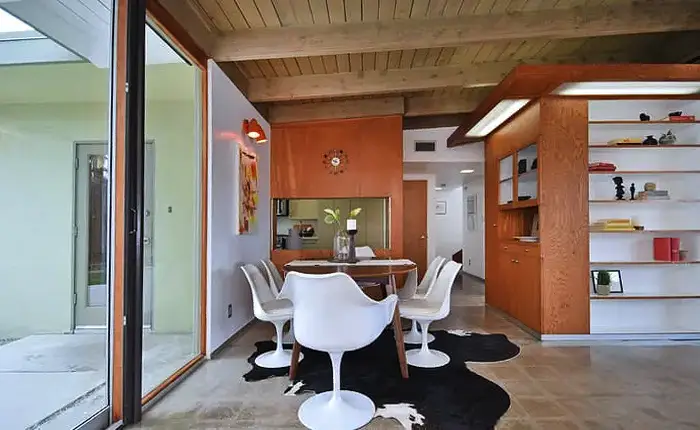
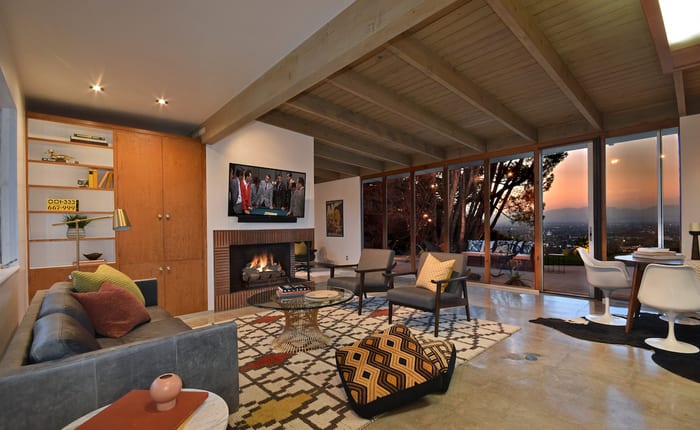
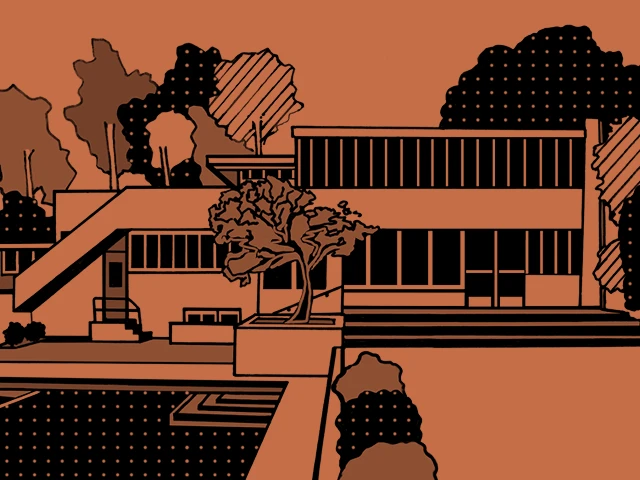
Walker designed homes throughout the San Fernando Valley, including Studio City, where this 1951 split-level residence offers panoramic views of the valley from the San Fernando to the San Gabriel Mountains. Rodney Walker’s architecture often feels like a quiet conversation between structure and landscape. Broad overhangs, built-ins, glass walls and low-slung forms invite nature into daily life. His homes are designed not just to be seen, but to be lived in.
One of the most striking things about Rodney Walker’s legacy in Los Angeles is its geographic breadth. Unlike some architects who concentrated their work in a single enclave or worked primarily for wealthy clients in premium ZIP codes, Walker built throughout the city. His homes can be found in the Hollywood Hills, Beverly Hills, Studio City, Sherman Oaks, Pacific Palisades, Silver Lake and Ojai, among other locations.
In Studio City, Walker designed a 1951 split-level home that offers panoramic views stretching from the San Fernando Valley to the San Gabriel Mountains. The three-bedroom, two-bath floor plan embodies his economy-of-means philosophy: not a single square foot is wasted, yet the home feels expansive and generously proportioned. The split-level section was an innovation Walker used to address sloping terrain without the expense of extensive grading, producing homes that sat lightly on the hillside while capturing views from multiple levels.
In Beverly Glen, the 1949 Leonard and Betty Asher House on Beverly Glen Boulevard represents Walker at his most refined in a canyon setting. Along Mulholland Drive, Walker built what he considered a personal statement in 1950. The Hollywood Hills provided the drama and topography that brought out some of his most inventive site work. And in Pacific Palisades, Case Study House #18 remains a landmark not just of Walker’s career but of California architecture broadly.
For buyers interested in these specific neighborhoods, Beyond Shelter offers deep local knowledge of the properties, streets, and architectural histories that define each community. Explore our Los Angeles neighborhood guides to understand what makes each area unique for architectural homebuyers.
Why Rodney Walker Homes Matter in Today’s Market
The market for architecturally significant mid-century modern homes in Los Angeles has grown dramatically over the past two decades. Properties by well-known Case Study architects now regularly sell at significant premiums over comparable conventional homes. Within this market, Rodney Walker’s work occupies an interesting position: deeply significant to historians and serious collectors, but still less widely recognized among general buyers than the work of Neutra or Koenig. That combination of quality and relative underrecognition has made Walker properties among the most compelling value propositions in the architectural real estate market.
Buyers who discover Walker often describe a feeling of having found something genuine before the rest of the world catches up. His homes are not rough approximations of the Case Study ideal. They are the real thing, designed by one of the program’s actual contributors, built with the same attention to materials, craft, and spatial intelligence that makes the celebrated Case Study Houses so enduring. And because Walker was prolific, producing nearly 100 homes over three decades, examples do appear on the market with some regularity, though the best ones move quickly.
Preservation is also an increasingly important factor. The LA Conservancy and other organizations have worked to document and protect Walker’s surviving work. Case Study House #18 is already recognized as a significant historic resource. As awareness of Walker’s legacy grows, additional properties in his portfolio may receive historic designation, which carries both legal protections and market implications for owners. For more on the broader architectural real estate market, Dezeen’s mid-century modern coverage provides excellent context on how this design legacy is valued globally.
If you are considering buying or selling a Rodney Walker home, or any architecturally significant mid-century modern property in Southern California, the guidance of specialists who understand both architecture and real estate is invaluable. Meet the Beyond Shelter team and learn how our architectural expertise translates into better outcomes for buyers and sellers of significant properties.
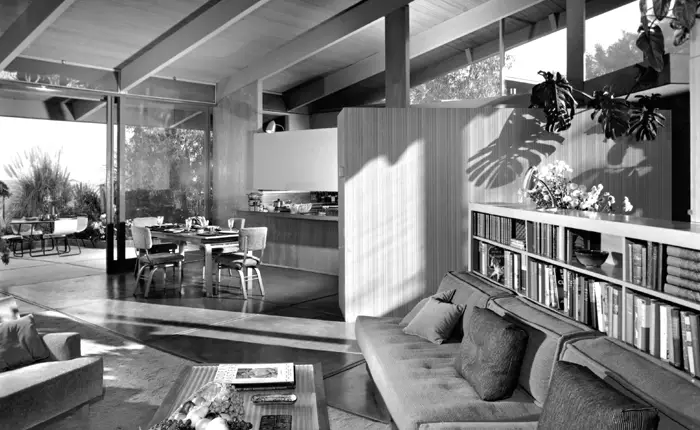
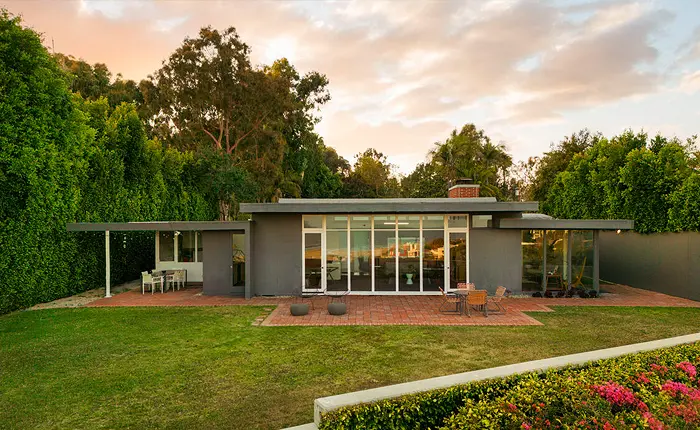
Legendary architectural photographer Julius Shulman documented many of Rodney Walker’s most important commissions for publications including Arts and Architecture, Better Homes and Gardens and the Los Angeles Times. Shulman’s images helped establish Walker’s homes as icons of California modernism. Walker designed and built nearly 100 homes across Southern California between the late 1930s and the 1960s, leaving a legacy that continues to shape the region’s architectural identity. At the Sweeney House, Walker’s architectural language reaches a quiet sophistication. Glass walls and carefully proportioned spaces create a home that feels open yet deeply grounded. The design captures his ability to merge modern clarity with warmth. Photo: Julius Shulman, 1953; © J. Paul Getty Trust. Getty Research Institute, Los Angeles.
Frequently Asked Questions About Rodney Walker Architecture
Looking for a Rodney Walker Home for Sale in Los Angeles?
Beyond Shelter specializes in finding and placing clients in architecturally significant mid-century modern properties throughout Southern California.
Whether you are searching for a Walker home, a Case Study House, or any other property where design pedigree matters, our team combines deep architectural knowledge with real estate expertise to guide you through every step of the process. We know these homes, these neighborhoods, and this market in a way that generalist brokers simply cannot match.
Browse Available Properties:
Mid-Century Modern Homes for Sale
Explore Architectural Homes:
Architectural Homes for Sale
Service Areas: Los Angeles and Southern California
Contact Beyond Shelter to discuss your search or listing today →
About Beyond Shelter
Beyond Shelter is a premier architecture and real estate firm serving Los Angeles and Southern California. With deep expertise in modernist architecture, historic preservation, and architectural history, we help clients discover, understand, and acquire architecturally significant properties. Our team combines architectural knowledge with real estate expertise to provide comprehensive guidance for design-conscious buyers, sellers, and architecture enthusiasts.