Wallace Neff Architecture: The Man Who Defined Golden Age Los Angeles
Wallace Neff – Architect Profile
- Born: January 28, 1895 — La Mirada, California
- Died: June 8, 1982 — Pasadena, California (age 87)
- Education: Massachusetts Institute of Technology, School of Architecture (1915–1917), Studied under Ralph Adams Cram; earlier studies in Munich and travel sketching across Western Europe (1909–1914)
- Style: Spanish Colonial Revival, Mediterranean Revival, French Normandy, Italian Renaissance, California Style, Airform-Concrete Dome
- Known For: Defining Southern California’s “California Style” residential architecture; designing estates for Hollywood’s Golden Age elite; inventing the Airform (Bubble House) low-cost housing system (patented 1941)
- Key Project Locations: Los Angeles, CA (Bel Air, Hancock Park, Holmby Hills) – Beverly Hills, CA – Pasadena, CA – Altadena, CA – Santa Barbara, CA – Glendora, CA – Ojai, CA – Palm Springs, CA – Sierra Madre, CA – San Marino, CA
- Notable Work: Pickfair, Beverly Hills (remodel 1925–26) – Falcon Lair, Beverly Hills (1925); Singer Mansion, Bourne House, Glendora (1932–34) – Fredric March House, Beverly Hills (1934) – Misty Mountain, Beverly Crest (1926) – St. Elizabeth of Hungary Church, Altadena (dedicated 1926) – Villa del Sol d’Oro, Sierra Madre (1928)
- Influences: Spanish mission heritage; Italian Renaissance villas; French Provencal farmhouses; Mediterranean vernacular; Ralph Adams Cram (Gothic Revival); Southern California landscape and climate; family upbringing among grand Altadena estates
- Awards and Honors: AIA Fellowship (1956, for excellence in design); Seven AIA Honor Awards (over career); Published Architecture of Southern California (1964); Career span recognized in “Wallace Neff: The Romance of Regional Architecture” (Huntington Library exhibition, 1989)
- Archive: Wallace Neff Collection, Huntington Library, San Marino, California – includes over 100 sets of drawings, project files, correspondence, journals and photographs spanning 1910–2008 (bulk 1923–1967). Photograph collection also held at Huntington Library.
In This Article
- Who Was Wallace Neff? Early Life and Education
- The Rise of the “California Style”
- Pickfair: The Estate That Made Neff Famous
- Falcon Lair and the Hollywood Hills Legacy
- Neff’s Pasadena and San Marino Masterworks
- The Airform House: Neff’s Bold Social Vision
- Wallace Neff Homes Today: Preservation and Value
- Why Wallace Neff Matters for Today’s Buyers
- FAQs About Wallace Neff Architecture
Who Was Wallace Neff? Early Life and Education
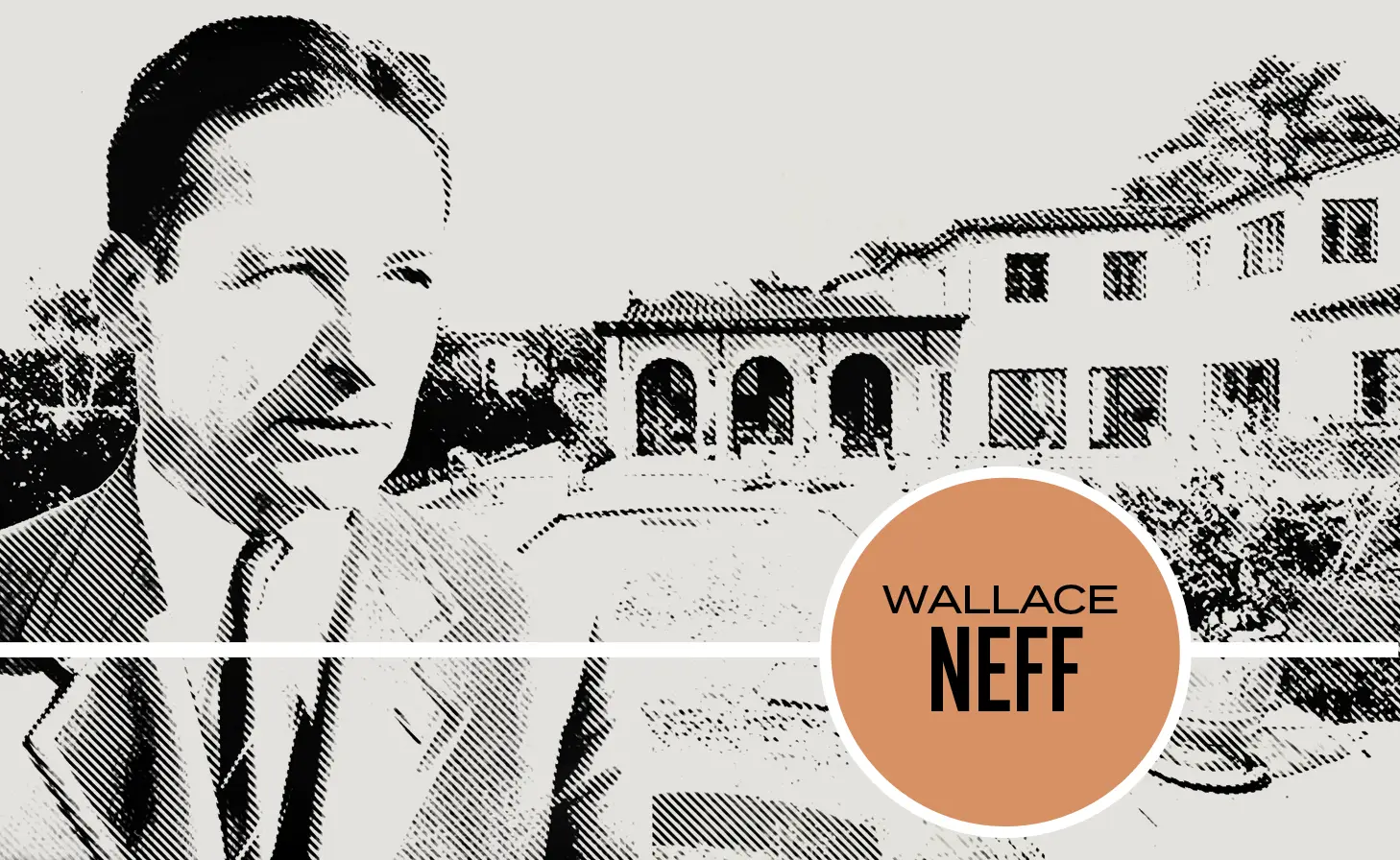
Wallace Neff (1895-1982) grew up surrounded by architectural grandeur in Altadena-Pasadena, California and carried that formative influence throughout his six-decade career designing homes for Hollywood’s elite. In Neff’s refined work, California architecture becomes a vision of romance and ease. White stucco walls, red tile roofs and graceful arcades create homes that feel timeless yet distinctly tied to place. His designs capture the sunlit experience of Southern California living and showcase the best of historical home living.
The Rise of the “California Style”
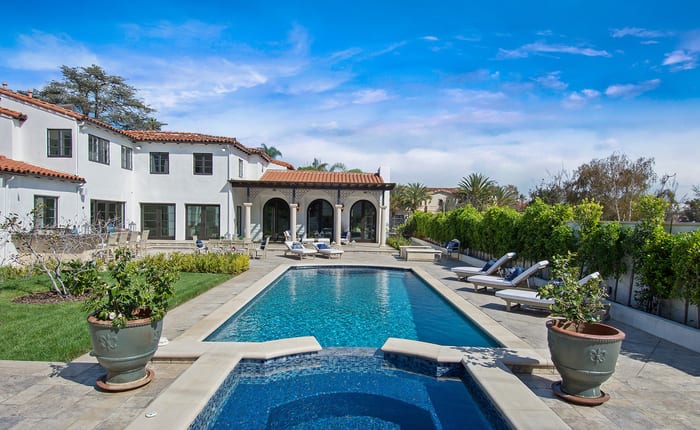
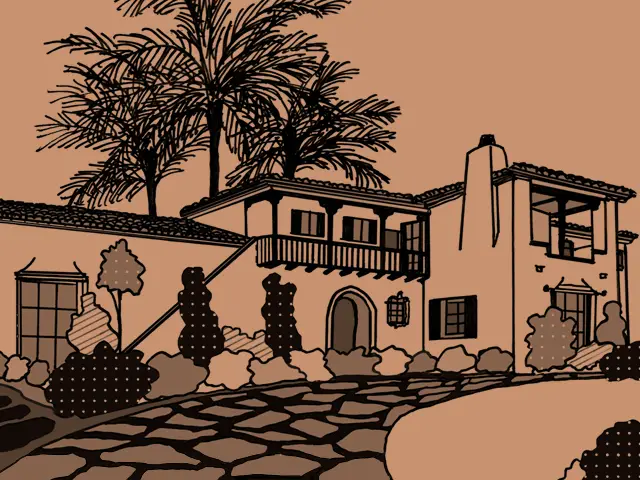
Neff’s defining contribution to American architecture was the creation and popularization of what became broadly known as the “California Style.” Rooted in Spanish Colonial Revival, Mediterranean, and French Normandy traditions, this approach embraced plastered white walls, red clay tile roofs, arched doorways and loggia, lush courtyard gardens and an indoor-outdoor flow perfectly suited to the Southern California climate.What set Neff apart from other architects working in similar styles was his mastery of scale and proportion. His houses felt both grand and livable, opulent and rooted in their landscape. A Neff design never felt like a European import dropped into a foreign context — it felt organically Californian, as though it had grown from the soil of the Los Angeles basin itself. He drew from Spanish mission heritage, Italian Renaissance villas, and the French countryside with equal ease, blending these influences into homes unified by a warm, sun-drenched California sensibility.Hollywood’s new aristocracy, film directors, studio heads, silent film stars and industrial magnates, responded immediately. By the mid-1920s, Neff was the most sought-after residential architect in Southern California, with a client list that read like a who’s-who of the Roaring Twenties. To learn more about the Spanish and Mediterranean home styles that Neff helped define, visit our Home Styles guide.Pickfair: The Estate That Made Neff Famous
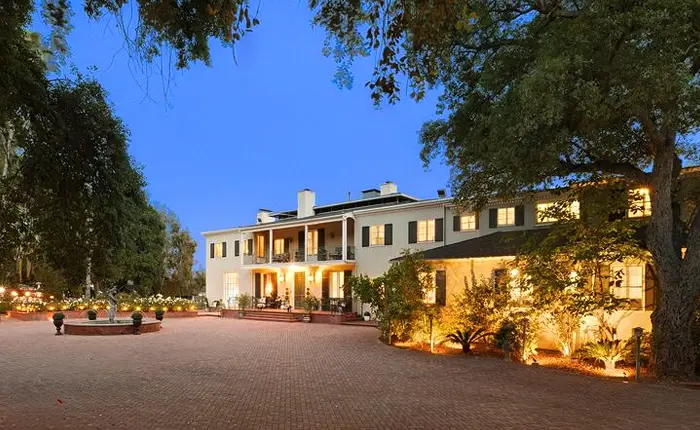
At the grand Singer Mansion, Neff brought his signature style. Expansive courtyards, shaded arcades and a harmonious relationship to the surrounding terrain define the estate. The project stands as a testament to Neff’s ability to translate luxury into architectural poetry. At legendary Pickfair, at 1143 Summit Drive, Beverly Hills, Wallace Neff helped shape one of Hollywood’s most storied residences for Mary Pickford and Douglas Fairbanks. Expanded and refined over time, the estate became a symbol of early Los Angeles glamour, hosting icons, royalty and industry pioneers. Its eventual demolition marked a poignant loss, a reminder that even the most celebrated architecture can be fleeting, while its cultural legacy endures.
Falcon Lair and the Hollywood Hills Legacy
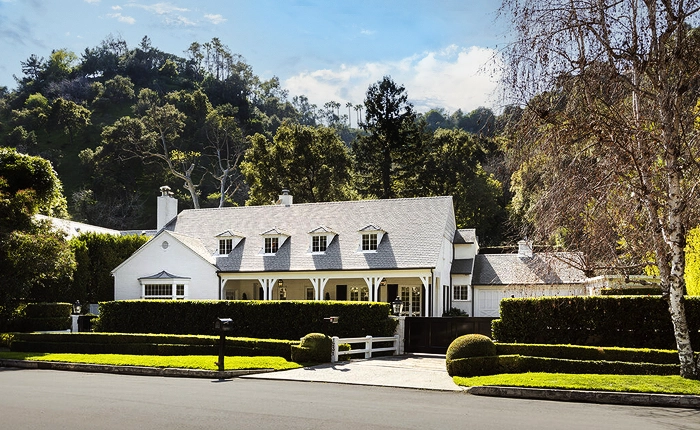
While Pickfair was Neff’s most celebrated commission, Falcon Lair is among his most evocative. Built in 1925 and located above Benedict Canyon, north of Beverly Hills at 1436 Bella Drive, Falcon Lair was a Spanish Colonial Revival estate designed for silent film icon Rudolph Valentino. Valentino purchased the completed property for $175,000, a staggering sum at the time, and named it after his unproduced film The Hooded Falcon. He lived there only briefly before his sudden death from peritonitis in 1926 at the age of 31.Falcon Lair went on to become one of the most famous addresses in Los Angeles history, later acquired by tobacco heiress Doris Duke as a private retreat. The estate featured characteristic Neff hallmarks: stucco walls, a red tile roof, arched entryways, Italian cypress gardens and a seamless integration of indoor and outdoor living. Tragically, the main house was demolished in 2006, leaving only gates and peripheral structures as evidence of its former glory.Neff’s 1926 commission for film director Fred Niblo, the Italian Renaissance-influenced Misty Mountain at 1330 Angelo Drive in Beverly Glen, also survives largely intact and represents one of the finest preserved examples of his residential work from this period. The property has since passed through the hands of entertainment mogul Jules Stein and media titan Rupert Murdoch.Neff’s Pasadena and San Marino Masterworks
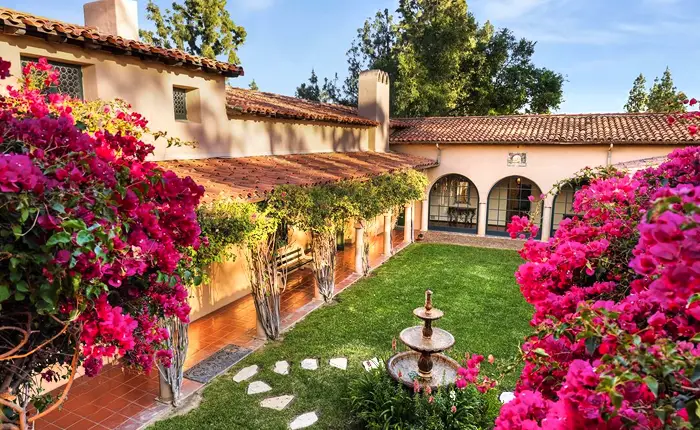
The Pasadena and San Marino areas contain one of the greatest concentrations of Wallace Neff homes in Southern California, many of which are still privately owned and meticulously maintained. Neff’s homes often feel shaped by climate as much as by style. Thick walls, shaded verandas and breezeways create naturally comfortable interiors. His architecture reflects an intuitive understanding of how people live in warm, sunlit environments.
Institutional Works: Beyond the Private Residence
Though primarily known for his residential architecture, Neff also designed notable institutional and religious buildings. St. Elizabeth of Hungary Roman Catholic Church in Altadena, dedicated in 1926, was his first major commission and remains a landmark of Spanish Medieval architecture in the region. He also contributed to the Edward L. Doheny Memorial Library at St. John’s Seminary in Camarillo and designed buildings for Pomona College in Claremont, demonstrating the breadth of a practice that extended far beyond the residential estate.The Airform House: Neff’s Bold Social Vision
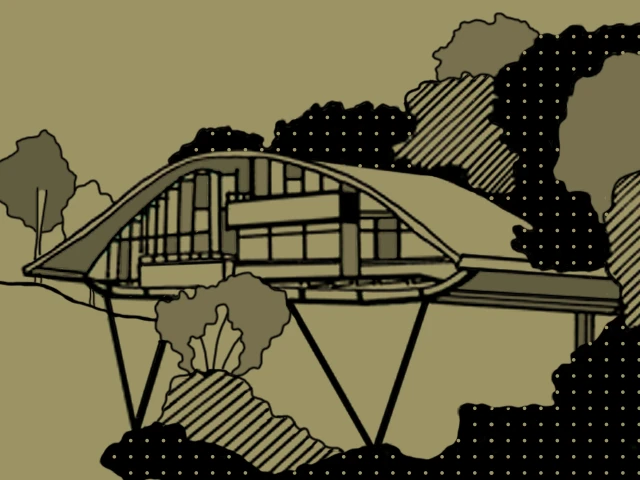
Wallace Neff was not only an architect of luxury but also a serious innovator with a genuine social conscience. In 1941, he patented what he called the Airform house, a revolutionary approach to low-cost housing. The design used an inflatable balloon as a formwork over which reinforced concrete was sprayed and allowed to cure, creating a dome-shaped structure of remarkable strength and economy. Once the concrete hardened, the balloon was deflated and removed, leaving a finished shell that could be built quickly and cheaply.Though the design gained little traction in the United States, where it was viewed with skepticism by a public accustomed to conventional homes, the Airform proved enormously influential abroad. Large-scale Airform housing projects were constructed in Egypt, Brazil and across West Africa during the 1940s and 1950s, providing affordable shelter for tens of thousands of people. A cluster of Bubble Houses built at the Wigwam Resort in Litchfield Park, Arizona, became a rare surviving American example of the concept before their eventual demolition.Neff’s willingness to pivot from designing mansions for Rudolph Valentino to engineering affordable dome homes for the developing world reveals a designer of unusual range and idealism. It is a dimension of his legacy that is often overlooked but speaks powerfully to the breadth of his architectural vision. For more on the variety of architectural approaches represented in Los Angeles’s built environment, visit ArchDaily’s Southern California coverage.Wallace Neff Homes Today: Preservation and Value
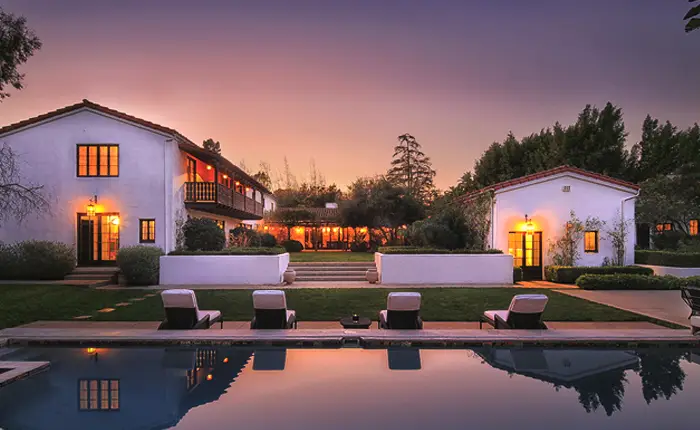
At the storied El Mirasol Estate, Wallace Neff composed a romantic vision of desert living through courtyards, arcades, and sun-washed stucco forms. Once owned by Diane Keaton and home to a lineage of notable tastemakers, the estate carries a layered history of Hollywood and design culture. Neff’s mastery of proportion and detail elevates traditional forms into something quietly cinematic. Arched doorways, wrought iron accents and carefully framed views create a sense of arrival and discovery. His homes invite both grandeur and intimacy in equal measure. Well-preserved Wallace Neff homes command significant premiums in today’s Los Angeles real estate market, attracting design-conscious buyers who understand the rarity and cultural weight of these properties.
Why Wallace Neff Matters for Today’s Buyers
Wallace Neff received the American Institute of Architects Fellowship in 1956, recognizing his excellence in design. Over his career, spanning from 1919 to 1975, he received seven AIA Honor Awards. But the enduring proof of his legacy is written in the walls, arches, and courtyard gardens of the homes that survive across Southern California today. For buyers who care about design, history, and the meaning embedded in a property, a Neff home offers something that new construction cannot.These properties connect their owners to one of the most fertile and glamorous periods in American cultural history. They were built with craftsmanship standards and material quality that are extraordinarily difficult to replicate today. And they carry the unmistakable imprint of a singular artistic vision — a man who understood his landscape, his climate, his clients, and his moment with rare clarity. When Neff said he built “California houses for California people,” he was describing not just a style but a philosophy: that architecture should emerge from its place, serve its people, and endure.For today’s luxury home buyers and historic property collectors, that philosophy translates into real estate of lasting significance. Whether you are searching for a verified Neff property or simply seeking guidance on what makes an architecturally significant home worth pursuing, explore our Mid-Century Modern and Architectural Homes listings and connect with the Beyond Shelter team. You can also deepen your understanding of Wallace Neff’s place in the broader California design tradition by exploring design resources in the Dezeen architecture archive.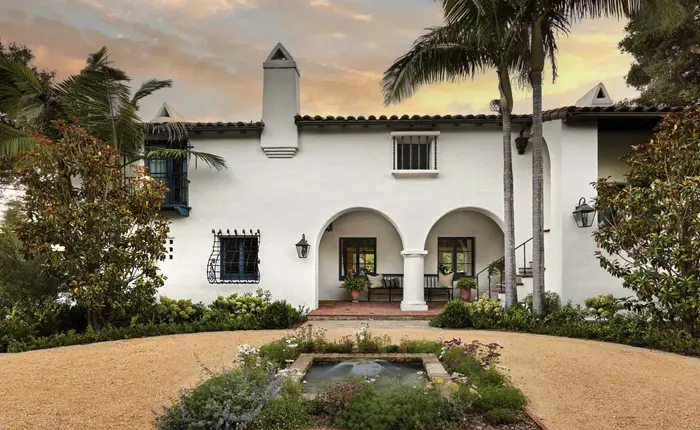
The surviving homes of Wallace Neff form one of the most important architectural legacies in Southern California. Spanning Beverly Hills, Pasadena, San Marino, Bel Air and communities across the region, they represent a design vision that defined the Golden Age of Los Angeles living and continues to command reverence and premium prices in today’s market. Neff’s work bridges the worlds of tradition and invention with remarkable ease. Whether designing grand estates or experimental dwellings, he maintained a consistent focus on livability and beauty. His architecture feels both rooted in history and open to possibility. In a surprising departure from his romantic estates, Neff developed his experimental “Airform” or bubble houses. These thin-shell concrete domes were designed as affordable, rapidly constructed housing solutions. The project reveals a visionary architect willing to explore innovation alongside tradition.