Raphael Soriano Architecture: The Steel Pioneer Who Shaped Mid-Century Los Angeles
Raphael Soriano (1904 – 1988) was a Greek-born American architect and Fellow of the American Institute of Architects (FAIA), widely recognized as a pioneer of mid-century modern architecture in Los Angeles and Southern California. Born in Rhodes, Greece, Soriano emigrated to the United States in 1924, earned his architecture degree from the University of Southern California in 1934 and trained under both Richard Neutra and Rudolph Schindler. He is best known for pioneering prefabricated steel and aluminum construction in residential design, his contribution to the Arts and Architecture Case Study Houses program (Case Study House 1950, Pacific Palisades) and landmark Los Angeles buildings including the Lipetz House (1936), the Julius Shulman House and Studio (1950) and the Grossman House (1964), a designated Los Angeles Cultural Heritage Monument. His archives are held at Cal Poly Pomona.
Raphael Soriano – Architect Profile
- Born: August 1, 1904 — Rhodes, Greece
- Died: July 21, 1988 — Los Angeles, California (age 83)
- Education: College Saint-Jean-Baptiste, Rhodes, Greece — B.Arch., University of Southern California, USC School of Architecture, 1934 — Internship: Richard Neutra, Los Angeles, 1931–1934 — Internship: Rudolph Schindler, Los Angeles, 1934
- Style: Mid-Century Modern, International Style, Prefabricated and Industrialized Modernism
- Known For: Pioneering prefabricated steel and aluminum construction in residential architecture, modular building systems, open-plan indoor-outdoor living, Case Study House program participation, launched Soria Structures, Inc. to design and build prefabricated “All-Aluminum Homes” and influencing a generation of California modernists including Pierre Koenig, Craig Ellwood, and Frank Gehry
- Key Project Locations: Los Angeles, CA (Silver Lake, Los Feliz,Hollywood Hills, Bel Air, Pacific Palisades, Studio City, Van Nuys) — Long Beach, CA — Burbank, CA — Tiburon, CA — Palo Alto, CA — Mill Valley, CA — Maui, HI
- Notable Work: Lipetz House (1936), Katz House (1947), Julius Shulman House and Studio (1950), Case Study House 1950 (1950), Colby Apartments (1951), Schrage House (1952), Grossman House (1964)
- Influences: Richard Neutra, Rudolph Schindler, International Style, Bauhaus movement, Ludwig Mies van der Rohe, industrial prefabrication theory and a lifelong passion for music, which Soriano credited as the foundation of his sense of proportion, rhythm and precision in design
- Awards and Honors: Third Prize, Postwar Living Competition, Arts and Architecture magazine (Plywood House prototype), 1943; AIA Southern California Chapter Honor Award, Katz House, 1949; National AIA Award for Design, Colby Apartments, 1951; VII International Pan American Congress Award, Colby Apartments, 1951 — AIA Southern California Chapter One Honor Award, Colby Apartments, 1951; Two AIA Northern California Chapter Awards, Eichler Steel House, c. 1955; Fellow, American Institute of Architects (FAIA), 1961; AIA Distinguished Achievement Award, 1986; USC Distinguished Alumni Award, 1986; Grossman House designated Los Angeles Cultural Heritage Monument, 1997
- Archive: Raphael S. Soriano Collection, ENV Special Collections-Archives, College of Environmental Design, California State Polytechnic University Pomona (Cal Poly Pomona), Pomona, CA
For those drawn to architecturally significant homes in Los Angeles, understanding Soriano’s legacy is essential. His buildings represent a distinct chapter in the story of modernist architecture, one marked by structural daring, deep respect for climate and landscape and an almost obsessive commitment to material honesty. At Beyond Shelter, we believe that knowing the architects who shaped Los Angeles makes every property search richer. Explore our collection of architectural homes for sale to discover properties with that same spirit of design excellence.
In This Article
- From Rhodes to Los Angeles: Soriano’s Origins
- Training Under Neutra and Schindler
- The Lipetz House: A Debut That Stunned Paris
- Steel as a Design Language
- The Case Study House Program and Soriano’s Contribution
- Iconic Soriano Buildings in Los Angeles
- Influence on Future Generations
- Soriano’s Legacy Today and What It Means for Buyers
- FAQs About Raphael Soriano Architecture
From Rhodes to Los Angeles: Soriano’s Origins
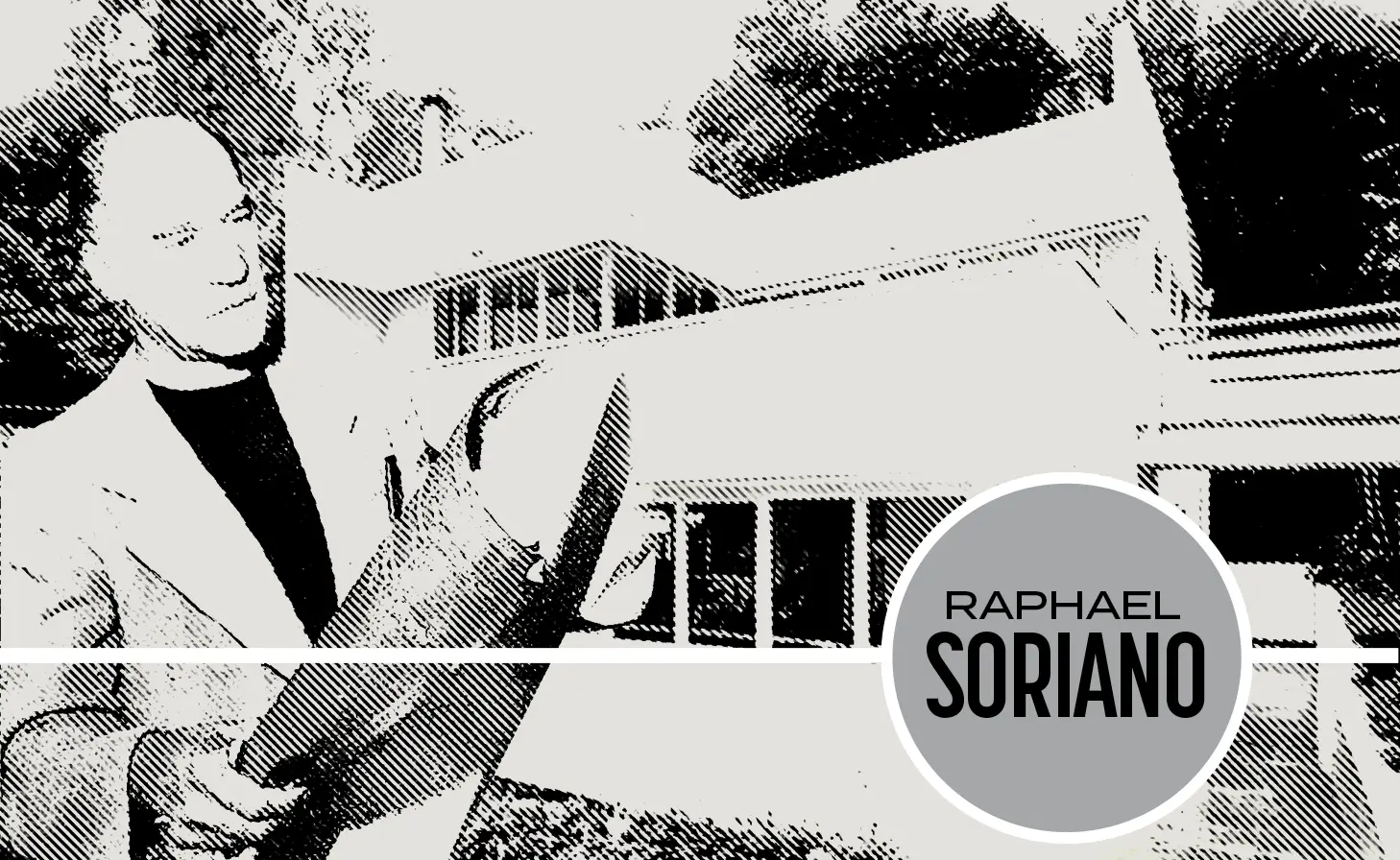
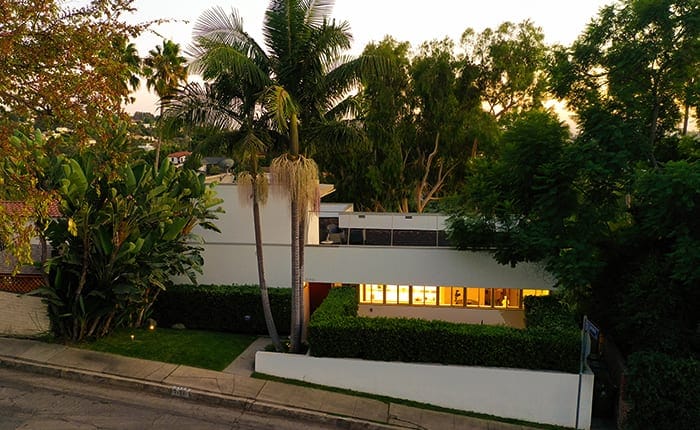
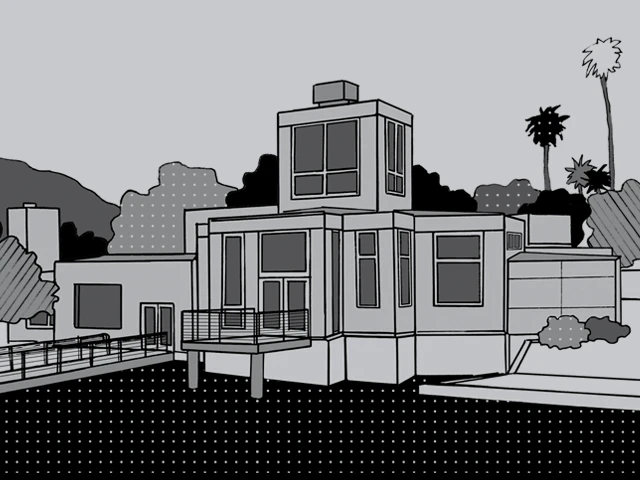
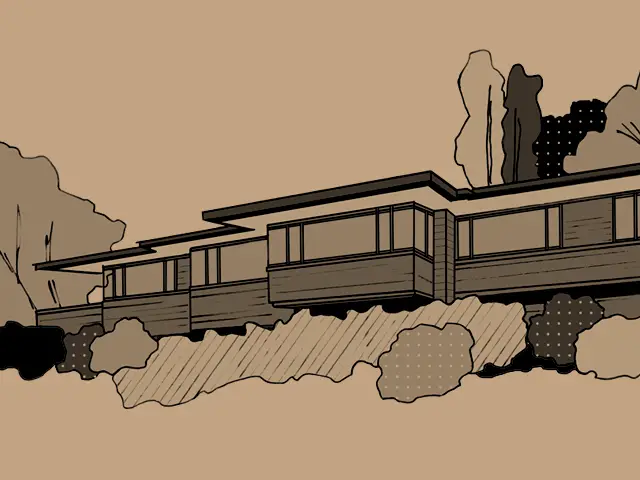
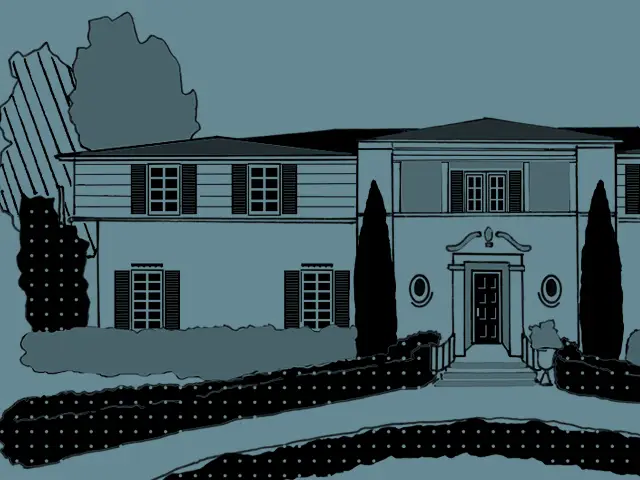
The Polito House, a characteristic Soriano design showing his signature use of exposed steel framing, floor-to-ceiling glass, and seamless indoor-outdoor connection, is a hallmark of his approach to mid-century modern residential architecture in Southern California. Raphael Soriano believed modern architecture should express its structure honestly. Slender steel frames, broad planes of glass and carefully proportioned spaces create homes that feel both rational and luminous. His work reflects a lifelong fascination with expert engineering.
Raphael Simon Soriano was born on August 1, 1904, on the island of Rhodes, in the Aegean Mediterranean, to a Sephardic Jewish family. He attended the College Saint-Jean-Baptiste in Rhodes before emigrating to the United States in 1924. Arriving in Los Angeles with relatives, he initially worked at fruit stands, including one at the Grand Central Market, while taking music and English classes as he built a foothold in his new country. His path to architecture was not immediate, but it was inevitable. Soriano enrolled at the University of Southern California’s School of Architecture in 1929 and graduated in 1934. He became an American citizen in 1930. Music, which had been central to his upbringing in Rhodes, remained a lifelong passion and, as architectural historians have noted, gave him a deep feeling for rhythm, proportion, and precision, qualities evident in his buildings. That Southern California drew him in is no accident. The region’s Mediterranean climate, its culture of innovation and its appetite for new ways of living made it the ideal laboratory for a young modernist architect with bold ideas about how homes should be built and how people should inhabit them. Los Angeles, still in the midst of explosive growth, offered opportunities that older, more established cities simply could not.
Training Under Neutra and Schindler
Before opening his own practice, Soriano spent formative years in the offices of two giants of California modernism. In 1931, he secured an internship with Richard Neutra, working alongside fellow interns Gregory Ain and Harwell Hamilton Harris. The experience was largely unpaid and Soriano worked in Neutra’s office on projects including the Rush City Reformed proposal, but it gave him an unparalleled education in modernist design thinking and an introduction to the professional networks that would define his career. A brief internship with Rudolph Schindler followed in 1934, the same year Soriano graduated from USC, before he returned to Neutra’s office. The influence of both men is visible in Soriano’s early work: the emphasis on the relationship between interior and exterior space, the use of the flat roof and the horizontal massing. Soriano would quickly develop his own distinct architectural voice, one built around materials, modularity and the possibilities of industrialized construction. It was also during these years that Soriano met Julius Shulman, the architectural photographer who would become a lifelong friend and collaborator. Neutra had arranged the introduction at the under-construction Lipetz House in 1936. Shulman would go on to photograph many of Soriano’s most important projects, ensuring that his work appeared in major architectural publications in the United States and Europe. Discover more about the broader world of modernist home styles in Los Angeles and the architects who helped shape them.
The Lipetz House: A Debut That Stunned Paris
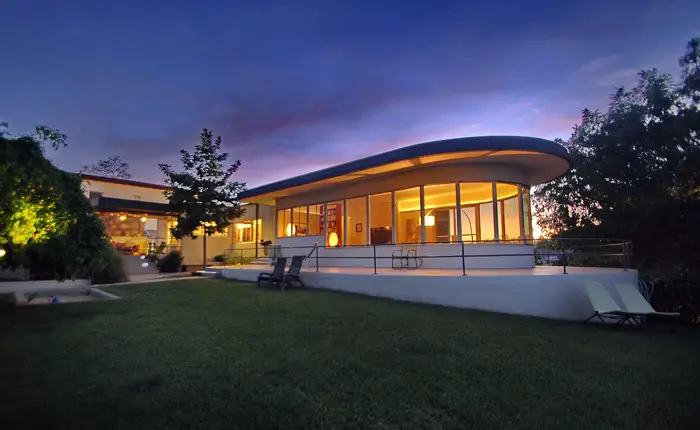
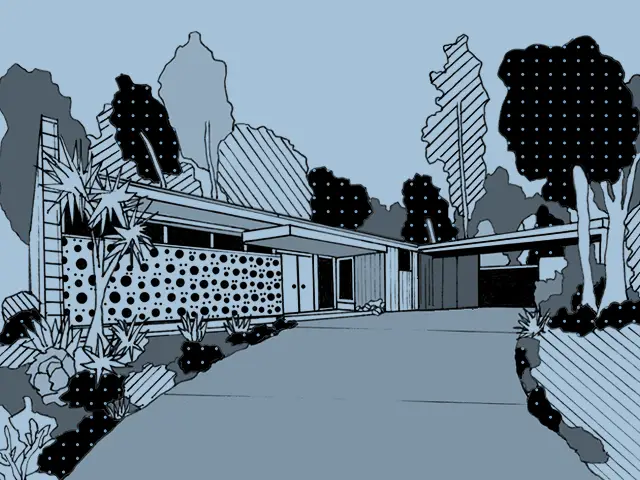
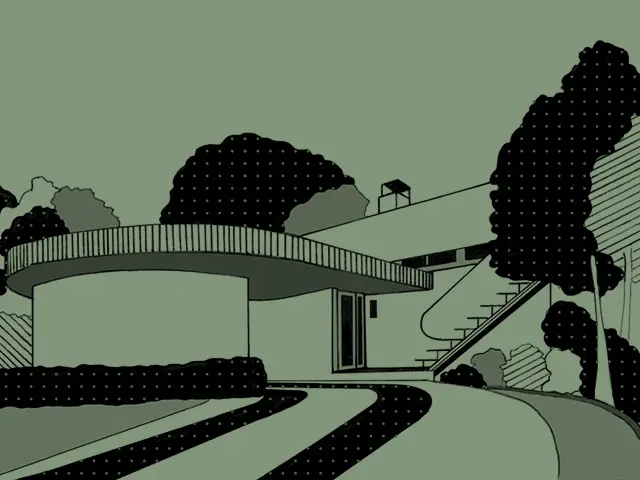
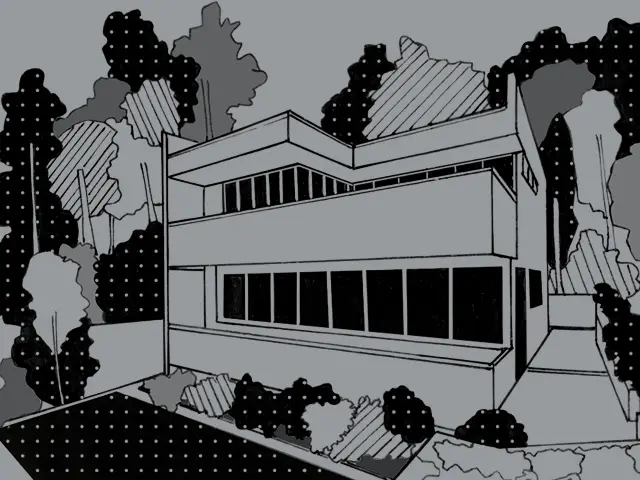
The Lipetz House (1936) in Silver Lake was Soriano’s first independent commission. Its curving music room and continuous windows made it a sensation when it was exhibited at the 1937 International Architectural Exhibition in Paris. The home already reveals the clarity and structural discipline that would define Soriano’s later steel-and-glass architecture. Even at the beginning of his career, the house announced a bold new voice in the emerging story of Southern California modernism. Photo: Michael J. Locke.
In 1936, Soriano completed his first independent commission: a house at 1843 North Dillon Street in the Silver Lake neighborhood of Los Angeles, designed for Emanuel and Helen Lipetz. Helen was a concert pianist and the house was literally organized around her music. Its most striking feature was a semicircular music room designed to accommodate a Bechstein grand piano and up to 20 guests, with continuous windows that wrap nearly one-third of the total 2,300 square feet. The commission itself came about through a chance encounter. Soriano attended a John Reed Club screening of a French film and ended up translating jokes for a woman behind him, a Mrs. Orkin. She later introduced him to Helen Lipetz and his evident passion for music during their conversation so impressed the couple that they asked him to design their home. It was an auspicious and fitting beginning for a career that would always be defined by the blending of culture, intellect and technical innovation. The Lipetz House caused a genuine sensation when it was featured in the 1937 International Architectural Exhibition in Paris. For a young architect just starting out, it was remarkable recognition. The house still stands today in Silver Lake and was carefully restored after being sold in 2007. The restoration, by architects Fung and Blatt, removed later alterations and returned the home to something closer to Soriano’s original vision.
Steel as a Design Language
Soriano’s most enduring and original contribution to American architecture was his pioneering use of steel in residential construction. While most architects of his era continued to rely on wood framing, Soriano saw steel as the logical material for a modern era, efficient, durable, precise and honest. He embraced modular systems that could be prefabricated off-site and assembled quickly on location, a forward-looking approach that anticipated many of the trends in sustainable and affordable construction that architects are still pursuing today. His design principles, well established by the late 1930s, centered on cost-efficient construction, maximum space efficiency, functional organization for minimal maintenance, built-in furniture, climate responsiveness and a strong indoor-outdoor relationship that expanded living to the exterior. These were not aesthetic choices alone, they reflected a genuine philosophy about how modern people should live and how architecture could serve everyday life without sacrificing beauty or precision. The use of steel also allowed Soriano to achieve the slender, floating profiles that became his visual signature. Wide spans, minimal columns and large expanses of glass became possible with steel in ways that wood framing simply could not support. The result was architecture that felt light, transparent and open, perfectly suited to the Southern California landscape and climate.
The Colby Apartments and National Recognition
Soriano’s 1951 Colby Apartments in Los Angeles demonstrated that his steel approach worked just as powerfully in multi-unit residential design as it did in single-family homes. The project earned the National American Institute of Architects Award for Design, the VII International Pan American Congress Award and the AIA Southern California Chapter One Honor Award, a remarkable sweep of recognition that confirmed his standing as one of the most significant architects practicing in the country. You can explore similar award-winning modernist properties through our mid-century modern homes for sale in Los Angeles.
The Case Study House Program and Soriano’s Contribution
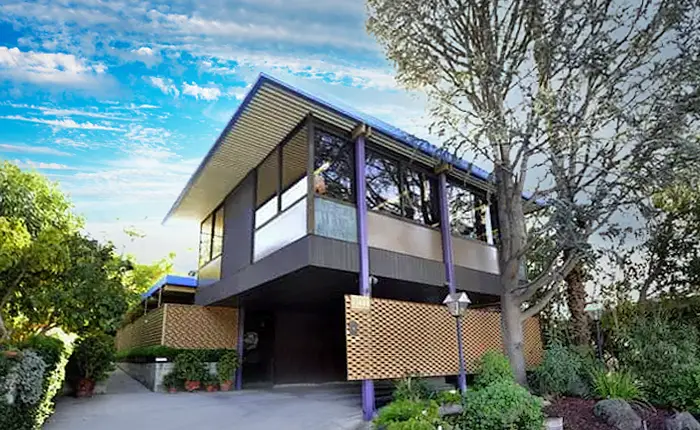
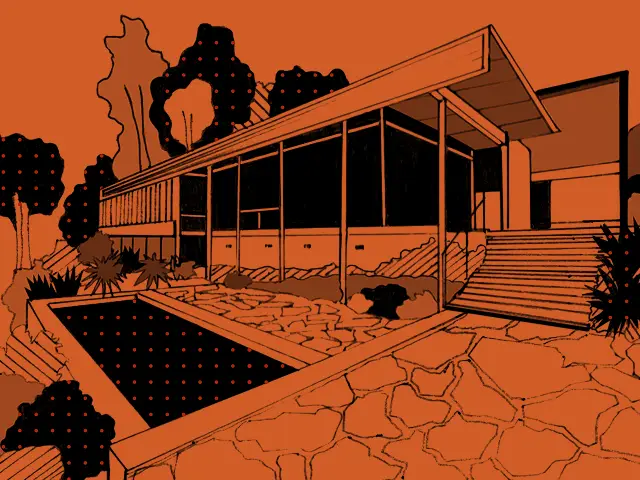
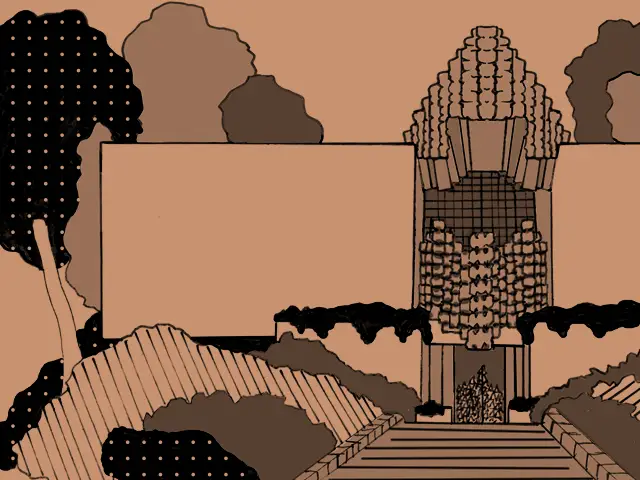
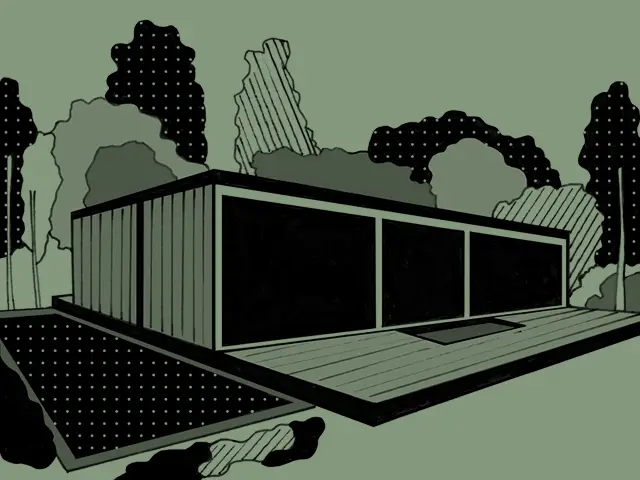
Designed for celebrated designer Greta Magnusson Grossman, the refined Greta Grossman House reveals Raphael Soriano at his most thoughtful and collaborative. The home’s restrained modern lines and luminous glass walls provided an ideal backdrop for Grossman’s Scandinavian modern interiors. Together, the architect and designer created a residence where architecture and furniture form a seamless expression of mid-century design culture. With his visionary Case Study House 1950, Soriano demonstrated how industrial steel construction could shape the future of modern living. The home’s disciplined structural frame supports wide expanses of glass that dissolve the boundary between interior and landscape.
One of the most celebrated architectural programs in American history, the Case Study Houses initiative was organized by John Entenza, editor of Arts and Architecture magazine, beginning in 1945. The program invited leading modernist architects to design experimental model homes that would demonstrate how thoughtful, modern design could serve the postwar American family. Soriano was among the architects Entenza invited to participate, completing his Case Study House in 1950 in Pacific Palisades. Soriano’s Case Study House for 1950 was a milestone. It was the first all-steel frame house in the program, located at 1080 Ravoli Drive in Pacific Palisades. Using 10-by-20-foot structural modules, the design created large, flexible interior spaces with a corrugated steel roof deck. From the street, it presented a deliberately austere face, but at the rear, it opened dramatically onto expansive outdoor views, a spatial sequence that perfectly embodied Soriano’s philosophy of the home as a place that engages with its landscape. The Case Study House marked a turning point in the entire program. Pierre Koenig, who assisted Soriano with his presentation drawings that year as a freshly graduated USC architecture student, would go on to design the program’s most iconic images, Case Study Houses 21 and 22, directly inspired by Soriano’s steel-first approach. Soriano’s contribution to the program is thus felt not only in his own building but in the work it inspired. For a deeper look at the Case Study Houses and their ongoing influence, ArchDaily’s Case Study Houses coverage is an excellent resource.
Iconic Soriano Buildings in Los Angeles
Soriano’s Los Angeles portfolio, though significantly diminished by demolition, earthquakes and wildfires, includes several buildings that remain important landmarks of mid-century modernism. Of the approximately 50 buildings he completed in his career, only around 12 survive. Those that remain are cherished by preservation advocates, architecture enthusiasts and the design-conscious homeowners who are lucky enough to live in them. The Julius Shulman House and Studio (1950) at 7875 Woodrow Wilson Drive in Los Angeles is among the most celebrated. Commissioned in 1947 and completed in 1950, it was Soriano’s first exposed-steel-frame house and served as the home and studio of the man who had photographed his work for decades. The house, restored by Lorcan O’Herlihy Architects after Shulman’s death, was featured in Architectural Record’s Houses of 2015. The Schrage House in Los Feliz, bequeathed to Cal Poly Pomona in 2011, is considered one of Soriano’s finest residential designs and the only steel-and-glass Soriano residence still in near-original condition. The Katz House (1947) in Studio City received the AIA Southern California Chapter Three Award in 1949. The Gogol House (1938-39) in Los Feliz is another fine surviving example, recognized as a building of significant historical and architectural value. The Grossman House (1964) in Studio City, Soriano’s first all-aluminum house, was designated a Los Angeles Cultural Heritage Monument in 1997. Each of these buildings represents a different phase of Soriano’s thinking, but all share his core conviction that architecture should be precise, efficient, beautiful and deeply connected to its place. Browse our guide to Los Angeles neighborhoods where this classic architectural heritage is still very much alive.
Influence on Future Generations
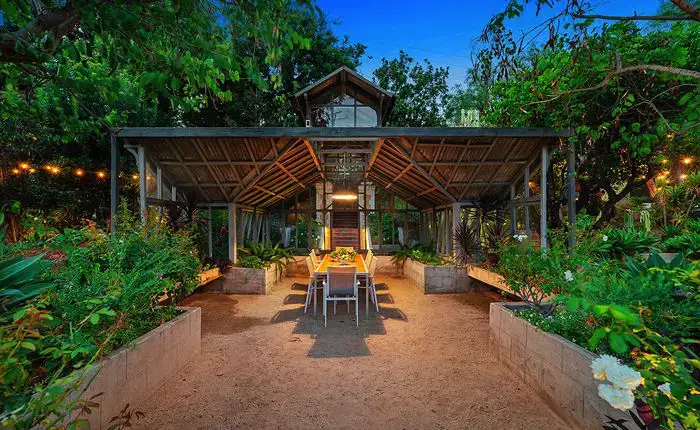
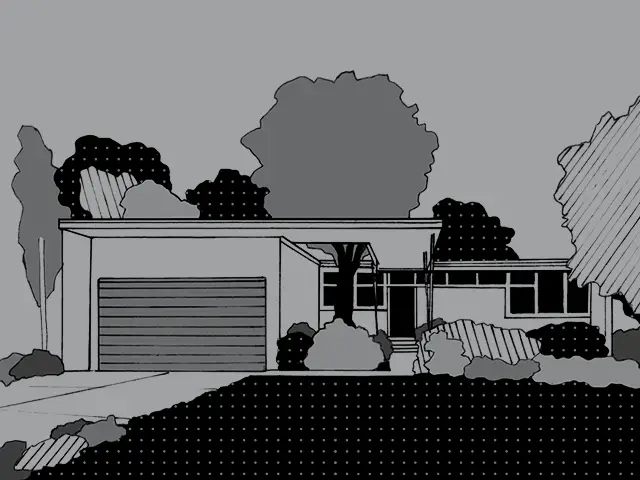
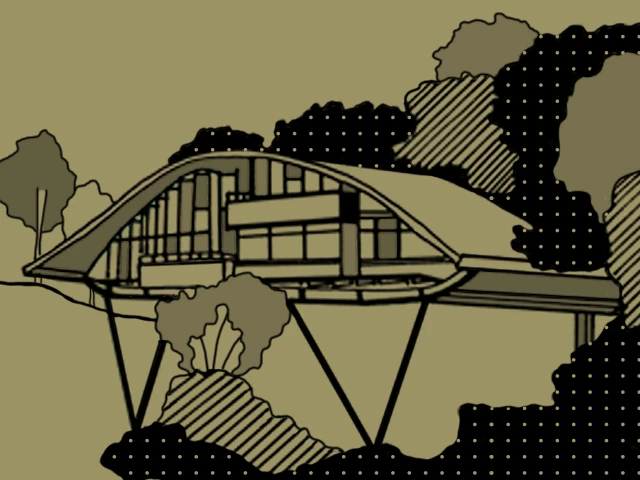
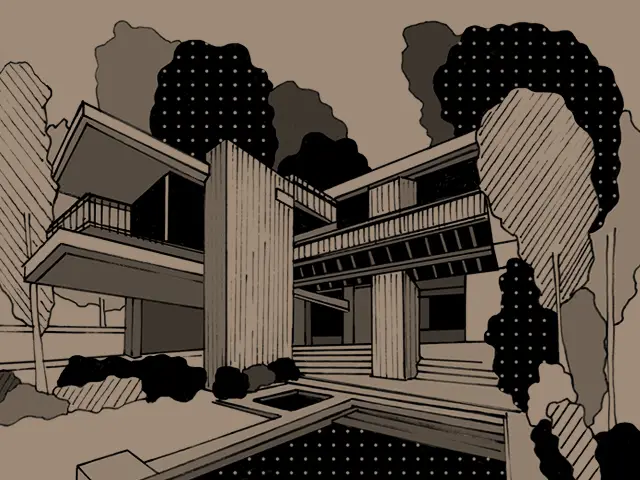
The Lukens House reflects Raphael Soriano’s fascination with precision and structural clarity. Slender steel framing and luminous glass walls create a home that feels both engineered and poetic. Decades later, the residence would gain renewed attention through its association with Frank Gehry, whose early admiration for Soriano’s work reflects the lasting influence of Soriano’s modernist vision. This restored greenhouse at the home dates back to 1908.
Soriano’s influence on subsequent generations of California architects is both direct and profound. Perhaps no story captures this better than Frank Gehry’s. Gehry, then a student at USC in a ceramics class taught by Professor Glen Lukens, was invited by Lukens to visit the house Soriano was building for him. There, Gehry encountered Soriano on the construction site, directing workers in his accented English, dressed in his characteristic all-black outfit and black beret. The encounter, Gehry has said, decisively redirected his ambitions toward architecture. Pierre Koenig, Craig Ellwood and Daniel Dworsky all spent time in Soriano’s office in the early 1950s, absorbing his approach to steel construction and his philosophy of modern living. Koenig in particular carried Soriano’s steel aesthetic forward into his own Case Study Houses, which became among the most photographed buildings of the twentieth century. In this sense, Soriano’s influence runs through some of the most iconic images of California modernism, even when his own name is not attached to them. Soriano was elevated to Fellow of the American Institute of Architects (FAIA) in 1961, recognizing the depth and originality of his contribution to the profession. He received both the AIA Distinguished Achievement Award and the USC Distinguished Alumni Award in 1986, shortly before his death. His papers and drawings are preserved in the ENV Special Collections-Archives at Cal Poly Pomona. You can read more about the broader circle of California modernist architects and their lasting impact at Dezeen’s mid-century modern coverage.
Soriano’s Legacy Today and What It Means for Buyers
Today, the small number of surviving Soriano buildings in Los Angeles carries enormous cultural and architectural weight. They are protected by municipal preservation codes, studied by architecture students and sought after by collectors of significant modernist homes. When a Soriano property comes to market, it attracts intense attention from buyers who understand that they are acquiring not just a house but a piece of architectural history. What makes Soriano’s homes particularly compelling for today’s buyers is how contemporary they feel. The open-plan interiors, the seamless connection between inside and outside, the use of industrial materials in refined ways, these are qualities that resonate as strongly now as they did when the houses were first built. Soriano was designing for a kind of Southern California lifestyle that has only grown more appealing over time: relaxed, light-filled and deeply engaged with the natural environment. Understanding the architects who shaped Los Angeles is part of what makes buying an architecturally significant home such a meaningful decision. Whether you are searching for a Soriano, a Neutra, a Schindler, or any other landmark of mid-century Los Angeles modernism, working with agents who combine architectural expertise with real estate knowledge makes the difference. Our team at Beyond Shelter is here to guide you through that process. Learn more about our approach and the properties we represent on our Los Angeles real estate team page.
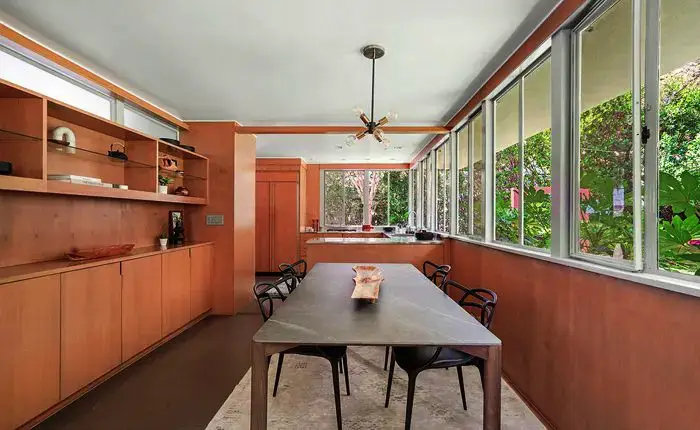
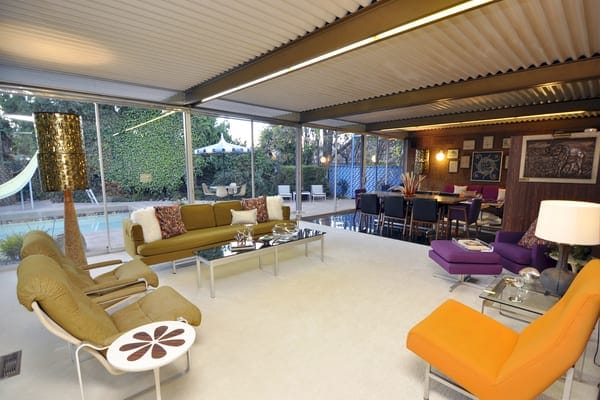
The interiors of Soriano’s steel-frame homes remain strikingly contemporary: open, light-filled and organized around a seamless relationship between interior space and the Southern California landscape. Today, Raphael Soriano is recognized as one of the quiet innovators of California modernism. His disciplined steel houses anticipated many ideas that would later define the era. Only around 12 of his approximately 50 built works survive today, making each one a rare and irreplaceable piece of Los Angeles architectural history.
Raphael Soriano – Notable Projects and Houses
- Lipetz House (1936) — Silver Lake, Los Angeles, CA. Soriano’s first independent commission; designed around a semicircular music room for concert pianist Helen Lipetz, seating up to 20 guests with continuous windows; 2,300 sf. Exhibited at the 1937 International Architectural Exhibition in Paris. Restored 2007–2008.
- Dodie Priver House I (1937) — Los Angeles, CA. 500 sf redwood studio house on a steep hillside lot; built for approximately $2,000. Demolished 1940s.
- Los Angeles Jewish Community Center (1938) — Los Angeles, CA. Early institutional commission during his formative years.
- Ross House (1938) — Los Angeles, CA. Continuous band of steel sash windows across the street elevation; game room and utility room cut into the hillside slope.
- Austrian House (1938) — Los Angeles, CA. Two-story house with two-car garage and rental studio apartment; African mahogany and oak flex wood interiors. Featured in Architectural Forum, October 1939.
- Gogol House (1939) — Los Feliz, Los Angeles, CA. Single-story plan; glass southern facade; 2,000 sf roof deck; extensive built-in furniture throughout.
- Polito House (1940) — Los Angeles, CA. Two-story over two-car garage with panoramic views of the Hollywood Hills and downtown Los Angeles. Featured in Architectural Record, February 1946.
- Glen Lukens House and Studio (1940) — Los Angeles, CA. U-shaped plan around a raised terrace linking living quarters and working studio; designed for USC ceramics professor Glen Lukens. A visit to this construction site by a young Frank Gehry, at Lukens’ invitation, inspired Gehry to pursue architecture. Restored 2010–2013.
- Koosis House (1940) — Los Angeles, CA. Exterior staircase entry; Soriano-designed built-in furniture throughout; photographed by Julius Shulman.
- Kimpson House (1940) — Long Beach, CA. Designed during Soriano’s six-month hospital stay following a car accident; ocean views from second story; lagoon views from first floor; sandblasted glass windbreak terrace.
- Strauss-Lewis House (1941) — Los Angeles, CA. Soriano-designed built-in bookshelves and beds with integrated headboard storage; photographed by Julius Shulman. Restored 1990s.
- “Plywood House” Prototype (1943) — Competition entry. Third Prize, Postwar Living Competition, Arts and Architecture magazine. Unbuilt.
- Katz House (1947) — Van Nuys, CA. Steel joists and 4-inch pipe columns; 8′ x 24′ modular system; all principal rooms oriented to an enclosed outdoor living area. AIA Southern California Chapter Honor Award, 1949. Photographed by Julius Shulman.
- Touriel Medical Building (1950) — Los Angeles, CA. Notable commercial commission demonstrating Soriano’s approach beyond residential work.
- Julius Shulman House and Studio (1950) — Los Angeles, CA. Commissioned 1947; Soriano’s first exposed steel frame house; landscape architecture by Garrett Eckbo. Occupied by photographer Julius Shulman until his death in 2009. Restored by Lorcan O’Herlihy Architects; featured in Architectural Record Houses of 2015.
- Case Study House 1950 (1950) — Pacific Palisades, Los Angeles, CA. Soriano’s contribution to the Arts and Architecture Case Study Houses program; the first all-steel frame house in the program. Structural 10′ x 20′ modules; corrugated steel deck roof. Pierre Koenig assisted with presentation drawings.
- Noyes / Curtis House (1950) — Bel Air, Los Angeles, CA. Commissioned 1949; 4,500 sf all-steel L-shaped structure; corrugated steel roof deck erected in 18 hours; prewired prefabricated cabinets used as interior walls. Later owned by futurists Alvin and Adelaide Toffler. Featured in Architectural Record Houses of 1956.
- Colby Apartments (1951) — Los Angeles, CA. Multi-unit residential building with extensive steel construction. Winner: National AIA Award for Design; VII International Pan American Congress Award; AIA Southern California Chapter One Honor Award. Demolished 1988.
- Adolph’s Laboratory and Office Building (1951–53) — Burbank, CA. Commercial commission developed with patron Lloyd Rigler; considered among Soriano’s proudest professional achievements.
- Schrage House (1952) — Los Feliz, Los Angeles, CA. Prefabricated steel, glass, and resin-bonded plywood; considered one of Soriano’s finest designs and the only steel-and-glass Soriano residence surviving in near-original condition. Bequeathed to Cal Poly Pomona in 2011 by Steve and Marian Dodge.
- Eichler Steel House (1955) — Palo Alto, CA. First mass-produced steel house in the United States, built by developer Joseph Eichler; winner of two AIA Northern California Chapter Awards.
- Cooke House (c. 1957) — Tiburon, CA. 40-foot span tapered-frame steel construction; AIA Honor Award, AIA-Sunset Western Home Awards.
- McCauley House (1959) — Mill Valley, CA. Pilot house for a mass-production steel system; cantilevered light-gauge metal decking with fiberglass insulation roof; AIA Award of Merit plus two additional prizes. Soriano’s last steel house built. Featured in Arts and Architecture, August 1960.
- Grossman House / “El Paradiso” (1964) — Studio City, Los Angeles, CA. Soriano’s first all-aluminum house; 3,800 sf; nicknamed “El Paradiso” by original owner Albert Grossman. The only surviving all-aluminum Soriano residence. Designated Los Angeles Cultural Heritage Monument, 1997. Restored by architect Linda Brettler, AIA.
- Soria Structures Homes (1965) — Maui, Hawaii. Eleven prefabricated all-aluminum homes; Soriano’s last realized buildings, constructed under his trademarked “Soria Structures” system marketed as “All-Aluminum Homes.”
Frequently Asked Questions About Raphael Soriano Architecture
Looking for a Raphael Soriano Home for Sale in Los Angeles?
Beyond Shelter specializes in exactly the kind of properties that Soriano’s legacy represents: modernist homes with architectural integrity, historical significance and enduring design quality.
Whether you are searching for a mid-century modern home, a property with architectural provenance, or simply a home that reflects a sophisticated understanding of design, our team combines deep architectural knowledge with Los Angeles real estate expertise to help you find the right match.
Browse Our Listings: Mid-Century Modern Homes for Sale in Los Angeles
Explore by Architecture: Architectural Homes for Sale
Service Areas: Los Angeles, Southern California and beyond. Get in touch with our team to start your search →
About Beyond Shelter
Beyond Shelter is a premier architecture and real estate group serving Los Angeles and Southern California. With deep expertise in modernist architecture, historic preservation and architectural history, we help clients discover and acquire architecturally significant properties. Our team combines architectural knowledge with real estate expertise to provide comprehensive guidance for design-conscious buyers, sellers and architecture enthusiasts. Learn more about our services →