Classic Spanish style and Batchelder tile play a central role in historic California homes, especially in Los Angeles and along the coast. The use of clay, color and pattern helped shape the region’s architectural design style. From Craftsman Arts & Crafts fireplaces to Spanish Colonial Revival courtyards, these tiles tell a story that today’s artisan studios continue.
In This Article
- In The Beginning: Roots of California Tile
- Batchelder Tile and The Arts & Crafts Movement
- Malibu And Catalina Tile: Color and The Cuerda Seca Technique
- Classic California Tile Today
- Choosing Tile for Historic Los Angeles Homes
- Keeping It Real: Authentic Upgrades in Today's Home
- A Connection to The Past: Lived in Authenticity
- Rooms That Tell a Story
- Modern Makers of Reproduction Tile
- Native Tile & Ceramics
- Pasadena Craftsman Tile
- Nonato Ceramics
- Where To Use Classic California Tile: Finding Context Within the Home
IN THE BEGINNING: ROOTS OF CALIFORNIA TILE
California’s tile tradition began in the early 1900s, when architects and artists adopted hand-formed ceramics as both a durable finish and a means of expressing creativity. The state’s mild climate encouraged outdoor rooms, fountains and garden walls, all of which were perfect canvases for decorative tile. Local quarries and clays, along with new kiln technology and creative experimentation, led to the warm colors and matte glazes that are now seen as classic California style.
Two main movements shaped this work. The Arts & Crafts movement focused on natural materials and skilled craftsmanship. Later, the Spanish Colonial Revival introduced bold colors and patterns inspired by Spain, Mexico and the Mediterranean.
PASADENA CRAFTSMAN TILE
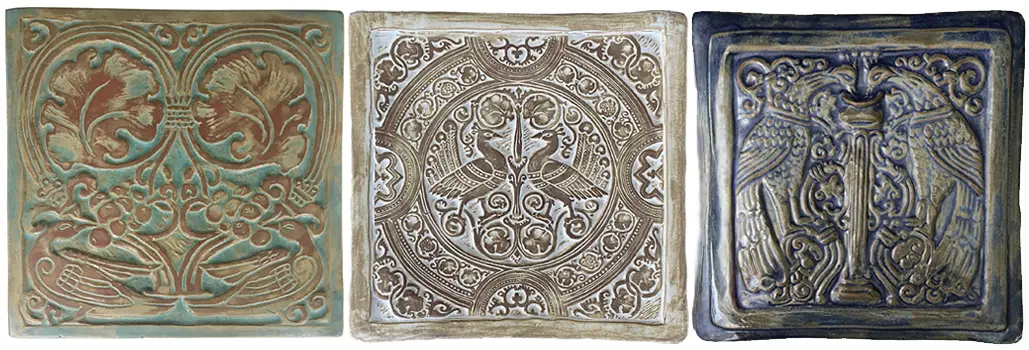
Batchelder tile is one of the defining decorative elements found in many historic Los Angeles homes. These artful additions can be seen in Craftsman, California Bungalows and Tudor Revival residences. Known for muted earth tones, relief patterns and handmade character, Batchelder tile brought artistry to everyday architecture through fireplace surrounds, hearths and entry details. In an Arts & Crafts style home, these tiles feel less like ornament and more like architecture itself: warm, grounded and deeply connected to Southern California design history. Artisan-crafted Batchelder tiles from Pasadena Craftsman Tile are slip-cast reproductions of Ernest Batchelder’s original designs. Shown here, Doves & Grapes, Peacocks in a Circle and Twin Peacocks are available from their website.
BATCHELDER TILE AND THE ARTS & CRAFTS MOVEMENT
Ernest Batchelder is probably the most famous name in historic California tile, especially for Arts & Crafts bungalows and period revival homes. Batchelder worked in Pasadena from around 1910 to the 1930s, making relief tiles and fireplace facings with earthy glazes and designs inspired by nature, medieval art and simple shapes.
His tiles were not inexpensive, but they were still within reach for many, so “hundreds of homes in Southern California and beyond” featured Batchelder fireplaces, fountains and floors. Batchelder Tile is known for its soft, matte surface and sculpted relief. Carved designs of birds, vines, Gothic arches and abstract patterns gently rise from a brown or buff background. Instead of using shiny colors, Batchelder preferred warm, muted tones and glazes that let the clay show through, adding depth and a handmade feel.
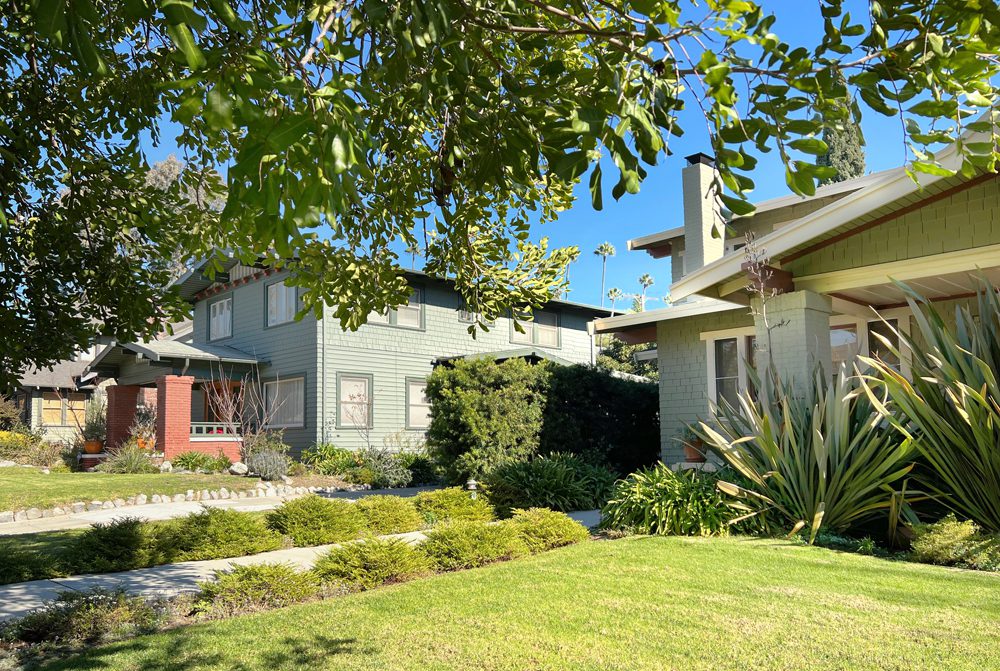
Craftsman homes celebrate natural materials, honest construction and the beauty of the hand-made object. Tile plays an essential role in that story, adding color, texture and artistry to wood-rich interiors, built-ins and gathering spaces. Whether used around a fireplace, along a stair riser or as a subtle kitchen accent, classic tile gives a historic home the layered, collected feeling that makes Los Angeles architecture so iconic. Along a treelined street, in the historic Los Angeles Hollywood Grove neighborhood, a row of Craftsman houses beautifully showcases the architectural style. Many houses in this coveted neighborhood are subject to the Mills Act, which helps preserve historic property’s character and has a welcome benefit of lower property taxes.
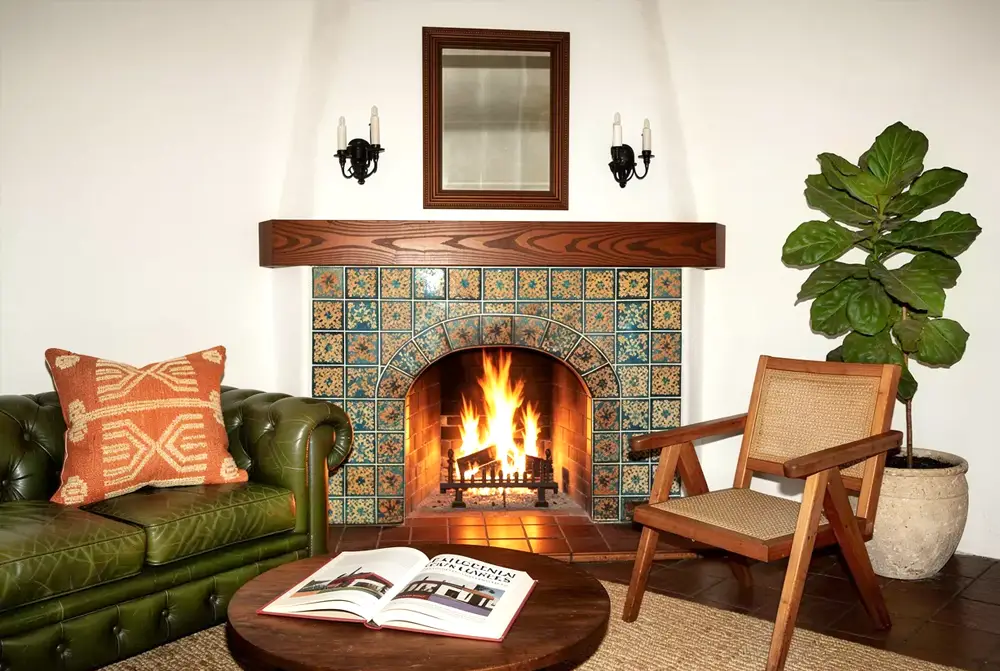
In many historic California homes, especially Craftsman and period cottage bungalows, a Batchelder fireplace is the main feature of the living room. It brings together structure, decoration and a cozy texture in one artistic piece. There are many Los Angeles area neighborhoods where you can find Craftsman houses and California bungalows for sale. These homes are filled with charm and character, boasting handcrafted elements and custom built-ins.
MALIBU AND CATALINA TILE: COLOR AND THE CUERDA SECA TECHNIQUE
While Batchelder shows the quieter side of California tile, Malibu Pottery and Catalina Island tile represent the vibrant, bright and lively side.
Malibu Potteries, which operated from 1929 to 1932, became known for its bright, patterned tiles used on fountains, stair risers, swimming pools and building facades across Southern California. Catalina Clay Products on Catalina Island made similar Spanish Colonial Revival designs, often featuring stylized plants, animals, ships and geometric borders. These tiles and murals were popular in seaside resorts and public buildings.
NATIVE TILE AND CERAMICS
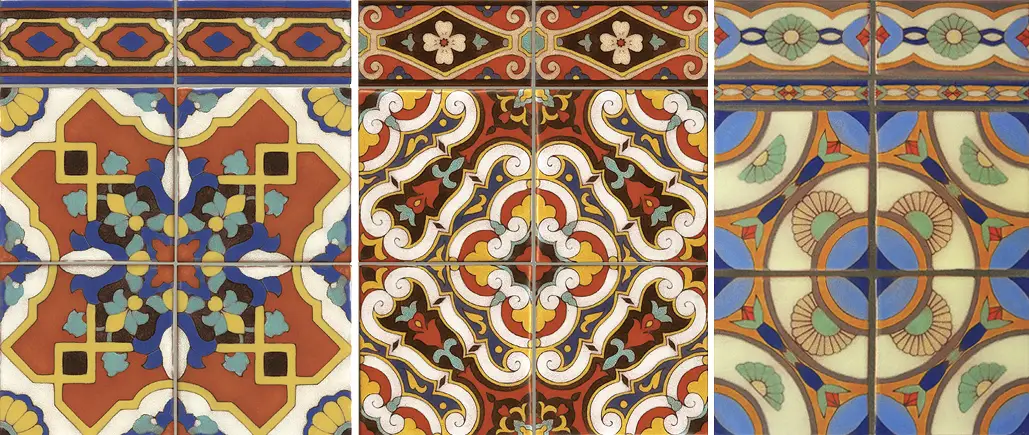
Native Tile specializes in handmade decorative ceramic tile inspired by California tilework from 1900 to 1940, with an emphasis on Arts & Crafts and Spanish-Mediterranean architectural styles. For historic Los Angeles homes, that makes the tile especially useful in sensitive restorations, period-inspired renovations and new spaces that need to feel architecturally grounded. The result is decorative tile that supports the home’s story rather than overwhelming it.
A key technique in this colorful style is cuerda seca, or “dry line.” It uses a wax or oil line between glaze colors to prevent them from mixing. In practice, a pattern is stamped or screened onto the tile with the resist lines. Then, different glaze colors are carefully added to each section before firing. This process creates a slightly raised, dark outline that clearly separates colors such as turquoise, gold, rust and green. The patterns look almost like stained-glass made of ceramic.
Malibu, Catalina and cuerda seca style tiles became key features of Spanish Colonial Revival homes, especially in Los Angeles and along the coast. Colorful stair risers, porch landings and courtyard fountains add movement and brightness to stucco walls and red-tile roofs.
NONATO CERAMICS
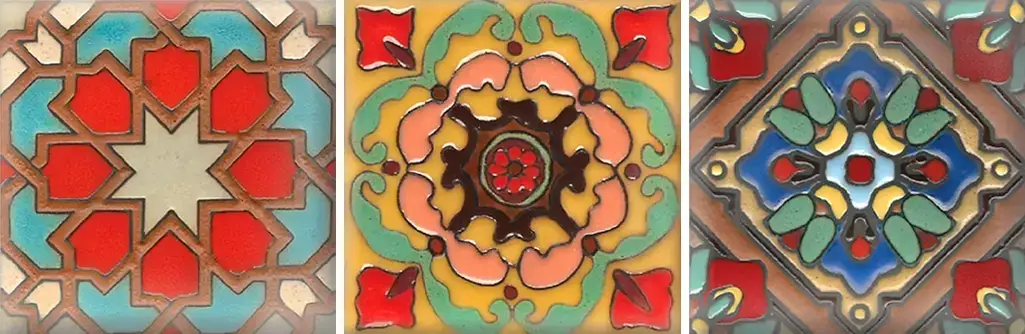
Nonato Ceramics carries forward the tradition of hand-painted tile in Los Angeles, creating work that feels deeply connected to the city’s historic tile language. For homeowners restoring or reimagining a Spanish Revival, Mediterranean, or Craftsman home, artisan-made tile offers a way to honor the past without making the space feel frozen in time. Used with intention, these tiles bring craftsmanship, color and a sense of local heritage into a modern living space.
CLASSIC CALIFORNIA TILE TODAY
Historic tile in California never had just one style. It ranged from rustic, earth-toned Arts & Crafts designs to the bold colors of Spanish Revival. Arts & Crafts tile focuses on handmade relief, nature-inspired imagery and soft, satin, or matte glazes that evoke bark, stone, ivy and leaves. Spanish and Moorish-influenced designs use symmetry, repeating patterns and bold colors. They often include cuerda seca, liner tiles and decorative inserts as accents on plain stucco or terra-cotta.
In historic California homes, these styles often mix. For example, a Craftsman bungalow might feature Batchelder-style fireplace tile and a colorful Spanish accent on an outdoor fountain or entry stair. Owners who care about preservation often seek tiles that match the original proportions, variations, and slight imperfections, rather than tiles that appear too perfect. This helps new work blend in with the old.
CHOOSING TILE FOR HISTORIC LOS ANGELES HOMES
When choosing tile for a historic California home, consider both the dwelling’s architectural style and the original materials used. For Craftsman, Prairie, or early bungalow homes, Batchelder-style Arts & Crafts tile with low-relief carvings and muted glazes from studios such as Pasadena Craftsman Tile feels authentic and fits the style well. For Spanish Colonial Revival, Mission Revival, or Mediterranean homes, Malibu- and Catalina-inspired cuerda seca styles from Native Tile or Nonato Ceramics can revive the lively colors and patterns of the 1920s and 1930s.
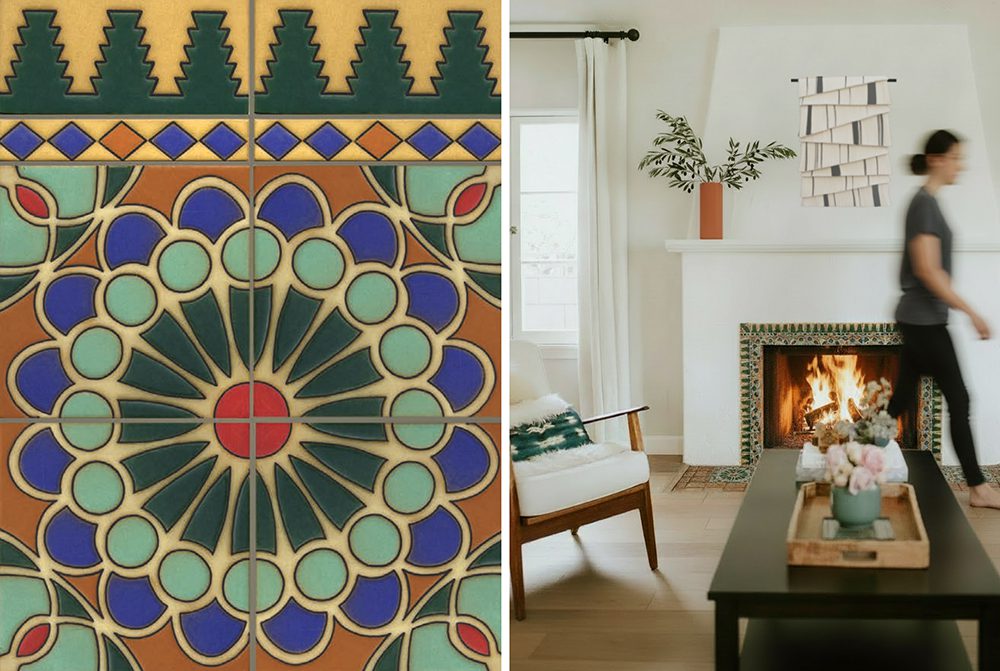
This incredible combination of Malibu-style tile from artisan manufacturer Native Tile celebrates everything to love about classic California tile. This combination consists of Three Ziggurats-trim, Little Diamonds-trim and a four- piece Ferris Wheel Medallion. Whether installed as a focal feature around a fireplace or used to clad an entire bathroom, this stunning tile will be the star of your home. Looking to add some bohemian vibe to your fireplace? The artistic work from Mexico-based Caralarga makes the perfect statement. The wall-hanging tapestry shown here is Mondrian.
KEEPING IT REAL: AUTHENTIC UPGRADES IN TODAY'S HOME
Upgrading a historic Los Angeles home with classic or reproduction tile is a way to care for its history. Thoughtful tile updates help a bungalow or Spanish Revival house feel fresh while keeping its original character. Homeowners join a long line of caretakers who respect the work of the original builders and artisans, even as they add modern touches.
A Batchelder-inspired fireplace surround can replace a plain insert, using hand-pressed relief tiles that appear to have always belonged, making the fireplace the center of the room again. Malibu-style cuerda seca tiles on front stairs can turn an ordinary entry into a warm, welcoming facade that fits the time when red clay roofs and white stucco first shaped the neighborhood.
Reproduction tiles from artisan studios like Native Tile, Pasadena Craftsman Tile and Nonato Ceramics let you make modern upgrades with better waterproofing, safer surfaces, and new designs, all while keeping the look of classic California tile and original architecture. These makers use original colors, sizes and textures, so a new kitchen backsplash or bathroom wainscot looks like a natural extension of a story that began decades ago.
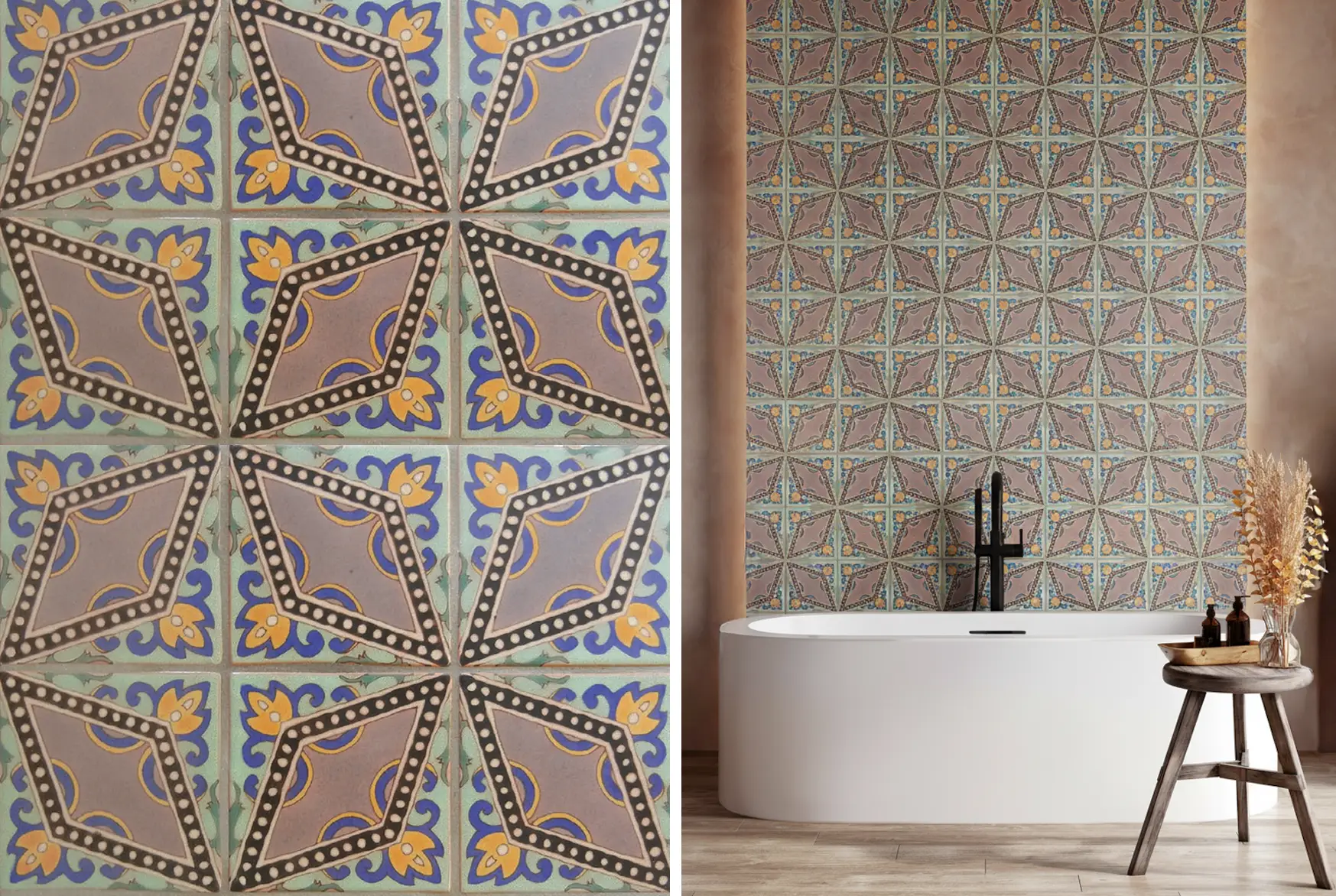
When choosing tile patterns for a historic home, begin with the architecture: a Craftsman bungalow often calls for earthy relief tiles, botanical motifs and quiet geometry, while a Spanish Revival home can carry bolder color, Moorish pattern and decorative borders. Smaller patterns can create intimacy in bathrooms and niches, while larger field tiles and repeating motifs bring rhythm to fireplaces and kitchens. The most successful choices feel collected, intentional and respectful of the home’s original character. Prefer a more modern bathroom in your historic house? Try a focal wall with this showstopping pattern from Native Tile’s Vintage California Series. The bold design bridges the gap between the past and the present.
A CONNECTION TO THE PAST: LIVED IN AUTHENTICITY
True authenticity is not about keeping a home unchanged, but about letting it age gracefully. Ceramic tile is a hands-on way to connect with the past; try running your hand over an Arts & Crafts relief or sitting by a glowing fireplace hearth.
Reproduction tiles do not feel brand new; they are respectful replacements that allow the original work to be repaired or extended without awkward changes. A fixed hearth or a new stair riser can blend in with older parts, creating a cohesive story rather than a mix of different eras. Using these tiles for new benches, breakfast nooks, and built-ins allows the surface to age naturally, as it did in the past, where friends and families gather.
ROOMS THAT TELL A STORY
True authenticity is not about keeping a home unchanged, but about letting it age gracefully. Ceramic tile is a hands-on way to connect with the past; try running your hand over an Arts & Crafts relief or sitting by a glowing fireplace hearth.
Reproduction tiles do not feel brand new, but rather like respectful replacements allowing the original work to be repaired or extended without awkward changes. A fixed hearth or a new stair riser can blend in with older parts, creating a cohesive story rather than a mix of different eras. Using these tiles for new benches, breakfast nooks and built-ins lets the surface age naturally where friends and families gather, as it did in the past.
MODERN MAKERS OF REPRODUCTION TILE
Today, several studios focus on making or reimagining classic California tile. This gives homeowners access to materials that fit historic homes for both restoration and new projects.
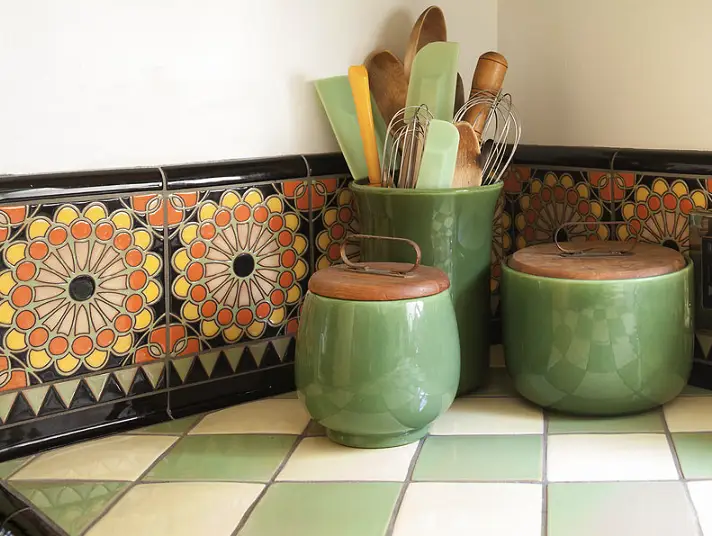
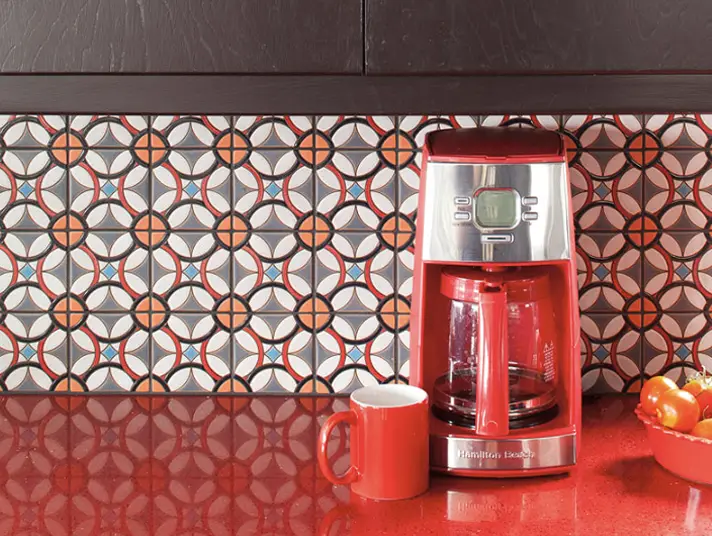
Color is where classic California tile becomes truly expressive. Batchelder-inspired palettes often lean into ochre, olive, umber, soft blue and warm brown, while Malibu and Catalina-style tiles may introduce turquoise, cobalt, yellow, coral and deep green. For a timeless interior, choose colors that echo the home’s woodwork, plaster, wrought iron, terracotta, garden views or natural light so the tile feels woven into the entire design story. Even small details in the kitchen, like a backsplash, create design moments in these historic houses. Award-winning Native Tile & Ceramics are masters of the craft. Visit their inspiring studio. Images: Native Tile & Ceramics by Edmund Barr
NATIVE TILE & CERAMICS
Native Tile & Ceramics is strongly inspired by the Malibu tradition, with collections based on historic Malibu Potteries. Their Malibu Series uses the cuerda seca, or resist-line, technique featuring rich colors and detailed designs that recall Spanish Revival projects from the 1920s and early 1930s.
They offer borders, corners, medallions, and field tiles that work well for stair risers, fountains, pools, and wainscoting in Spanish Colonial Revival homes. The studio’s work helps fill the gap between rare, salvaged historic Malibu tiles and the needs of modern projects that require tiles with consistent size, thickness and availability.
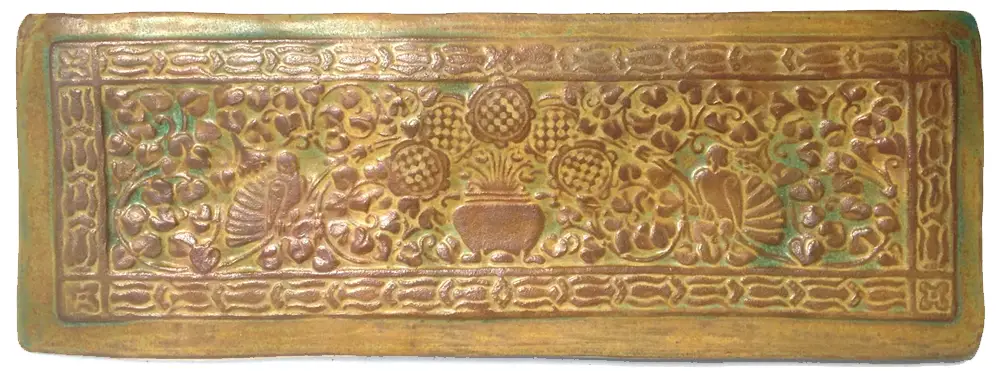
This textural frieze, Garden with Stylized Flowers, is an original Batchelder design licensed and reproduced by the Pasadena Craftsman Tile studio. The perfect addition to any Craftsman home’s fireplace surround. Craftsman homes celebrate natural materials, honest construction and the beauty of the hand-made object. Tile plays an essential role in that story, adding color, texture and artistry to wood-rich interiors, built-ins and gathering spaces. Whether used around a fireplace, along a stair riser or as a subtle kitchen accent, Arts & Crafts tile gives a historic home the layered, collected feeling that makes classic Los Angeles architecture so enduring. Image: Pasadena Craftsman Tile.
PASADENA CRAFTSMAN TILE
Pasadena Craftsman Tile, located in Pasadena, follows the tradition of Ernest Batchelder and the local Arts & Crafts movement. The studio makes custom-carved relief tiles, friezes, fireplaces, walls and fountains, focusing on handcrafting rather than mass production. They apply glazes by hand, so the clay shows through, creating the soft, varied surfaces seen in original Batchelder tiles.
They also produce a line of Batchelder “revival” tiles, slip‑cast from molds taken from original Batchelder relief designs. These revival tiles retain the look and patterns of historic pieces but are fired at higher temperatures to increase durability. This means they can be used on floors, walls and outdoors in places that do not freeze. For owners of historic California Craftsman homes and bungalows, Pasadena Craftsman Tile offers a way to add or recreate Batchelder-style work while maintaining the original tiles’ look.
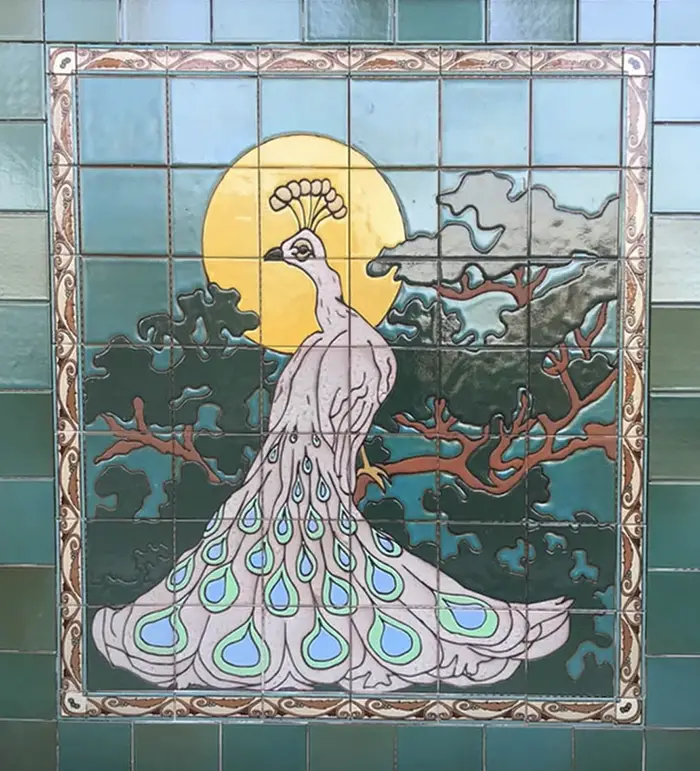
Imagine the possibilities of using this stunning tile mural in your home. The focal point of a courtyard fountain, a backsplash behind a kitchen range, or mounted on the wall over a freestanding bathtub. The craftsmanship in this peacock tile mural by Nonato Ceramics showcases the classic traditional cuerda seca technique. This technique gives classic Spanish-style tile its distinctive richness, with separated fields of glaze that create bold color and dimensional pattern. Often associated with Malibu, Catalina and California revival tile traditions, cuerda seca tile works beautifully where detail can be appreciated up close: bathroom niches, kitchen backsplashes, fireplace surrounds and decorative panels. Its hand-crafted surface gives interiors a depth that feels both historic and modern. Image: Nonato Ceramics.
NONATO CERAMICS
Nonato Ceramics, led by ceramic artist Jose Nonato, is known for making Spanish Colonial Revival-style cuerda seca tiles. His work employs traditional glazing techniques to create vibrant tiles for walls, stairs, and exteriors, reflecting early-twentieth-century Southern California design.
The designs often feature Spanish and Mediterranean influences, with flowing lines and bold outlines that work well in both traditional and modern settings. For homeowners or designers seeking custom, artistic versions of classic cuerda seca, Nonato Ceramics offers options that retain the historic feel while allowing modern creativity. In Spanish Colonial Revival or Mission Revival homes, these tiles can serve as focal points at entries, fountains, or fireplaces and still complement the original architecture.
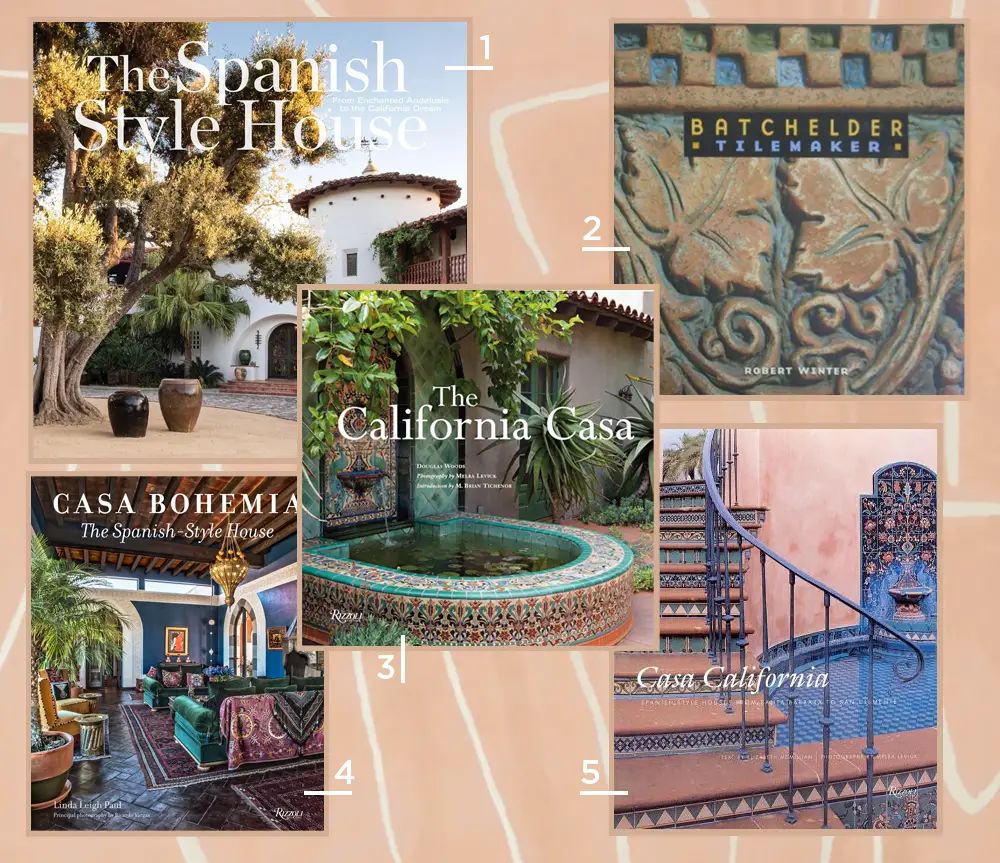
INSPIRATION FOR YOUR CLASSIC CALIFORNIA HOME
1 The Spanish Style House 2 Batchelder Tilemaker 3 The California Casa 4 Casa Bohemia 5 Casa California (out of print)
WHERE TO USE CLASSIC CALIFORNIA TILE: FINDING CONTEXT WITHIN THE HOME
Fireplaces, inglenooks and interior wainscoting are great places for Arts & Crafts relief tiles, which look especially nice up close and in soft, diffused light. Exterior stairs, porches, fountains, and garden walls look great with the high-contrast, weather-resistant glazes of cuerda seca, especially where the sun shines on their deep blues, greens, reds and ambers.
A thoughtful approach combines respect for historic styles with practical needs such as slip resistance, freeze-thaw durability and easy maintenance. For stewards of historic Los Angeles homes, preserving or reintroducing these tiles is central to maintaining authenticity. These resources enable the repair, addition, or updating of tilework in ways that honor the past while still working for daily life.
Remove the tile and much of a home’s architectural vocabulary and therefore its historic value and market distinctiveness disappear. Honor the tile and the house continues to read as a true product of its era and region, reinforcing Los Angeles’ broader legacy of design, craftsmanship and place-specific architectural beauty.
Dreaming of a Spanish Revival or Craftsman home rich with history, arched doorways, hand-set tiles, warm wood details and a story etched into every corner? Whether you’re searching for a lovingly preserved residence or a restoration-ready project waiting to be reimagined, Beyond Shelter Real Estate Group is here to help.With a design-driven approach and a deep appreciation for architectural legacy, we connect discerning buyers with homes of character, craftsmanship, and enduring soul. Contact us to begin a search that goes beyond expectations and leads to a place truly worth calling your own.