Lloyd Wright Architecture: The Visionary Who Shaped Los Angeles
Lloyd Wright – Architect Profile
- Born: March 31, 1890 — Oak Park, Illinois
- Died: May 31, 1978 — Santa Monica, California (age 88)
- Full Name: Frank Lloyd Wright Jr.
- Father: Frank Lloyd Wright (1867–1959), architect
- Son: Eric Lloyd Wright (1929–2023), architect
- Education: University of Wisconsin (agronomy and engineering); Olmsted and Olmsted landscape firm, Boston (1911)
- Style: Organic Architecture, Textile Block Construction, California Modernism, Expressionism
- Known For: Wayfarer’s Chapel (Rancho Palos Verdes, CA); Sowden House (Los Feliz); Hollywood Bowl Band Shells (1927-1928); Institute of Mentalphysics Campus (Joshua Tree, CA); Landscape architecture integrated with building design
- Key Project Locations: Los Feliz – Hollywood Hills – West Hollywood, CA – Rancho Palos Verdes, CA – Glendale, CA – Pasadena, CA – Joshua Tree, CA – Silver Lake – Santa Monica, CA – Los Angeles, CA
- Notable Work: Wayfarer’s Chapel (1951), Sowden House (1926), Samuel-Novarro House (1928), Hollywood Bowl Shells (1926–1928), Institute of Mentalphysics (1946–1957)
- Practice Active: 1916–1978 (independent practice from 1916; primarily Los Angeles)
In This Article
- Who Was Lloyd Wright? Stepping Out of His Father’s Shadow
- The Frank Lloyd Wright Connection: Collaboration and Independence
- Lloyd Wright’s Defining Design Philosophy
- Iconic Lloyd Wright Buildings in Los Angeles
- The Wayfarer’s Chapel: A Masterpiece of Organic Architecture
- Lloyd Wright Homes: Residential Genius in the Hills
- Lloyd Wright’s Landscape Architecture and Garden Legacy
- Buying a Lloyd Wright Home: What You Need to Know
- FAQs About Lloyd Wright Architecture
Who Was Lloyd Wright? Stepping Out of His Father’s Shadow
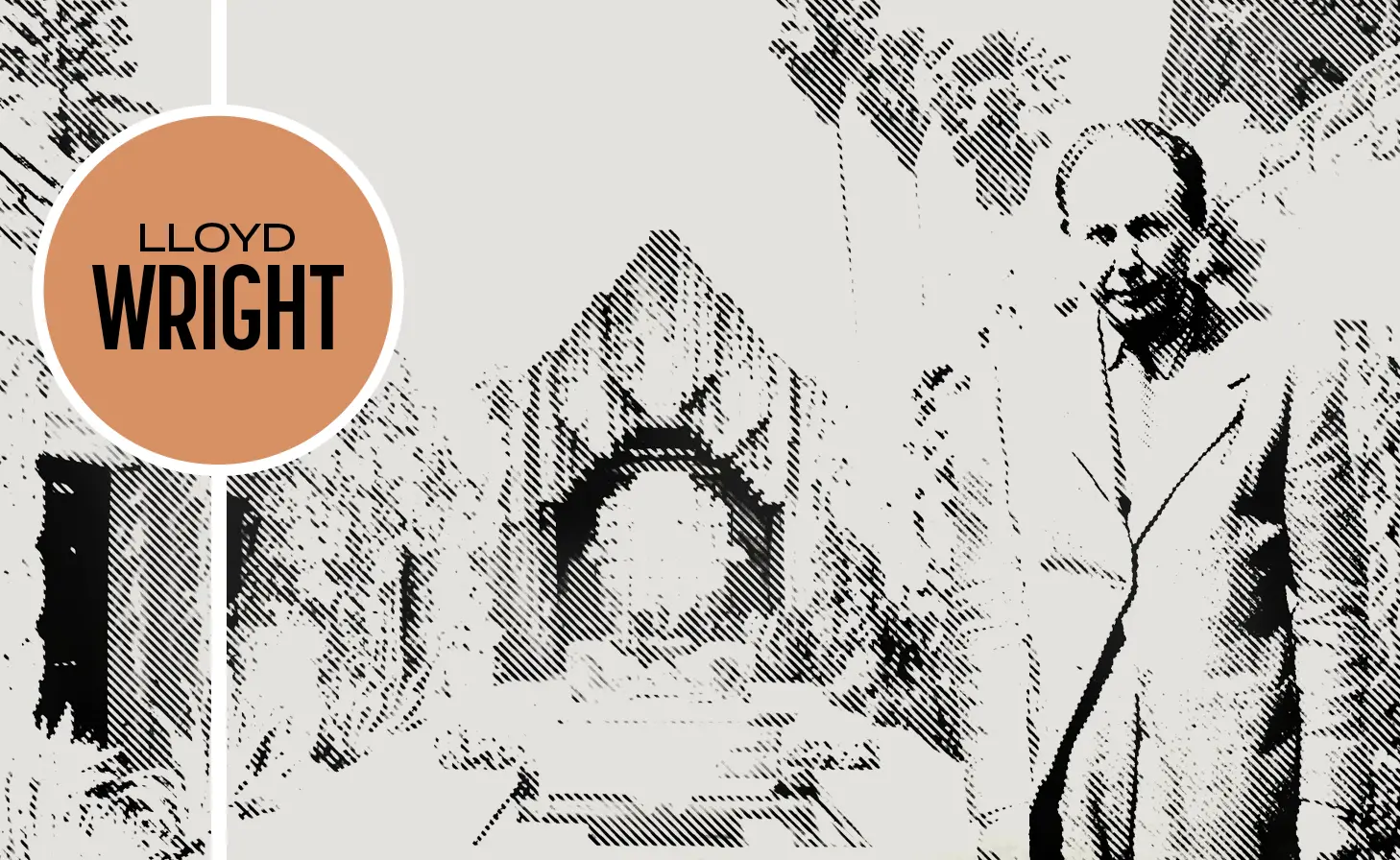
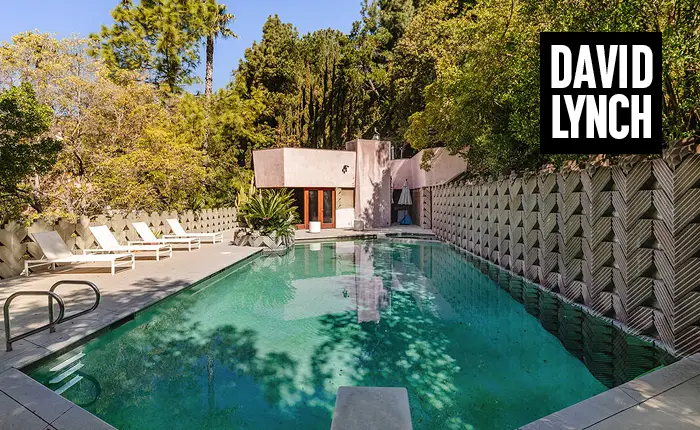
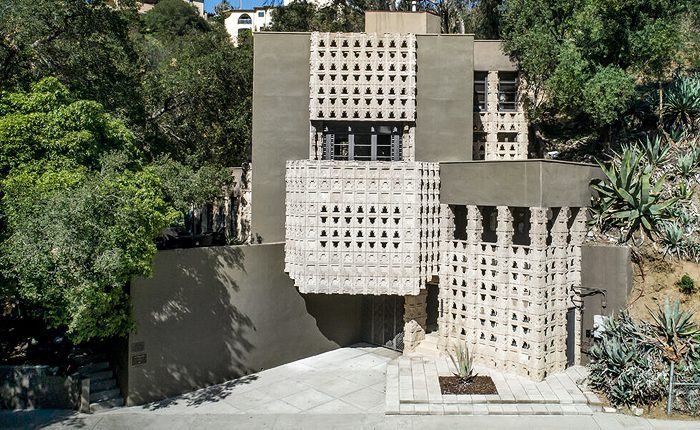
Lloyd Wright (Frank Lloyd Wright Jr.) spent most of his career in Los Angeles, where he developed a deeply personal architectural voice rooted in California’s natural landscape. With the enigmatic Sowden House, Lloyd Wright created one of Hollywood’s most unforgettable architectural statements. Inspired by Mayan temples and the emerging fascination with pre-Columbian motifs, its dramatic concrete-block facade rises like a sculpted monument along Franklin Avenue in Los Feliz. The house remains a bold reminder that Los Angeles modernism often embraced imagination as much as innovation.
The Frank Lloyd Wright Connection: Collaboration and Independence
The relationship between Lloyd Wright and his father, Frank Lloyd Wright, was complex, productive and at times strained. The two collaborated on several significant California projects during the early 1920s, a period when Frank Lloyd Wright was experimenting with his innovative textile block construction system. Lloyd Wright served as the on-site supervisor for several of his father’s commissions in Los Angeles, including the Hollyhock House for Aline Barnsdall, completed in 1921 and the Ennis House, completed in 1924.These early collaborations gave Lloyd Wright hands-on experience with the textile block method, where precast concrete blocks with decorative geometric patterns were interlocked to create walls, ceilings and facades. He absorbed the technique deeply and later applied it in his own work, though always with his own interpretive twist. The collaboration also gave him valuable insight into the kind of bold, site-specific design thinking that would become central to his own practice.After his father returned to Wisconsin and then Arizona, Lloyd Wright remained in Los Angeles and began establishing his independent reputation. He consciously moved away from the Prairie style and toward something more organically Californian. Where his father’s work was often monumental and commanding, Lloyd Wright’s residential work tends to feel more intimate, woven into the landscape rather than placed upon it. The distinction matters: his buildings feel like they belong to Southern California in a way that speaks to decades of careful observation and affection for the region.Architecture historians and enthusiasts interested in tracing this lineage can explore several of Frank Lloyd Wright’s Los Angeles works alongside Lloyd Wright’s own buildings, creating a fascinating architectural dialogue across generations. Browse our home styles guide for context on how these architectural traditions continue to shape the Los Angeles market.Lloyd Wright’s Defining Design Philosophy
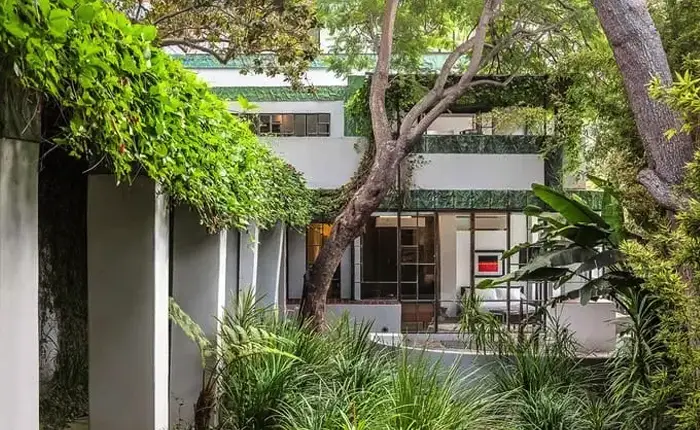
At the striking Samuel Novarro House in Los Feliz, Lloyd Wright pushed his fascination with texture and ancient form even further. The home’s sculptural geometry is wrapped in shimmering copper cladding that catches the California sun and deepens to a rich patina over time. Both dramatic and refined, the residence reveals Wright’s ability to transform modern architecture into something timeless, tactile and quietly cinematic.
Iconic Lloyd Wright Buildings in Los Angeles
Los Angeles contains a remarkable concentration of Lloyd Wright’s work, scattered across the hills, canyons and coastal bluffs of the city and its surroundings. Some of his most notable buildings have achieved landmark status, while others remain in private hands and are known primarily to dedicated architecture enthusiasts and real estate professionals with specialized expertise.The Sowden House, completed in 1926 in Los Feliz, is among his most dramatic and frequently discussed works. Its concrete-block facade features bold, pre-Columbian-influenced geometric patterns and the interior is organized around a central courtyard that floods the home with natural light. The house is a striking example of how Lloyd Wright absorbed his father’s textile block technique and pushed it in a more theatrical, almost mythological direction. The Sowden House has attracted considerable attention over the years for its architectural significance, cinematic appearance, and its complicated history.The Samuel-Novarro House, also known as the Navarro House, built in 1928 in the Hollywood Hills, demonstrates Lloyd Wright’s ability to create intimate luxury. Perched in the hills with commanding views, it uses concrete block construction to create a sense of shelter and enclosure that also opens dramatically to the landscape. The James Daniel Derby House in Glendale, designed in the same era, shows his ability to adapt the textile block approach to a more modest residential scale without sacrificing design quality.Lesser-Known Gems Worth Knowing
Beyond these well-documented works, Lloyd Wright completed dozens of residential commissions throughout Los Angeles that remain less publicly known but no less significant. Many of these homes sit in West Hollywood, Los Feliz and the Hollywood Hills neighborhoods, where his architectural sensibility found a natural home in the hilly terrain. Buyers looking to acquire architecturally significant properties in these neighborhoods benefit greatly from working with real estate specialists who can expertly guide them. Our team at Beyond Shelter brings exactly that depth of knowledge to every search.The Wayfarer’s Chapel: A Masterpiece of Organic Architecture
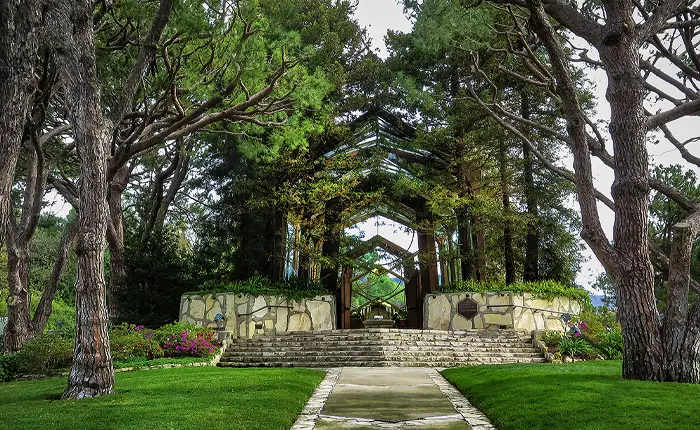
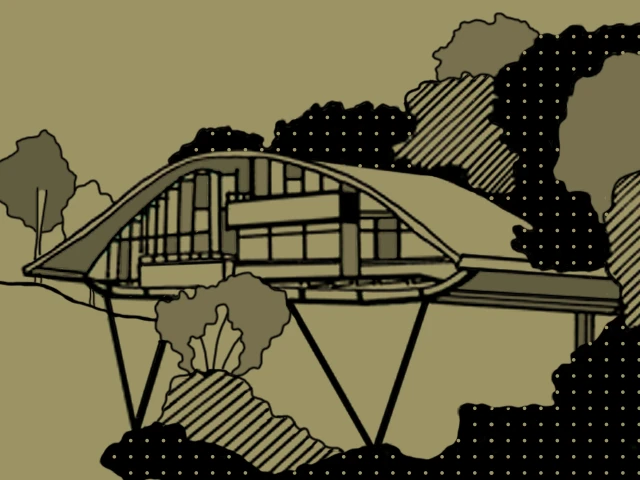
The Wayfarer’s Chapel in Rancho Palos Verdes, completed in 1951, is one of Lloyd Wright’s most celebrated works. Its glass walls, redwood structure and stone elements create a sanctuary that feels fully integrated with the surrounding Pacific bluffs and mature plantings. Lloyd Wright achieved a poetic harmony between architecture and nature here. Slender redwood frames and walls of glass allow the ocean and the surrounding grove of trees to become the chapel’s true ornament. The structure feels less like a building and more like a spiritual clearing shaped by light. Photo: Mark Thornberry
Lloyd Wright Homes: Residential Genius in the Hills
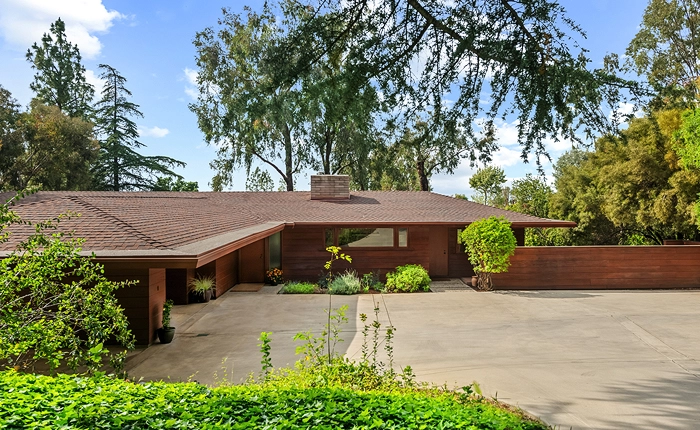
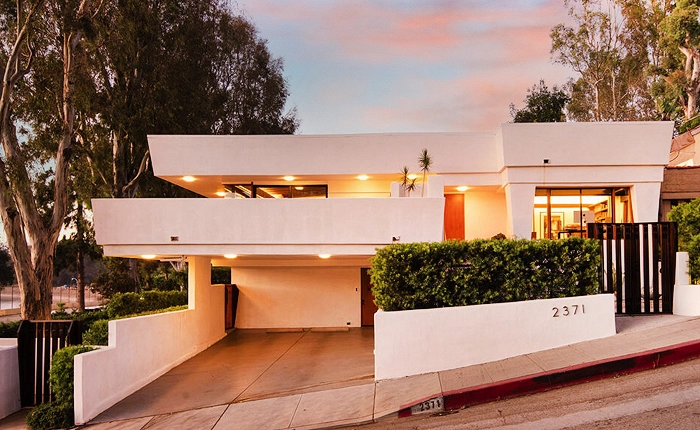
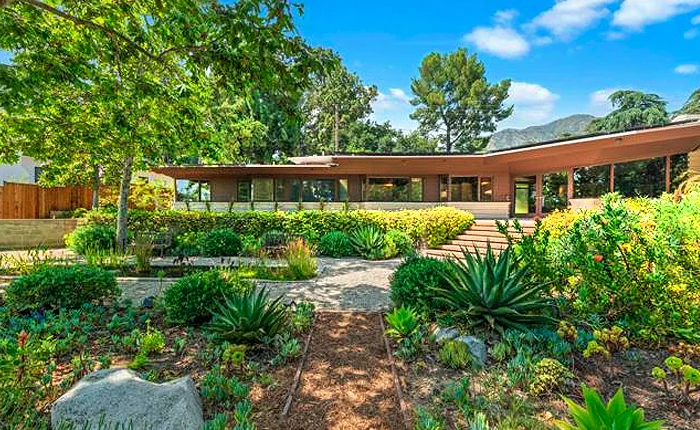
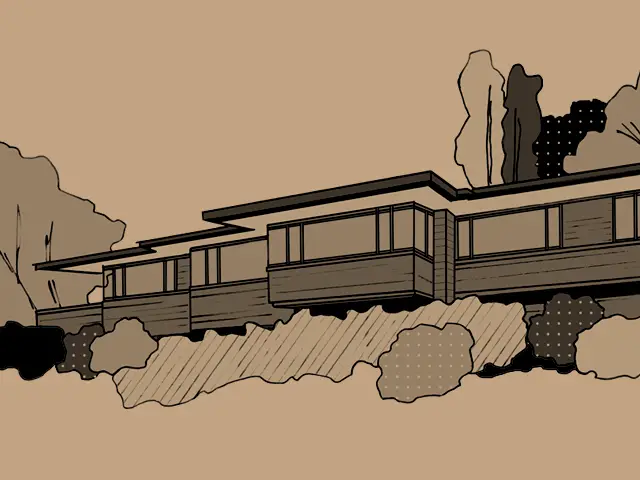
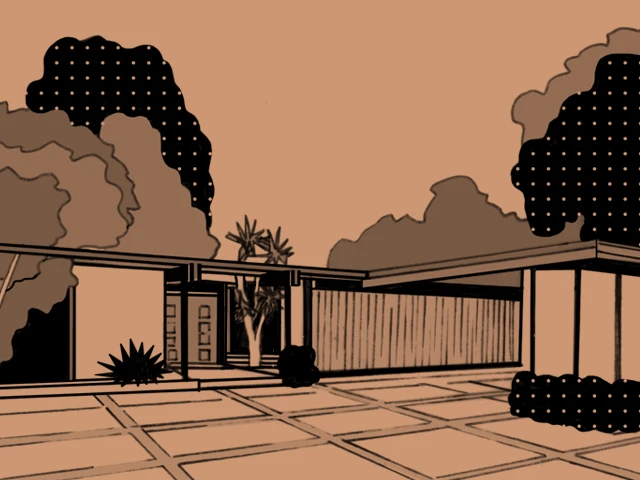
While the Wayfarer’s Chapel is Lloyd Wright’s most public work, his residential portfolio is arguably his most personally expressive. Across more than five decades, he designed homes throughout Los Angeles that demonstrate an extraordinary range of approaches, from modest hillside cottages to sweeping multi-level estates with panoramic views. What unites them is the consistency of his underlying philosophy: every house is designed as a specific response to its specific site.His residential work from the 1920s and 1930s frequently employs the textile block system, creating exterior walls with intricate surface patterns that cast complex shadows throughout the day. Inside, these homes tend to feature open, flowing plans with strong horizontal lines, generous built-in storage and a seamless relationship between interior living spaces and terraces or gardens. The homes are not merely interesting to look at from the street; they are genuinely pleasurable to live in and infrequently come to the real estate market.By the postwar period, Lloyd Wright’s residential work shifted toward lighter, more transparent structures that embraced California’s indoor-outdoor living culture with even greater enthusiasm. Post-and-beam construction, floor-to-ceiling glass and native plant landscapes became more prominent features. These later houses feel entirely at home in contemporary conversations about sustainable and environmentally responsive design, even though they predate those formal frameworks by decades.Buyers considering a Lloyd Wright home should understand that these properties offer something rare in the current market: genuine architectural pedigree combined with the livability of a well-crafted California house. Explore our mid-century modern homes for sale in Los Angeles to see the kinds of architecturally significant properties available in the Los Angeles area.Lloyd Wright’s Landscape Architecture and Garden Legacy
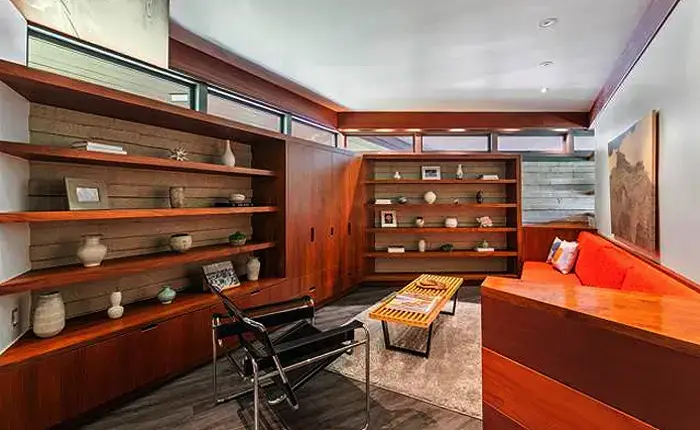
Though shaped by Frank Lloyd Wright’s influence, Lloyd Wright ultimately forged a uniquely Californian modernism. His buildings combine ancient inspiration, experimental materials and a deep sensitivity to landscape. Together they form a legacy of architecture that feels bold, expressive and unmistakably original. Long before establishing his own reputation, Lloyd Wright collaborated with his father on the landscape design of Hollyhock House at Barnsdall Art Park. Terraced gardens, pathways and plantings helped frame the iconic structure within its dramatic hilltop setting. The project offered an early glimpse of Wright’s ability to choreograph architecture, garden design and landscape together.
Buying a Lloyd Wright Home: What You Need to Know
Acquiring a home designed by Lloyd Wright can be incredibly rewarding for someone who appreciates architecture and design, but it helps to go in with a bit of preparation and perspective. These homes sit at a unique intersection of architecture, history and real estate, and understanding that context makes the process smoother.
One of the first things to look at is whether the property has any preservation status. Some Lloyd Wright buildings are recognized as local, state, or national landmarks. That can come with certain limitations on renovations or changes, but it can also provide benefits such as preservation tax incentives and protections that help preserve the home’s historic character. Knowing what applies to a particular property in advance can avoid surprises later.
The condition of the original materials is also an important part of the conversation. Lloyd Wright often used distinctive construction techniques, especially his well-known textile-block designs, which require thoughtful maintenance. Over time, blocks can become susceptible to moisture if mortar joints aren’t maintained and repairing them properly usually requires craftspeople who understand historic construction. The same goes for original woodwork, tile and custom hardware. These homes tend to reward careful stewardship rather than quick updates.
It can also be helpful to work with someone who understands the architectural side of these properties. An experienced real estate professional can often provide context on a home’s design history, connect buyers with preservation specialists or contractors familiar with historic materials and guide the process so that expectations align with the realities of owning an architectural property.
At Beyond Shelter, we specialize in exactly this kind of work. Visit our architectural homes for sale listings to see homes currently on the market and reach out to discuss how we can support you in your search. You can also browse Dezeen for current coverage of how Lloyd Wright’s legacy is being discussed in the wider architectural community.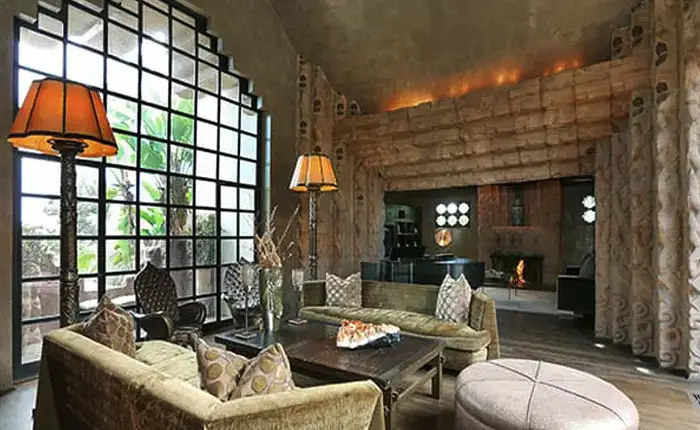
At the Sowden House, Lloyd Wright transformed a Hollywood residence into something resembling a ceremonial temple. The towering entry and rhythmic block patterns draw visitors inward toward a secluded courtyard oasis. It is architecture that feels both mysterious and cinematic, perfectly suited to the mythology of Los Angeles. As the son of Frank Lloyd Wright, Lloyd Wright inherited a powerful architectural legacy, yet quickly developed a voice entirely his own. While his father championed prairie horizontality and organic planning, Lloyd Wright explored textured concrete blocks, theatrical courtyards and richly patterned ornament. His work reveals a designer eager to reinterpret modernism through a distinctly Californian lens.