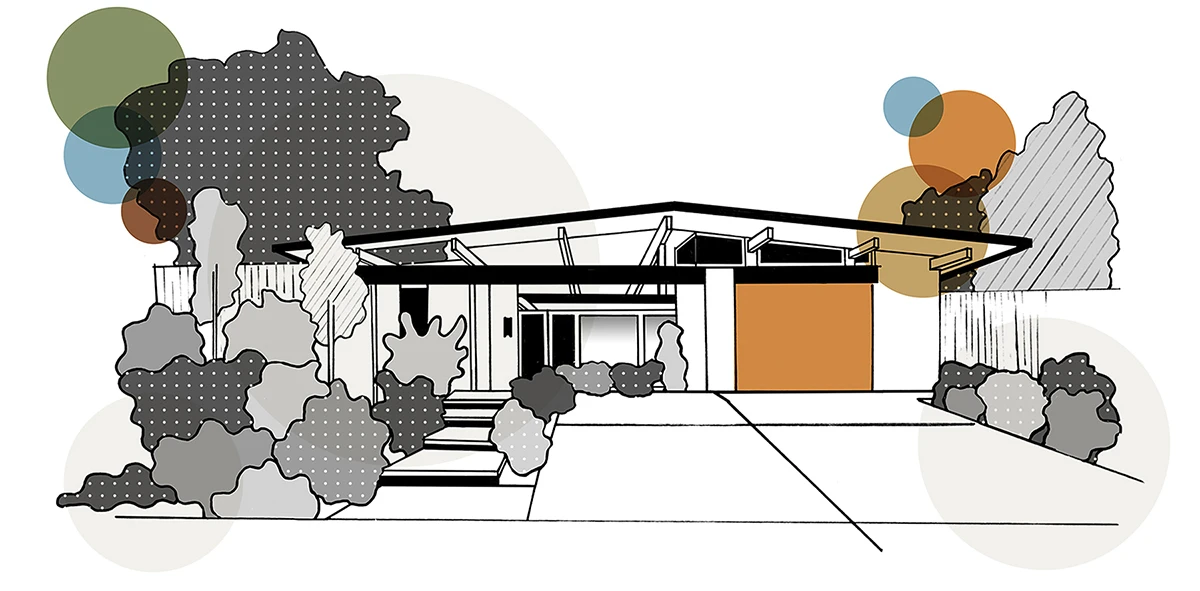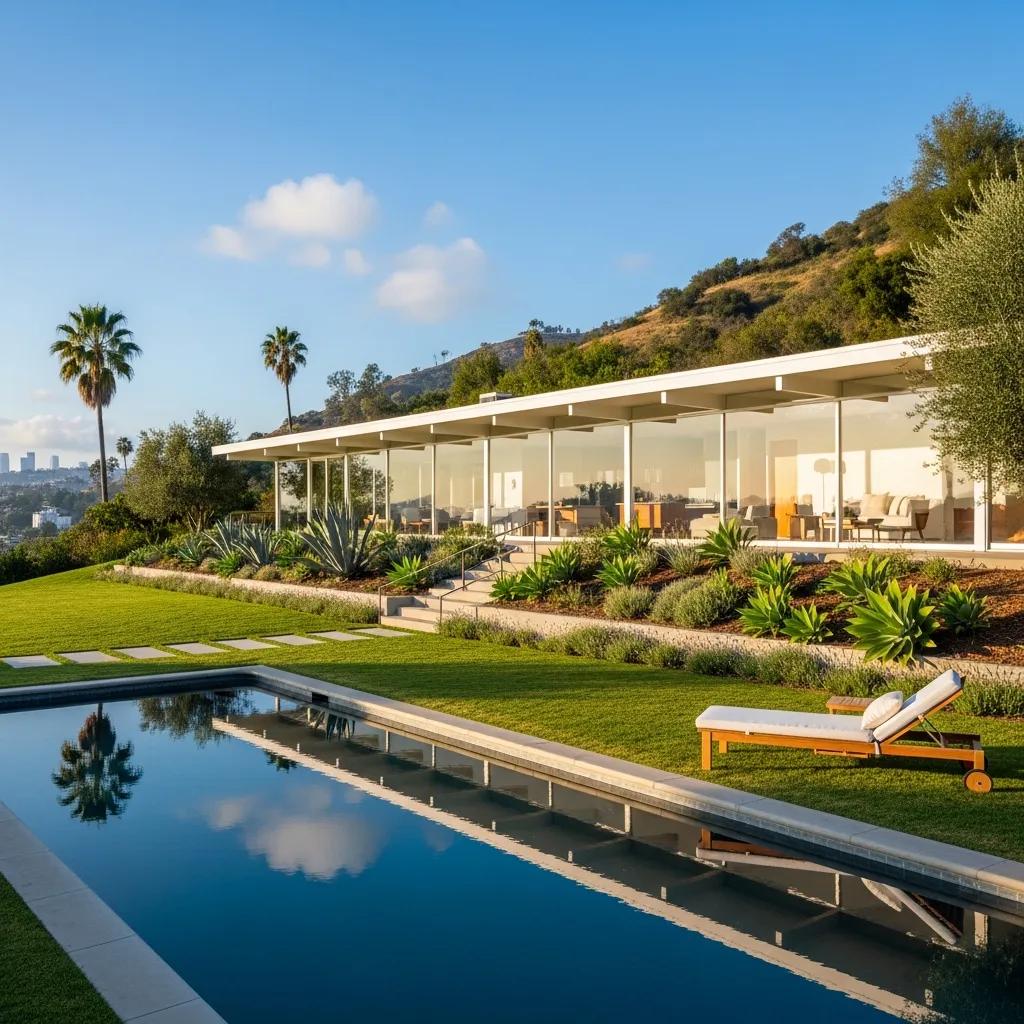
Mid‑Century Modern marked a turning point in Los Angeles design. Emerging after World War II, the style favors clean geometry, organic forms and a clear dialogue with the outdoors. Here we trace the style’s defining features, the architects who championed it and the landmark homes that turned Southern California into a global reference for modern living. Along the way you’ll see how Mid‑Century principles reshaped neighborhoods and continue to inform contemporary architecture.
What makes Mid‑Century Modern architecture in Los Angeles distinctive?
In Los Angeles, Mid‑Century Modern grew from a mix of innovation and climate. Architects pushed for simplicity and practical beauty—plans that feel open, materials that read honest, and large openings that invite the landscape inside. New building methods and materials let designers open up interiors and blur the line between inside and out, creating the relaxed, light‑filled homes associated with the era.
Signature features of LA’s Mid‑Century Modern homes
Look for these recurring design choices:
- Open floor plans: Rooms flow into one another to maximize space and create flexible living areas.
- Integration with nature: Generous glass walls and sliding doors frame gardens and views, bringing daylight and landscape into daily life.
- New materials and structure: Plywood, steel and exposed concrete enabled longer spans, thin profiles and inventive forms.
Together these elements produce homes that feel effortless, oriented to the California climate and tuned to casual indoor‑outdoor living.
How did culture and climate shape the movement?
Post‑war demand for housing, paired with Southern California’s mild weather and outdoor culture, created fertile ground for Mid‑Century ideas. Architects answered calls for affordable, modern homes by simplifying plans, experimenting with off‑the‑shelf materials and prioritizing light, air and connection to the landscape. The result was a regional expression of modernism that felt both practical and aspirational.
With those hallmarks in mind, it helps to meet the designers who brought them to life.
Who were LA’s leading Mid‑Century Modern architects?
Los Angeles incubated a number of architects whose work defined the era. They combined modernist principles with a sensitivity to site and lifestyle, producing houses and buildings that still read as fresh today.
Profiles of prominent LA Mid‑Century Modern architects and what they contributed
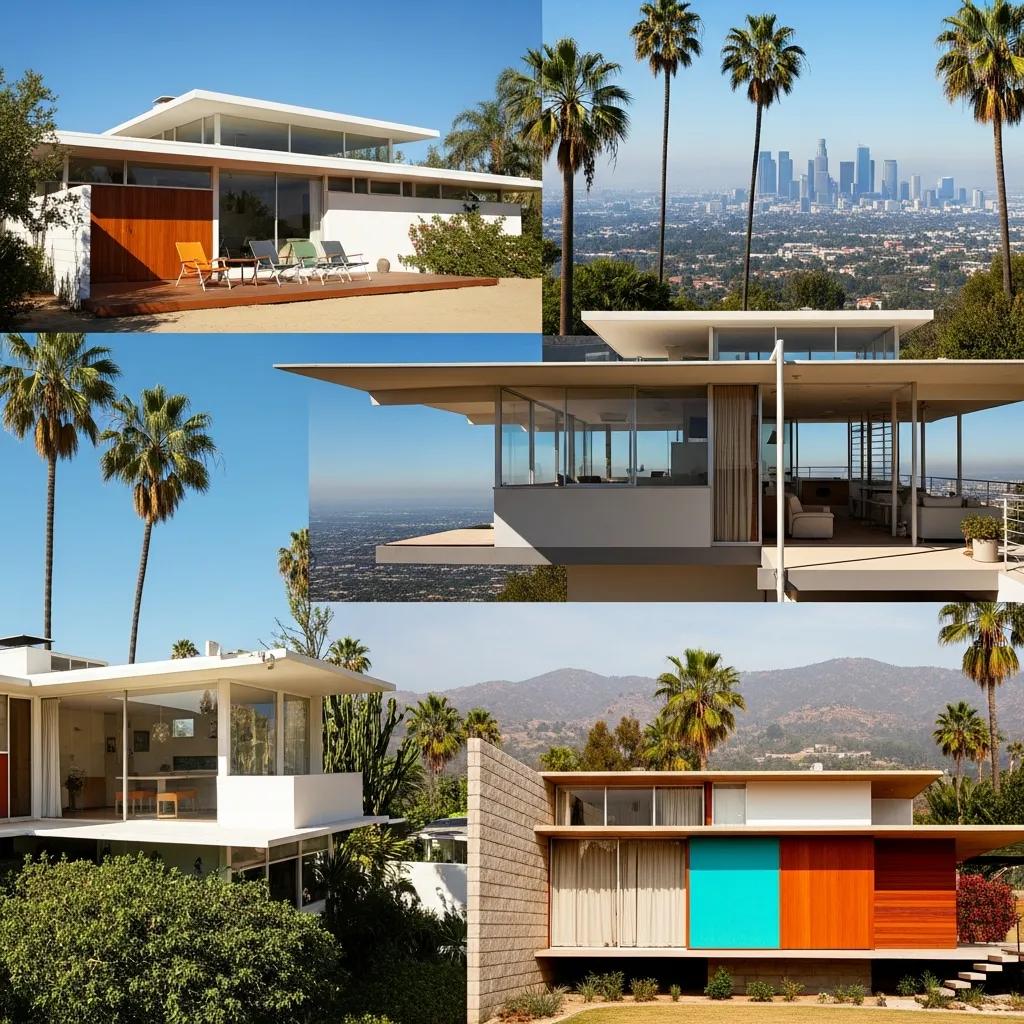
Notable figures include:
- Richard Neutra: A master of indoor‑outdoor relationships, Neutra used glass and slender framing to dissolve borders between house and landscape.
- Pierre Koenig: Best known for his Case Study Houses, Koenig pushed steel and glass construction to create deceptively light, structural homes.
- Rudolph Schindler: An early experimenter with open plans, Schindler emphasized practical layouts, natural light and material honesty.
Their work transformed residential design in Los Angeles and set a template that architects nationwide picked up.
How did these architects change residential and commercial design?
Beyond individual projects, these designers introduced durable ideas—open plans, transparency, and an emphasis on site—that spread through housing, offices and civic buildings. Those ideas reshaped how people used space and helped shape Los Angeles’s sprawling, modern identity.
What is the history and significance of the Case Study Houses in Los Angeles?
The Case Study House program, launched by Arts & Architecture magazine in the mid‑1940s, set out to design affordable, modern homes for a rapidly changing post‑war America. It became a central laboratory for Mid‑Century thinking.
The program was a direct response to post‑war housing needs, driven by visionaries like John Entenza who commissioned prototype homes from leading architects.
The Case Study House program — a brief legacy The Case Study House program began in 1945, led by John Entenza of Arts & Architecture. Entenza invited prominent architects to design prototype homes that explored modern living—affordable, efficient and visually forward‑looking. Case study houses, 2009
Origins and goals of the Case Study House program
Conceived as a practical answer to a housing shortage, the program tested building systems, layouts and materials that could be replicated at scale. The aim was straightforward: design homes that were economical, functional and of their moment—houses that married good design to everyday life.
Notable Case Study Houses and their influence
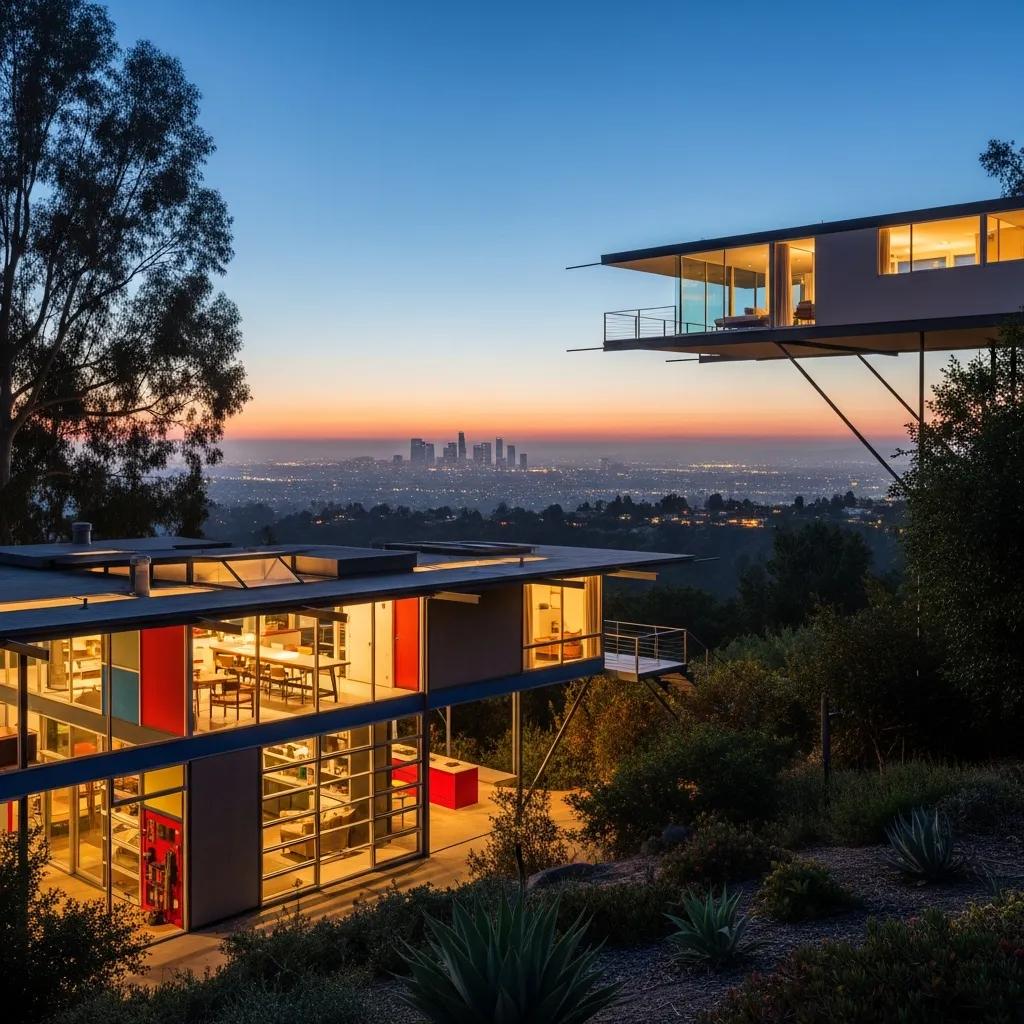
Standouts include:
- Case Study House No. 22 by Pierre Koenig: Celebrated for its elegant steel frame and glass planes, it shows how structure can read light and openness.
- Case Study House No. 8 by Charles and Ray Eames: A pioneering mix of industrial materials and lived‑in warmth, now an icon of modern domestic design.
Careful documentation—especially the photography around Case Study House 22—helped burn these homes into the public imagination.
Koenig, documentation and the power of photography Koenig knew the impact of strong imagery: Julius Shulman’s photographs of Case Study House 22 amplified the house’s reach. That attention pushed architects and photographers to document modern homes thoughtfully. Case Study House 21: The (Re) making of a Collector’s Item, 2015
These projects demonstrated how modern principles could be applied to everyday living, and they influenced builders, buyers and designers for decades.
Which Los Angeles neighborhoods showcase Mid‑Century Modern architecture?
Greater Los Angeles and nearby communities contain dense collections of Mid‑Century work—each area with its own character and concentration of notable homes.
Overview of well‑known Mid‑Century Modern neighborhoods in and around LA
Places to explore include:
- Palm Springs: Though outside the city, Palm Springs is synonymous with Mid‑Century Modern—an essential field site for desert houses by Neutra, Koenig and others.
- Silver Lake: Hillside lots and eclectic streets host many Mid‑Century gems tucked into a lively neighborhood fabric.
- Beverly Hills: The area contains several high‑profile Mid‑Century residences that blend luxury with modernist principles.
Together these neighborhoods show the style’s range—from modest prototypes to high‑end statements.
How have communities preserved and celebrated this heritage?
Local preservation groups, homeowners and cultural organizations work to protect these properties from demolition and insensitive alteration. Tours, festivals and advocacy campaigns raise awareness while local policy tools offer protections and incentives to keep these designs intact.
Community engagement and thoughtful stewardship help ensure these homes remain part of the city’s architectural story.
What are some famous Mid‑Century Modern homes in Los Angeles?
Several landmark houses in the region have become shorthand for Mid‑Century Modern design and continue to influence architects and buyers alike.
Iconic Mid‑Century Modern residences and what makes them notable
Examples include:
- The Stahl House (Case Study House No. 22): Pierre Koenig’s cantilevered plan offers expansive views and a striking structural clarity.
- The Eames House (Case Study House No. 8): Charles and Ray Eames combined industrial components with a human scale to create a warm, inventive home.
- The Kaufmann House: Richard Neutra’s Kaufmann House pairs glass and steel to emphasize transparency and landscape connection.
These homes are celebrated for their craftsmanship, site response and lasting design logic.
How have these houses shaped contemporary design trends?
Mid‑Century homes popularized ideas—open plans, generous glazing and natural materials—that persist in contemporary architecture. Designers often borrow these principles, updating them with sustainable materials and modern systems while keeping the original emphasis on proportion, light and site.
This continuity explains why Mid‑Century aesthetics remain popular with homeowners and architects alike.
How has Mid‑Century Modern architecture in Los Angeles evolved over time?
The movement has adapted as technology and tastes changed, but its core values—clarity of form, honest materials and a connection to place—remain influential.
From original experiments to contemporary reinterpretations
Contemporary architects translate Mid‑Century principles into new work that responds to climate, sustainability and modern living. You’ll see the same spatial logic but with up‑to‑date systems: better insulation, greener materials and efficient mechanicals that weren’t available in the original projects.
Preservation today and what’s next for Mid‑Century Modern in LA
Preservation is central to the story. Conserving Mid‑Century homes often requires specialized strategies because some original materials age poorly. Architects, conservators and preservation advocates collaborate to keep these houses authentic while upgrading them for contemporary use. Interest in restoration and careful adaptation suggests the style will remain a living, evolving part of LA’s built environment.
Sustained preservation is especially important because many Mid‑Century buildings used experimental materials that demand targeted conservation approaches.
Preserving Mid‑Century Modern architecture in Los Angeles This overview outlines preservation tools and incentives used to conserve Mid‑Century Modern buildings. Because many original materials were experimental, conservation requires strategic, sustainable approaches to slow deterioration and retain character. Preservation Planning and Mid‑Century Modern Materials: Tools to Promote Strategic and Sustainable Building Conservation, 2014
| Home | Architect | Year Built |
|---|---|---|
| Stahl House | Pierre Koenig | 1960 |
| Eames House | Charles and Ray Eames | 1949 |
| Kaufmann House | Richard Neutra | 1947 |
This selection highlights a few of the most influential Mid‑Century Modern houses in the region—their architects and the years they were completed. Each entry represents a different way the era tackled site, structure and daily life.
Ultimately, Mid‑Century Modern in Los Angeles stands as a testament to inventive design and a lifestyle built around light, views and ease of living. Protecting these houses keeps that legacy visible and relevant.
Frequently Asked Questions
What environmental advantages does Mid‑Century Modern architecture offer?
Mid‑Century Modern designs often prioritize daylight, cross‑ventilation and indoor‑outdoor living—features that reduce reliance on artificial light and heavy mechanical cooling. Today’s restorations frequently pair those passive advantages with energy‑efficient upgrades, like better glazing and insulation, to improve performance without losing the original character.
How can I spot an authentic Mid‑Century Modern home?
Look for clean horizontal lines, open plans, large glass walls or clerestory windows, and a restrained material palette—wood, stone, steel and concrete. Authentic examples often emphasize function, site orientation and simple detailing. Researching the architect or checking period photos can confirm authenticity.
Are there contemporary versions of Mid‑Century Modern homes?
Yes. Contemporary interpretations keep the core principles—clarity, connection to site and honest materials—while integrating modern systems, sustainable materials and current lifestyle needs. These reinterpretations maintain the visual spirit of Mid‑Century design with better environmental performance.
What do preservation organizations do for Mid‑Century Modern architecture?
Preservation groups advocate for protections, document important buildings, run educational programs and sometimes help secure funding or legal tools to safeguard significant properties. They also organize tours and events that build public appreciation and support for conservation efforts.
How has public perception of Mid‑Century Modern architecture changed?
After early enthusiasm, the style briefly fell out of favor as tastes shifted. In recent decades it has experienced a revival—driven by renewed interest in its minimal lines, craftsmanship and indoor‑outdoor living. That resurgence shows up in restorations, renewed market demand and contemporary projects that borrow Mid‑Century ideas.
What are common myths about Mid‑Century Modern homes?
People sometimes assume Mid‑Century homes are cold or purely aesthetic. In truth, the best examples balance form and function, producing warm, livable spaces. Another myth is that all Mid‑Century homes look the same—there’s actually a wide variety shaped by different architects, sites and regional details.
Conclusion
Mid‑Century Modern architecture in Los Angeles remains influential because it married practical solutions with clear, enduring design. By learning its hallmarks and supporting preservation, we keep these houses—and the ideas they represent—alive for future generations. Explore further to see how the legacy continues to shape modern homes and neighborhoods today.