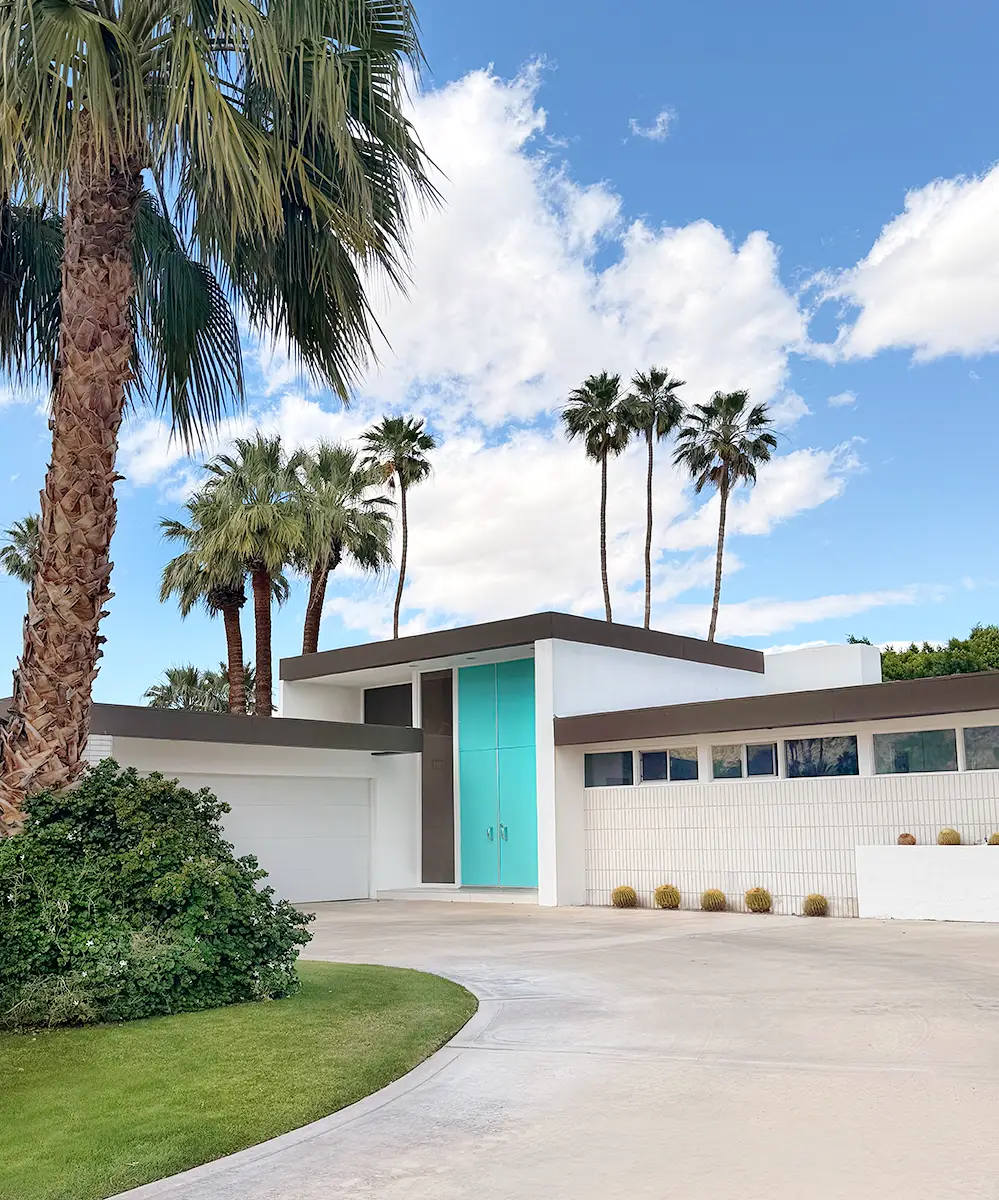
Gregory Ain Architecture: The Visionary Who Built Social Idealism Into Los Angeles Homes
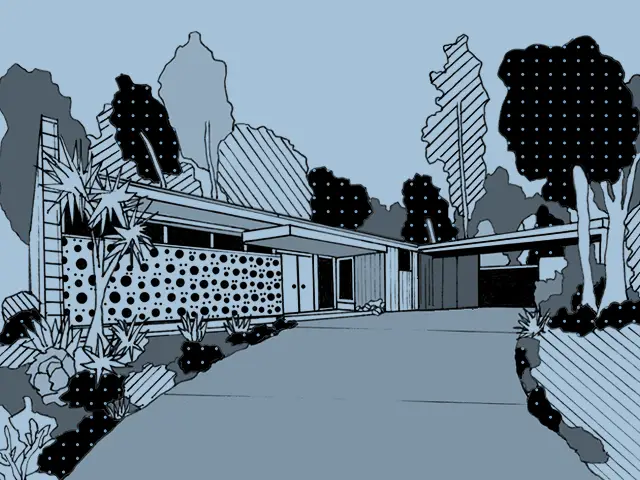
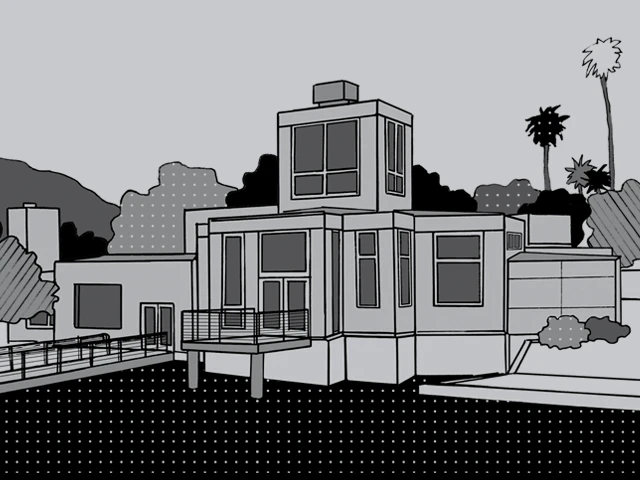
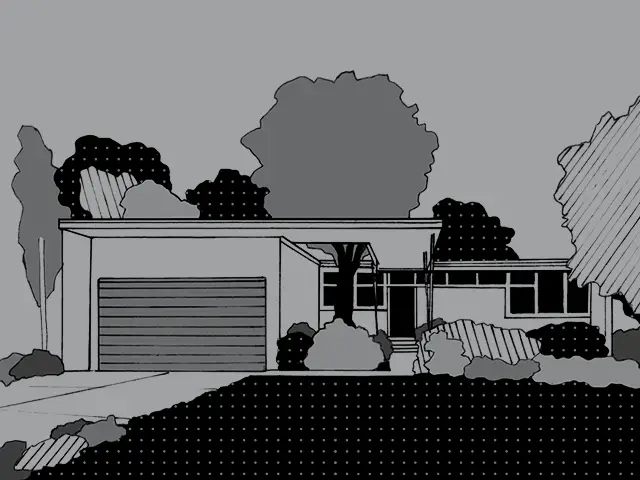
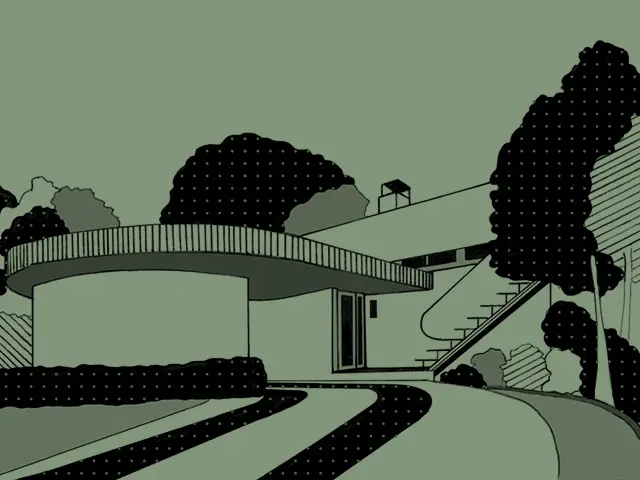
Gregory Ain (1908–1988) was a Los Angeles mid-century modern architect best known for bringing International Style modernism to working-and middle-class housing. Born in Pittsburgh and raised in Los Angeles, Ain trained under Richard Neutra from 1930 to 1935 before establishing his own practice in 1935. He addressed, in his own words, “the common architectural problems of common people,” designing compact, light-filled homes with open plans, indoor-outdoor flow and passive ventilation. His most significant works include the Dunsmuir Flats (1937), the Avenel Cooperative Homes in Silver Lake (1947) and the Mar Vista Housing Tract (1948), which became Los Angeles’s first Modern historic district in 2003. In 1950, Philip Johnson commissioned Ain to build an exhibition house in the garden of the Museum of Modern Art. During the McCarthy era, Ain was investigated by HUAC, limiting the scale of his career. He later taught at USC and served as Dean of Architecture at Pennsylvania State University from 1963 to 1967. His surviving homes are concentrated in Silver Lake, Los Feliz, Mar Vista and Altadena.
Gregory Ain – Architect Profile
- Born: March 28, 1908 — Pittsburgh, PA
- Died: January 9, 1988 — Los Angeles, California (age 80)
- Education: University of Southern California School of Architecture (1927–28)
- Style: International Style Modernism, Social Modernism, Mid-Century Modern
- Known For: Affordable modernist housing design, democratic approach to mid-century architecture, socially conscious community planning, compact, light-filled residential interiors, the Mar Vista Housing Tract
- Key Project Locations: Mar Vista, Silver Lake, Los Feliz, Altadena, Van Nuys, Los Angeles, California
- Notable Work: Mar Vista Housing Tract (1948), Dunsmuir Flats (1937), Avenel Cooperative Homes (1947), Park Planned Homes, Altadena (1946), MoMA Exhibition House (1950)
- Trained Under: Richard Neutra (1930–1935), Rudolf Schindler
- Wartime Role: Chief Engineer, Evans Products Company Molded Plywood Division; collaborated with Charles and Ray Eames on plywood leg splints and chairs (1944–1945)
- Academic Posts: Visiting Critic, University of Southern California (1949–1963); Dean, School of Architecture, Pennsylvania State University (1963–1967)
- Awards: House Beautiful Award (1937, 1938, 1940); House Beautiful House of the Year, Edwards House (1938); Guggenheim Fellowship for low-cost housing research (1940); Fellow, American Institute of Architects (1940)
- Recognition: Gregory Ain Mar Vista Tract designated Los Angeles’s first Modern historic district, 2003; full Historic Preservation Overlay Zone (HPOZ) designation, 2010
Born in Pittsburgh in 1908 and raised in Los Angeles, Gregory Ain trained under the legendary Richard Neutra before carving his own deeply principled path through architecture. His homes were compact, ingeniously planned and filled with light. They were also affordable by design, a deliberate choice that set Ain apart from nearly every modernist peer of his generation. If you are drawn to homes where intellectual purpose and livable beauty coexist, Ain’s legacy is essential reading. Explore how this tradition of architectural significance shapes Los Angeles real estate today.
In This Article
- Who Was Gregory Ain? A Life in Architecture
- The Influence of Richard Neutra and Schindler
- Ain’s Design Philosophy: Modernism for Everyman
- Iconic Gregory Ain Buildings in Los Angeles
- The Mar Vista Housing Tract: Modernism at Scale
- Ain’s Use of Space, Light, and Materials
- Gregory Ain’s Political Life and Its Impact on His Career
- Gregory Ain Homes Today: Preservation and Value
- FAQs About Gregory Ain Architecture
Who Was Gregory Ain? A Life in Architecture
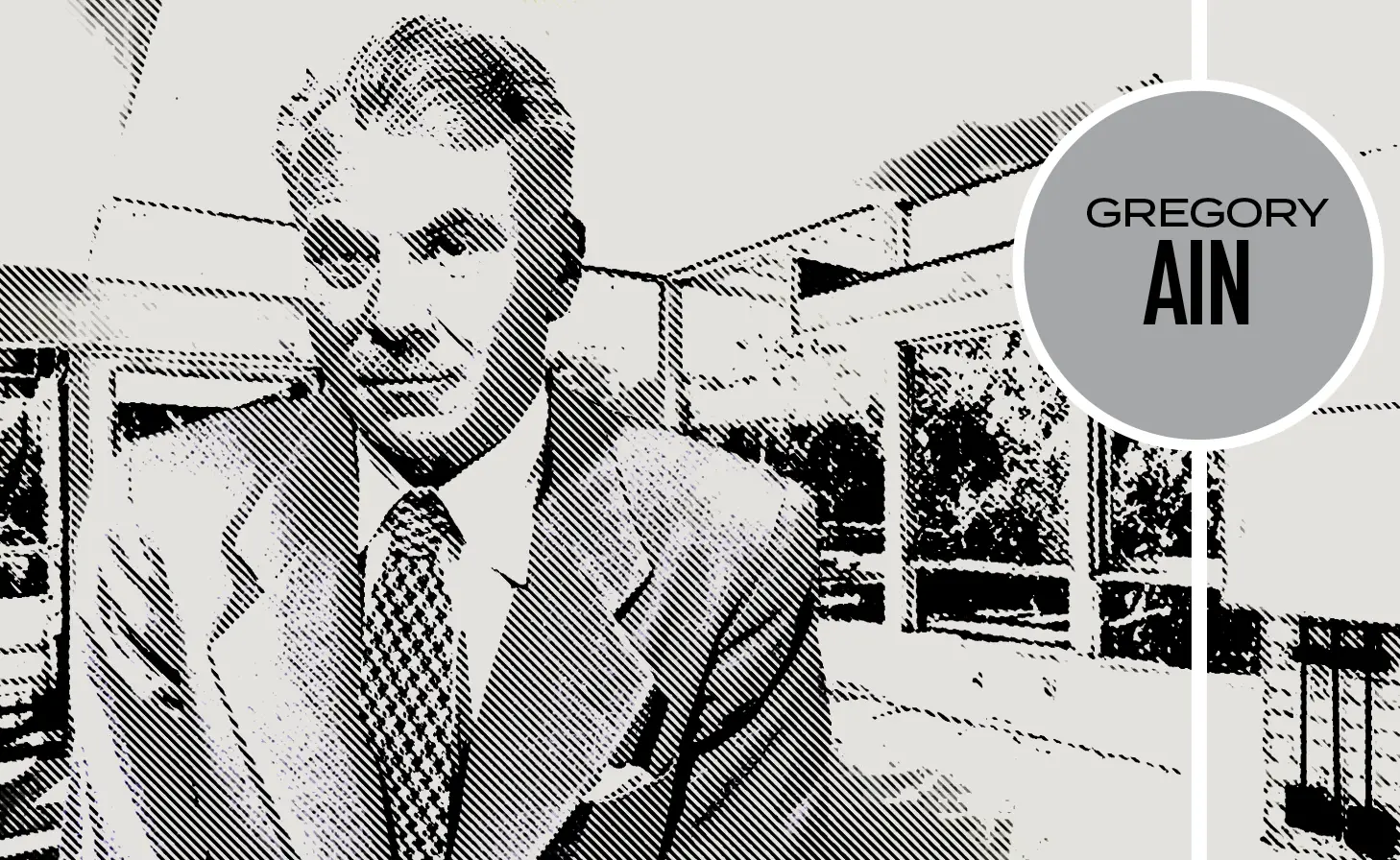
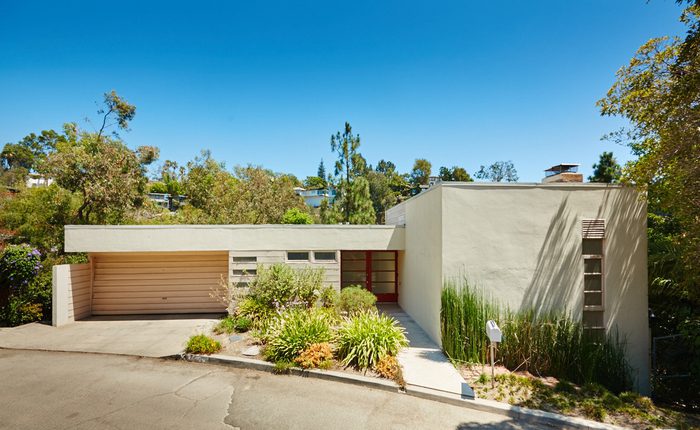
Gregory Ain approached mid-century modernism with a deeply democratic vision. Rather than designing only for the elite, he created thoughtfully planned neighborhoods where architecture fostered social interaction. Ain’s architecture celebrates simplicity and adaptability. Flexible interiors and modest footprints allow his homes to respond gracefully to changing family life. His work proves that thoughtful design can be both beautiful and accessible, as well as a hopeful expression of modernism shaped by human values.
Gregory Ain was born on March 28, 1908, in Pittsburgh, Pennsylvania, and moved with his family to Los Angeles as a young child. The city would become both his canvas and his cause. He studied architecture at the University of Southern California before working in the offices of Richard Neutra and, briefly, Rudolf Schindler, two towering figures of California modernism. That early immersion in rigorous, European-influenced modern design gave Ain a strong foundation, but his own vision would prove distinctly his own.
Unlike many architects of his era who pursued prestigious private commissions for wealthy clients, Ain was drawn from the start to questions of housing affordability, social equity and community planning. He earned his architectural license in 1935 and opened his own practice with a clear sense of mission. For Ain, architecture was inseparable from social responsibility. His homes were meant to prove that beautifully designed spaces did not have to be expensive, and that the working and middle classes deserved the same quality of spatial thinking as an elite patron.
Ain’s career spanned residential design, speculative housing and academic work. He taught at USC, influencing generations of California architects. He died in 1988; however, his buildings, scattered across Los Angeles neighborhoods from Silver Lake to Mar Vista, remain in active use and are increasingly recognized as landmarks of American modernism.
The Influence of Richard Neutra and Schindler
To understand Gregory Ain’s architecture, it’s important to examine the world he entered when he joined Richard Neutra’s office in the early 1930s. Neutra was then at the height of his early fame, a Viennese-trained architect who had transplanted European functionalism onto the sun-baked hillsides and flatlands of Southern California. Working under Neutra gave Ain direct exposure to the principles of the International Style: flat roofs, open floor plans, generous glazing and the integration of indoor and outdoor space. Ain also spent time with Rudolf Schindler, whose approach was more expressive and materially inventive than Neutra’s cooler rationalism. Schindler pushed Ain toward a freer handling of form and a deeper sensitivity to the relationship between architecture and daily lived experience. Where Neutra could be formal and precise almost to the point of severity, Schindler was warmer and more improvisational and Ain absorbed elements from them both. What Ain took from these mentors and made entirely his own was a commitment to economical construction without sacrificing spatial quality. He became exceptionally skilled at making small spaces feel expansive through careful planning, strategic placement of windows and skylights and the use of flexible, multi-purpose rooms. His training under two of the great modernists gave him technical mastery; his own convictions gave him direction. Discover other architectural home styles that define Los Angeles and the lineage that Ain helped build.
Ain’s Design Philosophy: Modernism for Everyman
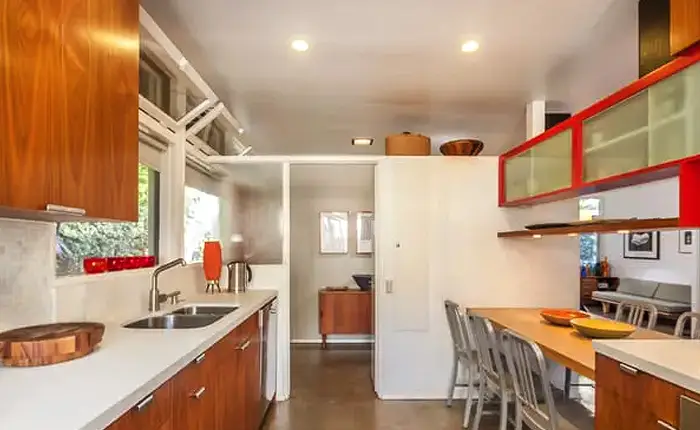
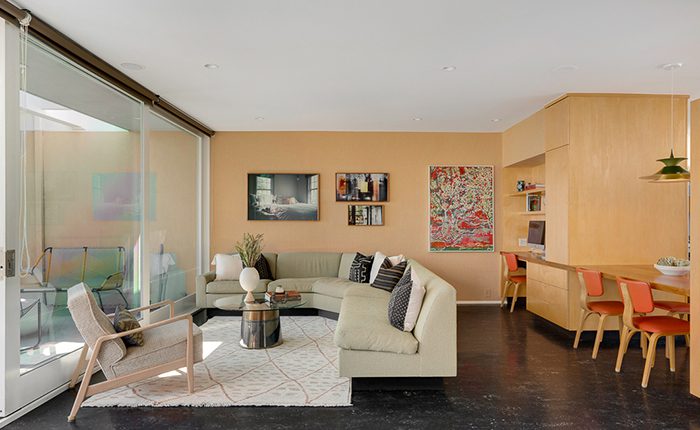
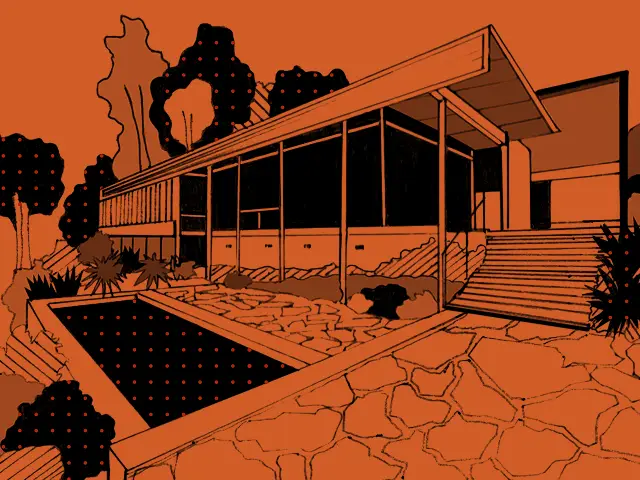
A mid-century kitchen interior in the celebrated Mar Vista Tract, where Gregory Ain reimagined suburban living through modern design. Homes are arranged to create shared green spaces and a sense of collective identity. The neighborhood remains one of the most influential examples of socially conscious mid-century planning. In Ain’s work, modern architecture becomes a vehicle for better living. His homes embrace open plans, natural light and thoughtful site planning that encourages connection among neighbors. Ain believed design should elevate everyday life while strengthening community.
At the core of Gregory Ain’s philosophy was a conviction that most people live in poorly designed homes, not because good design is impossible, but because it is treated as a luxury. He set out to systematically disprove that assumption. His approach combined rigorous spatial planning, modest material budgets and a deep respect for how families actually inhabit space.
Ain believed in what he called democratic design, the idea that a thoughtfully planned 1,200-square-foot home could provide more genuine comfort and delight than a carelessly designed 3,000-square-foot one. He studied how people moved through their homes, where they needed privacy, where they needed openness, how natural light changed throughout the day and how rooms could serve more than one purpose without feeling cramped or compromised.
His homes typically featured open living and dining areas that flowed toward outdoor spaces, bedrooms positioned for privacy from the street and kitchens designed for practical efficiency rather than mere decoration. He used modular construction methods and prefabricated components before these became mainstream, recognizing that standardization need not mean banality. Ain also incorporated passive ventilation strategies and oriented his homes to capture prevailing breezes and natural light, anticipating concerns about environmental performance that would not become widely shared in architecture for decades.
This philosophy made him a genuinely original voice in American modernism. While other architects of his era were demonstrating what architecture could look like, Ain was demonstrating what it could do for ordinary people.
Iconic Gregory Ain Buildings in Los Angeles
Los Angeles holds a significant collection of Gregory Ain buildings, most of them residential but varying widely in scale and approach. Several have become touchstones for anyone serious about mid-century modern architecture in Southern California.
The Dunsmuir Flats, completed in 1937 in the Dunsmuir Avenue neighborhood of Los Angeles, are among Ain’s most celebrated early works. This small apartment complex demonstrates his ability to bring modernist spatial intelligence to multi-family housing, a much rarer achievement than single-family residential design. The Dunsmuir Flats were carefully composed, thoughtfully oriented to the site and designed to give each unit a sense of spaciousness and connection to the outdoors that was practically unheard of in affordable rental housing of the period.
The Edwards House (1937) in Silver Lake and the Tierman House (1939) are among his notable early single-family commissions, each showing his ability to work on tight budgets without sacrificing design quality. The Scharlin House, the Daniel House and the Park Planned Homes tract in Altadena each represent different dimensions of his practice. His work can be found in Silver Lake, Los Feliz, Mar Vista, Altadena and other Los Angeles neighborhoods, making him a genuinely citywide presence. Learn more about the neighborhoods where Ain’s work endures on our Los Angeles neighborhoods guide.
For a deeper architectural overview of Ain’s place in the California modernist canon, ArchDaily maintains an extensive archive of articles covering mid-century Los Angeles architecture and the figures who shaped it.
The Mar Vista Housing Tract: Modernism at Scale
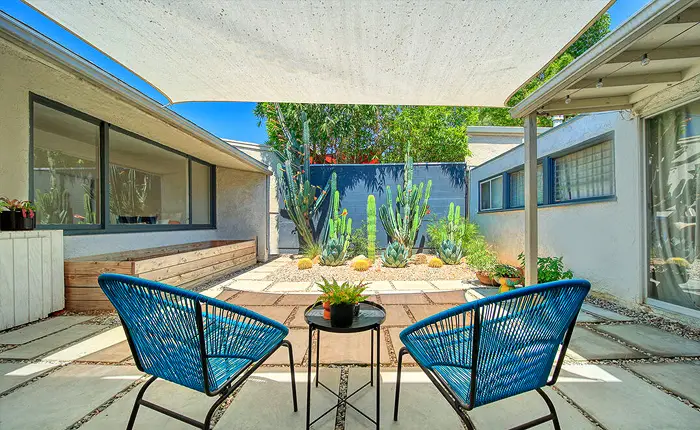
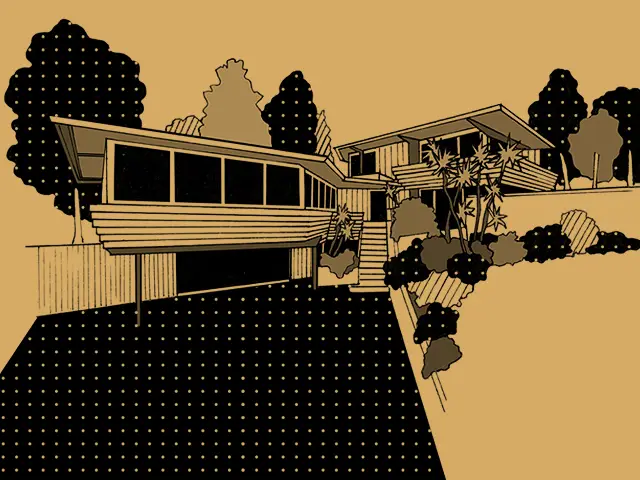
In the years following World War II, Gregory Ain responded to Los Angeles’ growing housing demand with a visionary experiment in modern living. At Park Planned Homes in Altadena, CA, thoughtful planning and modest modern design came together to create an affordable yet beautifully composed neighborhood. With Park Planned Homes, Ain explored how thoughtful planning could transform everyday housing. The homes share green spaces and pedestrian pathways that encourage community interaction. The development stands as a pioneering vision of neighborhood-centered modernism.
If there is a single project that crystallizes everything Gregory Ain believed about architecture and society, it is the Mar Vista Housing Tract, developed between 1947 and 1948, originally planned on a 60-acre site in the Mar Vista neighborhood of West Los Angeles. Working with collaborators Joseph Johnson and Alfred Day, Ain designed 52 modest single-family homes intended for returning veterans and working-class families who had been largely shut out of the postwar housing boom.
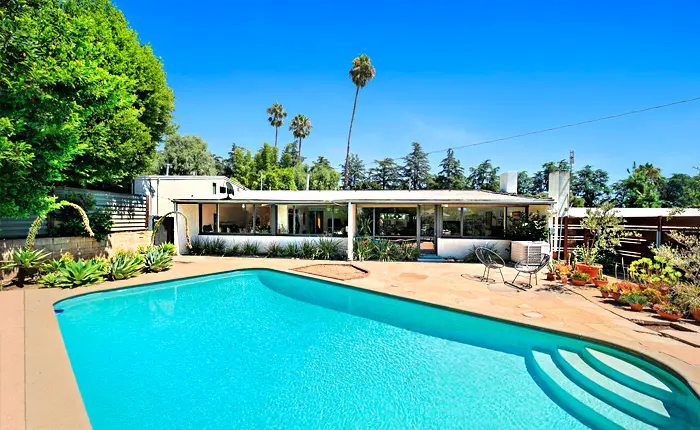
The tract was a bold social and architectural experiment. Rather than the conventional developer approach of stacking identical boxes on a grid, Ain arranged the homes to maximize privacy, cross-ventilation, and access to outdoor space. He varied the orientation of units and used low garden walls and plantings to create a sense of community and enclosure without sacrificing individual privacy. The homes were small by any standard, typically around 1,100 square feet, but Ain’s planning made them feel open and livable.
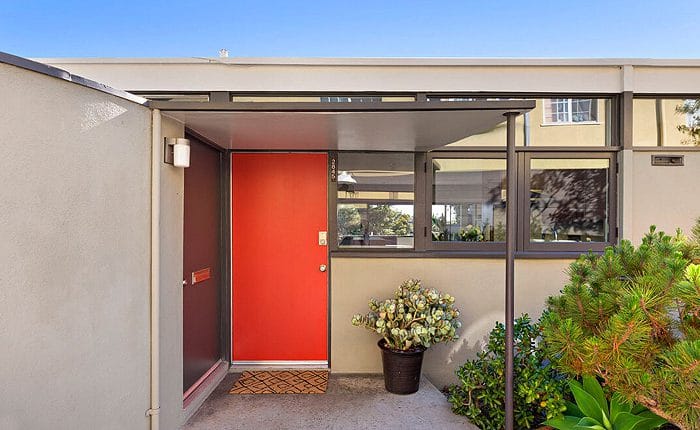
Each home featured an open living and dining area, a kitchen oriented toward the yard and bedrooms arranged for acoustic separation from the main living spaces. Sliding glass doors connected the interior to the exterior. Natural light was managed through carefully placed clerestory windows and overhangs that shaded summer sun while admitting lower winter light. These were not luxury homes. They were, in Ain’s phrase, homes for human beings.
The Mar Vista tract was designated a Historic Preservation Overlay Zone by the City of Los Angeles in 2003, recognizing its extraordinary significance as a collection. Many of the original 52 homes survive largely intact, and the neighborhood has become a destination for architecture enthusiasts and a benchmark for anyone interested in exploring post-war affordable residential design. Browse our listings for mid-century modern homes for sale in Los Angeles and see how Ain’s architectural legacy lives on in the real estate market today.
Ain’s Use of Space, Light and Materials
One of the most instructive aspects of Gregory Ain’s architecture is how much he accomplished with so little. His material palette was deliberately restrained: wood framing, stucco, concrete block and glass. These were economical choices, but Ain used them with a precision that turned economy into elegance.
Wood was central to his residential work. He favored exposed wood framing on ceilings and in structural details, giving his interiors warmth and texture that contrasted with the smooth stucco of his exteriors. He was also an early adopter of plywood as a finish material, using it in walls and built-in cabinetry in ways that anticipated the material honesty that became a hallmark of California modernism in subsequent decades.
Light was Ain’s most powerful tool. He understood Southern California’s light with the intimacy of a native, knowing how to use overhanging eaves to exclude the harsh direct sun of summer while welcoming the lower, warmer light of winter. Clerestory windows brought diffuse light deep into floor plans without creating glare or heat gain. Sliding glass walls dissolved the boundary between indoor and outdoor living, extending the functional area of each home into the garden or patio beyond.
His spatial planning was equally sophisticated. Ain was a master of the open-plan long before it became a cliché of American residential design. His living spaces flowed into dining areas and toward the garden, creating a sense of spaciousness that had nothing to do with square footage and everything to do with planning intelligence. Rooms were sized precisely for their function, with no wasted circulation space. Built-in storage was integrated throughout, reducing the need for freestanding furniture and keeping spaces uncluttered.
Structural Clarity as Aesthetic Expression
Ain believed the structure of a building should be legible, that you should be able to understand how a house was built by looking at it. This commitment to structural honesty aligned him with the broader modernist rejection of applied ornament. Ain’s version was warmer and less doctrinaire than some of his peers. He was not interested in architecture as ideology. He was interested in architecture as a way of improving the lives of the people who lived in his buildings.
Gregory Ain’s Political Life and Its Impact on His Career
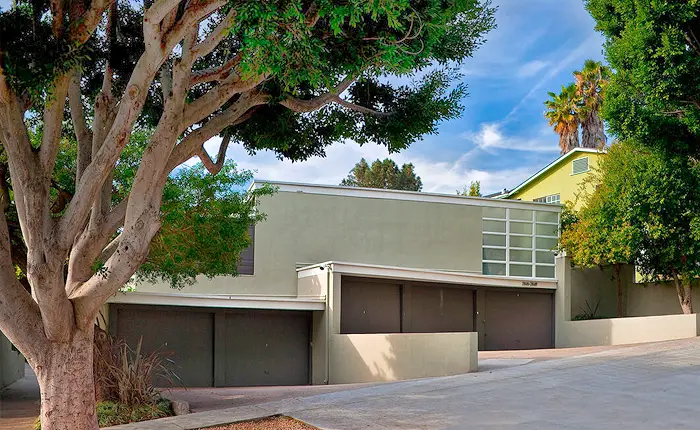
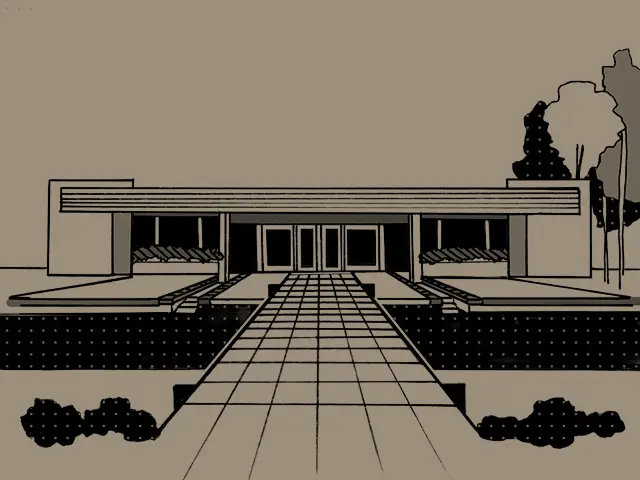
At the Avenel Cooperative Housing project, Ain pushed the idea of collaborative living even further. Ten modest modern homes are arranged around shared open space, encouraging neighbors to interact and thrive together. The project remains a landmark of progressive architecture and community design. Across Southern California, Gregory Ain helped shape a modern movement rooted in equality and community. His neighborhoods prioritize shared space, sunlight, and human connection. Today, his architecture remains a powerful reminder that modern design can build stronger communities.
Gregory Ain’s career cannot be fully understood without acknowledging his political convictions and the consequences they brought. Ain was a committed progressive who believed that architecture was a tool for social reform. He was involved in labor organizing and left-wing political causes throughout his career and he was openly sympathetic to socialist ideas about collective ownership and democratic access to resources, including housing.
During the McCarthy era, these convictions made him a target. He was investigated by the House Un-American Activities Committee (HUAC) and the FBI and placed on a blacklist that severely damaged his professional prospects. Major institutional clients and federal housing contracts, which might otherwise have given Ain the scale to realize his most ambitious community housing visions, became inaccessible. He was effectively shut out of the large-scale public work that his abilities and philosophy most suited him for.
The consequences for American architecture were significant. Ain had the talent, the vision and the commitment to make a transformative contribution to public housing design at a moment when the country was building millions of new homes. Instead, the work was done by others with less principled approaches and the result was the soul-crushing uniformity of much postwar American suburban development. Ain continued to work at a smaller scale, but the blacklist interrupted and diminished a career that might otherwise have reshaped how working Americans lived.
His experience is a reminder that architectural history is inseparable from political history and that the buildings we have and those we do not are shaped as much by power as by design talent. Understanding Ain’s story adds a dimension to the appreciation of his surviving work, making it even more poignant and impressive.
Gregory Ain Homes Today: Preservation and Value
Gregory Ain homes have experienced a significant reappraisal over the past two decades. Once overlooked in favor of more prominent California modernists, Ain’s work is now recognized as among the most important residential architecture of the twentieth century in America. This recognition has brought attention to his surviving buildings, academic study and growing collector interest.
The Mar Vista tract’s historic designation in 2003 was a landmark moment for Ain’s legacy and individual homes throughout Los Angeles have also been recognized by preservation organizations and local historic registers. Owners of Ain homes are aware of their significance and many undertake careful, historically sensitive restorations that honor Ain’s original intentions while updating systems and finishes for contemporary living.
From a real estate perspective, Ain homes occupy an interesting and valuable position in the Los Angeles market. They are typically modest in size by current standards, but their design quality, historic significance and connection to a major figure in American architectural history give them a distinction that transcends square footage. Buyers who seek out Ain’s homes understand the architect’s intention and values, as well as the value of these homes as real estate investments.
Condition varies considerably across surviving Ain homes. Some have been meticulously preserved; others have suffered inappropriate alterations over the decades. For buyers serious about acquiring an Ain property, working with agents who understand architectural significance and historic preservation is essential. Beyond Shelter specializes in exactly this kind of transaction, bringing architectural expertise to every step of the acquisition process. Explore our full range of architecturally significant homes for sale, or learn about our team of architecture-focused real estate professionals.
For those interested in the broader context of Los Angeles modernism and where Ain fits within it, Dezeen’s architecture coverage regularly explores mid-century design legacy and contemporary preservation efforts that illuminate Ain’s place in the canon.
Gregory Ain – Notable Projects and Houses
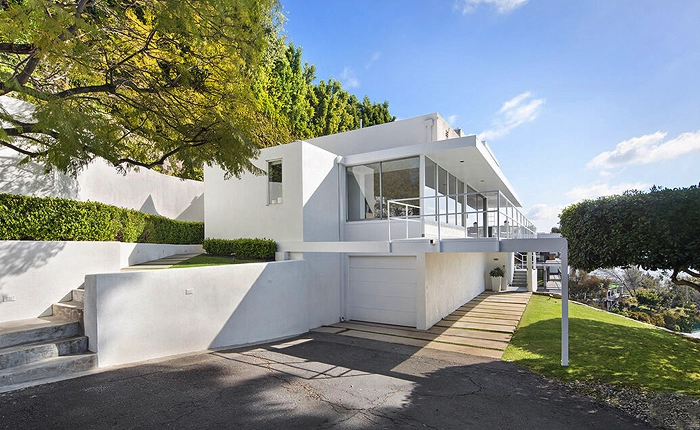
- Edwards House (1936) — Los Angeles, CA. Ain’s first built solo commission after leaving Neutra’s office, sited on a flat lot in the Hollywood Hills. Named House Beautiful Magazine’s House of the Year for 1938. Published in Modern House in America (1940).
- Ansalem Ernst House (1937) — Los Feliz, Los Angeles, CA. Hillside residence in the Los Feliz Oaks; Schindler-influenced fenestration, balconies, and clerestory detailing. Los Angeles Historic-Cultural Monument No. 840. Ain later designed a second home for the same client in Vista, CA (1962).
- Albert Byler House (1937) — Mount Washington, Los Angeles, CA. Small bungalow on a hilltop lot near the top of Mt. Washington; less than 500 sf; views toward downtown Los Angeles.
- Dunsmuir Flats (1937–38) — Mid-City, Los Angeles, CA. Four staggered two-story rental units on a single lot; continuous ribbon windows defining each ceiling level; early use of panel-post construction to reduce cost. Ain’s most widely published design. Los Angeles Historic-Cultural Monument No. 954.
- A.O. Beckman House (1938) — La Brea, Los Angeles, CA. Flat-lot residence with direct indoor-outdoor access from most rooms. Published in Arts & Architecture, Architectural Record and Modern House in America (1940).
- Goldberg House (1938) — Encino, San Fernando Valley, CA. Single-family residence in the Encino area; redwood siding used as exterior finish, an uncommon material choice for Ain, who generally preferred stucco. Remodeled, most Modernist elements eliminated.
- Hay House (1939) — Hollywood, Los Angeles, CA. Designed for Margaret Hay, commissioned by her son Harry Hay; clerestory windows and a private rear yard oriented living room; garage positioned at street level.
- Daniel House (1939) — Silver Lake, Los Angeles, CA. Built for Urcel Daniel, director of the Los Angeles Newspaper Guild; steep lot overlooking the Silver Lake reservoir. Published in Modern House in America (1940).
- Tierman House (1939-40) — Silver Lake, Los Angeles, CA. Single-family modernist residence; one of several notable Ain commissions concentrated in the Silver Lake neighborhood during his most productive prewar period.
- Vorkapich Garden House (1938-39) — Beverly Hills, CA. Guest and garden house designed for film director and visual effects pioneer Slavko Vorkapich; compact modernist structure on a Beverly Hills estate lot. Destroyed in the late 1990s.
- Becker House (1939) — Los Angeles, CA. Designed for Isador and Rosa Becker; Streamline Moderne-influenced front facade with curved exterior walls; reverse floor plan with main living areas at street level and bedrooms below.
- Hural House (1940-42) — Hollywood Hills, Los Angeles, CA. Featured a dental lab on the upper level for Dr. Alexander Hural; Ain’s signature showers noted by architecture critic Esther McCoy on a visit with the original owners.
- Brett Weston House and Studio (1940) — Santa Monica, CA. Combined residence and photography studio for renowned photographer Brett Weston.
- Gregory and Ruth March Ain House (1941) — Laurel Canyon, Los Angeles, CA. Ain’s own home, designed for himself and his second wife, Ruth March, located in Laurel Canyon.
- Orans House (1941) — Silver Lake, Los Angeles, CA. Designed for Maurice and Alice Orans; steeply sloped small lot; garage at street level with curved driveway for easy access; living areas elevated above.
- Domela House and Studio (1942) — Tarzana, Los Angeles, CA. Combined home and artist’s studio for Jocelyn and Jan Domela; Jan Domela was a well-known illustrator for the motion picture studios.
- Park Planned Homes (1947) — Altadena, CA. A 28-home modernist residential tract designed in collaboration with Royston, Williams and landscape architect Garrett Eckbo; 60 units planned but only 28 built due to theft and material shortages. Modular 12 x 16 ft unit planning; no front fences; continuous landscaping; side-facing garages; interior courtyards. One of the first modernist housing developments in the United States. Several homes destroyed in the Eaton Fire, January 2025.
- Mar Vista Housing Tract (1947–48) — Mar Vista, West Los Angeles, CA. 52 single-family homes designed with Joseph Johnson and Alfred Day for working-class and returning veteran families; marketed as Modernique Homes. Landscape design by Garrett Eckbo. Designated Los Angeles’s first Modern historic district in 2003; full Historic Preservation Overlay Zone (HPOZ) in 2010.
- Avenel Cooperative Homes (1947) — Silver Lake, Los Angeles, CA. 10-unit housing cooperative for WWII veterans and film industry workers; each family contributed $11,000 toward land and construction; 960 sf units arranged around shared garden; 14 units per acre. Designed with Joseph Johnson and Alfred Day. Widely regarded as a precursor to the modern co-housing movement.
- Hollywood Guilds and Unions Office Building (1947-48) — Los Angeles, CA. Commercial commission for a labor organization; one of Ain’s few non-residential built works and a direct expression of his labor movement ties. The project was later destroyed.
- Community Homes Cooperative (1946–48, unbuilt) — Van Nuys, San Fernando Valley, CA. Ain’s most ambitious project; 280-home racially integrated cooperative development with planned school, shopping center and parkland. Designed with architects Johnson and Day. Blocked by the FHA (Federal Housing Authority), restrictive covenants opposing racial integration. Actress Lena Horne and designer Saul Bass were among prospective residents. The FBI thought the project was connected to the Communist Party.
- MoMA Exhibition House (1950) — New York, NY. Prototype affordable modern home built in the garden of the Museum of Modern Art; commissioned by Philip Johnson; second in the MoMA exhibition house series following Marcel Breuer’s house in 1949. Designed with Joseph Johnson and Alfred Day; accompanied by a site plan for cooperative community deployment.
- Margolis House (1951-52) — Los Feliz, Los Angeles, CA. Designed for civil rights attorney Ben Margolis; later received an addition by Pierre Koenig. Considered a prime example of Ain’s mature design philosophy. Designed with James Garrott.
- Feldman Residence (1953-54) — Bel Air, Los Angeles, CA. Designed for Dr. Fred Feldman; larger-scale late-career commission on a nearly one-acre lot near the Beverly Hills Hotel. Los Angeles Historic-Cultural Monument. Recently restored.
- Ernst House II (1962-63) — Vista, San Diego County, CA. Second home designed for client Ansalem Ernst, built for his retirement on a sloping lot; Ain’s only built project in San Diego County. Later work described by David Gebhard as showing affinities with Schindler’s final designs.
Frequently Asked Questions About Gregory Ain Architecture
Looking for a Gregory Ain Home or an Architecturally Significant Property in Los Angeles?
Beyond Shelter specializes in exactly the kind of properties Gregory Ain dedicated his career to building: thoughtfully designed homes where architecture and livability are inseparable.
Whether you are searching for an original Ain property, a mid-century modern home in Mar Vista or Silver Lake, or any architecturally significant residence in Southern California, our team combines real estate expertise with genuine architectural knowledge. We understand what makes these homes special and we can help you find, evaluate and acquire one.
Browse Current Listings:
Mid-Century Modern Homes for Sale in Los Angeles
Explore by Architecture:
Architectural Homes for Sale
Service Areas: Los Angeles and Southern California
Contact our team to start your search for an architecturally significant home in Los Angeles →
About Beyond Shelter
Beyond Shelter is a premier architecture and real estate firm serving Los Angeles and Southern California. With deep expertise in modernist architecture, historic preservation and architectural history, we help clients discover and acquire architecturally significant properties. Our team combines architectural knowledge with real estate expertise to provide comprehensive guidance for design-conscious buyers, sellers and architecture enthusiasts.