RICHARD NEUTRA
ARCHITECTURE

A VISIONARY MODERNIST

. . . . . . . . . . . .

Richard Neutra Architecture: Iconic Los Angeles Buildings That Defined an Era

Richard Neutra (1892-1970) was an Austrian-born modernist architect based in Los Angeles, California, widely regarded as one of the most significant architects of the twentieth century. Trained in Vienna under Adolf Loos and later in Berlin with Erich Mendelsohn, Neutra arrived in Los Angeles in 1925 and spent the next four decades reshaping residential architecture in Southern California. His philosophy of biorealism held that design should support human well-being through connections to natural light, air, and landscape. Key works include the Lovell Health House in Los Feliz (1929), the first fully steel-framed residence in the United States; the VDL Research House in Silver Lake (1932), now a National Historic Landmark; and the Kaufmann Desert House in Palm Springs (1946). Twelve of his buildings are designated as Los Angeles Historic-Cultural Monuments. Neutra homes remain among the most architecturally significant and sought-after modernist properties in the Los Angeles real estate market.

Richard Neutra – Architect Profile

  • Born: April 8, 1892 — Vienna, Austria
  • Died: April 16, 1970 — Wuppertal, West Germany (age 78)
  • Education: Vienna University of Technology, Vienna, Austria — degree awarded 1911-1918; studied under Adolf Loos; apprenticed with Erich Mendelsohn, Berlin (1921–1923); worked at Taliesin studio with Frank Lloyd Wright (1924–1925)
  • Style: International Style, Mid-Century Modern, Modernist Residential
  • Known For: Biorealism philosophy; floor-to-ceiling glass walls; steel-frame residential construction; seamless indoor-outdoor living; the Lovell Health House; the Kaufmann Desert House
  • Key Project Locations: Los Angeles, CA (Los Feliz, Silver Lake, Hollywood Hills, Beverly Hills, Pacific Palisades, Santa Monica, Brentwood, Westwood) – Palm Springs, CA – San Pedro, CA and internationally in Pakistan, Switzerland, France and Germany
  • Notable Work: Lovell Health House (1929), VDL Research House (1932), Kaufmann Desert House (1946), Bailey House – Case Study House #20 (1948), Sten-Frenke House (1934), Kronish House (1955)
  • Influences: Otto Wagner: Viennese proto-modernist; Neutra encountered his work as a student and credited Wagner’s geometric rigor and use of industrial materials as a foundational early influence – Adolf Loos: Neutra’s direct teacher at der Technische Hochschule Wien, Vienna; Loos’s doctrine of ornament-free, function-first design was central to Neutra’s developing philosophy – Erich Mendelsohn: Neutra worked as chief draftsman in Mendelsohn’s Berlin office (1921–1923); Mendelsohn’s expressionist modernism and integration of technology with human experience shaped Neutra’s approach to material and form – Frank Lloyd Wright: Neutra worked at Taliesin (1924–1925) and met Wright at the funeral of Louis Sullivan; Wright’s organic architecture and insistence on connecting buildings to their landscape left a lasting impression, even as Neutra developed a distinctly more precise and technologically-driven vocabulary – Rudolf Schindler: Fellow Austrian and close friend since university; Schindler brought Neutra to Los Angeles and the two shared the Kings Road house (1925–1930), collaborating on projects including a 1927 League of Nations competition entry – Gustav Ammann: Swiss landscape architect with whom Neutra worked briefly after WWI; reinforced his understanding of landscape as an integral part of architectural design – Henry Ford: Neutra admired Ford’s assembly-line approach to mass production and believed, as Ford did, that quality design could be made affordable through prefabrication and standardization – Sigmund Freud / Otto Rank — Neutra was personally acquainted with Freud and was a committed follower of birth trauma theorist Otto Rank; psychoanalytic theory directly informed his biorealist philosophy and his use of detailed client questionnaires
  • Awards and Honors: (1932) Included in MoMA’s landmark Modern Architecture: International Exhibition, curated by Philip Johnson and Henry-Russell Hitchcock, the only West Coast architect selected; (1939, 1947, 1949, 1963) AIA Award, Southern California Chapter; (1946) Honorary Member, Mexican, Cuban and Bolivian Associations of Architects; (1947) Elected Fellow, American Institute of Architects (FAIA); (1949) Featured on the cover of Time magazine, ranked second only to Frank Lloyd Wright among American architects; (1959) Wilhelm Exner Medal, Austria, awarded for scientific contributions to architecture; (1959) Cross of the Federal Republic of Germany (Bundesverdienstkreuz); (1968) Gold Ring, City of Vienna; (1977) AIA Gold Medal (posthumous), the American Institute of Architects’ highest honor; (2015) Golden Palm Star, Palm Springs Walk of Stars, Palm Springs, California; (2017) VDL Research House designated a National Historic Landmark by the U.S. Department of the Interior
  • Archive: Julius Shulman Photography Archive, Getty Research Institute, Los Angeles – primary photo record of Neutra’s work; Neutra papers held at UCLA Charles E. Young Research Library; VDL house history documented at neutrahistory.org
Born in Vienna in 1892, Neutra arrived in Los Angeles in 1925 and spent the next four decades reshaping how the city lived. His philosophy of “biorealism” held that architecture should support human well-being by fostering connections to nature, light, and air. The result was a body of work that remains among the most sought-after in Southern California real estate. At Beyond Shelter, we specialize in exactly these properties. Explore our curated collection of mid-century modern homes for sale in Los Angeles to see what is currently available.

From Vienna to Los Angeles: Neutra’s Journey
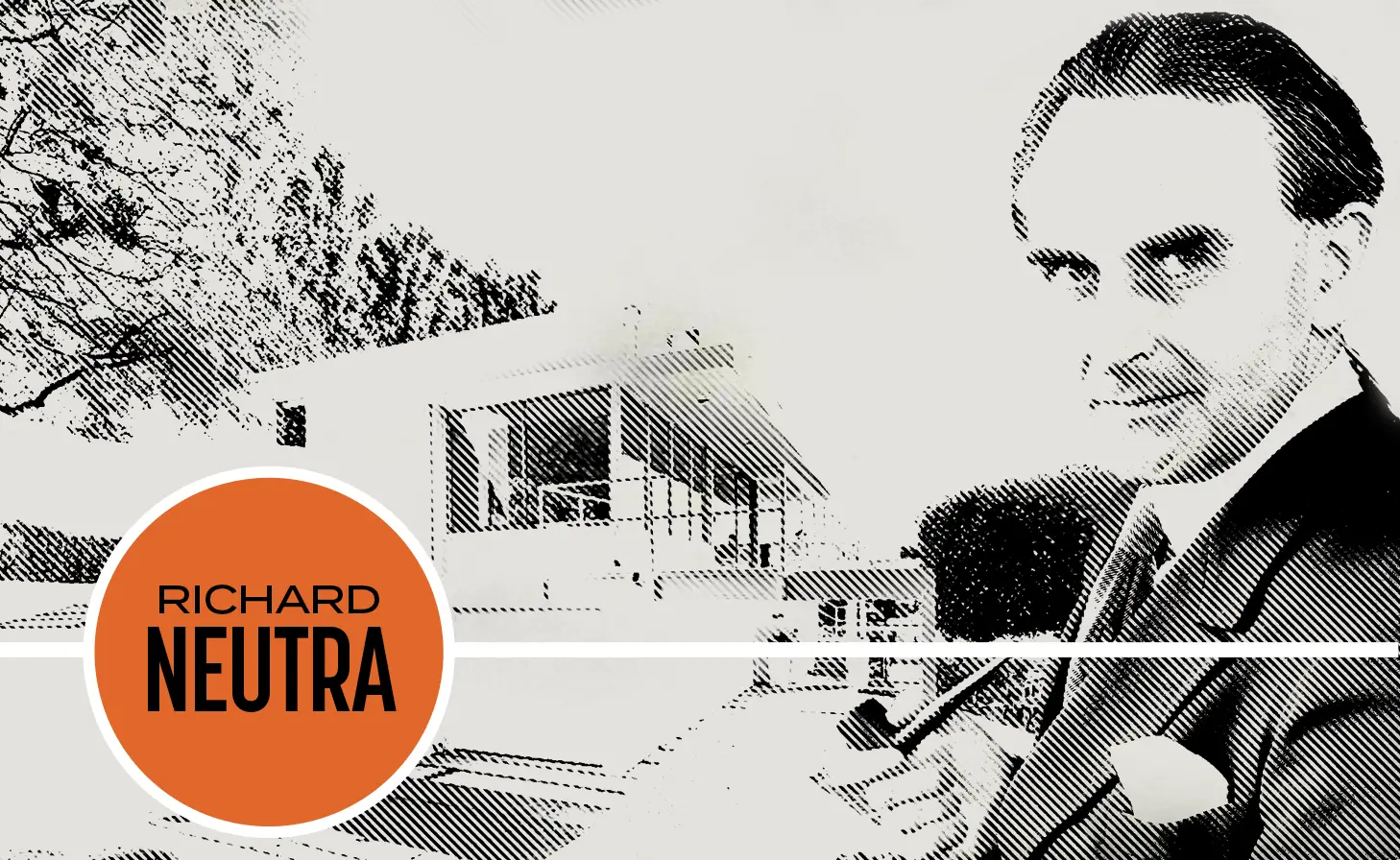
Richard Neutra in front of the Galka Scheyer House in the Hollywood Hills

Perched above the Hollywood Hills, the Galka Scheyer House reveals Richard Neutra at his most intellectually expressive. Designed for the influential art dealer who championed the Blue Four, the home became both residence and gallery—its clean lines and glass expanses framing modern art and sweeping city views alike. It stands as a rare intersection of architecture and avant-garde culture, where Neutra’s precision meets a world of artistic experimentation. Richard Neutra had an office in Silver Lake on Glendale Boulevard, where he practiced from 1950 until his death in 1970. The Neutra Office Building is listed on both the National Register of Historic Places and the Los Angeles Historic Cultural Monument Register.

Richard Josef Neutra was born on April 8, 1892, in Vienna, Austria, into an educated, culturally engaged family. His early architectural education at the Vienna University of Technology exposed him to Adolf Loos, the provocateur who famously declared ornament a crime. That formative lesson in stripping away the unnecessary stayed with Neutra for the rest of his life.His career path before reaching Los Angeles reads like a tour of European modernism’s greatest figures. He worked for the visionary Erich Mendelsohn in Berlin and briefly served as city architect in Luckenwalde, Germany. He crossed paths with Frank Lloyd Wright at the funeral of Louis Sullivan in 1924, and Wright hired him to work at Taliesin in Wisconsin. When that work ran out in 1925, Neutra followed his longtime friend Rudolph Schindler to Los Angeles, where Schindler had been working on Wright’s projects since 1918.For several years, the Neutras and Schindlers shared space at Schindler’s famous Kings Road house in West Hollywood. It was an extraordinary moment: two Austrian modernist architects, in one of the most open and experimental cities in the world, with careers just beginning to take shape. Neutra’s arrival in Los Angeles was not accidental. He saw Southern California as a place where modern architecture could actually be built, where the climate invited open plans and glass walls, and where a young, forward-looking culture was ready to embrace new ideas about how people should live.

The Philosophy of Biorealism

To understand any Neutra building, you need to understand biorealism. The term was Neutra’s own, and it expressed his conviction that architecture was not simply a matter of aesthetics or engineering but a biological and psychological enterprise. He believed that the built environment had a direct impact on human health and well-being, and that design should respond to how the human nervous system actually functions.As described by architect and Neutra scholar Barbara Lamprecht, his philosophy sought to use biological sciences in architecture “so that design exploited, with great sophistication, the realm of the senses and an interconnectedness to nature that he believed fundamental and requisite to human well-being.” In practical terms, this meant maximizing natural light, creating visual and physical connections between interior spaces and the landscape outside, and minimizing barriers between the inhabitant and the natural world.Neutra was also famous for his detailed client questionnaires, a practice that surprised many prospective homeowners. Before beginning any design, he wanted to understand how his clients lived: their daily routines, their relationships to light and sound, their habits and preferences. This meticulous attention to the individual made his version of modernism feel personal rather than dogmatic. The result was homes that were rigorously modern in their geometry and materials, yet warmly tailored to the people who lived in them.This balance between universal principle and individual response is what distinguishes Neutra from many of his contemporaries and explains why his homes remain so livable decades after they were built. To explore architecturally significant properties in Los Angeles, visit our architectural homes for sale page.

The Lovell Health House: A Landmark First
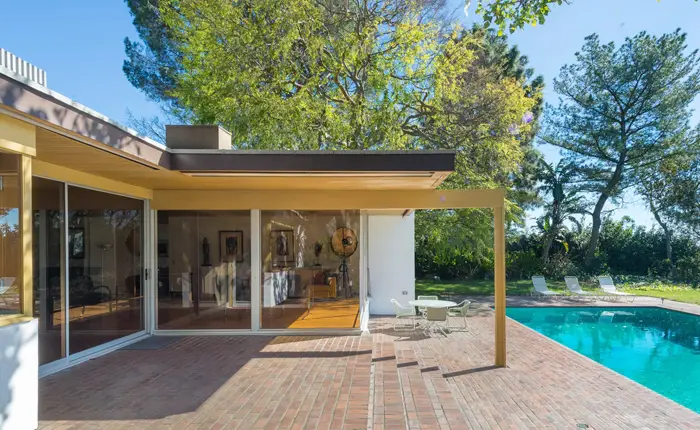
Lovell Health House by Richard Neutra in Los Feliz, Los Angeles, 1929

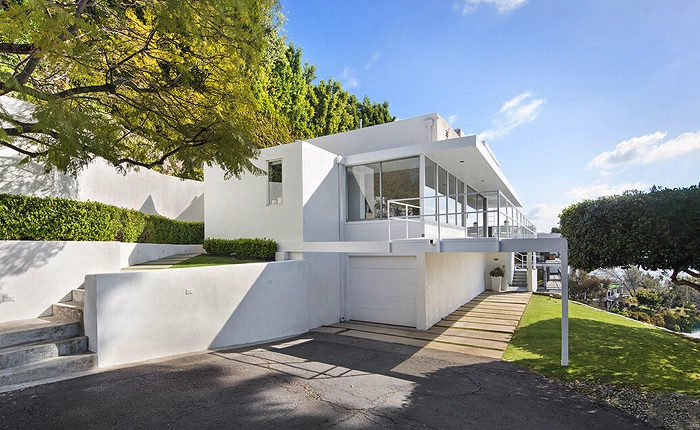
At the refined Shaarman House, Richard Neutra distilled his philosophy of clarity, proportion, and light into a quietly powerful composition. Horizontal planes and expansive glass open the home to its hillside setting, framing views as part of daily life. The residence reflects Neutra’s enduring pursuit of architecture that is both rigorously precise and deeply attuned to human experience. At the Lovell Health House in Los Feliz (1929), Neutra’s breakthrough commission and the first fully steel-framed residence in the United States. It remains a designated Los Angeles Historic Cultural Monument (HCM #123).

If there is a single building that launched Richard Neutra’s career, it is the Lovell Health House in the Los Feliz hills, completed in 1929. The commission came from Philip and Leah Lovell, prominent health advocates in Los Angeles who had already commissioned Schindler to design a beach house in Newport Beach. For their hillside residence, they turned to Neutra, giving him a project that would become one of the most important buildings in American architectural history.The Lovell Health House was the first fully steel-framed residence in the United States. Neutra spent most of 1928 designing the structure, and the steel framing presented immediate challenges: no residential contractor in Los Angeles had experience with the material, and Neutra had to work closely with industrial fabricators to realize his vision. The result was a three-story structure of extraordinary lightness and precision, suspended above a steep ravine on a structural system that seemed to defy gravity.The house arrived in Los Angeles at exactly the right moment. It was widely published, celebrated internationally, and confirmed Neutra’s reputation as one of the leading modernist architects of the twentieth century. It was included in the 1932 Museum of Modern Art International Style exhibition that introduced European modernism to American audiences. Today it remains a designated Los Angeles Historic Cultural Monument (HCM #123) and a pilgrimage site for architecture enthusiasts from around the world.For a deeper look at the homes and neighborhoods where Neutra’s legacy lives on, explore our guide to Los Angeles neighborhoods.

The VDL Research House: Neutra’s Own Home

Three years after the Lovell Health House, Neutra built something more personal and in many ways more revealing: his own home on the shore of the Silver Lake Reservoir. The VDL Research House, completed in 1932, was named for Cees H. Van der Leeuw, a wealthy Dutch industrialist and architecture patron who provided the loan that made the project possible.The VDL house was Neutra’s demonstration that the principles of the Lovell Health House could be applied on a modest budget. Working with approximately $10,000, he created a 2,000-square-foot home that used natural light, glass walls opening onto patio gardens, and carefully placed mirrors to create a sense of spaciousness and connection to the surrounding water and landscape. The house functioned simultaneously as Neutra’s family residence, his architecture studio, and a living laboratory for his biorealist ideas.Over the course of four decades, the VDL compound became a remarkable cultural salon. Gregory Ain, Harwell Harris, and Raphael Soriano, all major figures in California modernism, began their careers working here. Frank Lloyd Wright, Alvar Aalto, and Charles and Ray Eames all visited. The original house was destroyed by fire in March 1963, taking with it Neutra’s collection of sketches, writings, and his architecture library. Neutra and his son Dion rebuilt it, preserving the original footprint while introducing a more complex design.Today, the VDL Research House is owned by Cal Poly Pomona and designated a National Historic Landmark. It is open for public tours on Saturdays and is the only Neutra-designed house regularly accessible to the public. It remains one of the most significant addresses in the history of mid-century modern home design.

The Silver Lake Neutra Cluster

The VDL house was not an isolated project. Over time, Neutra designed a cluster of ten houses on Argent Place (now Neutra Place) overlooking Silver Lake Reservoir, creating what amounts to an outdoor museum of mid-century modernism in a single Los Angeles neighborhood. The nearby Neutra Office Building on Glendale Boulevard, designed in 1950, served as his professional studio until his death in 1970. That building is also listed on the National Register of Historic Places and designated HCM #676 by the City of Los Angeles.

The Kaufmann Desert House: Palm Springs Perfection
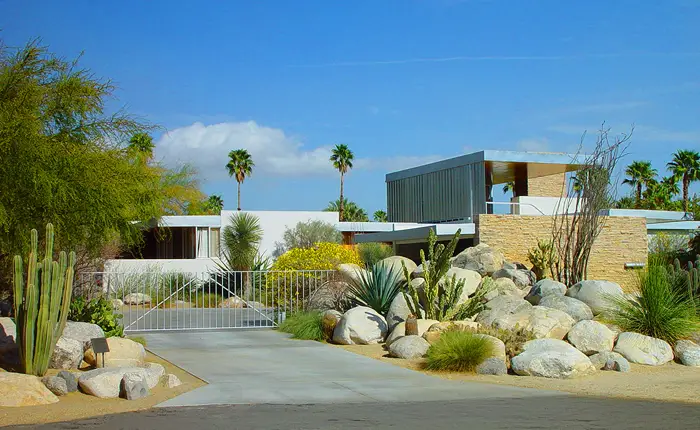
Kaufmann Desert House Palm Springs by Richard Neutra 1946

The Kaufmann Desert House in Palm Springs (1946) was famously photographed by Julius Shulman. Edgar Kaufmann commissioned both this house and Frank Lloyd Wright’s Fallingwater, making him one of the most consequential patrons of twentieth-century architecture. Across Palm Springs and beyond, Neutra shaped the identity of mid-century desert living. His designs respond to heat, sun, and horizon with deep overhangs and cooling breezeways. The result is architecture that feels both resilient and effortlessly elegant.

Of all the projects that cemented Richard Neutra’s international fame, the Kaufmann Desert House in Palm Springs may be the most celebrated. Completed in 1946, the house was commissioned by Edgar J. Kaufmann, the Pittsburgh department store magnate who had also commissioned Frank Lloyd Wright’s Fallingwater just a decade earlier. The fact that Kaufmann chose Neutra for his California retreat places both men in rarified company.The Kaufmann Desert House is widely regarded as one of the most important examples of International Style architecture ever built in the United States. Neutra’s response to the desert site was to embrace the landscape rather than defend against it. Pinwheel-plan wings extend outward in four directions, connecting the interior to the surrounding mountains, sky, and desert floor. A cantilevered roof plane shades outdoor living areas while framing dramatic views. The pool and terrace dissolve the line between architecture and landscape in a way that felt genuinely new.The house became iconic in large part through the photographs of Julius Shulman, whose image of the Kaufmann House bathed in desert light became the defining visual of mid-century modern architecture in the American imagination. The house has been cited by architectural historians as capturing the optimism, glamour, and technological confidence of postwar America better than almost any other building. It remains in private ownership and is considered one of the crown jewels of Palm Springs modernism.For more on the architects who shaped Southern California’s most significant residential architecture, explore our collection of architectural homes or read more on the ArchDaily spotlight on Richard Neutra.

Signature Design Elements of a Neutra Home

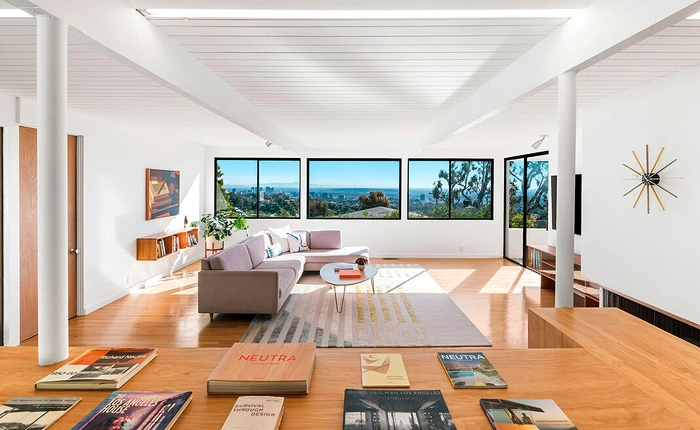
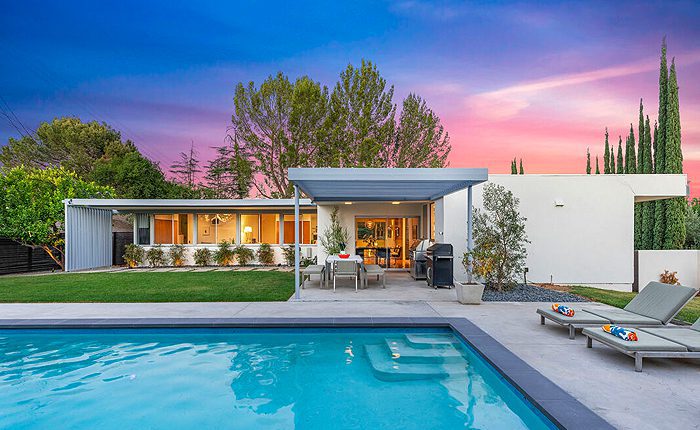
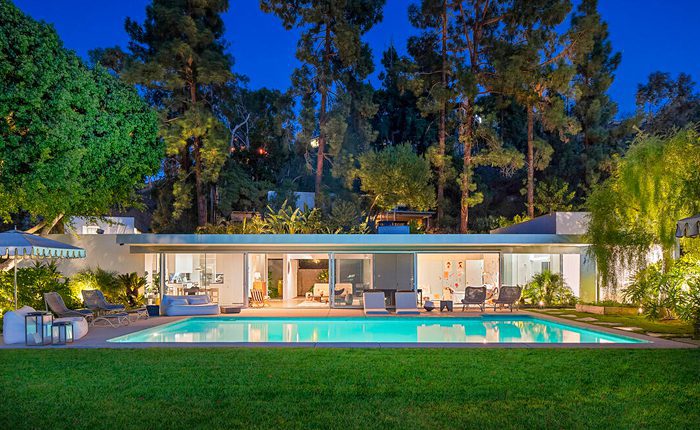
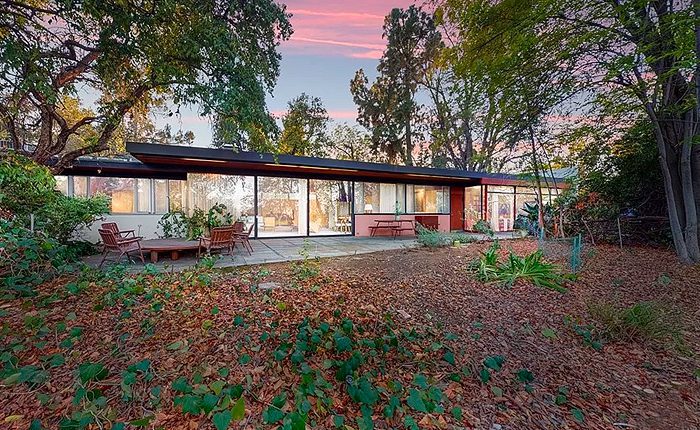
Walking through a Neutra house, certain design signatures become immediately recognizable. Understanding these elements helps explain why his homes remain so highly valued and why they retain their power to surprise and delight even after nearly a century.Floor-to-ceiling glass. Neutra used expansive glass walls not as a showoff gesture but as a direct expression of his biorealist philosophy. Glass walls keep the inhabitant visually connected to the garden, the sky, and the surrounding landscape at all times. In many Neutra homes, the glass slides open completely, allowing interior and exterior spaces to merge during mild California weather.Steel framing. Neutra’s use of steel, pioneered at the Lovell Health House, enabled open floor plans without load-bearing walls. The structural system is often expressed honestly, with slender steel columns and cantilevered overhangs that give his homes their characteristic sense of lightness and hovering precision.Integration with landscape. Neutra invariably designed the garden as an extension of the interior. Reflecting pools, planted courtyards, and carefully positioned vegetation were part of the architectural composition, not afterthoughts. Many Neutra homes sit so organically within their sites that the boundary between building and garden becomes genuinely ambiguous.Natural materials used sparingly. Against the steel and glass, Neutra introduced warmth through wood ceilings, stone fireplaces, and natural floor materials. These elements were chosen and placed with great care, creating a visual and tactile balance that prevents his homes from feeling cold or institutional.Flat or low-pitched roofs with deep overhangs. The roof plane in a Neutra house is almost always horizontal, extending well beyond the walls to shade the interior and frame views. This horizontal emphasis connects the building visually to the landscape, reinforcing the sense that the house grows naturally from its site.

Other Iconic Neutra Buildings in Los Angeles
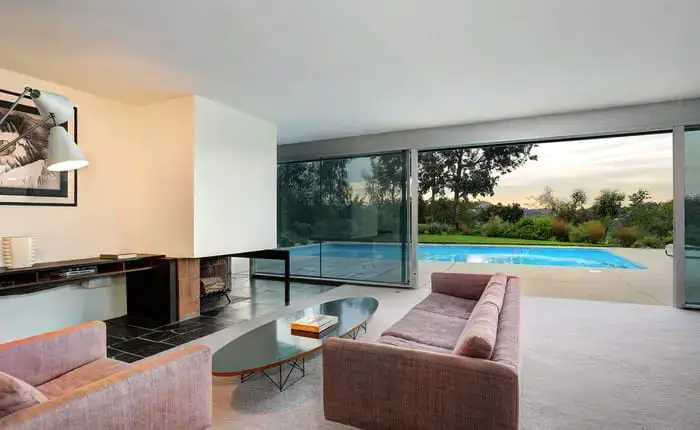
Richard Neutra Loring House 1958

At the understated Loring House, Richard Neutra refined his vision of modern living into a composition of calm precision. Delicate steel framing, horizontal lines, and expansive glazing create a seamless dialogue between interior space and the surrounding landscape. The home embodies Neutra’s belief that architecture should quietly support life—measured, luminous, and deeply in tune with its environment.

Beyond the Lovell and VDL houses, Neutra left an extraordinary collection of significant buildings across Los Angeles and Southern California. Twelve of his designs are designated as Los Angeles Historic-Cultural Monuments, a number that speaks to the sustained quality of his work across four decades.The Sten-Frenke House in Santa Monica (1934) is often cited as one of Neutra’s finest residential works. Originally designed for a Ukrainian actress and her husband, the house won the House Beautiful competition and was the first modern home to receive that recognition. It remains one of the most architecturally significant properties on the Westside and is designated as Los Angeles Historic-Cultural Monument #647.The Kronish House in Beverly Hills (1955) represents Neutra at his postwar best: a sprawling Westside residence that sits on a half-acre site with views toward the Pacific. When a proposed demolition threatened the property in 2010, a preservation battle ensued that ultimately pushed the City of Beverly Hills to strengthen its historic preservation policies. The house sold in 2011 for $12.8 million, reflecting the sustained premium that authentic Neutra architecture commands in the marketplace.The Bailey House, also known as Case Study House #20 (1948), was Neutra’s contribution to the Case Study House Program, the influential Arts and Architecture magazine initiative that enlisted leading modernists to design and build experimental postwar residences. Neutra’s Case Study entry in Pacific Palisades demonstrated how his principles could be applied to a modest middle-class home, expanding his influence beyond wealthy clients to a broader public.Beyond residential work, Neutra also designed civic and institutional buildings, schools, and an unbuilt plan for affordable housing in Chavez Ravine, the site now occupied by Dodger Stadium. His interest in architecture as a tool for social improvement ran throughout his career. For a broader perspective on the architectural styles that define Los Angeles, visit our guide to Los Angeles home styles. You can also read more about Neutra’s preservation legacy at the Los Angeles Conservancy’s Neutra biography.

Owning a Neutra: Value, Preservation and Legacy

For buyers and collectors of architecturally significant properties, Neutra homes occupy a unique position in the Los Angeles real estate market. Their value is simultaneously artistic, historical and financial. Unlike standardized mid-century houses that are sometimes marketed under the modernist umbrella, an authenticated Neutra comes with documented provenance, a place in architectural history and a set of design values that remain as relevant today as when they were first built.Twelve Neutra buildings in Los Angeles hold official Historic-Cultural Monument designations, offering legal recognition, protection and prestige. Properties with this designation are subject to preservation oversight, which protects their character and also confirms their significance in ways that support long-term value. The Kronish House’s $12.8 million sale in 2011 and the ongoing eight-figure prices for properties like the Kaufmann Desert House reflect the sustained premium that authentic Neutra architecture commands.Owning a Neutra home does come with responsibilities. These are buildings designed with specific materials, structural systems, and spatial intentions. Thoughtful stewardship means maintaining original features, using historically appropriate materials for any repairs and working with architects who understand modernist preservation. The reward is living in a building that continues to perform exactly as intended: connecting its inhabitants to light, air, garden, and landscape in a way that no ordinary house can replicate.Beyond Shelter works closely with buyers and sellers of architecturally significant properties throughout Los Angeles and Southern California. Whether you are seeking a Neutra home for the first time or considering the sale of an important modernist property, our team brings the architectural knowledge and real estate expertise required for the process. Learn more about our Los Angeles real estate team or contact us directly to begin the conversation.
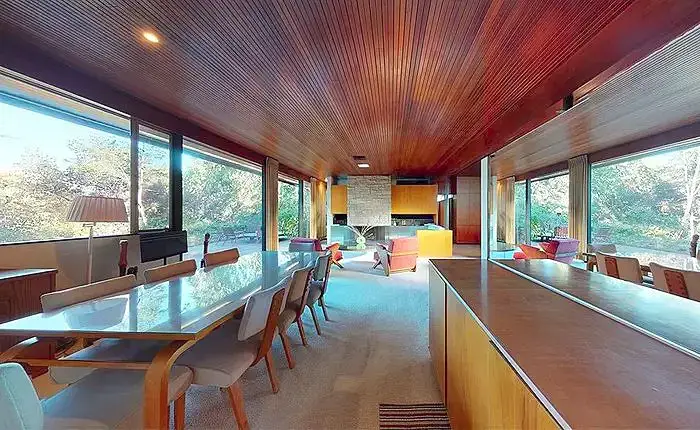
Richard Neutra Auerbacher House in Redlands CA dining room

At the elegant Auerbacher House, Richard Neutra composed a home of quiet precision and luminous restraint. Slender structural lines and expansive glass dissolve the boundary between interior space and garden, allowing light to shape every moment. The residence reflects Neutra’s enduring pursuit of architecture that is both intellectually rigorous and effortlessly livable.
Frequently Asked Questions About Richard Neutra Architecture

/
Richard Neutra

ARCHITECT

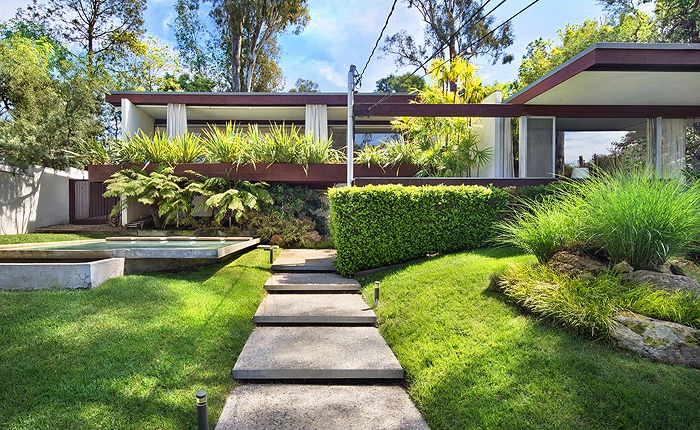
A Richard Neutra residence offers a study in precision and calm, where clean lines and expansive glazing invite nature into every moment. Architecture becomes both shelter and experience, grounded in clarity, balance and modernist intention.

Richard Neutra (1892-1970) was an Austrian-born architect who arrived in Los Angeles in 1925 and became one of the most influential modernists of the twentieth century. He is important to Los Angeles because he defined the city’s residential architectural identity through glass walls, steel frames and seamless connections between interiors and landscape. Twelve of his buildings are designated Los Angeles Historic Cultural Monuments and his homes remain among the most sought-after architectural properties in Southern California.

The Lovell Health House in Los Feliz (1929) is widely considered Neutra’s most important Los Angeles building. It was the first fully steel-framed residence in the United States and was included in the landmark 1932 Museum of Modern Art International Style exhibition. The house is designated as Los Angeles Historic-Cultural Monument #123 and is considered a pivotal work in American architectural history. Neutra’s VDL Research House in Silver Lake (1932), now a National Historic Landmark, is another iconic local work.

Biorealism was Neutra’s personal philosophy of design, grounded in the belief that architecture should support human health and well-being by keeping people connected to nature, light and air. He used biological and psychological sciences to inform his design decisions, maximizing natural light, creating visual connections to the landscape through glass walls and designing gardens as extensions of interior space. This philosophy is why Neutra homes feel exceptionally livable and why they continue to resonate with design-conscious buyers today.

The Neutra VDL Studio and Residences are located on the shore of Silver Lake Reservoir in Los Angeles, at 2300 Silver Lake Boulevard. Originally built in 1932 and rebuilt after a 1963 fire, the house is now owned by California State Polytechnic University, Pomona (Cal Poly Pomona). It is designated a National Historic Landmark and is the only Neutra-designed house regularly open to the public. Tours are offered on Saturdays and are led by Cal Poly Pomona architecture students.

Neutra homes are typically characterized by floor-to-ceiling glass walls that open to the garden, slender steel structural frames that allow open floor plans, flat or low-pitched roofs with deep overhangs for shade and framing views and a careful integration of architecture with the surrounding landscape. Natural materials like wood ceilings and stone fireplaces provide warmth against the cool steel and glass. Reflecting pools, planted courtyards and carefully sited vegetation are common exterior features.

Prices for authenticated Richard Neutra homes in Los Angeles vary widely based on size, condition, location and preservation status. The Kronish House in Beverly Hills sold for $12.8 million in 2011, while smaller Neutra residences have traded in the $1.5 million to $5 million range. Homes with Historic Cultural Monument designations, strong provenance and original features intact typically command the highest premiums. The market for Neutra properties has remained strong, driven by their scarcity, cultural significance, and enduring design quality.

The Kaufmann Desert House is a 1946 residence designed by Richard Neutra for department store magnate Edgar J. Kaufmann in Palm Springs, California. It is considered one of the most important examples of International Style architecture in the United States and became globally famous through the photographs of Julius Shulman. Kaufmann was also the patron of Frank Lloyd Wright’s Fallingwater. The house is privately owned and is widely regarded as the crown jewel of Palm Springs mid-century modern architecture.

Looking for a Richard Neutra Home for Sale in Los Angeles?

Beyond Shelter specializes in architecturally significant properties across Los Angeles and Southern California, including mid-century modern homes by Neutra and his contemporaries.Whether you are searching for a verified Neutra residence, exploring modernist properties with architectural pedigree, or considering selling an important mid-century home, our team combines deep architectural knowledge with real estate expertise to guide you through every step of the process.Browse Available Properties: Mid-Century Modern Homes for Sale in Los Angeles Explore by Architecture: Architectural Homes for Sale Service Areas: Los Angeles, West Hollywood, Beverly Hills, Silver Lake, Los Feliz, Santa Monica, Pacific Palisades, and throughout Southern California.Contact our team to discuss your search →

About Beyond Shelter

Beyond Shelter is a premier architecture and real estate firm serving Los Angeles and Southern California. With deep expertise in modernist architecture, historic preservation, and architectural history, we help clients discover, understand, and acquire architecturally significant properties. Our team combines architectural knowledge with real estate expertise to provide comprehensive guidance for design-conscious buyers, sellers, and architecture enthusiasts.Learn more about our services →
SILVER LAKE RICHARD NEUTRA – THE OHARA HOUSE
2210 Neutra Place, Los Angeles, CA

Silver Lake Richard Neutra home – The Ohara House, 1959. An architectural work of art, this 1,300-square-foot glass house is a masterpiece of modern design. Boasting stunning sectional variation in its airy and open design. Glass walls…

SUNSET STRIP RICHARD NEUTRA HOME – THE GALKA SCHEYER HOUSE
1880 Blue Heights Drive, Los Angeles, CA

A rare offering of this incredible Sunset Strip Richard Neutra home — The Galka Scheyer House. Built in 1934, the residence celebrates both architectural beauty and functionality. In 1936, architect Gregory Ain added a second story to the…

RICHARD NEUTRA CRESTWOOD HILLS HOME
1438 North Kenter Avenue, Los Angeles, CA

Constructed in 1956, this Richard Neutra Crestwood Hills home boasts panoramic vistas, stretching from the majestic mountains to the serene sea. The Adler House exemplifies an era in architecture where design was not only focused on…

WOODLAND HILLS RICHARD NEUTRA HOME THE J.N. BALDWIN HOUSE
6025 Lubao Avenue, Woodland Hills, CA

Rare Woodland Hills Richard Neutra Home – The J.N. Baldwin House is a prime example of how form follows function to create a truly unique living experience. Sited on a private hilltop and accessed by a long, curved driveway, the home is…

ICONIC HOLLYWOOD HILLS RICHARD NEUTRA LORING HOUSE
2456 Astral Drive, Los Angeles, CA

The Richard Neutra Loring House is about as good as it gets. Built in 1958, this boxcar-style mid-century modern is an ultra-stylish Hollywood Hills oasis. Set in lush tropical landscaping with a grassy lawn and spectacular views it is a…

RICHARD NEUTRA AUERBACHER HOME
ON AUCTION
121 Sierra Vista Drive, Redlands, CA

Richard Neutra Auerbacher home comes to auction. For purveyors of mid century modern architecture, Neutra’s design is at the top of the list. A rare opportunity to bid on the historic Auerbacher residence in Redlands, CA. In 1951,…

ARCHITECTS

Los Angeles became a hub of post-war design and experimentation as visionary architects reshaped residential living. Their steel-and-glass homes, post-and-beam structures, sliding walls and expansive windows embraced natural materials, open floor plans and Southern California’s indoor-outdoor lifestyle.